
Featured High-Temp Resistance Products for Doha Projects
Direct factory supply of certified FeCrAl & NiCr resistance heating elements engineered for harsh Middle Eastern industrial processing plants.



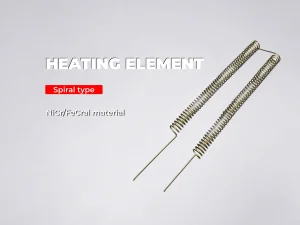
Macro-Industrial Context: Thermal Processing & Metallurgical Demands in Doha & Qatar
Analyzing Qatar’s economic diversification, coastal industrial infrastructures, and high-temperature alloy specifications.
The State of Qatar, centered around its vibrant capital Doha and strategic manufacturing hubs such as Ras Laffan Industrial City, Mesaieed Industrial City, and the Doha Industrial Area, is undergoing unprecedented industrial transformation. Driven by Qatar National Vision 2030 (QNV 2030), the nation is actively expanding its non-hydrocarbon industrial base, heavily investing in advanced metallurgy, heavy manufacturing, downstream petrochemical processing, seawater desalination, and solar energy manufacturing.
In these modern industrial ecosystems, high-temperature thermal processing units—such as heavy heat-treatment furnaces, carbon anode baking kilns, extrusion die preheaters, thermal cracking tubes, and ceramic sintering lines—operate under extreme physical conditions. The localized climate in Doha presents dual challenges: high atmospheric salinity combined with ambient temperatures often exceeding 45°C. When operating industrial electric resistance furnaces continuously between 1000°C and 1425°C, heating elements are exposed not only to intense thermal stress, thermal cycling fatigue, and mechanical creep, but also to corrosive industrial micro-environments containing trace sulfur, carbonaceous gases, and moisture.
Critical Technical Imperative for Doha Industrial Buyers
Conventional heating wires often suffer from rapid surface oxidation, premature intergranular embrittlement, structural sag, and excessive electrical resistance drift. To maintain continuous 24/7 production cycles without costly emergency shutdowns, engineering teams in Doha require High Resistance Iron-Chromium-Aluminium (FeCrAl) Alloys possessing exceptional thermodynamic stability, ultra-dense alumina film protection, and extended creep-rupture life.
Key Economic Drivers Shaping Alloy Demand in Qatar
- Petrochemical & LNG Refineries (Ras Laffan & Mesaieed): Continuous high-wattage electric heating systems for process air heaters, catalyst regeneration units, and pipe tracing elements requiring resistance to sulfur-bearing gases.
- Aluminium Smelting & Steel Fabrication (Qatalum & Qatar Steel Ecosystems): Extreme-duty heating elements for holding furnaces, aluminum ladle preheaters, and steel stress-relieving heat treatment furnaces operating up to 1250°C–1350°C.
- Thermal Desalination & Power Generation Facilities: Custom heavy-duty tubular and spiral resistance ribbons designed to survive aggressive humidity and cycling duty.
- Emerging Green Tech & Photovoltaic Manufacturing: High-purity furnace zones utilizing powder-metallurgy FeCrAl wire (e.g., SGHT grades rated up to 1425°C) for polysilicon crystal growth and solar glass sintering.
Global Industry Overview & FeCrAl Alloy Metallurgical Superiority
Understanding why FeCrAl alloys outperform traditional NiCr resistance wires in high-temperature industrial electric heating.
Globally, the industrial electric heating element market is transitioning rapidly toward high-efficiency, decarbonized electric resistance systems. As worldwide industries replace fossil-fired burners with zero-emission electric furnaces, the demand for high-performance electric resistance alloys has reached historic highs. Among the primary resistance alloy families—namely Nickel-Chromium (NiCr) and Iron-Chromium-Aluminium (FeCrAl)—FeCrAl has emerged as the clear benchmark for high-temperature industrial duty.
Thick Protective Al₂O₃ Scale
When exposed to oxygen at elevated temperatures (>1000°C), FeCrAl alloys synthesize a self-healing, thermodynamically ultra-stable α-Al₂O₃ (Alpha-Alumina) outer protective oxide film. This layer exhibits lower ionic permeability than NiCr’s chromia (Cr₂O₃) scale, preventing deep internal oxidation.
Higher Electrical Resistivity
FeCrAl alloys deliver higher specific electrical resistivity (typically 1.35 to 1.45 μΩ·m) compared to NiCr (1.09 to 1.18 μΩ·m). This enables thermal designers to specify thicker wire gauges for identical electrical resistance, vastly extending physical service life.
15% Lower Specific Density
With a density of ~7.10 g/cm³ compared to NiCr’s ~8.40 g/cm³, FeCrAl provides significant material weight savings. Buyers in Doha receive up to 15% more linear meters of heating wire per kilogram purchased, significantly lowering capital procurement costs.
Comprehensive Technical Specification Matrix
The table below highlights standard thermodynamic and physical properties comparing major SPARK FeCrAl and NiCr alloy grades manufactured in strict alignment with international quality standard GB/T 1234-2012 and ASTM specifications.
| Alloy Grade | Alloy Family | Max Continuous Temp (°C) | Resistivity @ 20°C (μΩ·m) | Density (g/cm³) | Melting Point (°C) | Primary Industrial Application |
|---|---|---|---|---|---|---|
| SPARK SGHT | Powder-Metallurgy FeCrAl | 1425°C | 1.45 | 7.10 | 1500°C | Semiconductor, Photovoltaic Sintering, Cleanroom Furnaces |
| SPARK SGHYZ | Advanced Rare-Earth FeCrAl | 1400°C | 1.43 | 7.10 | 1500°C | Heavy Duty Industrial Kilns, Powder Metallurgy |
| SPARK HRE | High-Performance FeCrAl | 1350°C | 1.42 | 7.15 | 1500°C | Aluminium Anode Baking, Ceramic Kilns, Stress Relieving |
| 0Cr25Al5 | Standard FeCrAl | 1250°C | 1.42 | 7.10 | 1500°C | Industrial Heating Elements, Heat Treatment, Radiators |
| 0Cr23Al5 | Standard FeCrAl | 1250°C | 1.35 | 7.20 | 1500°C | Domestic Appliances, Industrial Air Heaters |
| Cr20Ni80 | Premium NiCr Nichrome | 1200°C | 1.09 | 8.40 | 1400°C | Frequent Cycling Appliances, Nitrogen Atmosphere Furnaces |
Macro Industry Solutions: Engineering FeCrAl Alloys for Qatar's Core Sectors
Custom metallurgical configurations engineered to resist high sulfur, thermal shock, and continuous duty cycles.
1. Petrochemical Reformers & Process Heating (Ras Laffan Ecosystems)
In Qatar's world-scale gas processing plants, indirect electric process heaters must maintain strict temperature uniformity without risking element failure. High Resistance FeCrAl alloys, particularly SPARK HRE and 0Cr25Al5, possess superior resistance to sulfur compound attack (sulfidation) compared to high-nickel alloys. Nickel rapidly reacts with sulfur at temperatures above 645°C to form low-melting-point eutectic Ni-Ni₃S₂ phases, leading to catastrophic catastrophic "green rot" failure. FeCrAl's nickel-free iron matrix protected by α-Al₂O₃ completely eliminates this risk.
2. Primary Aluminium Smelting & Anode Holding (Mesaieed Facilities)
Aluminium reduction facilities operate continuous high-amperage, high-temperature holding furnaces and preheaters. SPARK FeCrAl spiral elements and heavy ribbon strip deliver unyielding resistance to molten metal splatter and aggressive flux vapors. The mechanical stability of our cold-rolled strips ensures minimal dimension expansion under thermal fatigue, keeping furnace heating grids perfectly aligned.
3. Stress Relieving & Heavy Heat Treatment in Doha Marine & Fabrications
Qatar's marine shipyards and heavy structural steel fabricators require portable ceramic pad heaters, channel heaters, and large walk-in car-bottom stress-relieving furnaces. High Resistance FeCrAl wire supplies maximum watt-density performance, allowing rapid ramp rates up to 1100°C while resisting oxidization under ambient humidity when furnaces are powered down between shifts.
Localized Application Scenarios in the Doha Market
Proven real-world deployments across industrial zones and specialized infrastructure in Qatar.
Doha Industrial Area Workshops
Wound spiral heating wire installed in chamber muffles, tool-steel hardening furnaces, and commercial pottery kilns requiring constant 1150°C performance.
Ras Laffan Petrochemical Labs
Precision-drawn fine FeCrAl resistance wire used in analytical sample heating equipment, gas chromatography ovens, and trace element testing chambers.
Qatar Desalination Pilot Plants
Heavy-duty immersion electric tubular heating bundles configured with SPARK 0Cr25Al5 cores designed for extreme heat flux in brine concentration boilers.
Technology Roadmap & Future Outlook: Next-Gen FeCrAl Innovations
How advanced powder metallurgy and rare-earth doping are unlocking 1425°C+ operational limits.
Traditional melted FeCrAl alloys face physical limitations near 1300°C: grain coarsening occurs over time, leading to reduced hot strength, structural sagging, and room-temperature brittleness after cooling. To overcome these challenges for next-generation industrial furnaces in Doha, Shougang Gitane (SPARK) has pioneered advanced metallurgical synthesis routes:
1. Powder Metallurgy (PM) Synthesis – The SGHT Breakthrough
By employing gas atomization followed by hot isostatic pressing (HIP) and precision hot rolling, our flagship SPARK SGHT alloy achieves microstructural refinement impossible through conventional ingot casting. Microscopic oxide dispersion strengthens the grain boundaries, dramatically mitigating thermal creep. SGHT operates continuously at 1425°C with zero vertical sagging in suspended furnace element designs.
2. Tailored Reactive Element Addition (RE Doping)
Through micro-alloying controlled additions of Yttrium (Y), Zirconium (Zr), Hafnium (Hf), and Cerium (Ce), SPARK alloys form a "keying" effect where the protective alpha-alumina oxide scale mechanically locks into the base alloy substrate. This eliminates oxide spallation during rapid thermal cycling, extending element lifetime by 300% to 500% in cyclic heat-treatment operations.
Localization Support, Quality Assurance & Compliance for Qatar
Rigorous quality controls, certification compliance, and direct export logistics to Hamad Port.
Beijing Shougang Gitane New Materials Co., Ltd. brings over six decades of metallurgical heritage backed by state-owned Shougang Group. For engineering EPCs, industrial furnace builders, and factory procurement managers in Doha, we provide complete compliance documentation and end-to-end export support:
Traceable Quality System
Certified under ISO 9001 and ISO 14001. Every production coil undergoes strict spectrographic elemental analysis, room-temperature resistance testing, and continuous optical dimension verification.
Mill Test Certificates (EN 10204 3.1)
All shipments to Doha include full chemical heat analysis, electrical resistance per meter values, tensile strength data, and accelerated life test results compliant with GB/T 1234-2012.
Expedited Logistics to Hamad Port
Export-ready seaworthy vacuum packaging with anti-tarnish desiccant protections, customized wooden crating, and direct sea-freight routing to Hamad Port, Doha.
Complete Range of Resistance Wires & Industrial Furnace Components
Explore our full catalog of specialized FeCrAl, NiCr, and custom prefabricated heating element assemblies.

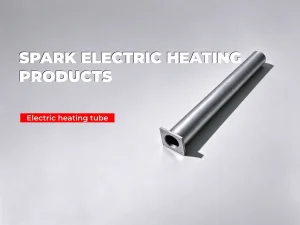

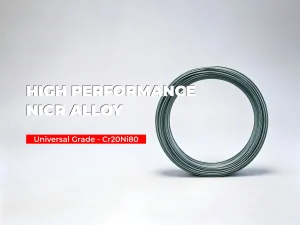
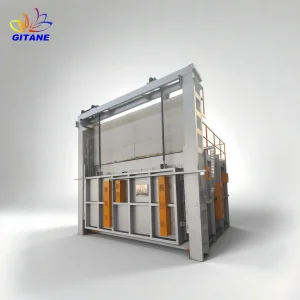

Technical FAQ: High Resistance FeCrAl Alloys in Qatar
Expert metallurgical answers addressing furnace design, atmospheric chemical compatibility, and installation best practices.
Optimize Your High-Temperature Furnace Performance in Doha
Partner with Beijing Shougang Gitane New Materials for direct factory pricing, certified metallurgical quality, and specialized technical support across Qatar and the GCC region.
Send Inquiry Now