
Primary Functional Alloy Products for South African Industry
Direct factory bulk supply featuring certified resistance heating wire, high-temperature tubes, and specialized structural elements.
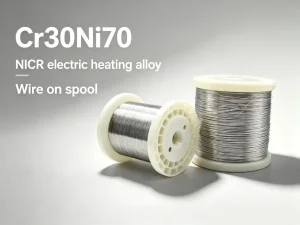

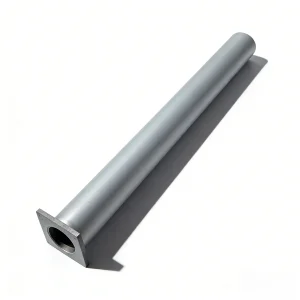

High-Temperature Functional Alloys in Modern Thermal Processing
In high-temperature processing, electrothermal materials are the backbone of continuous thermal generation, mineral transformation, and structural integrity under stress. A Functional Alloy represents a class of highly engineered metallic materials designed not for structural load-bearing under ambient conditions, but for physical, chemical, and electrical performance at elevated temperatures (ranging from 900°C to 1425°C).
Specifically within electrothermal systems, functional alloys predominantly fall into two microstructural families: Ferritic Iron-Chromium-Aluminum (FeCrAl) and Austenitic Nickel-Chromium (NiCr / NiCrFe). Operating in aggressive industrial environments demands meticulous control over alloy chemistry, trace element micro-alloying (such as Yttrium, Zirconium, and Rare Earth elements), and grain structure morphology. Beijing Shougang Gitane New Materials Co., Ltd., leveraging over 60 years of metallurgical engineering heritage under the state-owned Shougang Group, maintains full operational vertical integration—from vacuum induction melting (VIM) and ESR refining to precision cold drawing and continuous bright annealing.
Microstructural Comparison: FeCrAl vs. NiCr Functional Alloys
Selecting the correct functional alloy requires an understanding of hot yield strength, oxide scale formation dynamics, electrical resistivity variations with temperature, and resistance to environmental contaminants such as sulfur, carbon monoxide, and vanadium pentoxide.
| Metallurgical Property | FeCrAl Family (e.g., 0Cr25Al5, SGHYZ, SGHT) | NiCr Family (e.g., Cr20Ni80, Cr30Ni70) |
|---|---|---|
| Crystal Structure | BCC (Body-Centered Cubic) Ferritic Structure | FCC (Face-Centered Cubic) Austenitic Structure |
| Protective Oxide Scale | Alpha-Alumina (α-Al₂O₃) - Dense, adherent, thermally protective | Chromium Oxide (Cr₂O₃) - Highly ductile, self-healing scale |
| Max Operating Temperature | Up to 1425°C (Powder Metallurgy SGHT) | Up to 1250°C (Cr30Ni70) |
| Electrical Resistivity (20°C) | High (1.25 – 1.45 μΩ·m) | Moderate (1.09 – 1.18 μΩ·m) |
| Hot Strength & Creep Resistance | Lower hot yield strength; requires supportive design at high temp | Exceptional hot yield strength; highly resistant to sagging |
| Sulfur Atmosphere Tolerance | Excellent resistance to reducing/oxidizing sulfur gas | Prone to sulfidation degradation (formation of low-melting Ni-Ni₃S₂ eutectic) |
| Ductility After Prolonged Use | Becomes brittle after room temperature cooling (grain growth) | Retains high ductility even after extended thermal cycling |
South Africa’s Industrial Landscape & Thermal Alloy Demands
Understanding the unique operational stressors faced by South African mines, mineral smelters, and heavy equipment plants.
Platinum & Base Metal Pyrometallurgy
The Bushveld Igneous Complex around Rustenburg, Polokwane, and Steelpoort represents over 70% of global platinum production. Processing chromite and PGM concentrates requires calcining kilns and electric arc furnace tap-hole heating elements capable of resisting heavy SO₂ and particulate exposure.
Grid Load-Shedding & Thermal Fatigue
Irregular grid power and planned load-shedding cycles subject industrial furnaces in Gauteng and Mpumalanga to rapid thermal cycling. Standard alloys degrade rapidly due to oxide spallation. SPARK FeCrAl alloys are engineered with trace Yttrium to lock the α-Al₂O₃ scale to the substrate during thermal shock.
Petrochemical Synthesis (Sasol Secunda)
The coal-to-liquid (CTL) and gas-to-liquid (GTL) complexes in Sasolburg and Secunda require high-alloy heater tubes and furnace coils that resist high-temperature carburization and green-rot attack in hydrocarbon-rich atmospheres.
Addressing Thermal Spallation in Intermittent Power Conditions
In South African manufacturing environments, thermal cycling represents the single largest cause of premature heating element failure. When power is suddenly cut, an industrial element cools rapidly from 1200°C to ambient temperatures. The metallic substrate contracts at a higher thermal coefficient than its outer oxide layer. In conventional cheap FeCrAl wire, this mismatch creates shear stress at the interface, causing the protective alumina oxide scale to flake off (spallation).
Once power is restored, the exposed core metal must react with oxygen to rebuild the oxide scale, consuming internal Aluminum content. Repeated cycling depletes the alloy's Aluminum, leading to rapid bulk oxidation (commonly known as "element burnout"). Beijing Shougang Gitane addresses this directly through micro-alloying doping technology, adding micro-concentrations of Yttrium (Y), Zirconium (Zr), and Rare Earth (RE) elements. These elements form structural mechanical pegs at the oxide-metal interface, anchoring the oxide scale and extending service life by up to 300% under severe thermal cycling conditions.
High-Temperature Functional Alloy Engineering & Material Formats
Precision manufacturing parameters and composition controls behind Shougang Gitane's SPARK series.
1. The SPARK SGHT Powder Metallurgy Advantage (1425°C Peak Rating)
For extreme temperature applications such as advanced ceramic sintering, dental zirconia firing, and high-purity glass annealing, traditional ingot-cast alloys reach their physical limits due to grain coarsening at temperatures above 1300°C. SPARK SGHT is manufactured using advanced powder metallurgy processing. Rapid atomization produces ultrafine, homogeneous alloy powders that are consolidated via Hot Isostatic Pressing (HIP) and subsequently rolled into wire and strip.
The resultant microstructure contains evenly dispersed nano-sized oxide dispersoids that pin grain boundaries. This prevents rapid grain growth at elevated temperatures, providing unmatched high-temperature creep strength, minimal dimensional sagging, and an ultra-dense, self-healing alumina protective layer.
2. Austenitic NiCr Alloys for Heavy Cycling & Mechanical Resilience
In applications where furnace elements are unsupported, vertically suspended, or subject to heavy mechanical vibration (such as automotive heat treatment plants in Port Elizabeth and Uitenhage), austenitic NiCr alloys remain the premier choice. With grades like Cr20Ni80 and Cr30Ni70, the high Nickel content ensures an austenitic matrix that remains ductile when cold. This allows furnace engineers to easily service, adjust, or rewiring heating banks without element cracking after hundreds of thermal hours.
| SPARK Alloy Grade | Nominal Composition (%) | Resistivity (μΩ·m at 20°C) | Density (g/cm³) | Melting Point (°C) | Primary SA Industry Application |
|---|---|---|---|---|---|
| 0Cr25Al5 | Cr: 23.0-26.0, Al: 4.5-5.5, Fe: Bal. | 1.42 | 7.10 | 1500 | Standard Industrial Kilns, Ceramic Drying |
| 0Cr21Al6Nb | Cr: 21.0-23.0, Al: 5.5-6.5, Nb: 0.5, Fe: Bal. | 1.45 | 7.10 | 1500 | Glass Tempering, High-Efficiency Heaters |
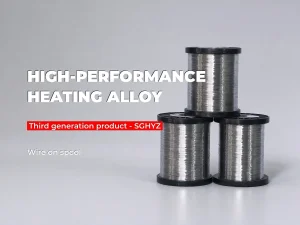
| SPARK SGHYZ | Cr: 24.0-27.0, Al: 6.0-7.0, Rare Earths, Fe: Bal. | 1.45 | 7.10 | 1520 | PGM Smelting Laboratory Furnaces (1400°C) |
| SPARK SGHT | Powder Metallurgy FeCrAl + Y₂O₃ Dispersoids | 1.45 | 7.10 | 1530 | Semiconductor Diffusion & Ultra-Temp Kilns |
| Cr20Ni80 | Ni: Bal., Cr: 20.0-23.0, Si: 1.0-1.5, Fe: <1.0 | 1.09 | 8.40 | 1400 | Automotive Heat Treatment, Duct Heaters |
| Cr30Ni70 | Ni: Bal., Cr: 28.0-31.0, Si: 0.8-1.2, Fe: <1.0 | 1.18 | 8.10 | 1380 | Harsh Chemical & Petrochemical Furnaces |
China Factory Integration & Direct Wholesale Procurement
Why South African procurement officers choose direct factory partnerships with Beijing Shougang Gitane.
Upstream Raw Material Security
As part of the Shougang Group, Gitane possesses direct upstream supply stability for high-purity Nickel, Chromium, and refined Iron, protecting South African partners from speculative market spikes and raw material shortages.
Full Process Traceability & MTR
Every order dispatched to Durban, Cape Town, or Johannesburg includes Mill Test Reports (MTR) detailing exact chemical heat analysis, room temperature yield strength, tensile properties, and precise electrical resistance per meter.
Custom Delivery Formats
We supply fine wire down to 0.05mm, heavy industrial drawing wire up to 12mm, cold-rolled strip, wound spirals, and ready-to-install custom heating element coils manufactured precisely to customer CAD drawings.
South African Field Deployment Case Studies
Practical installations demonstrating operational stability in challenging southern African conditions.
Platinum Group Metals (PGM) Calcination Kilns – Rustenburg
Challenge: Excessive element corrosion and embrittlement in rotary calcining kilns due to high concentration of sulfur oxides and variable ore moisture levels.
Solution: Implementation of SPARK 0Cr21Al6Nb and SGHYZ heavy-gauge coiled elements. The dense α-Al₂O₃ protective oxide layer completely shielded the inner metallic core from sulfidation, extending average element service life from 4 months to over 14 months continuous operation.
Automotive Component Heat Treatment – Port Elizabeth
Challenge: High-frequency thermal cycles in continuous carburizing and nitriding furnaces caused standard element distortion and localized overheating.
Solution: Conversion to high-purity Cr20Ni80 flat ribbon strip elements. The high hot yield strength of the austenitic FCC structure prevented element sagging, maintaining precise spatial clearances and uniform thermal radiation across gear assemblies.
Technology Roadmap: Functional Alloys in Decarbonization
How advanced thermal materials support South Africa's transition toward green energy and sustainable processing.
1. Green Hydrogen & High-Temperature Electrolysis (HTE)
As South Africa positions itself as a global hub for Green Hydrogen production (utilizing vast solar resources in the Northern Cape), High-Temperature Steam Electrolysis (HTSE) is emerging as a critical technology. Operating at 700°C–850°C, HTSE stack heaters require specialized functional alloys that maintain high electrical conductivity, resist hydrogen embrittlement, and provide decades of continuous operation without degradation.
2. Thermal Energy Storage (TES) for Renewable Integration
To mitigate grid instability, South African industrial facilities are increasingly adopting Thermal Energy Storage (TES) systems using molten salt or metallic heat storage blocks. SPARK high-resistivity FeCrAl alloys are engineered into high-density immersion heater tubes, converting off-peak renewable solar/wind generation into high-grade industrial process heat stored up to 1000°C.
Quality Standards & South African Trade Compliance
Ensuring seamless customs entry, local technical alignment, and strict quality verification.
All functional alloy wire, strip, and elements manufactured by Beijing Shougang Gitane comply fully with major global standard frameworks, including GB/T 1234-2012 (High Resistance Electrothermal Alloys), ASTM B603, ASTM B344, and DIN 17470. For South African importers, our documentation package simplifies SARS (South African Revenue Service) customs clearance under HS Code Chapter 72 and 75.
ISO 9001 & ISO 14001 Quality System
Fully audited quality management system ensuring 100% eddy current testing and dimensional tolerance checks across all drawn wire products.
Port Logistics Efficiency
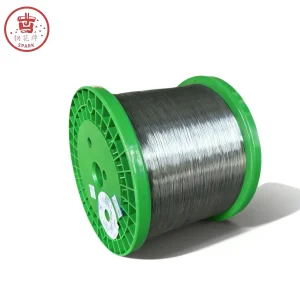
Direct export packaging with heavy-duty sea-freight spools, wooden crating, and anti-corrosion VCI wrapping. Regular containerized shipments to Durban (Port Natal) and Cape Town.
Local Engineering Support
Our engineering support team offers surface load (W/cm²) calculations and cold-end terminal lead sizing designed specifically for South African plant electrical parameters.
Comprehensive SPARK Functional Alloy Catalog
Explore our complete inventory of resistance heating alloys, custom elements, and high-purity raw metal materials.

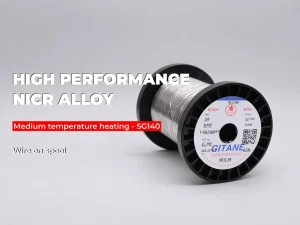
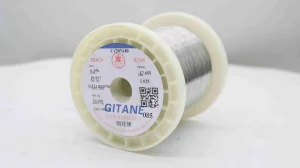

Frequently Asked Questions for South African Buyers
Technical, logistical, and commercial details for importing functional alloys into South Africa.
What is the recommended alloy choice for high-sulfur mining furnace environments in South Africa?
For high-sulfur environments such as PGM calcining or sulfide ore roasters, FeCrAl alloys (such as 0Cr25Al5, 0Cr21Al6Nb, or SGHYZ) are strongly recommended over NiCr alloys. FeCrAl forms a protective alpha-alumina scale that is chemically inert to sulfur gas attack. Nickel-rich alloys undergo catastrophic sulfidation due to the formation of a low-melting Ni-Ni₃S₂ eutectic at temperatures above 645°C.
How do SPARK alloys resist thermal shock caused by grid load-shedding?
SPARK alloys are micro-alloyed with reactive elements (Yttrium, Zirconium, and Neodymium). These trace additions form micro-anchors at the oxide-metal boundary, preventing the alumina scale from spalling off during rapid cooling cycles. This maintains oxide protection even under frequent thermal shutdowns.
What shipping options and delivery lead times are available to Durban or Johannesburg?
Standard drawn wire and coiled stock are available with dispatch lead times of 10 to 15 business days. Sea freight shipping to Durban Port typically takes 22 to 28 days in transit. Air freight for urgent replacements (via Johannesburg O.R. Tambo International Airport) takes 3 to 5 days.
Are mill test reports and material certifications provided with wholesale orders?
Yes. Every dispatch includes an official Mill Test Report (MTR) according to EN 10204 3.1, detailing heat analysis, mechanical yield/tensile strength, elongation, and exact electrical resistance at 20°C per GB/T 1234-2012 standards.
Can Beijing Shougang Gitane supply pre-coiled heating spirals to CAD drawings?
Yes. In addition to raw wire and strip spools, our fabrication workshop produces custom-wound spiral coils, star-shaped elements, and rod heaters ready for direct installation into furnace refractory bricks.
Request Engineering Support & Bulk Factory Quotes for South Africa
Partner with Beijing Shougang Gitane for certified high-temperature functional alloys. Direct pricing, technical surface-load calculations, and reliable global shipping.
Send Inquiry Now