
Featured Istanbul Resistance Alloy Delivery Forms (Primary Lineup)
Direct supply solutions tailored for high-temperature furnace OEMs, industrial heating element winders, and heavy industrial plants across Istanbul, Gebze, and the Marmara industrial zone.

Executive Summary: The Strategic Value of Delivery Forms in Istanbul's Industrial Belt
The Marmara Region, encompassing Istanbul, Kocaeli, Gebze, Dilovası, and Bursa, stands as one of the most dynamic industrial manufacturing corridors spanning Europe and Asia. Within this dense ecosystem, high-temperature thermal processing is vital across automotive manufacturing, ceramic tile firing, steel heat treatment, glass bending, and defense aerospace metallurgy. At the heart of every thermal system lies the Electric Heating Alloy—primarily Iron-Chromium-Aluminum (FeCrAl) and Nickel-Chromium (NiCr) systems. However, industrial procurement teams and thermal engineers increasingly recognize that selecting the chemical grade is only half the battle. The physical Delivery Form (wire diameter, strip thickness, spooling geometry, pre-formed meander element configuration, and bright-annealed surface conditions) dictates heat dissipation performance, oxidation life, coilability, labor efficiency, and ultimately, total operational downtime.
This technical whitepaper provides an exhaustive analysis of wholesale delivery form supply dynamics, factory pricing structures, and engineering standards for resistance heating alloys within the Istanbul market. Backed by over six decades of metallurgical research, advanced cold-drawing technologies, and stringent ISO 9001 and GB/T 1234-2012 compliance, this guide equips procurement managers and chief engineering officers with actionable insights for optimizing thermal efficiency and supply chain resilience.
Istanbul Regional Industrial Reality & High-Temperature Demand Driving Factors
Istanbul is not merely a commercial bridge between continents; it is a manufacturing powerhouse driving Turkey's $250B+ export economy. The regional industrial landscape features high concentrations of specialized manufacturing clusters that depend heavily on precision-engineered resistance heating elements:
Automotive & Heat Treatment (Bursa-Kocaeli Axis)
Continuous carburizing, nitriding, and tempering furnaces require ultra-stable NiCr (Cr20Ni80, Cr30Ni70) flat ribbons and heavy-gauge wire coils that retain high hot-strength and ductility during rapid thermal cycling without sagging or shorting.
Glass & Ceramics Sector (Kütahya, Bilecik & Tuzla)
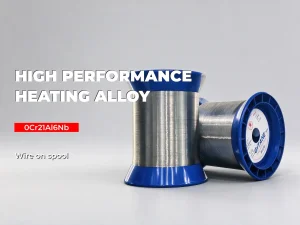
Tunnel kilns and roller hearth furnaces firing porcelain, sanitaryware, and technical ceramics demand FeCrAl delivery forms (such as 0Cr21Al6Nb and SGHYZ) capable of continuous operation up to 1400°C without spalling critical oxide flakes onto workpieces.
Electronics & Powder Metallurgy (İkitelli & Hadımköy OSB)
High-density sintering furnaces for soft magnetic materials and electronic components mandate ultra-pure, fine-gauge resistance wire with tight diameter tolerances (±0.005mm) delivered on precision DIN spools for clean automated winding.
To service these industries, factory suppliers must go beyond offering standard bulk wire reels. Procurement teams in Istanbul require tailored Delivery Form Engineering—supplying pre-annealed strips, custom-pitch helical spiral coils, straight cut rods, and pre-formed meander element shapes that fit directly into furnace refractory bricks, drastically minimizing local fabrication labor.
Macro Industry Solutions: FeCrAl vs. NiCr Delivery Form Selection Matrix
Selecting the optimal delivery form and chemical system requires a nuanced understanding of high-temperature physical chemistry, mechanical load limits, and local electrical cost structures in Turkey. Below is an authoritative technical comparison between the two major alloy families:
| Parameter / Feature | FeCrAl Alloys (e.g., 0Cr25Al5, HRE, SGHYZ, SGHT) | NiCr Alloys (e.g., Cr20Ni80, Cr30Ni70, Cr20Ni40) |
|---|---|---|
| Max Operating Temperature | Up to 1425°C (SGHT Powder Metallurgy Grade) | Up to 1250°C (Cr30Ni70 High-Temp Grade) |
| Resistivity at 20°C ($\mu\Omega\cdot\text{m}$) | High (1.35 – 1.45) – Enables thinner wire & less weight | Moderate (1.09 – 1.18) – Requires greater cross-section |
| Density ($\text{g/cm}^3$) | 7.10 – 7.25 (Approx. 15% lighter than NiCr) | 8.40 – 8.50 (Heavier, higher nickel metal raw cost) |
| Protective Oxide Scale | $\alpha\text{-Al}_2\text{O}_3$ (Adherent, light grey, non-scaling ceramic) | $\text{Cr}_2\text{O}_3$ (Dark green/black, high hot emission) |
| Hot Strength & Ductility | Lower yield strength at $>1000^\circ\text{C}$; becomes brittle after use | Excellent hot strength; remains ductile post-heating |
| Atmospheric Compatibility | Superior in oxidizing, sulfurous, and carburizing atmospheres | Preferred in reducing, moist, and nitrogen/ammonia gases |
| Typical Primary Delivery Forms | Heavy spools, cut straight rods, ceramic rod-supported coils | Flat cold-rolled ribbon, tightly wound flexible spirals |
Total Cost of Ownership (TCO) Impact for Turkish Enterprises: Because FeCrAl alloys feature a higher electrical resistivity and lower physical density than NiCr alloys, switching to high-grade FeCrAl (such as 0Cr21Al6Nb or SGHYZ) can yield a raw material weight saving of up to 20-30% for identical power outputs. In an era of fluctuating nickel commodity prices on the LME, this provides a massive cost mitigation strategy for high-volume element fabricators in Istanbul.
Technological Roadmap: Advanced Metallurgical Processing for Delivery Forms
Achieving prolonged thermal element life at temperatures exceeding 1300°C requires advanced metallurgical manufacturing technology. Our state-of-the-art production line integrates four core technological pillars that directly enhance the performance of every delivered wire coil and strip spool:
1. Rare Earth Reactive Element Addition (RE Micro-Alloying)
By micro-alloying controlled fractions of Yttrium (Y), Zirconium (Zr), Lanthanum (La), and Niobium (Nb), the grain growth rate at ultra-high temperatures is significantly suppressed. RE atoms migrate to oxide scale grain boundaries, anchoring the protective $\alpha\text{-Al}_2\text{O}_3$ scale firmly to the metal core and completely eliminating premature scale spalling under thermal shock.
2. Rapid Powder Metallurgy Synthesis (SGHT Series)
For demanding $1400^\circ\text{C}-1425^\circ\text{C}$ furnace applications, traditional ingot casting suffers from heavy macro-segregation. Our SGHT powder metallurgy route ensures atomized ultra-fine alloy powders, resulting in isotropic mechanical properties, zero internal micro-voids, and a high-temperature creep resistance up to 4 times greater than conventional FeCrAl wires.
3. Hydrogen Bright Annealing & Surface Passivation
Every meter of cold-drawn wire and cold-rolled strip passes through continuous vertical hydrogen bright annealing furnaces. This eliminates surface contamination, oil residues, and micro-cracks while establishing a mirror-like finish or a pre-oxidized golden passivation layer that minimizes initial power commissioning burn-in times.
4. Precision Cold-Rolling & Tension-Controlled Spooling
To eliminate wire overlap, tangling, and uneven tension during automated coil winding, our factory utilizes CNC multi-axis tension spoolers. Flat ribbon and strip forms maintain strict edge-radius rounding (eliminating micro-burrs) and cross-sectional thickness tolerances within $\pm 0.003\text{ mm}$.
Standard Wholesale Delivery Forms & Dimensional Specifications
To seamlessly integrate into Turkish OEM manufacturing lines, our wholesale supply program offers a comprehensive array of standard and customized physical delivery forms:
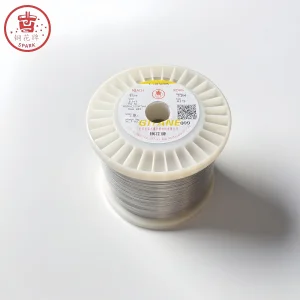
Round Resistance Wire
Diameter Range: $\Phi 0.05\text{ mm} - \Phi 12.0\text{ mm}$
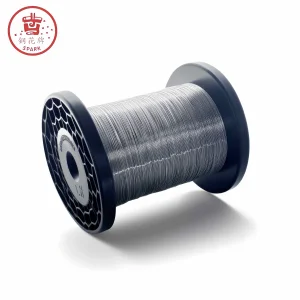
Delivery Form: Precision wound on Plastic Spools (DIN 100, DIN 160, DIN 200, DIN 250, K350) for fine sizes ($\le 1.0\text{mm}$); heavy catch-weight coils or carrier baskets for thick wire ($\gt 1.0\text{mm}$).
Surface: Bright annealed, oxidized golden finish, or matte drawn.
Cold-Rolled Strip & Flat Ribbon
Dimensions: Thickness $0.05\text{mm} - 4.0\text{mm}$; Width $0.5\text{mm} - 200\text{mm}$
Delivery Form: Continuous pancake coils, wooden core reels, or cut-to-length flat bars.
Edge Condition: Deburred round edges, slit square edges, or custom deburred profiles to protect ceramic element holders.
Pre-Formed Heating Elements
Configurations: Helical wound spiral coils, wave-shaped meander elements, ROH (Rod-Over-Hanging) elements, and tubular heating coils.
Tailored Options: Welded terminal leads (thickened cold ends) engineered according to customer CAD drawings for rapid installation in industrial furnaces.
Localization Support & Customs Compliance for Istanbul Importers
Procuring raw metallurgical materials internationally can introduce administrative and logistical friction if compliance is not strictly controlled. We offer a fully streamlined export mechanism explicitly structured for Turkish customs regulations and industrial procurement requirements:
1. Certified Quality Documentation
Every shipment is accompanied by a full Chemical Composition and Physical Properties Mill Test Certificate compliant with EN 10204 3.1. Testing covers exact chemical spectro-analysis, room-temperature resistivity ($\mu\Omega\cdot\text{m}$), tensile strength, yield elongation, and accelerated high-temperature lifecycle (Bash Test) results.
2. Smooth Customs Clearance at Bosphorus Ports
Our logistics team prepares complete documentation packages aligned with Turkish Customs Tariffs (HS Codes: 7223.00 for FeCrAl wire, 7505.22 for NiCr wire). Whether shipping via Sea Freight to Ambarlı Port (Istanbul), Evyap Port / Gebze, or air freight to Istanbul Airport (IST), all invoices, packing lists, and Certificates of Origin (Form A / COO) are meticulously prepared for seamless import duty processing.
Complete Industrial Catalog: Full Delivery Form Portfolio for Turkey
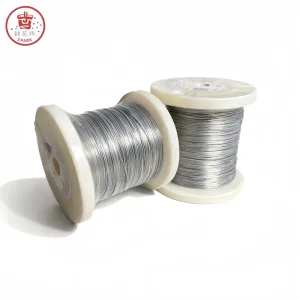
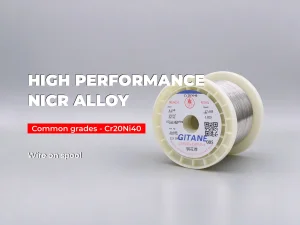
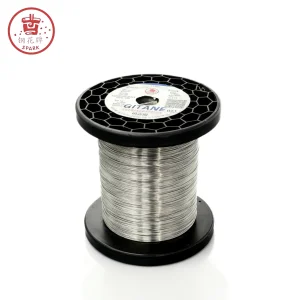
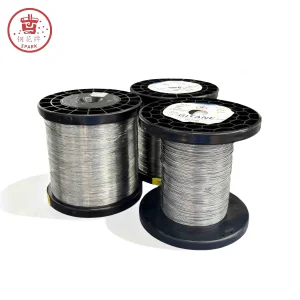
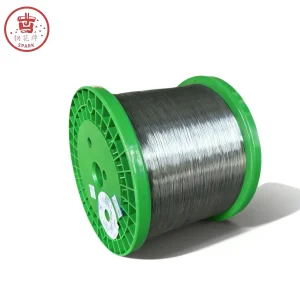
Explore our secondary lineup of high-performance heating alloy wires, ribbons, and specialized formulations designed for extreme heat resistance and long service life.
Frequently Asked Questions (Technical Procurement FAQ)
Direct answers to critical technical questions asked by industrial furnace engineers, purchasing officers, and element fabricators in the Marmara region.
For automated winding machines (such as those used in Hadımköy and İkitelli OSB), precision-spooled wire on DIN 200 or DIN 250 plastic reels with controlled back-tension is the most efficient form. It prevents wire cross-over, ensures uniform helix pitch, and eliminates machine jamming. For heavier wire gauges ($\gt 2.5\text{mm}$), carrier basket coils (100kg-250kg) provide continuous winding capability without frequent spool changes.
The $D/d$ ratio is crucial for element stability. The recommended ratio is typically between 5:1 and 8:1. If $d$ is too thin relative to $D$ ($D/d \gt 10$), the helical coil becomes mechanically weak and prone to sagging at temperatures above 1000°C. If $D/d \lt 3$, excessive internal stress during winding can lead to premature cracking during initial heat-up. Our technical team assists Istanbul clients with CAD element calculation software to optimize $D/d$ ratios prior to delivery.
Standard raw material drawing and bright annealing take approximately 10-15 days. Direct sea freight from Tianjin or Qingdao ports to Ambarlı/Gebze ports in Turkey typically takes 22-28 days. For urgent plant maintenance shutdowns, express air freight (5-7 transit days via Istanbul IST Airport) is available for wire and strip orders under 500 kg.
The addition of Niobium (Nb) in 0Cr21Al6Nb acts as a strong grain refiner and carbide/nitride stabilizer. At temperatures between 1200°C and 1350°C, Niobium prevents micro-structural grain coarsening, maintaining higher yield strength and significantly superior resistance to sagging compared to standard 0Cr25Al5, resulting in a 30-50% longer element life in continuous ceramic firing kilns.
We utilize continuous online eddy-current testing and laser micrometer profiling during the drawing and spooling process. Electrical resistivity is measured per meter under temperature-controlled laboratory conditions. Our guaranteed resistance tolerance per spool is within $\pm 3\%$, with premium tolerance grades offering $\pm 1.5\%$ uniformity.
Yes. To prevent terminal overheating where elements pass through furnace insulation walls, we supply pre-formed elements with welded or doubled/tripled cold terminal ends (using low-resistance alloys or enlarged cross-sections) according to your exact electrical and furnace wall thickness specifications.
Optimize Your Thermal System Performance Today
Need custom delivery forms, factory direct pricing schedules, or immediate engineering consultation for your Istanbul factory? Contact our senior metallurgical engineering team now for prompt technical support and detailed quotes.