
Featured Industrial Products for Philippines Grid & Heating Applications
High-performance structural, resistance, and magnetic materials manufactured for severe tropical grid conditions and high-temperature industrial processing.

High-Performance SGHT Structural & Enclosure Alloy Tube Material
View Product Details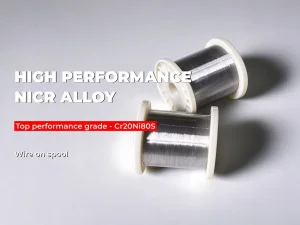
China Cr20Ni80S Nickel Chromium Heating Wire (1200°C High Temp)
View Product Details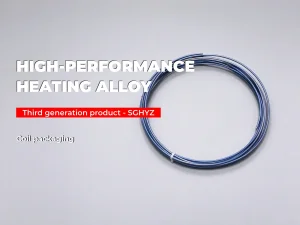
Wholesale SGHYZ 1400°C High Temp FeCrAl Creep-Resistant Heating Wire
View Product Details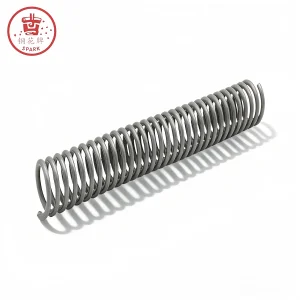
High-Efficiency NiCr & FeCrAl Industrial Electric Heating Elements
View Product Details1. Metallurgical Foundations: Physics of Amorphous & Nanocrystalline Materials
Amorphous metals (frequently referred to as metallic glasses) represent a radical departure from conventional crystalline metallurgy. While traditional electrical steel sheets—such as Grain-Oriented Silicon Steel (CRGO)—possess an ordered, repeating atomic lattice structure, amorphous alloys feature a non-crystalline, randomized atomic configuration. This unique atomic disorder is achieved through ultra-rapid solidification (planar flow casting) where molten alloy is quenched at cooling rates exceeding 10^6 Kelvin per second (1,000,000 °C/s).
Because the metal transitions from liquid to solid instantaneously without giving atoms sufficient time to arrange into a crystal lattice, grain boundaries, crystalline anisotropy, and dislocation networks are completely eliminated. For magnetic applications, the absence of grain boundaries reduces domain-wall pinning to near zero, yielding extraordinarily soft magnetic characteristics:
- Ultra-Low Coercivity ($H_c$): Coercive force is reduced by up to 80% compared to high-permeability CRGO silicon steel, allowing near-frictionless magnetic domain rotation.
- Minimal Hysteresis Loss: Because the B-H loop area is exceptionally narrow, the thermal dissipation caused by cyclic magnetization in alternating current (AC) fields is drastically suppressed.
- High Electrical Resistivity ($\rho$): Amorphous ribbons typically exhibit electrical resistivity between $130\,\mu\Omega\cdot\text{cm}$ and $150\,\mu\Omega\cdot\text{cm}$—nearly three times higher than conventional silicon steel ($45–50\,\mu\Omega\cdot\text{cm}$). This high intrinsic resistivity inherently limits eddy current formation within the core matrix.
- Ultra-Thin Ribbon Geometry: Industrial amorphous ribbons are cast at standard thicknesses of merely $20\,\mu\m$ to $30\,\mu\m$, which further curtails high-frequency eddy current losses ($P_e \propto f^2 t^2$).
As a leading Wholesale Amorphous Products Manufacturer & Supplier supplying the Philippines, our production lines specialize in Iron-based (Fe-based) amorphous ribbons, Cobalt-based (Co-based) ultra-low loss alloys, and fine-grained Nanocrystalline alloys (such as Fe-Si-B-Nb-Cu systems). These materials serve as the core technical foundation for next-generation distribution transformers, pulse transformers, common-mode chokes, and high-temperature electrothermal installations.
2. Philippines Industrial Context: Grid Modernization & Energy Demand Dynamics
The Philippines electricity landscape presents a distinct operational environment characterized by some of the highest retail electricity rates in Southeast Asia (ranging from 9.50 PHP to 12.00 PHP per kWh depending on fuel pass-through costs and distribution utility tariffs). Consequently, grid efficiency and thermal optimization directly translate to massive financial bottom-line impacts for power utilities, industrial estates, and commercial real estate developers.
Grid Transformation & The Meralco / PHILRECA Directives
Major distribution utilities such as the Manila Electric Company (Meralco), Visayan Electric Company (VECO) in Cebu, Davao Light & Power, and rural electric cooperatives under PHILRECA are actively modernizing distribution infrastructure. Under the Philippine Department of Energy (DOE) energy efficiency mandates and Net Zero roadmaps, distribution transformers are required to drastically reduce baseline core dissipation.
In traditional rural and island mini-grid electrification projects across Luzon, Visayas, and Mindanao, distribution transformers operate at low average load factors (20% to 35% capacity load). Under these prolonged low-load conditions, constant 24/7 core losses (no-load losses) account for the vast majority of wasted energy. Amorphous metal distribution transformers (AMDT) excel specifically in these environments by eliminating up to 80% of standby core heat dissipation.
Key Philippine Industrial Corridors & Demand Drivers
- CALABARZON Industrial Cluster (Laguna, Batangas, Cavite): Host to heavy electronics assembly, semiconductor packaging, automotive assembly, and chemical processing facilities (e.g., Laguna Technopark, Light Industry & Science Park). These plants require continuous, high-reliability power quality, ultra-low loss power transformers, and high-frequency inductive components.
- Central Luzon Economic Zones (Clark Freeport & Subic Bay): High-density logistics hubs, data centers, and light-manufacturing facilities undergoing rapid expansion, demanding eco-friendly dry-type amorphous transformers to comply with LEED energy standards.
- Metro Cebu & Western Visayas Infrastructure: Rapid urbanization and commercial tower development requiring compact, low-noise, fire-resistant amorphous core transformers to meet strict urban building safety codes.
- Renewable Energy Surge (Solar & Offshore Wind Integration): Large-scale solar farms across Tarlac, Pangasinan, and Negros Occidental require step-up transformers with specialized amorphous and nanocrystalline cores capable of managing high-frequency harmonics emitted by large solar grid-tied inverters.
Tropical Climate Resilience (High Humidity & Corrosion Challenges)
Operating electrical core assemblies and heating elements in the Philippines requires overcoming extreme ambient conditions: constant relative humidity levels above 85%, high ambient air temperatures ($35^\circ\text{C}$ to $42^\circ\text{C}$), and severe coastal airborne salinity. Our wholesale amorphous ribbon products and high-temperature heating alloys undergo proprietary anti-corrosion surface treatments and thermal-stress annealing, ensuring structural integrity and zero dielectric breakdown under extreme tropical exposure.
3. Comparative Benchmark: Amorphous Alloys vs. Conventional Silicon Steel
To establish clear technical ROI for Philippine transformer OEMs, electrical contractors, and utility procurement directors, the following table details the key physical, mechanical, and magnetic parameters comparing Fe-Based Amorphous Ribbon against premium Grain-Oriented Silicon Steel (CRGO grade M4/Hi-B):
| Technical Parameter | Fe-Based Amorphous Ribbon (1K101 / Fe-Si-B) | Grain-Oriented Silicon Steel (CRGO M4 / Hi-B) | Performance Advantage for Philippine Buyers |
|---|---|---|---|
| Saturation Induction ($B_s$) | 1.56 Tesla | 2.03 Tesla | Slightly larger core size balanced by massive loss reduction |
| Coercive Force ($H_c$) | < 4.0 A/m | < 30 A/m | Near-frictionless magnetic domain rotation |
| Core Loss at 50Hz, 1.3T | 0.18 – 0.25 W/kg | 0.85 – 1.10 W/kg | 75% to 80% Reduction in No-Load Energy Wasted |
| Electrical Resistivity ($\rho$) | 137 μΩ·cm | 45 – 50 μΩ·cm | Supressed eddy current generation even under harmonic distortion |
| Standard Ribbon Thickness | 25 μm (0.025 mm) | 230 – 300 μm (0.23 – 0.30 mm) | Eliminates high-frequency skin effect heating |
| Crystallization Temperature | 510°C | N/A (Fully Crystalline) | Requires precision stress-relief magnetic field annealing |
| Density | 7.18 g/cm³ | 7.65 g/cm³ | 6% lower weight per unit volume |
From an economic standpoint in the Philippines (assessed at an average industrial rate of 10.50 PHP per kWh), a standard 500 kVA distribution transformer manufactured with an amorphous core saves approximately 3,800 to 4,500 kWh per year in baseline no-load losses alone. Over a 25-year operational lifecycle, the energy savings far exceed the initial core procurement cost, producing a payback period of under 2.5 years.
4. China Direct Factory Efficiency & Shougang Gitane Supply Chain Heritage
Procuring wholesale amorphous materials and electrothermal heating wires directly from our modern Chinese manufacturing complex offers Philippine industrial clients unmatched technological rigor, scale, and cost transparency. Backed by over 60 years of metallurgical leadership (inherited through our parentage within the renowned Shougang Group network), our facilities integrate the complete value chain from raw metal melting to finalized core fabrication.
Advanced Planar Flow Casting & Quality Control
Our factory operates automated continuous rapid solidification casting lines equipped with induction melting furnaces under vacuum/inert gas shielding. Advanced online laser-micrometer thickness sensors dynamically monitor the 25-micron ribbon profile across widths ranging from 142 mm to 213 mm, ensuring width tolerances within $\pm 0.5\,\text{mm}$ and edge burrs below $3\,\mu\m$.
Integrated Magnetic Field Annealing Infrastructure
The magnetic properties of amorphous cores depend heavily on post-winding annealing treatment. Our plant houses high-vacuum, longitudinal, and transverse magnetic field annealing furnaces. By applying a controlled 2000 A/m magnetic field during the thermal cooling cycle (at approximately 360°C to 390°C), we induce uniaxial magnetic anisotropy, optimizing the core’s B-H loop shape for specific application requirements (e.g., flat loops for common-mode chokes vs. square loops for saturable reactors).
Direct Logistics to Manila, Subic & Cebu Ports
Strategically synchronized with major ocean transport lines operating out of Tianjin, Qingdao, and Shanghai ports, our export logistics team offers rapid 5-to-7 day transit times directly to Manila North/South Harbor, Subic Bay International Terminal, and Cebu International Port. Custom moisture-proof, vacuum-sealed aluminum foil packing with desiccants ensures that zero surface oxidation occurs during maritime transit through humid tropical seas.
5. Primary Localized Application Scenarios Across Philippine Sectors
A. Amorphous Core Distribution Transformers (AMDT) for Rural & Urban Grids
Engineered specifically for single-phase pole-mounted and three-phase pad-mounted distribution transformers deployed by Philippine electric cooperatives. The high stacking factor ($>0.86$) and optimized rectangular core cuts allow local transformer manufacturers in Manila and Cavite to assemble lightweight, highly compact units that meet DOE Green Building Code energy guidelines.
B. High-Frequency Switched-Mode Power Supplies (SMPS) for Electronics Ecozones
In the semiconductor testing and consumer electronics assembly plants of Laguna Technopark and Batangas, high-frequency power units rely on our Nanocrystalline ribbon cores for common-mode chokes, high-frequency transformers, and magnetic amplifiers. Nanocrystalline cores offer high permeability ($\mu_i > 80,000$) across 10 kHz to 100 kHz frequencies, reducing component footprint by up to 50% compared to traditional ferrite cores.
C. High-Temperature Industrial Furnaces & Process Heating Systems
Beyond soft magnetic amorphous ribbons, industrial processing facilities in the Philippines—such as steel heat treatment, ceramic tile kilns, glass processing, and food dehydration plants—require extreme-temperature resistance wire. Our Cr20Ni80 Nichrome and ultra-high-temperature SGHYZ / SGHT FeCrAl alloys withstand continuous temperatures up to 1425°C without sagging, embrittlement, or rapid surface oxidation.
D. Solar PV Inverters & Renewable Energy Microgrids
To support the Philippines’ rapid solar energy expansion, inverter manufacturers utilize our custom toroidal cut cores within output filter inductors. The low core losses under high-frequency pulse-width modulation (PWM) switching preserve inverter conversion efficiency above 98.5% under harsh ambient conditions.
6. Global Trends & Advanced Metallurgical Development Roadmap
The global soft magnetic material market is undergoing a major technological transition driven by carbon-neutral mandates, electric vehicle (EV) charging infrastructure, and medium-voltage solid-state transformers (SST). Key global developmental trends include:
- Ultra-High Saturation Induction ($B_s \ge 1.65\,\text{T}$) Fe-Based Amorphous Ribbons: Next-generation alloy compositions incorporating trace silicon, boron, carbon, and phosphorus modifications to bridge the saturation gap with silicon steel while retaining non-crystalline loss profiles.
- Thin-Gauge Nanocrystalline Strip Down to 14 Microns: Engineered specifically for megawatt-level high-frequency transformers used in electric vehicle fast-charging networks and marine propulsion inverters.
- Hybrid Core Configurations: Combining amorphous core limbs with grain-oriented silicon steel yokes to balance acoustic noise reduction (mitigating magnetostriction) with low no-load losses.
- Sustainable Low-Carbon Manufacturing: Transitioning raw element melting to green hydrogen-powered electric arc furnaces, reducing the embodied carbon footprint of amorphous ribbons delivered to global OEM supply chains.
7. Global Procurement Guidelines & Quality Assurance Standards
When procuring amorphous ribbons, cut cores, and high-temperature electrothermal resistance wires for project deployment in the Philippines, industrial procurement managers should enforce rigorous incoming inspection and technical compliance verification:
Core Material Inspection Protocols
- Ribbon Geometry Uniformity: Thickness tolerances must be verified across 10 random cross-sectional points per master spool using digital micrometer equipment to prevent local hot-spotting.
- Stacking Factor Verification: Amorphous transformer core lamination stacking factor must meet or exceed 0.86 (according to IEC 60076-10 standards) to ensure proper magnetic flux distribution and physical core density.
- Specific Loss Testing (Epstein Frame & Single Sheet Tester): Core losses must be certified at 1.3 Tesla, 50 Hz/60 Hz under sinusoidal flux conditions prior to shipment, accompanied by Mill Test Certificates (MTC) compliant with EN 10204 3.1.
- Embrittlement & Mechanical Integrity: Following magnetic field annealing, ribbons must retain sufficient fracture toughness to withstand physical coil winding and bending stresses without micro-cracking.
Quality Management System Accreditations
Our manufacturing plant operates under certified ISO 9001:2015 (Quality Management System), ISO 14001:2015 (Environmental Management System), and ISO 45001:2018 (Occupational Health & Safety) frameworks. All electrothermal alloys and resistance wires comply fully with China National Standard GB/T 1234-2012 and international ASTM / DIN equivalents.
Complete Industrial Product Portfolio for Wholesale Procurement
Explore our full inventory of resistance wires, heating ribbons, high-resistivity foils, and customized industrial furnaces optimized for regional utility and manufacturing demands.
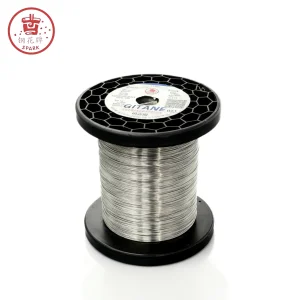
Wholesale High-Temperature HRE 1350°C Electric Heating Wire
View Product Details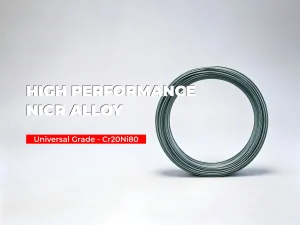
China Cr20Ni80 (80/20 NiCr) High-Temperature Resistance Heating Wire
View Product Details
China 0Cr25Al5 High-Performance Electric Resistance Heating Wire
View Product Details
High-Temperature Cr30Ni70 Nickel Chromium Durable Alloy Wire
View Product Details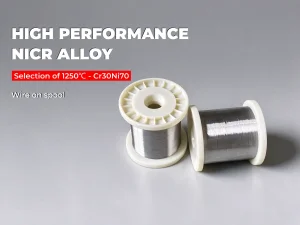
Industrial Grade Ni70Cr30 Nickel Chromium Resistance Heating Wire
View Product Details
Gitane Energy-Efficient Customized Industrial Furnace Systems
View Product Details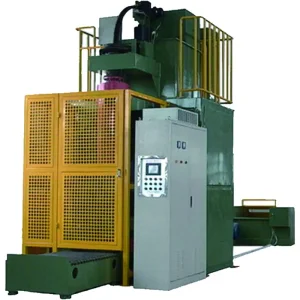
China High-Resistivity Chromel A Alloy Precision Foil Strip
View Product Details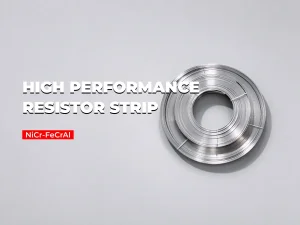
High-Temperature FeCrAl & NiCr Industrial Resistance Strips & Ribbons
View Product DetailsFrequently Asked Questions (FAQ) — Engineering & Procurement Guide
Detailed technical solutions for utility engineers, transformer manufacturers, and procurement teams in the Philippines.
Accelerate Your Grid & Thermal Systems Efficiency in the Philippines
Partner directly with China's premier metallurgical manufacturer. Contact our engineering team today for technical datasheets, core design support, and direct factory wholesale pricing.