
Featured High-Temperature Alloys & Elements
Engineered specifically for continuous industrial duty, high oxidation resistance, and reliable electric thermal output across European heating equipment standards.
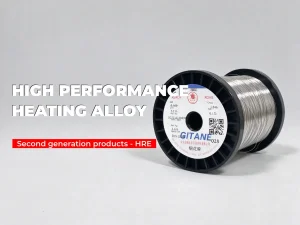
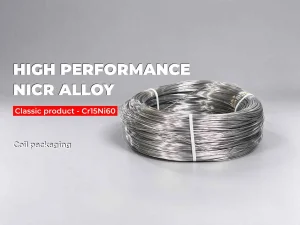
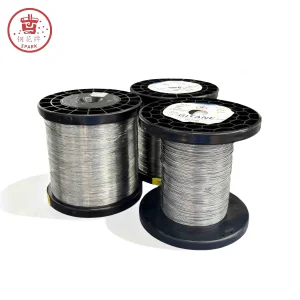

The Barcelona Industrial Ecosystem: Demand for High-Performance Thermal Alloys
As Catalonia solidifies its position as Southern Europe's primary advanced manufacturing and automotive technology hub, direct sourcing of precision Nickel-Chromium (NiCr) heating wire has become a critical operational requirement.
Automotive & EV Battery Production
Centered around the Martorell industrial cluster and Zona Franca, heat-treatment processes for drivetrain gearing, aluminum housing annealing, and battery cell curing demand zero-drift NiCr resistance elements capable of uniform thermal distribution up to 1200°C.
Plastics, Polymer & Packaging
Catalonia's dense concentration of plastics processing plants in Vallès Oriental and Western Barcelona relies heavily on Nickel-Chromium strip and wire for hot runner nozzles, blow-molding dies, and automated seal-bar units where hot ductility is mandatory.
Commercial Culinary Equipment
Barcelona's world-leading gastronomy sector fuels major OEMs producing commercial convection ovens, continuous industrial fryers, and specialized thermal processing systems requiring food-safe, corrosion-resistant NiCr alloys.
Zona Franca & Port of Barcelona Logistics Hub
Direct maritime import channels through the Port of Barcelona ensure seamless customs clearance for heavy spools, bulk coils, and direct-to-factory freight dispatch across Catalonia.
Vallès Industrial Arc (Granollers, Sabadell, Terrassa)
Supplying Tier-1 and Tier-2 machine builders requiring localized technical support, custom alloy slitting, and fast factory quotes compliant with Spanish industrial standards.
Comprehensive Technical Analysis: NiCr vs. FeCrAl in Heavy Thermal Duty
Selecting the optimal resistance heating alloy requires an understanding of oxidation kinetics, high-temperature creep strength, structural phase stability, and localized atmospheric compatibility.
Nickel-Chromium alloys—most notably Cr20Ni80 (Ni80Cr20) and Cr15Ni60 (Ni60Cr15)—are globally recognized as the golden standard for applications requiring superior mechanical strength in the hot state, high ductility after prolonged heating, and resistance to frequent thermal cycling. Unlike Iron-Chromium-Aluminium (FeCrAl) alloys which form an $\alpha\text{-}Al_2O_3$ (alumina) scale, NiCr alloys form a protective, tightly adherent scale predominantly composed of Chromium Oxide ($Cr_2O_3$) and Nickel-Chromium Spinel ($NiCr_2O_4$).
Oxidation Mechanism & Scale Adhesion
The addition of rare-earth elements (such as Cerium and Yttrium) in SPARK NiCr wire improves the oxide layer's mechanical anchoring ("pegging" effect) into the metal substrate. This prevents scale spallation during intense heating-cooling cycles, extending element service life by up to 40% compared to standard commercial NiCr grades under cyclic shock.
| Alloy Grade | Nominal Chemical Composition (%) | Max Service Temp (°C) | Resistivity @ 20°C ($\mu\Omega\cdot m$) | Density ($g/cm^3$) | Hot Ductility & Thermal Cycling |
|---|---|---|---|---|---|
| Cr20Ni80 (Ni80) | 80 Ni, 20 Cr, Bal. Fe/Mn/Si | 1200 °C | 1.09 ± 0.05 | 8.40 | Superior (Stays ductile after long-term exposure) |
| Cr30Ni70 (Ni70) | 70 Ni, 30 Cr, Bal. Fe/Mn/Si | 1250 °C | 1.18 ± 0.05 | 8.10 | Excellent (Highest oxidation performance in NiCr class) |
| Cr15Ni60 (Ni60) | 60 Ni, 15 Cr, 25 Fe | 1150 °C | 1.12 ± 0.05 | 8.20 | High (Economical for medium-temperature equipment) |
| FeCrAl (0Cr25Al5) | 25 Cr, 5 Al, Bal. Fe | 1250 °C | 1.42 ± 0.07 | 7.10 | Moderate (Becomes embrittled post-heating above 900°C) |
| FeCrAl (SGHT PM) | 25 Cr, 6 Al + Rare Earth (Powder Met) | 1425 °C | 1.45 ± 0.07 | 7.10 | High Creep Resistance (Engineered for ceramic kilns) |
For industrial furnace builders in Barcelona, the choice between NiCr and FeCrAl frequently hinges on mechanical handling requirements. While FeCrAl alloys offer a higher maximum service temperature (up to 1425°C for powder-metallurgy SGHT grades) and lower material density, NiCr wire remains irreplaceable in applications where heating elements must be periodically uncoiled, repaired, re-formed, or subjected to intense mechanical vibration without fracturing.
Global Procurement Dynamics & Direct Factory Value
Optimizing Total Cost of Ownership (TCO) for Southern European OEMs through scalable factory capacity, strict metallurgical tolerances, and rapid export dispatch.
Tight Electrical Tolerances
Resistance variations within ±3% per coil ensure uniform power density and prevent localized hotspots, protecting sensitive furnace control electronics in modern automated lines.
Custom Delivery Formats
Supplied as fine wire (0.05mm), heavy industrial round wire (up to 10mm), cold-rolled strip/ribbon, or pre-wound spiral elements matched to customer CAD specifications.
Direct OEM Cost Advantage
Eliminate intermediary distributor margins in Europe by procuring directly from primary melt source with complete EN 10204 3.1 Mill Test Certificates.
Macro Industrial Solutions for Greater Barcelona & Catalonia
Tailored alloy compositions and physical geometries designed to address specific industrial thermal requirements across regional manufacturing zones.
Automotive Heat Treating & Carburizing
Primary Challenge: Resistance element degradation inside controlled-atmosphere furnace chambers containing carbon-bearing gas mixtures.
SPARK Solution: Cr20Ni80 Nichrome wire provides superior resistance to "green rot" (carburization followed by oxidation) in endothermic atmospheres compared to standard irons, maintaining integrity in Martorell gear-hardening operations.
Chemical & Pharmaceutical Process Heaters
Primary Challenge: Chemical vapor exposure and stringent thermal uniformity in Tarragona and Baix Llobregat pharma plants.
SPARK Solution: High-density NiCr ribbon engineered with tightly controlled electrical resistivity for explosion-proof immersion heaters and high-precision fluid heat exchangers.
High-Precision Glass & Ceramic Kilns
Primary Challenge: Extreme thermal demands reaching up to 1350°C - 1400°C in technical ceramic sintering.
SPARK Solution: High-temperature HRE and SGHYZ FeCrAl grades featuring enhanced rare-earth oxide dispersion, providing exceptional structural rigidity and oxidation performance for kiln builders.
Quality Assurance, Testing Protocols & European Standards Compliance
Every shipment bound for the EU market undergoes stringent metallurgical verification to ensure full compliance with international standards including ISO 9001, RoHS, REACH, and GB/T 1234-2012 / ASTM B344 specifications.
Quality reliability starts at the vacuum induction melting (VIM) stage. By controlling trace impurity elements (such as sulfur, phosphorus, and low-melting-point metals) to ppm-level thresholds, SPARK NiCr alloy wire maintains exceptional grain structure stability over long operational lifespans.
XRF Spectro-Analysis & Traceability
100% heat verification via X-ray fluorescence spectrometry ensures exact elemental ratios (Ni, Cr, Fe, Al, Si, Mn) prior to wire drawing and annealing.
Accelerated Life Testing (ASTM B78)
Regular Bash & Harsch cycle testing validates scale adhesion and thermal endurance under severe cyclic load conditions before product release.
EN 10204 3.1 Certification
Full mill test certificates documenting wire diameter tolerances, resistivity values, tensile strength, elongation %, and heat number provided with all export orders.
Technological Roadmap & Green Industrial Transition
Supporting Catalonia's target of 100% renewable industrial electrification through next-generation high-efficiency resistance heating alloys.
Hydrogen Atmosphere Compatibility
As industrial heat treatment shifts from natural gas combustion to green hydrogen ($H_2$) atmospheres, standard heating elements face accelerated degradation from hydrogen embrittlement and steam oxidation. SPARK's R&D division has developed specialized micro-alloyed NiCr and powder-metallurgy FeCrAl grades engineered specifically to withstand pure $H_2$ and high-moisture reducing environments up to 1350°C.
Energy Density & Thin-Ribbon Innovation
By optimizing cold-rolling processes to achieve continuous micro-ribbon geometries down to ultra-thin gauges, SPARK enables equipment manufacturers to increase surface-area-to-volume ratios, enhancing heat transfer efficiency by up to 18%.
Oxide Dispersion Strengthened (ODS) Alloys
Integrating sub-micron yttria particles via powder metallurgy creates a pinning force on grain boundaries, dramatically reducing high-temperature creep sag in suspended horizontal industrial furnace elements.
Extended Resistance Heating Product Portfolio
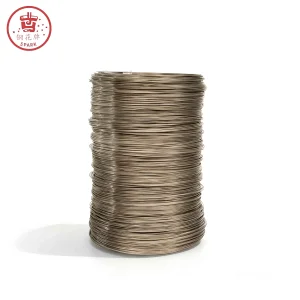
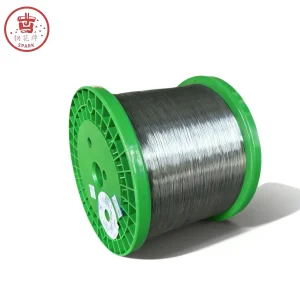
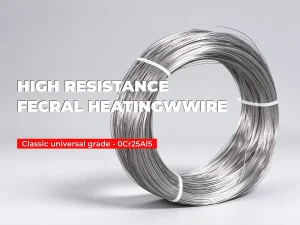
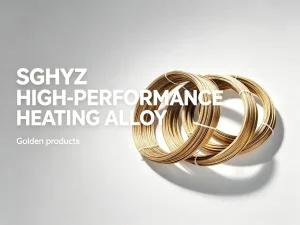
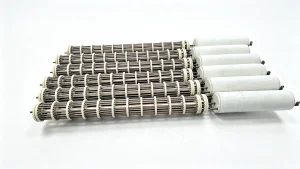
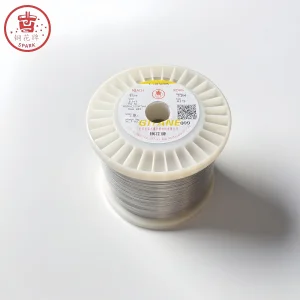
Explore our complete range of round wires, ribbons, ceramic cores, and structural alloy tubes available for factory-direct dispatch to Barcelona and European ports.


Frequently Asked Questions for Industrial Buyers in Barcelona
Detailed answers to technical, commercial, and logistical inquiries regarding direct factory purchasing of NiCr and FeCrAl heating alloys.
Why is Cr20Ni80 preferred over FeCrAl for plastics extrusion in Catalonia?
What is the estimated lead time and shipping pathway to Barcelona?
How do I determine the correct surface load (W/cm²) for my NiCr furnace elements?
Do SPARK alloys comply with EU RoHS and REACH regulations?
Can SPARK produce pre-oxidized heating wire for immediate installation?
Ready to Source Direct from a Certified Heating Alloy Factory?
Contact our engineering sales team today for custom quotes, technical datasheets, and sample spools delivered directly to your plant in Barcelona or anywhere in Southern Europe.
Send Inquiry Now