
Featured Industrial Resistance Alloys for Russian Projects
High-purity Nickel-Chromium (NiCr) and Iron-Chromium-Aluminum (FeCrAl) wires precision-manufactured for heavy industrial furnaces and thermal application resilience.



Executive Whitepaper: Strategic Role of NiCr & FeCrAl Wire in Russian Industry
Analysis of the industrial heating demand, import substitution shifts, and metallurgical standards across Russian industrial regions.
The Russian industrial sector is undergoing a profound structural transformation. As heavy machinery manufacturing, Ural metallurgical combines, Siberian oil and natural gas processing plants, and defense-industrial complexes accelerate production, the demand for high-reliability, high-temperature electric heating alloys has scaled exponentially. Electric resistance heating alloys—specifically Nickel-Chromium (NiCr) and Iron-Chromium-Aluminum (FeCrAl)—serve as the indispensable thermal backbone for industrial furnaces, heat treatment kilns, oil pipeline electric heat tracing, and specialized thermal processing lines.
Historically, Russian industrial buyers relied heavily on European resistance wire brands (such as Kanthal or Sandvik) or domestic Russian GOST-spec alloys (like X20H80, X15H60, and X23J5T). However, recent geopolitical realignments and trade supply chain disruptions have forced Russian enterprise procurement managers, furnace builders, and metallurgical engineers to seek direct, high-capacity manufacturing partners in China.
Beijing Shougang Gitane New Materials Co., Ltd. (SPARK brand), as a flagship subsidiary under the state-owned Shougang Group, brings over 60 years of deep metallurgical research and advanced alloy wire drawing. Shougang Gitane provides Russian enterprises with seamless structural equivalence to GOST standard alloys, superior chemical homogeneity, extended service life under thermal cycling, and highly competitive pricing direct from Chinese state-of-the-art production lines.
Technical Specification & GOST Equivalent Mapping
Detailed physical, electrical, and thermal properties comparing NiCr and FeCrAl resistance heating wire alloys for engineering reference.
Selecting the correct resistance alloy requires balancing maximum operating temperature, thermal cycling frequency, atmosphere chemistry (oxidizing, reducing, carburizing, or vacuum), and electrical resistivity stability over time. Below is a comprehensive cross-reference table mapping Chinese standard grades (GB/T 1234-2012), SPARK proprietary high-temp alloys, and Russian GOST standards:
| Alloy Grade (SPARK / GB) | Russian GOST Equivalent | Nominal Chemical Composition | Max Temp (°C) | Resistivity at 20°C (μΩ·m) | Density (g/cm³) | Primary Industrial Application |
|---|---|---|---|---|---|---|
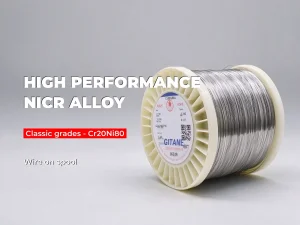
| Cr20Ni80 (Nichrome 80/20) | GOST X20H80 / X20H80-H | 20% Cr, 80% Ni, Fe ≤ 1.5% | 1200°C | 1.09 ± 0.05 | 8.40 | Industrial heat treatment, precision resistors, appliance heating |
| Cr15Ni60 (Nichrome 60/15) | GOST X15H60 / X15H60-H | 15% Cr, 60% Ni, Bal. Fe | 1150°C | 1.11 ± 0.05 | 8.20 | Medium-temp industrial furnaces, oil tracing cables, radiant tubes |
| Cr20Ni40 (Nichrome 40/20) | GOST X20H40 | 20% Cr, 40% Ni, Bal. Fe | 1100°C | 1.04 ± 0.05 | 7.90 | Commercial heaters, defrosting elements, low-cost industrial heating |
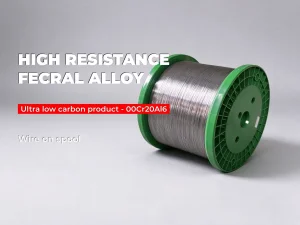
| 0Cr25Al5 (FeCrAl 135) | GOST X23J5T / X27J5T | 25% Cr, 5% Al, Bal. Fe | 1250°C | 1.42 ± 0.07 | 7.10 | High-temp annealing furnaces, ceramic kilns, continuous heaters |
| 0Cr21Al6Nb (FeCrAl + Nb) | GOST X23J5T modified | 21% Cr, 6% Al, Nb micro-alloyed | 1350°C | 1.45 ± 0.07 | 7.10 | Sintering furnaces, powder metallurgy, high-stress radiant spirals |
| SPARK HRE Grade | High-Purity Premium FeCrAl | Rare Earth (RE) Doped FeCrAl | 1350°C | 1.45 ± 0.05 | 7.10 | Heavy industrial furnaces, continuous ceramic kilns, long-life elements |
| SPARK SGHYZ Grade | Ultra-High Temp Alloy | Refined RE + Controlled Grain Structure | 1400°C | 1.48 ± 0.05 | 7.00 | High-temperature ceramic sintering, crystal growth furnaces |
| SPARK SGHT (Powder Metallurgy) | Advanced PM Alloy | Dispersion Hardened FeCrAl | 1425°C | 1.50 ± 0.05 | 7.00 | Semiconductor, defense research, extreme-creep resistance kilns |
NiCr Alloys: Key Advantages for Russian Buyers
Nickel-Chromium alloys (Cr20Ni80, Cr15Ni60) maintain superior hot mechanical strength and ductility even after hundreds of operating hours. Unlike FeCrAl wire, NiCr does not become brittle when cooled down to ambient room temperatures (or cold Siberian winter shutdowns).
- Non-Magnetic Behavior: Fully austenitic matrix, non-magnetic in fully annealed state.
- Hot Ductility: Easily reshaped or repaired after years of high-temperature service.
- Adherent Chromium Oxide Layer: Excellent protection against cycling thermal shock and nitrogen-containing atmospheres.
- Ideal for Rapid On/Off Cycling: Resistivity remains steady with minimal thermal drift.
FeCrAl Alloys: High-Efficiency Thermal Advantage
Iron-Chromium-Aluminum alloys (0Cr25Al5, HRE, SGHYZ) feature significantly higher electrical resistivity (up to 1.50 μΩ·m) and lower material density (7.10 g/cm³) compared to NiCr (8.40 g/cm³).
- Higher Max Operating Temp: Reaches continuous working temperatures up to 1425°C.
- Material Weight Savings: Lower density means approximately 15-20% less weight required per heating element meter.
- Self-Healing $Al_2O_3$ Protective Film: Dense alpha-alumina oxide scale prevents further oxidation and resists sulfurous gas attack.
- Substantial Cost Efficiency: Eliminates expensive Nickel raw material content.
China Factory Manufacturing Efficiency & Metallurgy Control
How Beijing Shougang Gitane combines state-level steelmaking infrastructure with high-precision wire drawing technology.
The manufacturing competitiveness of Chinese resistance wire factories is rooted in deep vertical integration, scale efficiency, and continuous technological upgrading. As part of the Shougang Group—one of China's largest iron and steel conglomerates—Shougang Gitane operates an integrated supply chain starting from high-purity raw material melting to final coil packing.
Vacuum Induction Refining
Utilizing VOD/AOD vacuum induction melting and secondary refining to minimize trace impurities (C ≤ 0.02%, S ≤ 0.005%, P ≤ 0.015%), ensuring exceptionally clean grain boundaries and consistent electrical resistance per meter.
Precision Wire Drawing
Multi-stage diamond die continuous wire drawing machines allow ultra-fine tolerances (diameter control down to ±0.005mm for fine wires and ±0.02mm for industrial heavy wire coils).
Controlled Atmosphere Annealing
Continuous bright annealing under hydrogen shielding gas yields a pristine, bright, oxide-free surface ready for winding or immediate element fabrication.
This integrated manufacturing setup delivers significant cost benefits to Russian enterprise procurement. Compared to European imports, Chinese factory direct supply offers 30% to 45% cost savings without compromising metallurgical purity, coil dimensional stability, or maximum continuous service life.
Localized Application Scenarios in Russia's Key Industrial Hubs
Engineered thermal solutions designed to withstand extreme cold environments, continuous operation, and heavy-duty industrial loading.
1. Ural Heavy Machinery & Metallurgy Plants (Yekaterinburg, Chelyabinsk)
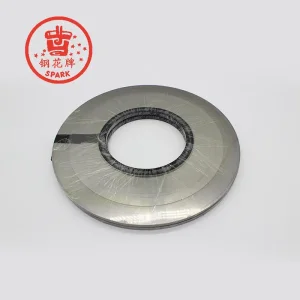
Large-scale gas-carburizing, quenching, and tempering furnaces require resistance elements that resist carbon deposition and mechanical vibration. SPARK Cr20Ni80 strip and 0Cr25Al5 heavy wire coils are widely integrated into car-bottom heat treatment furnaces, maintaining dimensional stability under heavy thermal loads.
2. Arctic Siberian Oil & Gas Pipeline Heat Tracing (Surgut, Tyumen)
Extreme Siberian winter temperatures (dropping below -50°C) demand low-temperature flexible resistance wire for oil and gas fluid transport line heating. Cr15Ni60 and Cr20Ni40 fine wire provide dependable constant-wattage heating inside mineral-insulated (MI) heat tracing cables, preventing crude oil wax precipitation.
3. Central Russia Ceramic & Glass Sintering Kilns (Moscow, Vladimir)
Continuous tunnel kilns for high-voltage ceramic insulators and glass tempering require high-temperature resistance wire rated above 1300°C. SPARK HRE and 0Cr21Al6Nb alloys offer excellent sag resistance and long-term oxidation protection under continuous 24/7 kiln operation.
4. Precision Laboratory & CCD Spectrometer Systems
In metallurgical analysis laboratories, thermal stability is critical for exact chemical composition diagnostics. Our companion high-accuracy measurement solutions ensure complete quality feedback during high-temp heating alloy testing.
Pricing Drivers & Commercial Pricelist Framework for Russia
Transparent pricing metrics, volume tier discounts, and supply chain logistics for shipments to Moscow, St. Petersburg, Vladivostok, and Novosibirsk.
Pricing for industrial Nickel-Chromium and FeCrAl wire is governed by global raw metal spot markets (specifically the London Metal Exchange - LME Nickel cash prices), alloy purity tier, wire gauge diameter, and surface finish processing.
Key Commercial Pricelist Drivers:
- LME Nickel Spot Price Correlation: NiCr alloys (Cr20Ni80, Cr15Ni60) are directly indexed to Nickel commodity pricing. FeCrAl alloys (0Cr25Al5, 0Cr23Al5) are immune to Nickel price volatility, providing a cost-stable option for large projects.
- Wire Gauge & Drawing Pass Count: Heavy industrial wire (Ø 2.0mm – 8.0mm) carries lower manufacturing surcharge per kg, whereas fine resistance wire (Ø 0.05mm – 0.50mm) involves multiple drawing and annealing passes.
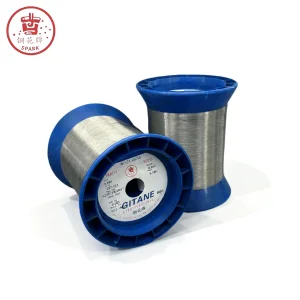
- Packaging & Spooling Options: Options include plastic spools (DIN160, DIN200, DIN250) for automated winding, or large-capacity coils (25kg - 100kg per coil) wrapped in waterproof plastic film and sea/rail-worthy wooden crates.
- Logistics Routes to Russia: Direct rail container transport via Manzhouli/Zabaikalsk, Suifenhe/Grodekovo, or maritime shipping to Vladivostok port followed by Trans-Siberian Railway transport.
Direct Factory Guarantee & Custom Quotations
All SPARK resistance alloy products shipped to the Russian market are issued with official Mill Test Certificates (MTC) detailing exact chemical heat analysis, electrical resistance per meter at 20°C, tensile strength, and elongation rate according to GB/T 1234-2012 and GOST standards.
Future Trends: Industrial Decarbonization & Next-Gen Resistance Alloys
The shift from gas-fired industrial heating to zero-emission electric furnace power in global and Russian manufacturing.
Across global manufacturing hubs, the transition from fossil fuel gas burners to clean electric resistance heating is accelerating rapidly. Electric heating provides up to 98% thermal efficiency directly converted at the element point, zero direct flue gas emissions, and micro-degree temperature accuracy required for advanced heat-treating of alloys and ceramics.
Beijing Shougang Gitane is pioneering next-generation powder metallurgy alloys (such as SGHT) that integrate rare-earth dispersion strengthening (Yttrium, Zirconium, Niobium). These advanced elements extend continuous furnace lifespan by over 40% under aggressive high-temperature oxidation, helping Russian and international furnace builders construct the next era of high-efficiency, zero-carbon thermal equipment.
Frequently Asked Questions (FAQ) for Russian Enterprise Buyers
Technical and procurement answers regarding grade selection, GOST compliance, delivery times, and pricing factors.
Complete High-Temperature Resistance Alloys Catalog
Explore our full line of Nichrome, FeCrAl, Tempering Furnace Wires, and Precision Spectrometer Alloys supplied directly from our Beijing production site.



Partner with China's Premier Resistance Alloy Manufacturer
Get direct factory pricing, mill test certificates, custom spooling, and fast rail/sea logistics support tailored for Russian industrial enterprises.
Send Inquiry Now