
High-Performance Industrial Furnaces & Heating Elements
Premium thermal processing systems and engineered heating elements tailored for US aerospace, automotive, semiconductor, and heavy metallurgy facilities.



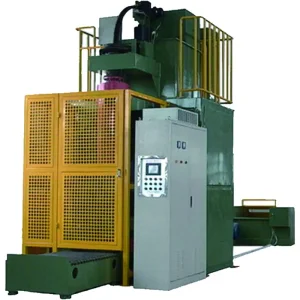
US Industrial Thermal Processing Market & Re-Industrialization
The United States manufacturing sector is currently experiencing a monumental structural shift. Driven by legislation such as the CHIPS and Science Act, the Inflation Reduction Act (IRA), and national supply chain resilience initiatives, heavy manufacturing, semiconductor fabrication, and clean energy production are returning to domestic soil at an unprecedented rate. Central to this industrial renaissance is the requirement for high-efficiency, ultra-reliable industrial furnace systems and advanced high-temperature electrothermal alloys.
Modern US manufacturing facilities—spanning from the automotive and EV battery corridors in the Midwest to the aerospace hubs in the Pacific Northwest and the Sun Belt—are aggressively transitioning away from fossil-fueled combustion heating toward zero-emission, precision electric furnace architectures. Electric industrial furnaces deliver key operational parameters that legacy gas systems cannot achieve: absolute atmosphere purity, digital micro-zone temperature uniformity within ±2°C, and instant integration with automated SCADA networks.
Regional Industrial Demand Breakdown across North America
Industrial furnace requirements vary significantly across American manufacturing corridors, requiring custom thermal engineering rather than off-the-shelf equipment:
- Midwest Industrial Belt (Ohio, Michigan, Indiana): Heavy demand for continuous mesh-belt hardening furnaces, carburizing furnace lines, and atmosphere tempering systems for automotive gears, drivetrain components, and structural steel press hardening.
- Southeast Advanced Manufacturing (Texas, Georgia, North Carolina): Rapid expansion of EV lithium-ion battery cathode calcination kilns, synthetic graphite anode graphitization furnaces operating above 1300°C, and structural aluminum solution heat treatment systems.
- Aerospace & Defense Corridors (Washington, California, Connecticut): High-vacuum sintering furnaces, hot isostatic pressing (HIP) heat zones, and batch box furnaces operating under inert gas or hydrogen to satisfy Nadcap and AMS 2750G Class 1/Class 2 standards.
- Semiconductor Hubs (Arizona, Oregon, Texas): Precision quartz tube horizontal/vertical diffusion furnaces, fast thermal processing (RTP) tools requiring ultra-pure electrothermal heating elements free of iron or heavy metal contamination.
High-Temperature Technology Roadmap & Heating Alloys
A comprehensive engineering comparison of resistance heating materials powering modern North American industrial furnaces.
FeCrAl Alloys (SGHT & SGHYZ)
Powder-metallurgy Iron-Chromium-Aluminium alloys engineered for operating temperatures up to 1425°C (2597°F). Forms a self-healing $\alpha\text{-Al}_2\text{O}_3$ (alumina) surface layer providing extreme oxidation protection, higher resistivity, and 15% lower density than nickel-based wire.
NiCr Alloys (Cr20Ni80 & Cr30Ni70)
Premium Nickel-Chromium resistance wires rated up to 1250°C (2282°F). Exceptional hot mechanical strength, superior creep ductility after extended heating cycles, and outstanding stability in reducing, carburizing, or nitrogen-rich furnace atmospheres.
Industry 4.0 Thermal Controls
Integrated furnace control panels featuring SCR phase-angle thyristor power controllers, multi-zone PID controllers, real-time SCADA telemetry, and predictive element-degradation algorithms matching US industrial IoT architectures.
| Alloy Grade | Alloy Composition Type | Max Operating Temp (°C / °F) | Resistivity at 20°C ($\mu\Omega\cdot\text{m}$) | Density ($\text{g/cm}^3$) | Primary Industrial Applications in US |
|---|---|---|---|---|---|
| SPARK SGHT | FeCrAl (Powder Metallurgy) | 1425°C / 2597°F | 1.45 | 7.10 | Advanced ceramic sintering, semiconductor crystal growth, powder metallurgy kilns |
| SPARK SGHYZ | FeCrAl + Rare Earth (RE) | 1400°C / 2552°F | 1.42 | 7.15 | Continuous ceramic kilns, high-temp box furnaces, heavy forging pre-heaters |
| 0Cr25Al5 | FeCrAl Standard Grade | 1250°C / 2282°F | 1.42 | 7.10 | Industrial heat treating furnaces, radiant heating tubes, heavy appliance elements |
| SPARK Cr20Ni80 | 80/20 Nickel-Chromium | 1200°C / 2192°F | 1.09 | 8.40 | Atmosphere heat treatment furnaces, laboratory muffles, high-cycling industrial heaters |
| SPARK Cr30Ni70 | 70/30 Nickel-Chromium | 1250°C / 2282°F | 1.18 | 8.10 | Carburizing & nitriding furnaces, industrial air heaters, salt bath crucibles |
US Industry-Specific Furnace Solutions & Applications
Customized high-temperature heating architectures developed for rigorous North American industrial environments.
1. Aerospace & Defense Solutions (AMS 2750G Pyrometry Standards)
Aerospace manufacturing in North America demands absolute pyrometry compliance. Industrial furnace systems supplied to defense prime contractors and aerospace OEMs must satisfy strict Class 1 (±3°C / ±5°F) or Class 2 (±6°C / ±10°F) temperature uniformity. Our engineered electric box, pit, and gantry furnaces feature multi-zone PID temperature controllers combined with calibrated N-type or S-type thermocouple arrays. Utilizing SPARK FeCrAl SGHT heating elements eliminates element sag and localized hot spots, ensuring uniform microstructural phase transition during titanium annealing, nickel superalloy solution treatment, and aluminum precipitation hardening.
2. Automotive & EV Battery Production (Continuous & Batch Systems)
The gigafactory boom across North America requires continuous rotary kilns and roller hearth furnaces for lithium-ion battery material synthesis. Battery cathode materials (NMC, LFP) undergo continuous calcination under controlled oxidizing atmospheres at 800°C–1050°C. For these applications, high-durability SPARK 0Cr25Al5 ribbon coils and radiant heating tubes prevent atmospheric contamination and withstand chemical exhaust gases. Furthermore, automotive component hardening lines benefit from our heavy-duty mesh belt furnaces designed for high throughput carburizing, carbonitriding, and press-hardening steel (PHS) stampings.
3. Heavy Metallurgy, Forging & Powder Metallurgy
Foundries and forge shops in states like Pennsylvania, Illinois, and Indiana require rugged batch furnaces capable of heating heavy forged ingots, die castings, and structural steel sections up to 1300°C. Our heavy-element box furnaces utilize thick-gauge wire coils mounted on ceramic tubing or embedded in high-purity alumina fiber modules, offering outstanding resistance to thermal shock and mechanical vibration.
China Manufacturing Strengths & Supply Chain Resilience
As a key subsidiary of the state-owned Shougang Group, Beijing Shougang Gitane New Materials Co., Ltd. represents over 60 years of metallurgical excellence. Operating from an 88,000 m² state-of-the-art industrial complex in Beijing, Gitane integrates the entire manufacturing chain—from primary vacuum induction melting (VIM) and electroslag remelting (ESR) to hot rolling, cold wire drawing, and automated coil spiraling.
This fully integrated Industry 4.0 manufacturing infrastructure offers North American buyers distinct strategic advantages:
- Complete Batch Traceability: Every batch of SPARK heating wire, strip, or element is tracked from molten ingot chemistry to final spooling, backed by comprehensive ISO 9001 quality management and GB/T 1234-2012 testing compliance.
- Unmatched Cost Efficiency: Direct vertical integration eliminates middleman markups, enabling US furnace builders and maintenance managers to secure premium-grade thermal alloy elements at 30% to 45% lower total cost than European or traditional domestic suppliers.
- Massive Production Capacity: With over 39,000 m² of modern workshops and 500+ skilled staff (over 30% dedicated technical engineers), Gitane maintains deep raw material stocks (Nickel, Chromium, Aluminium, Yttrium) to protect global clients from supply chain disruptions and price volatility.
- Rapid Logistics & US Buffer Stocking: Streamlined sea and air freight logistics ensure quick turnaround times for custom furnace element replacement kits, emergency heating wire spools, and turnkey industrial furnace deliveries across all major US ports.
US Safety Standards, Compliance & Local Technical Support
Ensuring full alignment with North American safety codes, electrical guidelines, and operational standards.
NFPA 86 Safety Compliance
Engineered to comply with National Fire Protection Association (NFPA) 86 standards for industrial ovens and furnaces, incorporating safety shutoff valves, explosion relief ventilation, purge timers, and dual-channel overtemperature protection.
UL 508A Electrical Standards
Control panels integrated into our custom furnace builds utilize UL-listed electrical components (Schneider, Siemens, Honeywell) meeting UL 508A and CSA C22.2 requirements for seamless inspection approval by US Authorities Having Jurisdiction (AHJ).
Commissioning & Spare Parts
Comprehensive US customer assistance: On-site supervision during commissioning, field SAT (Site Acceptance Testing), SAT/TUS pyrometry calibration support, and fast delivery of replacement heating coils, ceramic supports, and thermocouples.
Total Cost of Ownership (TCO) & RFQ Evaluation Guide
A structured framework for US procurement directors, furnace engineers, and plant managers evaluating industrial furnace quotations.
Evaluating Industrial Furnace Quotes: Beyond the Initial Purchase Price
When requesting quotes for industrial furnaces or element replacements in North America, focusing solely on CAPEX (Capital Expenditure) often leads to higher long-term operating costs. A rigorous Total Cost of Ownership (TCO) analysis evaluates three critical lifecycle pillars:
- Energy Efficiency & Thermal Insulation: Energy costs represent up to 70% of a high-temperature industrial furnace’s total lifetime expense. Modern SPARK furnaces utilize micro-porous ceramic fiber insulation modules combined with high-resistivity FeCrAl heating elements. This combination reduces thermal mass, accelerates heat-up cycles by up to 40%, and cuts standby kilowatt-hour consumption by 25% compared to legacy refractory brick linings.
- Element Life & Maintenance Downtime: Unplanned furnace shutdowns can halt entire production lines, costing tens of thousands of dollars per hour. Choosing high-purity rare-earth modified alloys such as SPARK SGHYZ or powder-metallurgy SGHT extends element life by 2.5× to 4× in continuous high-temperature environments (1200°C–1400°C), drastically lowering maintenance labor and spare part consumption.
- Thermal Uniformity & Yield Rate: Superior temperature zone control ensures consistent hardness, grain size, and mechanical strength in treated metal parts. High process repeatability eliminates scrap rates and customer warranty claims in high-precision sectors such as aerospace fasteners, medical devices, and automotive gears.
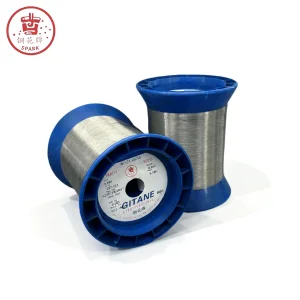
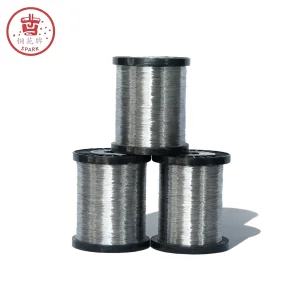
Complete Heating Alloys & Furnace Component Catalog
Explore our comprehensive range of resistance heating wires, strips, elements, and specialized furnace accessories available for North American export.






Frequently Asked Questions (FAQ) for US Buyers
Technical guidance on industrial furnace selection, electrothermal alloys, and custom North American procurement.
What criteria determine whether I should select FeCrAl or NiCr heating elements for my industrial furnace?
Selection depends primarily on operating temperature, furnace atmosphere, and mechanical duty. FeCrAl alloys (such as 0Cr25Al5, SPARK SGHYZ, and SGHT) reach higher maximum continuous operating temperatures up to 1425°C (2597°F), provide higher electrical resistivity, and feature a lower density—yielding up to 15% material weight savings. They excel in clean oxidizing atmospheres, air, and neutral environments. NiCr alloys (such as Cr20Ni80 and Cr30Ni70), rated up to 1250°C (2282°F), provide superior hot mechanical strength, resist sagging, retain ductility after prolonged use, and perform exceptionally well under rapid thermal cycling or carbon-rich carburizing atmospheres.
How do SPARK industrial furnaces comply with North American electrical and safety codes?
All customized industrial furnaces engineered for US destination are built to comply with NFPA 86 (Standard for Ovens and Furnaces), incorporating certified explosion relief systems, automatic gas safety shut-off valves, and redundant limit controllers. Control panels are designed following UL 508A and CSA C22.2 guidelines, utilizing premier UL-listed components suitable for 208V, 240V, 480V, or 600V 3-Phase 60Hz US electrical infrastructures.
Can Shougang Gitane manufacture custom pre-wound heating element coils to match existing US OEM furnace drawings?
Yes. Shougang Gitane specializes in custom fabrication of spiral coils, rod-over-bend (ROB) elements, meander-ribbon elements, and ceramic-supported heating rack assemblies. Customers simply provide engineering drawings, wire gauge dimensions, coil inner/outer diameters, stretch ratios, and wattage ratings. Our engineering team verifies surface load parameters ($\text{W/cm}^2$) prior to automated CNC coiling.
What is the typical lead time for custom industrial furnace quotes and ocean/air freight delivery to the United States?
Formal technical proposals and pricing quotes are typically issued within 24 to 48 hours following RFQ submission. Standard resistance wire spools and stock element sizes ship via express air freight within 5–7 business days. Custom engineered industrial furnaces require 4 to 8 weeks for manufacturing, testing, and factory acceptance testing (FAT), followed by ocean shipping (approx. 18–25 days to West Coast ports or 28–35 days to East Coast ports).
What mill test certification and documentation accompany SPARK heating alloy shipments?
Every shipment is accompanied by a certified 3.1 Mill Test Certificate (MTC) detailing exact chemical ladle analysis, room temperature tensile strength, elongation percentage, 20°C electrical resistivity, and dimensional tolerance verification in accordance with ISO 9001 and GB/T 1234-2012 quality control protocols.
Accelerate Your US Thermal Processing Operations
Partner with Beijing Shougang Gitane New Materials Co., Ltd. for direct mill pricing, certified electrothermal alloys, and custom engineered industrial furnace solutions.
Send Inquiry Now