
Featured SPARK High-Temperature Alloys for Chilean Industry
Premium electrothermal resistance wires engineered for continuous operation up to 1425°C in extreme environments.
Macroeconomic Transformation: Industrial Heat Decarbonization in Chile
Chile stands as a global industrial powerhouse in Latin America, driven by its massive copper processing capacity (representing nearly 28% of world supply) and the rapid expansion of lithium brine refining within the Atacama Desert region (Antofagasta, Atacama, and Coquimbo). As the Republic of Chile advances its ambitious National Energy Strategy (Estrategia Nacional de Energía) and National Green Hydrogen Strategy to achieve net-zero carbon emissions by 2050, Chilean industrial sectors face an urgent mandate to transition away from heavy fuel oils (HFO) and liquefied petroleum gas (LPG) toward zero-carbon high-efficiency electrical heating technology.
This structural transition requires industrial electric resistance heating alloys capable of enduring extreme thermal stress, highly corrosive ambient conditions (sulfur dioxide fumes from copper smelting and saline atmospheric dust in lithium salt flats), and high-altitude operational parameters across the Andes (often exceeding 2,500 to 4,500 meters above sea level). As China’s premier electric heating alloy manufacturing group, Beijing Shougang Gitane New Materials Co., Ltd. (SPARK Brand) delivers metallurgical solutions tailored specifically to the procurement standards and operational realities of Chilean industrial enterprises, EPC contractors, and OEM furnace builders.
Information Gain Insight for Chilean Metallurgical Engineers: Electrification of thermal processing in high-altitude environments requires accurate derating of air convection cooling models and precise dielectric barrier planning. SPARK FeCrAl alloys form a self-healing, adherent $\alpha-\text{Al}_2\text{O}_3$ scale that protects against thermal degradation and corrosive gaseous bypass in mining kilns.
Copper Smelting & Refining
Demanding anode annealing, electrowinning cell tank heating, and concentrate drying furnaces operating under aggressive sulfur dioxide environments requiring specialized corrosion-resistant NiCr and FeCrAl grades.
Lithium Carbonate & Hydroxide
High-temperature rotary kilns, calcination reactors, and battery-grade lithium powder processing units requiring continuous 1200°C–1400°C heat with zero metal ion particulate contamination.
High-Altitude Andean Duty
Custom-engineered thermal expansion allowances and modified mechanical pitch ratios to prevent short-circuit sagging under reduced atmospheric air density at elevations over 3,000m.
Metallurgical Architecture: SPARK Powder Metallurgy vs. Standard Melt Alloys
To achieve unmatched lifespan in Chilean industrial applications, SPARK has developed advanced metallurgical manufacturing routes. Standard electric resistance heating alloys produced via conventional vacuum induction melting (VIM) and open melting often suffer from coarse grain growth at temperatures above 1300°C, leading to thermal creep, sag, and early mechanical failure. SPARK breaks through these thermal limits via high-purity Powder Metallurgy (PM) processing (SGHT Grade).
1. Protective Oxide Scale Kinetics ($\alpha-\text{Al}_2\text{O}_3$ vs. $\text{Cr}_2\text{O}_3$)
Iron-Chromium-Aluminum (FeCrAl) alloys rely on the spontaneous growth of a continuous, thermodynamically stable Alpha-Alumina ($\alpha-\text{Al}_2\text{O}_3$) protective scale at temperatures above 1000°C. This scale exhibits exceptionally low ionic oxygen transport rate, insulating the underlying metallic matrix from oxidation and chemical attack by sulfur-bearing gases commonly found in mining calcination. In contrast, Nickel-Chromium (NiCr) alloys form a Chromia ($\text{Cr}_2\text{O}_3$) oxide scale, which performs exceptionally well in carburizing or nitriding atmospheres up to 1200°C but volatilizes into $\text{CrO}_3$ gas above 1200°C in oxygen-rich environments.
2. Dispersion Strengthening & Grain Boundary Stabilization
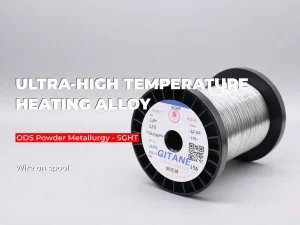
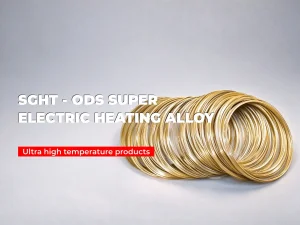
SPARK's proprietary SGHT and SGHYZ alloys incorporate precisely balanced trace additions of Reactive Elements (RE) such as Yttrium (Y), Zirconium (Zr), Niobium (Nb), and Rare Earth metals. During the powder metallurgy atomization and hot isostatic pressing (HIP) process, sub-micron oxide dispersions form along grain boundaries, anchoring grain boundaries and suppressing creep deformation at ultra-high service temperatures up to 1425°C.
| SPARK Alloy Grade | Alloy System | Max Temp (Air) | Resistivity @ 20°C ($\mu\Omega\cdot\text{m}$) | Density ($\text{g/cm}^3$) | Yield Strength ($\text{MPa}$) | Key Chilean Application |
|---|---|---|---|---|---|---|
| SPARK SGHT | FeCrAl (PM + RE) | 1425°C | 1.45 ± 0.05 | 7.10 | ≥ 550 | High-purity Lithium calcination kilns & SiC furnaces |
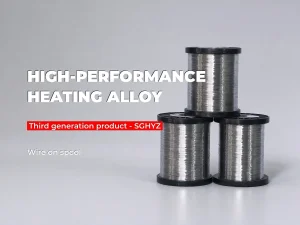
| SPARK SGHYZ | FeCrAl (Doped RE) | 1400°C | 1.42 ± 0.05 | 7.15 | ≥ 520 | Copper anode baking furnaces & heavy industrial kilns |
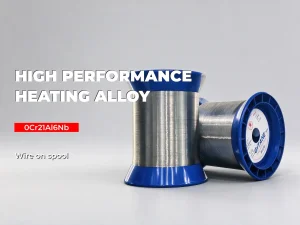
| 0Cr21Al6Nb | Fe-Cr-Al-Nb | 1350°C | 1.40 ± 0.05 | 7.18 | ≥ 500 | Continuous steel rod annealing & ceramic firing lines |
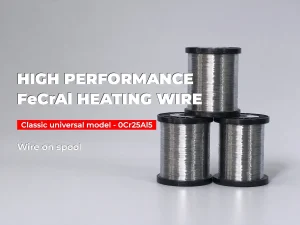
| 0Cr25Al5 (SPARK 255) | Fe-Cr-Al | 1250°C | 1.42 ± 0.05 | 7.10 | ≥ 480 | General industrial heating, duct heaters & drying ovens |
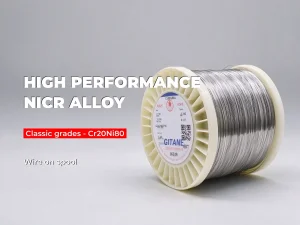
| Cr20Ni80 (Nichrome) | Ni-Cr (80/20) | 1200°C | 1.09 ± 0.05 | 8.40 | ≥ 420 | Precision heat-treating, fluid immersion & cyclic elements |
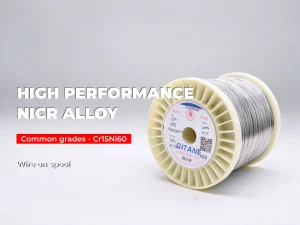
| Cr15Ni60 | Ni-Cr-Fe | 1150°C | 1.12 ± 0.05 | 8.20 | ≥ 400 | Commercial appliances, domestic heating & oil preheaters |
3. High-Altitude Electrical & Thermal Engineering Formulae for the Andes
At high mining elevations in Chile (e.g., Chuquicamata at 2,870m, Collahuasi at 4,400m), atmospheric air density drops significantly ($\rho_{alt} = \rho_0 \cdot e^{-h/8400}$). Convective heat transfer coefficient ($h_c$) decreases proportionally to atmospheric density to the power of 0.6 ($h_c \propto \rho^{0.6}$), resulting in higher element surface temperatures for an equivalent surface load ($\text{W/cm}^2$).
SPARK engineering teams recommend applying the altitude surface loading derating equation for elements operating in unpressurized Andean environments:
Surface Load Derating Formula: W_{allowed}(h) = W_{sea\_level} \times \left( \frac{P_h}{P_0} \right)^{0.35}
Where $P_h$ is ambient pressure at altitude $h$ (kPa) and $P_0$ is standard sea-level pressure (101.325 kPa). For installation at 4,000m (pressure ~61.6 kPa), allowable element surface load must be derated by approximately 16% to prevent element burnout.
Sector-Specific Solutions for Chilean Industrial Verticals
SPARK does not merely supply raw resistance wire; we engineering high-value electrothermal component systems tailored to the core economic drivers of Chile.
Lithium Hydroxide & Carbonate Calcination
In the Salar de Atacama and industrial processing facilities in Antofagasta, lithium chemical refining requires precision rotary kilns operating up to 1300°C. SPARK SGHYZ and 0Cr21Al6Nb coiled elements offer exceptional resistance against alkali lithium vapors, ensuring zero scale flaking and preventing product contamination in high-purity battery chemicals.
Copper & Molybdenum Smelting Infrastructure
For copper concentrator plants and pyrometallurgical refining in Calama, Rancagua, and Antofagasta, SPARK heavy-ribbon FeCrAl heating elements are designed for severe thermal shock resistance during molten slag pouring, ladle drying, and baghouse gas re-heating systems.
Green Hydrogen Electrolyzer Thermal Stacks
Chile's southern Magallanes region is emerging as a world leader in green hydrogen production. SPARK Cr20Ni80 ultra-fine wire and custom element coils provide exact power density and thermal stability for high-temperature solid oxide electrolyzer cells (SOEC) operating between 700°C and 850°C.
Need Custom Resistance Heating Calculations for Chile?
Our senior metallurgical engineers provide tailored wire diameter, resistance coil, and altitude derating calculations within 24 hours.
Technology Roadmap & Future Outlook (2025–2035)
As global thermal processing pushes toward higher energy efficiency and localized zero-carbon electric heating, SPARK is advancing next-generation metallurgical research through three key innovation vectors:
1. Nanoscale ODS (Oxide Dispersion Strengthened) FeCrAl
Developing nano-Yttrified FeCrAl matrices capable of continuous service at 1450°C with 300% higher creep strength than conventional alloys, catering to next-generation semiconductor ingot growth kilns in South America.
2. IoT-Enabled Resistance Degradation Monitoring
Integrating smart resistance sensors directly into custom-wound heating bundles. Real-time tracking of element resistance drift ($\Delta R/R_0$) enables predictive maintenance in remote Andean mining sites before open-circuit failure occurs.
3. Ultra-Low Carbon Hydro-Processed Alloys
Transitioning SPARK primary smelting furnaces to 100% green hydrogen reduction melting, yielding sub-10 ppm carbon and sulfur impurity levels for unparalleled ductility and zero embrittlement during cold coiling.
Commercial Compliance & Trade Advantages: China-Chile Free Trade Agreement
Procuring electric resistance heating alloys from SPARK (Beijing Shougang Gitane New Materials) provides significant commercial, financial, and regulatory advantages for Chilean corporations and international EPC procurement teams:
Preferential Zero Tariff (TLC Chile-China)
Under the bilateral Free Trade Agreement (Tratado de Libre Comercio China-Chile), SPARK electric heating alloys (HS Code: 7229.90, 7505.22) qualify for 0% import tariffs upon presentation of an official Certificate of Origin (Form F), dramatically reducing landed costs compared to European or North American suppliers.
SEC Electrical Safety Alignment
All SPARK alloys are manufactured strictly in accordance with GB/T 1234-2012, ISO 9001:2015, and RoHS/REACH environmental standards. Technical parameters align fully with the safety requirements overseen by Chile's Superintendencia de Electricidad y Combustibles (SEC).
Oceanic Freight & Express Logistics
Products are shipped directly from Tianjin or Shanghai ports with specialized multi-layer VCI anti-corrosion vacuum packaging, arriving at major Chilean ports including Valparaíso, San Antonio, and Antofagasta in 30–35 days with full mill test certs (MTC EN 10204 3.1).
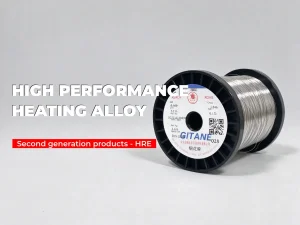
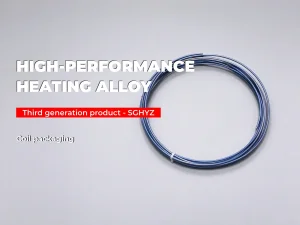
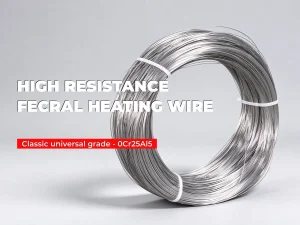
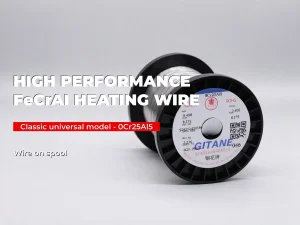
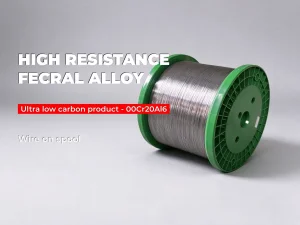
Complete SPARK Industrial Resistance Wire & Ribbon Directory
Explore our full range of alloy grades, available in spools, coils, and flat ribbons for immediate shipment to Chile.
Frequently Asked Questions: SPARK Alloys for the Chilean Market
Technical and procurement responses formulated by SPARK metallurgical engineering directors for Chilean industry clients.
How do high-altitude conditions in northern Chile (e.g., 3,000m+ in Antofagasta/Atacama) impact heating element design?
High-altitude mining environments experience lower atmospheric pressure and reduced air density, which impairs natural air convection cooling. Consequently, an heating element operating at high altitude will experience a higher surface temperature than the same element operating at sea level under identical electrical loading. SPARK engineers recommend derating the surface load ($\text{W/cm}^2$) by 12% to 18% depending on exact altitude, or switching to higher-temperature grades like SPARK SGHYZ or SGHT to prevent premature creep burnout.
Why is FeCrAl preferred over Nichrome (NiCr) for lithium brine calcination kilns?
Lithium brine processing involves corrosive alkali vapors and requires continuous temperatures above 1200°C. FeCrAl alloys form an $\alpha-\text{Al}_2\text{O}_3$ (Alpha-Alumina) oxide scale that is far more resistant to lithium vapor attack than the $\text{Cr}_2\text{O}_3$ scale formed on Nichrome. Furthermore, FeCrAl has a higher melting point (1500°C vs 1400°C) and lower density, offering a 15% to 20% weight savings for equivalent electrical resistance, making it significantly more cost-effective for heavy industrial kilns.
What tariff benefits apply when importing SPARK heating alloys from China to Chile?
Thanks to the China-Chile Free Trade Agreement (TLC China-Chile), importers in Chile enjoy zero customs duty (0% tariff) on SPARK electrothermal resistance alloys. SPARK supplies an official Form F Certificate of Origin with every export shipment, along with full EN 10204 3.1 Mill Test Certificates detailing exact chemical analysis and resistivity testing.
In what supply forms can SPARK deliver electric heating alloys to Chilean customers?
We supply materials in complete delivery formats: round wire (0.05mm to 12.0mm diameter), flat wire/ribbon, cold-rolled strip (thickness 0.1mm to 4.0mm, width up to 200mm), pre-wound spiral heating coils, and ready-to-install custom heating element assemblies tailored to customer furnace technical drawings.
How can Chilean maintenance teams extend the service life of FeCrAl elements in copper smelter kilns?
Service life can be maximized by: 1) Pre-oxidizing new elements in clean air at 1050°C for 8 to 12 hours before exposure to process gases to establish a dense alumina scale; 2) Ensuring ceramic support insulators are free of iron oxides and low-melting silica flux; and 3) Avoiding frequent rapid thermal cycling, which causes mechanical shearing of the oxide layer.
What is the standard lead time for shipping SPARK alloys to ports in Chile such as Valparaíso or Antofagasta?
Standard raw wire or strip orders are produced within 10 to 15 business days. Direct ocean freight from Tianjin or Shanghai port to Valparaíso, San Antonio, or Antofagasta takes approximately 30 to 35 days. For urgent plant breakdowns in Chile, air freight dispatch is available with 5 to 7 day transit times.
Ready to Optimize Your Industrial Heating Performance in Chile?
Contact Beijing Shougang Gitane New Materials Co., Ltd. (SPARK) today for factory direct pricing, technical datasheets, and sample spools.