
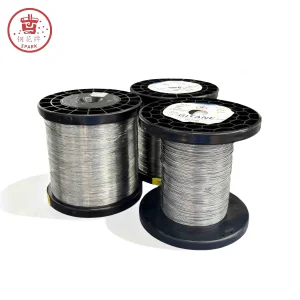
Featured High-Temperature Alloys & Heating Wire Solutions for Italian Industry
High-purity resistance alloys, ultra-high temperature heating wires, and specialized furnace elements manufactured strictly under ISO 9001 and GB/T 1234-2012 standards, fully compliant with EU quality norms.

High-Performance SGHT Tube Material - Trusted for Italian Energy & Petrochemical Plants
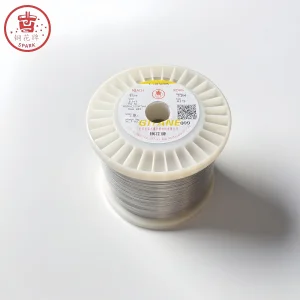
High-Performance Cr20Ni80S Electric Heating Alloy - Ideal for Industrial Heat Treatment in Italy
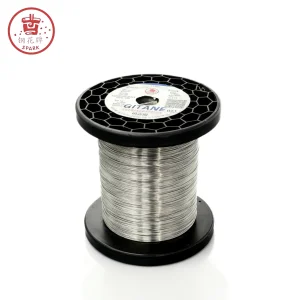
High Temperature Electric Heating Wire HRE 1350℃ - Premium Grade Resistance Wire for EU OEMs
1. Macro-Industrial Overview: Italy’s Thermal Processing Transition & China Supply Synergy
Italy stands as the second-largest manufacturing power in the European Union, distinguished by highly specialized industrial clusters. From the mechanical engineering and metallurgical centers of Lombardy (Milan, Brescia, Bergamo), to the world-renowned ceramic tile capital of Sassuolo and Modena (Emilia-Romagna), the automotive innovation hubs of Piedmont (Turin), and the appliance manufacturing centers in Triveneto, Italian manufacturers rely heavily on continuous, high-efficiency thermal processing systems.
Under the European Union’s strict decarbonization mandates and energy efficiency directives (such as the Green Deal and Fit for 55), Italian industrial thermal processing is undergoing a major technological transformation: replacing traditional fossil fuel-fired burners with electrically powered high-temperature radiant heating elements. Electric heating offers direct heat transfer, precise zero-carbon thermal control, and eliminates localized nitrogen oxide (NOx) emissions.
Strategic Sourcing Insight for Italian Engineering Firms: To stay competitive globally, Italian industrial furnace builders and equipment manufacturers must secure steady access to high-purity Nickel-Chromium (Ni-Cr) and Iron-Chromium-Aluminium (FeCrAl) resistance alloys that guarantee long service life, hot strength, structural creep resistance, and strict electric resistance tolerance (within ±3%).
China's advanced metallurgical manufacturing sector, backed by integrated steelmaking complexes such as Beijing Shougang Gitane New Materials Co., Ltd., has emerged as the premier strategic partner for Italian importers, furnace fabricators, and heating element suppliers. By leveraging state-of-the-art Vacuum Induction Melting (VIM), Electroslag Remelting (ESR), continuous bright annealing, and micro-alloying techniques with rare earth elements (Yttrium, Cerium), Chinese manufacturers provide Italian industry with European-grade metallurgical quality at highly optimized total-cost-of-ownership (TCO) levels.
2. Metallurgical Science: Ni-Cr Alloys vs. FeCrAl Resistance Alloys
Choosing between Nickel-Chromium (Ni-Cr) alloys and Iron-Chromium-Aluminium (FeCrAl) alloys requires a nuanced understanding of high-temperature thermodynamics, oxide layer formation, mechanical ductility, and thermal cycling performance.
Ni-Cr Alloys (Cr20Ni80, Cr30Ni70, Cr15Ni60)
Nickel-Chromium alloys form a tenacious, self-healing scale of chromium oxide ($\text{Cr}_2\text{O}_3$). They are the gold standard for applications requiring high hot strength, non-magnetic behavior, superior resistance to wet corrosion/oxidizing atmospheres, and structural ductility after prolonged high-temperature exposure.
- Ductility & Workability: Remains ductile after aging; does not become brittle upon cooling down, making repair and maintenance hassle-free.
- Thermal Cycling: Superior adherence of oxide film prevents flaking under rapid heating/cooling cycles common in Italian fast-bake industrial ovens.
- Non-Magnetic Properties: Essential for precision electrical instruments, high-frequency induction units, and specialized laboratory furnaces.
FeCrAl Alloys (0Cr25Al5, 0Cr23Al5, SGHYZ, SGHT)
Iron-Chromium-Aluminium alloys form an exceptionally dense protective layer of alpha-alumina ($\alpha\text{-Al}_2\text{O}_3$). They are optimized for extreme operating temperatures up to 1425°C, providing higher electrical resistivity and lower density than Ni-Cr alloys.
- Higher Temperature Limit: Operates up to 1425°C compared to the 1200°C limit of standard Cr20Ni80 nichrome wire.
- Higher Resistivity: Higher specific electrical resistance ($\approx 1.45 \, \mu\Omega\cdot\text{m}$) allows furnace designers to use thicker wire cross-sections for longer element life.
- Weight & Cost Efficiency: Lower density ($\approx 7.10 \, \text{g/cm}^3$ vs $8.40 \, \text{g/cm}^3$ for Ni-Cr) means approximately 15% less material weight per heating element coil.
Engineering Comparison Table: Key Industrial Resistance Alloys
| Alloy Grade | Alloy Family | Max Service Temp (°C) | Resistivity at 20°C ($\mu\Omega\cdot\text{m}$) | Density ($\text{g/cm}^3$) | Yield Strength / Ductility | Primary Italian Application |
|---|---|---|---|---|---|---|
| Cr20Ni80 / Cr20Ni80S | Ni-Cr (80/20 Nichrome) | 1200°C | $1.09 \pm 0.05$ | 8.40 | Excellent ductility post-service | Automotive heat treating, household heating elements, plastics processing |
| Cr30Ni70 | Ni-Cr (70/30 Nichrome) | 1250°C | $1.18 \pm 0.05$ | 8.10 | High hot strength & green-rot resistance | Controlled atmosphere furnaces, industrial ovens, chemical vessels |
| Cr15Ni60 | Ni-Cr (60/15 Nichrome) | 1150°C | $1.11 \pm 0.05$ | 8.20 | Good flexibility & corrosion resistance | Commercial appliances, defrosting heaters, brake resistors |
| 0Cr25Al5 | FeCrAl High-Temp | 1250°C | $1.42 \pm 0.07$ | 7.10 | High resistivity, lower weight | Kilns, industrial heat treatment, radiant tube heaters |
| HRE / SGHYZ | FeCrAl Premium Grade | 1350°C - 1400°C | $1.45 \pm 0.07$ | 7.10 | Enhanced creep resistance with RE | Sassuolo ceramic kilns, powder metallurgy, high-temp sintering |
| SGHT (PM) | Powder Metallurgy FeCrAl | 1425°C | $1.48 \pm 0.08$ | 7.10 | Ultra-high creep strength at 1400°C+ | Semiconductor diffusion, advanced technical ceramics, quartz glass |
3. Why Italian Buyers Partner with China’s Premier Alloy Manufacturers
Navigating global supply chains requires full confidence in metallurgical consistency, manufacturing traceability, and compliance with international standards. Here is how leading Chinese factories deliver unparalleled value to Italian clients.
Full-Process Integrated Production
From primary induction melting and vacuum refining to hot rolling, cold drawing, continuous hydrogen bright annealing, and spooling — total control over every production stage guarantees batch-to-batch consistency and uniform grain structures.
Strict Quality & Mill Certification
Every shipment to Italy is accompanied by comprehensive EN 10204 3.1 Mill Test Certificates detailing exact ladle chemical analysis, physical resistance measurements ($\Omega/\text{m}$), tensile strength, elongation percentage, and dimensional tolerances.
Versatile Delivery Formats
Supplied in complete range formats tailored to Italian machinery builders: fine wire (0.05mm - 0.50mm), heavy industrial wire (0.60mm - 12.0mm), cold-rolled flat ribbon/strip (thickness 0.1mm–4.0mm, width 5mm–200mm), and pre-formed spiral elements.
Micro-Alloying Breakthrough: Rare Earth Element (RE) Addition
A major competitive advantage of Chinese metallurgical engineering is the precise addition of active rare earth micro-elements (such as Yttrium $\text{Y}$, Cerium $\text{Ce}$, and Lanthanum $\text{La}$) into Ni-Cr and FeCrAl melts. Rare earth grain-boundary engineering produces key performance enhancements:
1. Superior Oxide Pegging Effect
Rare earth ions concentrate at the metal-oxide interface, creating mechanical "pegs" that interlock the protective $\text{Cr}_2\text{O}_3$ or $\text{Al}_2\text{O}_3$ scale with the underlying alloy substrate. This prevents scale spallation during rapid thermal cycling.
2. Inhibition of High-Temp Grain Growth
At continuous operating temperatures above 1100°C, rare earth oxides pin crystal grain boundaries, significantly slowing down grain coarsening, reducing structural sagging, and extending wire working lifetime by up to 40%.
4. Application Scenarios Across Italy’s Core Industrial Districts
Engineered alloy formulations tailored to meet the exacting operating conditions of Italy’s leading industrial manufacturing sectors.
Sassuolo & Modena Ceramic District
Ceramic Kilns & Heavy-Duty Sintering Elements
The Italian ceramic tile industry requires high-temperature furnace elements capable of operating continuously in roller hearth kilns and spray drying towers at temperatures between 1200°C and 1380°C. Our SGHYZ and HRE FeCrAl alloys provide exceptional hot strength, resisting deformation under thermal shock and corrosive glaze vapors.
Lombardy Metallurgy & Heat Treatment
Industrial Heat Treatment & Carburizing Furnaces
In Brescia, Bergamo, and Milan, commercial heat treaters utilize pit furnaces, mesh-belt furnaces, and vacuum annealing lines for automotive gears and precision forgings. Cr20Ni80S and Cr30Ni70 nichrome alloys resist carbon pickup (carburization) and green-rot corrosion, ensuring stable electrical performance in protective nitrogen/hydrogen atmospheres.
Turin Automotive & Aerospace Hub
Automotive Component & Aluminum Melting Alloys
Piedmont’s tier-1 automotive component suppliers depend on immersion heating tubes, aluminum holding furnace elements, and exhaust treatment sintering heaters. Our thick-gauge Ni-Cr round wire and heavy flat strip deliver consistent surface load capacity ($W/\text{cm}^2$) for high-throughput aluminum casting lines.
Triveneto Industrial Appliance Sector
Commercial Catering & Household Appliance Heaters
The Triveneto cluster leads Europe in commercial food service equipment, coffee machine boilers, and domestic heating appliances. Bright-annealed Cr20Ni80 and Cr15Ni60 fine wires offer precise resistance values per meter, high coilability, and long cyclic life in tubular heating elements.
5. Technical Design Guide: Surface Load ($W/\text{cm}^2$) Optimization for Furnace Builders
For Italian design engineers and furnace refurbishers, optimizing the surface load ($w$) of a heating element is critical to prevent premature failure. Surface load represents the electrical power emitted per unit surface area of the heating wire:
w = \frac{P}{\pi \cdot d \cdot L} \quad (\text{W/cm}^2)
Where $P$ is total power in Watts, $d$ is wire diameter in centimeters, and $L$ is active wire length in centimeters.
Recommended Maximum Surface Loads in Air
| Furnace Temperature (°C) | Cr20Ni80 Nichrome Wire ($W/\text{cm}^2$) | 0Cr25Al5 FeCrAl Wire ($W/\text{cm}^2$) | SGHYZ / SGHT FeCrAl Wire ($W/\text{cm}^2$) |
|---|---|---|---|
| 800°C | $4.0 - 5.5$ | $4.5 - 6.0$ | $5.0 - 7.0$ |
| 1000°C | $2.5 - 3.5$ | $3.0 - 4.0$ | $3.5 - 4.5$ |
| 1200°C | $1.0 - 1.5$ (Max limit) | $1.8 - 2.3$ | $2.2 - 3.0$ |
| 1350°C | Not Recommended | Not Recommended | $1.2 - 1.8$ |
Design Tip: Operating elements at lower surface load values significantly prolongs life. When switching an Italian furnace design from gas to electric heating, select slightly thicker wire diameter ($d$) to maximize surface area while maintaining required total resistance ($R$).
Complete Portfolio of Resistance Heating Alloys, Tubes & Furnaces for EU Suppliers
Browse our full factory product range shipped directly from China to major Italian ports (Genoa, La Spezia, Trieste) and logistics hubs in Northern Italy.

Professional Customized Industrial Furnaces - Energy-Efficient Heating Solutions for EU Factories
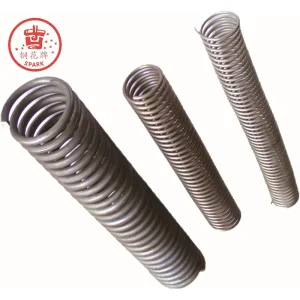
St35.8 DIN17175 High Pressure Resistant Seamless Tube - ASTM A179 Heat Exchanger Tube
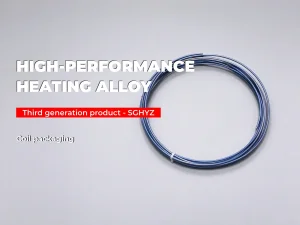
SGHYZ 1400°C High Temp FeCrAl Heating Wire | Creep Resistant Alloy for Industrial Kilns
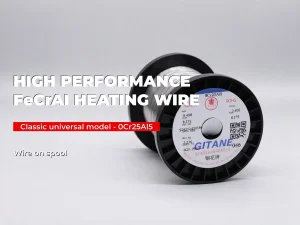
0Cr23Al5 General-Purpose Fe-Cr-Al Heating Alloy | 1250°C Grade for Industrial & Domestic Heating

0Cr25Al5 Electric Heating Wire - Top Factory Supplier for High-Performance Resistance Wire

High-Quality Electric Heating Tubes from China Factory - Efficient Industrial Thermal Solutions
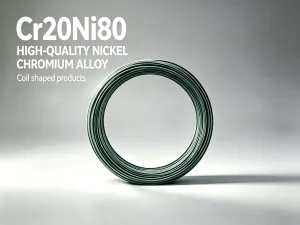
Cr20Ni80 Nickel Chromium Heating Wire - High-Temperature NiCr Resistance Wire Factory Export
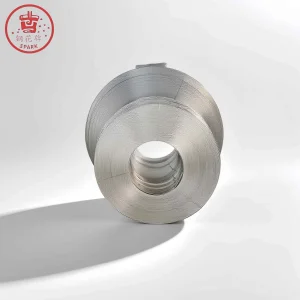
SG140 Alloy Wire - High-Performance Resistance Wire for Industrial Tempering Furnaces
6. Streamlined Procurement & Logistics Roadmap for Italian Importers
Direct factory procurement from China simplified with international quality control, flexible trade terms, and expedited European logistics.
Step 1: Technical & Alloy Matching
Send us your required alloy specification, drawing, wire diameter, or equivalent Western brand code (e.g., Nikrothal 80, Kanthal A1, Resistohm 80). Our metallurgical team confirms chemical and electrical equivalency within 24 hours.
Step 2: Sample & Testing Verification
We provide sample coils with full batch MTC (Mill Test Certificates) for laboratory verification in Italy. Test electrical resistivity, grain size, and spooling tension on your local winding machines.
Step 3: Export Logistics to Italy
Flexible Incoterms including FOB, CIF Genoa/La Spezia/Trieste, or DDP direct to your factory warehouse in Milan, Turin, or Bologna. Packed in ocean-ready plastic spools, anti-moisture vacuum wraps, and reinforced wooden crates.
7. Frequently Asked Questions (FAQ) for Italian Buyers & Technical Directors
Common queries regarding metallurgical equivalency, European compliance, shipping schedules, and custom manufacturing.
Are Chinese Ni-Cr alloys directly interchangeable with European standards like Kanthal, Sandvik, or VDM grades?
Yes. Our Cr20Ni80, Cr30Ni70, 0Cr25Al5, and SGHT alloys comply strictly with GB/T 1234-2012, ASTM B344, and DIN 17470 standard requirements. Cr20Ni80 is chemically and electrically equivalent to Nikrothal 80, Chromel A, and Resistohm 80. Our technical team provides side-by-side metallurgical mapping charts to verify exact cross-referencing.
What documentation and mill test certificates accompany shipments to Italy?
Every shipment includes an Official EN 10204 3.1 Mill Test Certificate detailing chemical composition (spectrometric melt analysis), specific electrical resistance ($\mu\Omega\cdot\text{m}$ at 20°C), tensile strength, elongation percentage, wire diameter tolerance, and ISO 9001 quality compliance stamp.
How do rare earth micro-additions improve element performance in high-frequency thermal cycling?
The inclusion of micro-alloyed Yttrium (Y) and Cerium (Ce) prevents scale spallation. In fast-cycling Italian ceramic kilns and heat-treating lines, thermal expansion mismatches often cause oxide scale to flake off, exposing fresh metal to rapid oxidation. Rare earth elements create microscopic oxide "pegs" into the alloy matrix, keeping oxide layers intact and dramatically increasing cyclic life.
What are the minimum order quantities (MOQ) and sample policies for Italian engineering firms?
We offer flexible MOQ terms for trial orders. For standard wire gauges (0.10mm to 6.00mm) of Cr20Ni80 or 0Cr25Al5, trial order MOQs start from as low as 50 kg to 100 kg. Free sample spools are available for qualified Italian OEMs and equipment fabricators upon request.
What delivery forms can be manufactured for customized Italian heating element designs?
We provide round wire on DIN plastic spools or coils, flat ribbon/strip in coils, straight rod elements, cold-formed wave/meander elements, open spiral coils wound to customer inner/outer diameter specifications, and prefabricated ceramic tube assembly heating elements.
What is the typical transit lead time from China to Northern Italy industrial centers?
Sea freight shipping from Chinese ports (Tianjin, Qingdao, Shanghai) to main Italian ports (Genoa, La Spezia, Trieste) typically takes 28 to 35 days. For urgent OEM maintenance requirements, air freight delivery directly to Milan Malpensa (MXP) or Bologna Airport (BLQ) takes 5 to 7 days.
Direct Factory Pricing & Technical Engineering Support
Elevate Italian Heating Equipment Performance Today
Partner with Beijing Shougang Gitane New Materials Co., Ltd. for engineering-grade Ni-Cr and FeCrAl alloys. Request custom quotes, technical datasheets, or free trial samples tailored to your exact industrial thermal specifications.