

Direct Factory Sourcing
Featured San Francisco Industrial Resistance Wire Selection
Immediate local availability for San Francisco technology research labs, semiconductor equipment manufacturers, and advanced clean-tech thermal processing units.

Bay Area Industrial 2.00mm 0Cr25Al5 Heating Elements Wholesale - ISO9001 Factory
View Product & Price
San Francisco Tech Cr15Ni60 Heating Wire - High Temp Oxidation Resistant Alloy
View Product & Price
Silicon Valley Standard Cr20Ni40 Nickel Chrome Heating Wire - High Temp Resistance Alloy
View Product & Price
Regional Intelligence
San Francisco's Hardware Renaissance & Industrial High-Temperature Sourcing Requirements
The San Francisco Bay Area—stretching from the city’s urban innovation hubs down through South San Francisco’s biotech ecosystem to the semiconductor corridors of Silicon Valley—is undergoing an unprecedented advanced hardware renaissance. While historically celebrated for cloud software and artificial intelligence models, San Francisco has rapidly evolved into a global powerhouse for physical deep-tech innovation, additive manufacturing, semiconductor equipment prototyping, and clean energy grid transformation.
High-precision thermal processing sits at the foundational core of this industrial resurgence. Modern applications across the San Francisco Bay Area require specialized electrical resistance alloys engineered to withstand extreme thermal stress, corrosive atmospheres, and rapid duty cycling without mechanical degradation. For instance:
Semiconductor Wafer Epitaxy
Bay Area fabrication tools demand sub-millimeter thermal uniformity up to 1350°C to eliminate lattice defects during chemical vapor deposition (CVD) and rapid thermal annealing (RTA).
CleanTech & Fuel Cell R&D
Emerging energy startups in the SF waterfront districts utilize solid oxide fuel cell (SOFC) test rigs requiring ultra-stable FeCrAl (Iron-Chromium-Aluminum) heating elements resistant to high-temperature oxidation.
Biotech & Medical Devices
South San Francisco’s life science facilities rely on micro-gauge NiCr (Nickel-Chromium) resistance wires for precise thermal sterilization units and custom nitinol shape-memory alloy heat treating.
To maintain competitive advantages and aggressive prototype-to-production timelines, procurement teams in San Francisco actively search for trustworthy China Featured Suppliers & Pricelists. Direct factory partnerships bridge the gap between rigorous American engineering specifications and China's unparalleled metallurgical manufacturing scale.
Macro-Economic Dynamic
Global Metallurgical Shift: Why B2B Procurement Prefers Direct Chinese Metallurgy
The global resistance alloy market has experienced a seismic shift over the past decade. Traditional Western suppliers have struggled with rising overhead, legacy melting infrastructure, and prolonged lead times exceeding 20–26 weeks. Conversely, China’s primary alloy production ecosystem—anchored by state-certified leaders like Beijing Shougang Gitane New Materials Co., Ltd.—has modernized its entire vertical stack, combining Vacuum Induction Melting (VIM), Electroslag Remelting (ESR), and continuous wire drawing.
1425°C
Maximum Continuous Rating (SGHT Grade)
60+
Years Metallurgical R&D Heritage
1.45
Highest Resistivity (μΩ·m)
35%
Average Cost Reduction vs. Western Distributors
Overcoming Bay Area Procurement Bottlenecks
For purchasing directors in San Francisco, sourcing high-temperature resistance wire through domestic stockists often entails a 200% to 400% middleman price mark-up without guaranteed heat-lot traceability. By connecting directly with accredited Chinese manufacturers, San Francisco enterprises gain transparent unit pricelists, custom alloy composition tailoring (such as precise Rare Earth addition of Yttrium and Zirconium), and direct technical consultations with metallurgical engineers.
Proven Metallurgical Authority (E-E-A-T)
Chinese Manufacturing Superiority: High-Temperature Resistance Alloys
Achieving stable high-temperature performance requires absolute metallurgical discipline. Under the banner of Beijing Shougang Gitane New Materials Co., Ltd. (SPARK), Chinese resistance heating alloys represent the pinnacle of alloy consistency, grain refinement, and thermal endurance.
Proprietary Oxide Film Mechanics (α-Al2O3)
The operational lifespan of an electric heating element is determined by the integrity of its surface oxide scale. Premium Chinese FeCrAl alloys (such as 0Cr25Al5, HRE, SGHYZ, and SGHT) form an ultra-dense, non-spalling alpha-alumina (α-Al2O3) outer protective layer when energized above 1000°C. This self-healing scale acts as an impermeable barrier against oxygen diffusion, carbon penetration, and chemical attack in industrial atmospheres.
| Alloy Grade | Material Family | Max Temp (°C) | Electrical Resistivity (μΩ·m, 20°C) | Density (g/cm³) | Primary Industrial Application |
|---|---|---|---|---|---|
| SGHT | Powder Metallurgy FeCrAl | 1425°C | 1.45 | 7.10 | Semiconductor, Solar Wafer Fabs, High-Temp Kilns |
| SGHYZ | Rare-Earth Enhanced FeCrAl | 1400°C | 1.42 | 7.10 | Continuous Industrial Heat-Treating Furnaces |
| HRE | Advanced FeCrAl Wire/Strip | 1350°C | 1.40 | 7.15 | Ceramic Sintering, Powder Metallurgy Kilns |
| 0Cr25Al5 | Standard Industrial FeCrAl | 1250°C | 1.42 | 7.10 | Industrial Furnaces, Commercial Heating Elements |
| Cr20Ni80 | Premium Nichrome (Ni-Cr) | 1200°C | 1.09 | 8.40 | Medical Instruments, Clean Room Precision Heaters |
| Cr15Ni60 | Commercial Nichrome | 1150°C | 1.11 | 8.20 | Industrial Rheostats, Domestic Appliances |
Local SF Case Applications
Targeted Industrial Scenarios in San Francisco & Northern California
The unique cross-section of San Francisco’s local industries requires customized technical configurations. Below are key deployment scenarios where China-sourced resistance heating alloys deliver exceptional performance and economic value:
1. Wafer Diffusion Fabs (Fremont & San Jose)
Horizontal and vertical quartz tube furnaces operating at 1200°C–1300°C utilize SPARK 0Cr25Al5 and SGHYZ spiral elements. The low creep rate and high resistivity prevent coil sagging, ensuring zero particle contamination across wafer batches.
2. University & Incubator Testing Kilns
San Francisco research laboratories (such as startups expanding out of UC Berkeley and Stanford spin-offs) require custom small-footprint muffle furnaces. Standardized 0Cr21Al6Nb wire coils provide fast thermal response times and resilient performance in frequent cycling tests.
3. Precision Medical Thermal Units (South SF)
Biomedical OEMs manufacturing surgical instruments utilize micro-fine Cr20Ni80 Nichrome flat ribbon wire for consistent electrical resistance and non-magnetic operation in precise thermal bonding fixtures.
Strategic Sourcing Whitepaper
San Francisco Buyer’s Guide: China Supplier Pricelists & Total Cost Breakdown
Navigating international procurement for high-temperature resistance materials requires a complete understanding of price drivers, quality metrics, and freight economics. Below is an engineering evaluation framework designed for San Francisco procurement managers:
1. Raw Material Volatility & Alloy Pricing Dynamics
Pricing for resistance wire is fundamentally tied to international metal exchange indices (LME Nickel, Ferro-Chromium, and Primary Aluminum). FeCrAl alloys offer a significant cost advantage—typically costing 30% to 50% less per kilogram than Nickel-Chromium (NiCr) alloys due to the absence of expensive nickel content. Furthermore, because FeCrAl has a lower density (approx. 7.10 g/cm³) compared to NiCr (approx. 8.40 g/cm³), engineers yield 15% to 20% more meters of wire per kilogram, resulting in compounding material savings.
2. Logistics to Port of Oakland & San Francisco International Airport (SFO)
Direct shipment routes from Chinese manufacturing hubs to the Port of Oakland offer expedited ocean transit times of just 14–18 days. For urgent engineering prototypes, direct air freight into SFO provides door-to-door delivery within 3 to 5 business days. Purchasing managers should request DDP (Delivered Duty Paid) terms or clear FOB Beijing/Tianjin pricelists to simplify import processing.
3. Verification Checklist for San Francisco Quality Engineers
- Mill Test Certificates (MTC): Verify compliance with ISO 9001 and Chinese National Standard GB/T 1234-2012 for electrothermal alloys.
- Resistivity Uniformity: Ensure tolerance within ±3% along the entire coil spool length to prevent localized hot-spots.
- Surface Finish Options: Specify oxidized, bright annealed, or pickled surfaces depending on furnace atmosphere requirements.
Pro Procurement Tip for Bay Area Hardware OEMs
Requesting pre-wound spiral elements or custom cut-to-length ribbon directly from the factory reduces local San Francisco labor costs by up to 60%. China suppliers utilize automated CNC coiling machinery to deliver tight pitch tolerances directly to your assembly line.
Frequently Asked Questions
Procurement & Technical FAQ for San Francisco Buyers
How do I obtain an updated China featured supplier pricelist for San Francisco delivery?
You can request an official quote and wholesale pricelist directly by submitting your specification drawing or wire gauge requirements through our Inquiry Portal. Quotes are typically returned within 1 business day, including FOB, CIF Oakland, or DDP San Francisco pricing options.
What is the difference between FeCrAl and NiCr heating wire for Bay Area industrial applications?
FeCrAl (Iron-Chromium-Aluminum) offers higher maximum operating temperatures (up to 1425°C), higher electrical resistivity, and lower material density, making it the most cost-effective choice for industrial kilns and semiconductor equipment. NiCr (Nickel-Chromium) provides superior hot strength, non-magnetic properties, and better ductility after prolonged exposure, making it ideal for precision laboratory instruments and frequent thermal cycling.
Can Chinese factories supply custom coil dimensions and pre-formed elements to San Francisco?
Yes. Factories like Beijing Shougang Gitane specialize in custom wire diameters (from micro-gauge 0.05mm wire to heavy 10mm rod), cold-rolled flat strip, pre-wound spiral heating coils, and custom ceramic-mounted furnace elements tailored to your specific voltage and power density specifications.
What quality standards and certifications back these resistance alloy products?
Products are manufactured in strict compliance with ISO 9001 quality management systems and the national standard GB/T 1234-2012 for high-resistance electric heating alloys. Every shipment includes a comprehensive Mill Test Report (MTR) detailing chemical heat analysis, electrical resistance measurements, and mechanical tensile properties.
What are the standard shipping lead times from China to Northern California?
Standard inventory spools ship within 3–5 business days. Express air freight to SFO takes approximately 5–7 calendar days. Bulk ocean container shipments to the Port of Oakland typically take 16–22 days door-to-door, inclusive of customs clearance.
Comprehensive Alloy Catalog
Complete China Supplier Pricelist Products for San Francisco
Explore our full line of resistance alloys, ultra-high-temperature FeCrAl tubes, surface mount inductors, and specialized industrial furnaces.
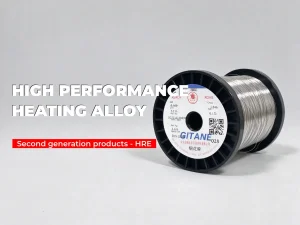
San Francisco High-Temp FeCrAl Heating Alloy HRE 1350℃ for Ceramic & Glass
View Product & Price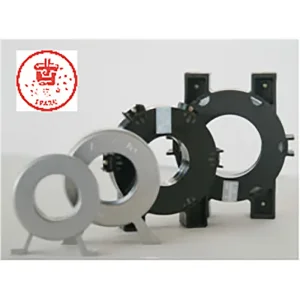
Wholesale San Francisco Special Price Choke Coil & Surface Mount Chip Inductors
View Product & Price
Bay Area Wholesale Spiral Electric Heating Elements - High Quality Heating Solutions
View Product & Price
San Francisco Supply Cr20Ni40 Nickel Chrome Wire - High Temperature Alloy
View Product & Price
Silicon Valley Spec HRE High Temperature 1350℃ Alloy Resistance Wire Quotes
View Product & Price
San Francisco Wholesale SG140 Alloy Wire for Tempering Furnaces Pricelist
View Product & Price
Gitane Customized Industrial Furnaces for San Francisco Energy-Saving Solutions
View Product & Price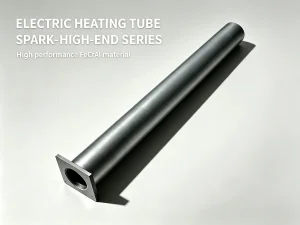
Ultra-High Temp FeCrAl Heating Tube 1425°C for San Francisco Industrial Applications
View Product & PriceOptimize Your San Francisco Thermal Engineering Sourcing Today
Partner directly with China's premier resistance alloy manufacturer. Access wholesale pricelists, custom wire gauge rolling, and instant technical engineering assistance for Bay Area projects.