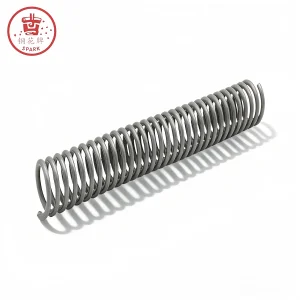
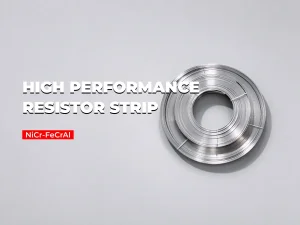
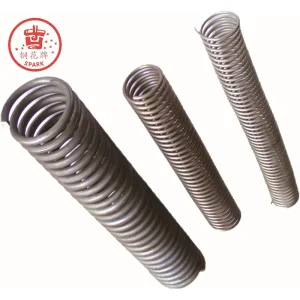
Featured High-Resistivity Resistance Alloys & Elements





1. Executive Summary & Fundamentals of High-Resistivity Resistance Alloys
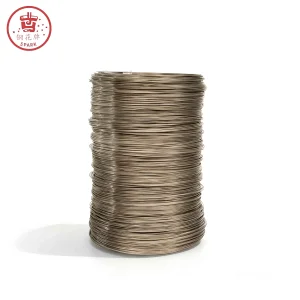
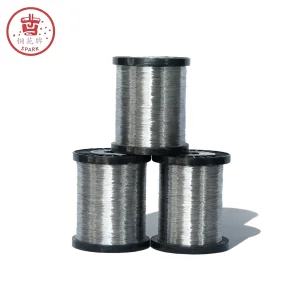
In modern high-temperature thermal processing, metallurgy, and electrical element manufacturing, selecting the ideal heating material requires balancing physical, electrical, and thermal properties. The engineering standard known as "this alloy delivers a balanced combination of high electrical resistivity" describes a specific category of advanced electrothermal alloys—principally Iron-Chromium-Aluminum (FeCrAl) and Nickel-Chromium (NiCr) series—that exhibit stable electrical resistance across elevated thermal spectra, superior oxidation resistance, and reliable mechanical durability.
High electrical resistivity ($\rho$) is the cornerstone parameter of resistive heating engineering. According to Joule's Law ($P = I^2 R = V^2 / R$), an alloy with elevated specific resistance allows heating element designers to construct compact coils, ribbons, or radiant tube cores using larger cross-sectional wire diameters. Larger cross-sections dramatically increase the element's operational lifespan by providing a greater volumetric reservoir of scale-forming elements (such as Aluminum and Chromium) to continuously repair protective oxide films ($\alpha\text{-Al}_2\text{O}_3$ and $\text{Cr}_2\text{O}_3$) under aggressive thermal cycling.
Core Engineering Principle: A balanced combination of high electrical resistivity allows industrial furnace builders to minimize component total weight while maximizing thermal power density (W/cm²), achieving rapid thermal response times without sacrificing hot tensile strength or sagging resistance.
2. Industry Trends: Decarbonization, Electrification & Powder Metallurgy Evolution
The global industrial heating sector is undergoing a massive shift driven by decarbonization mandates and Net-Zero carbon targets. Heavy industrial sectors—including automotive forging, aerospace heat treatment, photovoltaic silicon refining, and petrochemical cracking—are systematically replacing legacy fossil-fuel combustion burners with high-efficiency electric thermal processing systems. This industrial transformation has created explosive global demand for advanced resistance alloys engineered to deliver reliable performance above 1300°C.
Emergence of Powder Metallurgy (PM) Dispersion-Strengthened Alloys
Traditional ingot melting and cold drawing processes often face mechanical limits at temperatures exceeding 1350°C due to rapid grain coarsening and thermal creep sagging. To surpass these metallurgical limits, modern pioneers such as Beijing Shougang Gitane New Materials Co., Ltd. have commercialized Powder Metallurgy (PM) electrothermal materials (such as the proprietary SGHT grade rated up to 1425°C). By utilizing micro-alloying techniques enriched with Yttrium (Y), Zirconium (Zr), and rare-earth oxides, PM alloys achieve oxide dispersion strengthening (ODS). This microstructure locks grain boundaries, suppressing high-temperature creep while maintaining high specific electrical resistivity throughout thousands of operational hours.
3. Global Procurement Intent & B2B Supply Chain Dynamics
When international procurement teams, furnace original equipment manufacturers (OEMs), and metallurgical engineering firms query wholesale markets for "alloys delivering a balanced combination of high electrical resistivity," their search intent spans several critical commercial and technical requirements:
- Total Cost of Ownership (TCO) Optimization: Evaluating element longevity versus raw material cost. While Nickel-Chromium (NiCr) alloys offer high ductility and hot mechanical strength, FeCrAl alloys provide a lower density (~7.10 g/cm³ vs. 8.40 g/cm³ for NiCr) and higher resistivity, yielding up to 20-30% material weight savings for equivalent thermal output.
- Pricelist Translucency & Wholesale Scalability: Global buyers require scalable B2B supply agreements with transparent pricing tiers, mill test certificate (MTC) verification, and batch-to-batch chemical homogeneity (verifying Cr, Al, Ni, and trace element percentages per GB/T 1234-2012 or ASTM standards).
- Atmospheric Resilience: Selecting specialized grades suitable for diverse furnace atmospheres—including oxidizing air, reducing hydrogen ($H_2$), carburizing endothermic gases, nitrogen ($N_2$), and high-vacuum thermal chambers.
4. China Industry 4.0: Supply Chain Resilience & Manufacturing Advantages
As global supply chains place higher emphasis on resilience, risk mitigation, and rapid fulfillment, China’s advanced metallurgical sector—led by enterprise manufacturers like Beijing Shougang Gitane New Materials Co., Ltd. (a direct subsidiary of state-owned steel giant Shougang Group)—offers unprecedented manufacturing stability.
Operating an integrated 88,000 m² facility with over 39,000 m² of dedicated high-precision workshops in Beijing, Shougang Gitane embodies China's Industry 4.0 Smart Manufacturing Transformation:
Vertical Integration from Melt to Finished Heating Element
Unlike secondary wire re-drawers, Shougang Gitane controls the entire production chain: Vacuum Induction Melting (VIM), Electroslag Remelting (ESR), hot rolling, precision wire drawing, ribbon flattening, bright annealing, and automated spiral coil formation. This end-to-end control eliminates raw material impurity variations, guaranteeing consistent electrical resistivity across every spool shipped globally.
Automated Quality Assurance & Digital Traceability
Utilizing laser eddy-current flaw detection, continuous online optical wire diameter monitoring, and digital resistance testing per meter, Shougang Gitane ensures zero-defect delivery. Every coil is tagged with a digital heat number linked to certified chemical composition analysis, heat-treatment logs, and mechanical test results.
Technical Comparison of High-Resistivity Alloys
| Alloy Grade | Alloy Family | Resistivity at 20°C (μΩ·m) | Max Temp (°C) | Density (g/cm³) | Dominant Protective Oxide | Primary Industrial Application |
|---|---|---|---|---|---|---|
| SGHT | FeCrAl (PM ODS) | 1.45 | 1425°C | 7.10 | $\alpha\text{-Al}_2\text{O}_3$ | Semiconductor wafer kilns, advanced ceramics, powder metallurgy |
| SGHYZ | FeCrAl (Rare-Earth) | 1.42 | 1400°C | 7.10 | $\alpha\text{-Al}_2\text{O}_3$ | High-temperature industrial furnaces, radiant heating tubes |
| HRE 1350 | FeCrAl High-Temp | 1.40 | 1350°C | 7.15 | $\alpha\text{-Al}_2\text{O}_3$ | Sintering furnaces, heavy-duty industrial heating elements |
| 0Cr25Al5 | FeCrAl Standard | 1.42 | 1250°C | 7.10 | $\alpha\text{-Al}_2\text{O}_3$ | Industrial kilns, ceramic heaters, electrical appliances |
| 0Cr23Al5 | FeCrAl Standard | 1.35 | 1250°C | 7.25 | $\alpha\text{-Al}_2\text{O}_3$ | Heat-treatment furnaces, duct heaters, braking resistors |
| Cr30Ni70 | NiCr Premium | 1.18 | 1250°C | 8.10 | $\text{Cr}_2\text{O}_3$ | Continuous cycling equipment, nitriding furnace elements |
| Cr20Ni80 | NiCr Standard | 1.09 | 1200°C | 8.40 | $\text{Cr}_2\text{O}_3$ | Precision lab heaters, medical sterilizers, consumer appliances |
| Cr20Ni40 | NiCr Economy | 1.04 | 1100°C | 8.60 | $\text{Cr}_2\text{O}_3$ | Commercial tempering furnaces, heating cables, drying kilns |
5. Localized Application Scenarios & Industry Case Studies
Understanding how high-resistivity alloys perform in specific industrial equipment helps engineering teams select the optimum wire gauge, ribbon width, or ceramic tube core assembly.
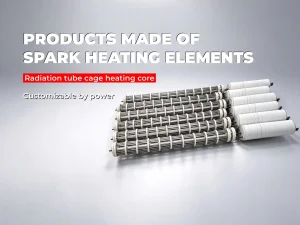
Solution: Utilizing SPARK SGHT Alloy Seamless Tubes & Ceramic Radiant Cores. The dense alumina film prevents carbon ingress and hot-corrosion, extending replacement cycles from 8 months to over 36 months.
Solution: Installing Cr20Ni40 & Cr20Ni80 Nichrome Strips. High post-use ductility allows elements to absorb mechanical shocks and frequent power switches without structural fracture.
Solution: Implementing HRE 1350 & SGHYZ High-Purity FeCrAl Wires wound on ceramic supports, maintaining stable thermal output across extended silicon wafer processing runs.
Specialized Resistance Wires, Strips & Tubes