
High-Performance Thermal Processing Resistance Alloys
Explore our premium grade resistance heating wires, strips, and pre-formed heating elements manufactured under strict ISO 9001 and GB/T 1234-2012 quality control protocols.
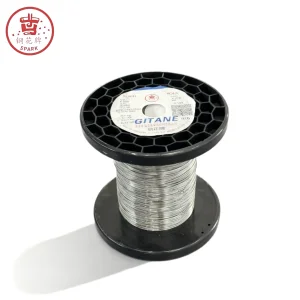
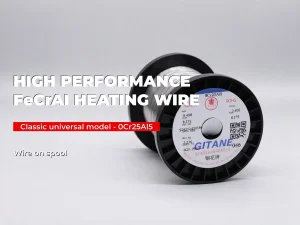

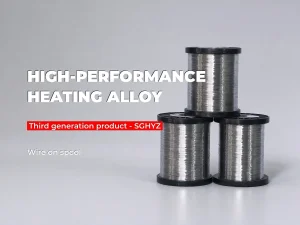
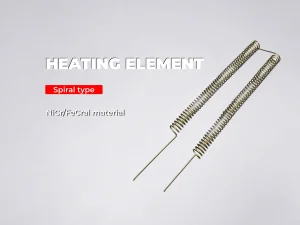
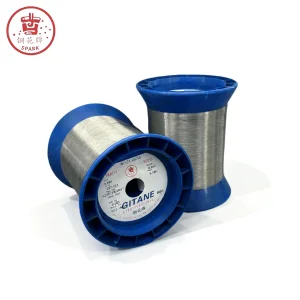
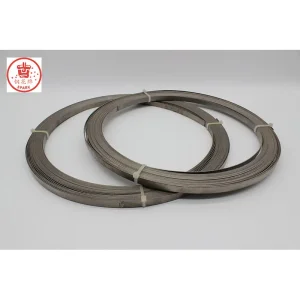

Executive Whitepaper: Strategic Sourcing of Thermal Processing Heating Wires
Thermal processing is the core foundation of modern metallurgy, semiconductor fabrication, aerospace heat treatment, automotive manufacturing, and clean energy production. At temperatures ranging from 800°C to exceeding 1425°C, electric heating alloys are subjected to extreme thermodynamic stress, rapid oxidation mechanisms, mechanical sagging, and cyclic thermal shock. Procurement executives, furnace designers, and thermal systems engineers require a granular understanding of alloy selection, microstructure optimization, and supplier manufacturing capabilities.
As a premier manufacturing force within the high-temperature alloy sector, Beijing Shougang Gitane New Materials Co., Ltd. (SPARK brand) operates with over six decades of dedicated metallurgical research. This guide serves as a comprehensive reference manual for global procurement engineers evaluating Wholesale Thermal Processing Heating Wire Manufacturers & Suppliers.
1. Microstructural Foundations: FeCrAl vs. NiCr Electrothermal Alloys
Industrial resistance heating alloys are predominantly divided into two core metallurgical families: Iron-Chromium-Aluminum (FeCrAl) alloys and Nickel-Chromium (NiCr) alloys. Choosing between these material families requires balancing maximum service temperature, electrical resistivity, mechanical hot strength, and atmospheric chemical compatibility.
FeCrAl Alloys (Ferritic Structure)
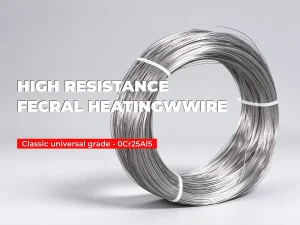
Primary Grades: SGHT (1425°C), SGHYZ (1400°C), HRE (1350°C), 0Cr25Al5, 0Cr23Al5, 0Cr21Al6Nb.
- Passivation Scale: Forms a self-healing, non-porous alpha-alumina ($\alpha\text{-Al}_2\text{O}_3$) protective oxide layer at temperatures above 1000°C.
- Higher Operating Temperatures: Reaches continuous service up to 1425°C, surpassing nickel-based limits.
- High Specific Electrical Resistivity: Ranges from 1.25 to 1.45 $\mu\Omega\cdot\text{m}$, allowing for thicker wire gauges and extended element lifespan.
- Cost & Weight Efficiency: Ferritic structure yields approximately 13-15% lower mass density than NiCr, delivering significantly higher heat output per kilogram.
NiCr Alloys (Austenitic Structure)
Primary Grades: Cr20Ni80 (Nichrome 80/20), Cr30Ni70, Cr15Ni60.
- Passivation Scale: Forms a resilient chromium oxide ($\text{Cr}_2\text{O}_3$) protective scale.
- Superior Mechanical Hot Strength: Excellent ductility at elevated operating temperatures; resists structural sagging and deformation under vertical load.
- Ductility Post-Heating: Retains plastic ductility after prolonged thermal cycles, enabling straightforward maintenance, repair, and element re-coiling.
- Thermal Cycling Stability: Ideal for rapid on/off duty cycles, precision lab furnaces, medical equipment, and domestic heating applications.
At SPARK (Shougang Gitane), our high-temperature FeCrAl grades (such as SGHYZ and SGHT) incorporate precise micro-alloying additions of Yttrium (Y), Hafnium (Hf), and Zirconium (Zr). This rare-earth package refines grain structure boundaries, locks surface oxide adhesion, suppresses oxide scale spallation, and extends dynamic operating lifespan by up to 300% under severe thermal cycling.
Comprehensive Thermal Processing Alloy Technical Matrix
Direct comparison of key chemical, physical, and thermodynamic properties based on GB/T 1234-2012 and mill test certification standards.
| Alloy Grade | Alloy Family | Max Temp (°C) | Resistivity 20°C ($\mu\Omega\cdot\text{m}$) | Density ($\text{g/cm}^3$) | Melting Point (°C) | Key Industrial Applications |
|---|---|---|---|---|---|---|
| SPARK SGHT | FeCrAl (PM Technology) | 1425°C | 1.45 ± 0.07 | 7.10 | 1500 | Semiconductor diffusion, advanced ceramic sintering, crystalline growth |
| SPARK SGHYZ | FeCrAl (Rare Earth Doped) | 1400°C | 1.42 ± 0.07 | 7.10 | 1500 | Ultra-high temp industrial furnaces, powder metallurgy kilns |
| 0Cr21Al6Nb | FeCrAl + Niobium | 1350°C | 1.45 ± 0.07 | 7.10 | 1500 | Heavy-duty industrial furnace coils, radiant heater tubes |
| HRE Grade | FeCrAl High Temp | 1350°C | 1.42 ± 0.07 | 7.10 | 1500 | Heat treatment furnaces, steel mill annealing lines |
| 0Cr25Al5 | FeCrAl Workhorse | 1250°C | 1.42 ± 0.07 | 7.10 | 1500 | General industrial heating, ceramic kilns, continuous heat processing |
| 0Cr23Al5 | FeCrAl Commercial | 1250°C | 1.35 ± 0.06 | 7.25 | 1500 | Industrial baking ovens, radiant panel heaters, domestic heating elements |
| Cr30Ni70 | NiCr High Chrome | 1250°C | 1.18 ± 0.05 | 8.10 | 1380 | Corrosive industrial atmospheres, precision electronic furnaces |
| Cr20Ni80 | NiCr Classic Nichrome | 1200°C | 1.09 ± 0.05 | 8.40 | 1400 | Medical sterilizers, laboratory appliances, plastic welding equipment |
China Supply Chain Excellence & Manufacturing Heritage
Why Tier-1 global equipment manufacturers rely on Shougang Gitane for large-scale, consistent thermal heating wire contracts.
100% Upstream Vertical Integration
Backed by the industrial capital of Shougang Group, our manufacturing facility spans from Vacuum Induction Melting (VIM) and Electroslag Remelting (ESR) down to hot rolling, cold drawing, continuous bright annealing, and dynamic coil packaging. This absolute end-to-end oversight guarantees impurity-free melt chemistries and uniform grain structures.
Micro-Toleranced Wire Drawing
Utilizing high-speed multi-pass diamond die drawing systems, SPARK produces wire dimensions ranging from ultra-fine 0.05mm filaments to heavy-duty 12.0mm industrial rods, maintained within sub-micron dimensional tolerances ($\pm0.002\text{mm}$). Highly uniform cross-sectional geometry eliminates hot-spot resistance spikes.
Scalable Capacity & Rapid Lead Times
Operating over 39,268 m² of specialized workshop space equipped with modern hydrogen-atmosphere continuous bright annealing furnaces, our monthly output exceeds hundreds of metric tons. This enables rapid lead-time execution for large-scale OEM furnace replacement orders and continuous factory supply lines.
Global Enterprise Procurement Standards & Compliance Framework
International industrial buyers operate within rigorous compliance, environmental, and metallurgical frameworks. Sourcing thermal processing resistance wire requires complete verification of mechanical properties, resistivity curves, and environmental standards.
1. Certifications & Traceability Protocols
Every coil and spool of SPARK resistance heating alloy leaves our Beijing plant backed by comprehensive documentation conforming to EN 10204 3.1 Mill Test Certificates (MTC). Our quality inspection protocols include:
- X-Ray Fluorescence (XRF) Spectral Analysis: Verifies exact alloy element stoichiometry (Cr, Al, Ni, Fe, and micro-alloying RE additions).
- 20°C Electrical Resistance Mapping: Ensures strict resistance per meter ($\Omega/\text{m}$) conformance within narrow batch limits.
- Accelerated Life Testing (GB/T 1234 Standard): Simulates thermal cycling to confirm oxidation resistance longevity prior to batch release.
- ISO 9001:2015 & ISO 14001 Certification: Fully documented quality control systems covering raw melt to export packing.
2. Environmental & Hazardous Material Compliance
To support global supply chains in Europe, North America, and Asia-Pacific, SPARK alloys are verified fully compliant with international environmental directives:
- RoHS 3 Compliance (Directive 2015/863/EU): Free from heavy metal contaminants such as Lead, Cadmium, Mercury, and Hexavalent Chromium.
- REACH SVHC Verification: Registration, Evaluation, Authorization, and Restriction of Chemicals protocol adherence.
- Conflict-Free Mineral Sourcing: Responsible sourcing of raw metallic elements verified through transparent supply chain auditing.
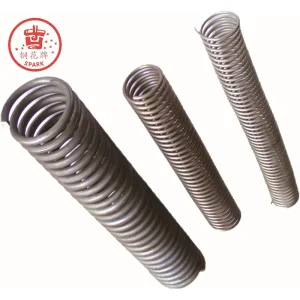
Our global engineering department provides custom surface load calculations ($W/\text{cm}^2$), optimal element shape geometry design (ROD, SPIRAL, WAVE, MESH), and furnace atmosphere compatibility assessments. We assist international OEMs with emergency stocking programs, customs-cleared logistics routes, and tailored packaging in seaworthy wooden cases or reinforced plastic spools.
Emerging Trends in High-Temperature Industrial Thermal Processing
Key technological shifts altering the landscape of industrial electric heating wire demand and alloy design over the next decade.
1. Industrial Decarbonization & Furnace Electrification
Global net-zero mandates are pushing heavy industries (steel heat treatment, aluminum processing, glass melting) away from gas burners toward clean electric heating banks. This decarbonization wave requires thick-gauge FeCrAl alloys operating reliably above 1300°C without frequent replacement cycles.
2. Hydrogen Atmosphere Processing
As green hydrogen replaces carbon monoxide as a reducing agent in powder metallurgy and direct reduced iron (DRI) processes, heating alloys must withstand pure $H_2$ atmospheres without hydrogen embrittlement or rapid aluminum depletion.
3. Smart Thermal Management & PWM Control
Modern fast-response furnaces utilize Pulse-Width Modulation (PWM) and Solid-State Relays (SSR). Heating elements need ultra-stable cold-to-hot resistance ratios ($R_T/R_{20}$) to prevent current surge spikes and electrical control tripping during cold startup.
Localized Application Scenarios & Engineering Implementations
From solar ingot growth to automotive gear heat treating—how SPARK alloys are engineered for specialized thermal environments.
Photovoltaic Ingot & Wafer Processing
Polysilicon crystallization and monocrystalline ingot pulling demand contamination-free heating zones. SPARK SGHT powder-metallurgy wires are deployed in clean vacuum chambers up to 1425°C without outgassing or element sagging.
Lithium Battery Cathode Calcination
Rotary kilns and mesh-belt furnaces producing NCM/LFP battery powders operate under corrosive, lithium-rich gaseous environments. SPARK 0Cr21Al6Nb wires resist alkaline attack and deliver continuous 24/7 campaign lives.
Automotive Gear Carburizing Furnaces
Drivetrain heat treatment utilizes endothermic and gas carburizing atmospheres. High-nickel Cr30Ni70 and specialized FeCrAl elements prevent severe soot deposition, carbon penetration, and green rot degradation.
Technical Sourcing & Metallurgical FAQ
Expert engineering answers to common technical queries regarding thermal processing heating wire selection and installation.
Specialized Tubes, Custom Elements & Furnace Systems
Explore our complete range of specialized steel tubes, high-pressure heat exchanger tubing, and fully customized industrial furnaces engineered by Shougang Gitane.




Request Mill Test Certificates & Direct Factory Quotes
Partner with Beijing Shougang Gitane New Materials Co., Ltd. for certified electrothermal resistance wire, expert element design, and factory-direct wholesale pricing.
Inquire With Our Metallurgical Engineers