Featured High-Temperature Heating Elements & Alloy Wires
Direct Factory Supply from Beijing Shougang Gitane New Materials Co., Ltd. – Engineered for Thermal Stability up to 1425°C.

1. Industry Trends in Tempered Glass Furnace Heating Elements
The Technological Paradigm Shift in High-Efficiency Glass Processing Lines
The global glass processing industry is undergoing a profound thermal transformation. Modern architectural requirements demand ultra-large jumbo glass sizes (up to 20 meters in length), while automotive and solar photovoltaic sectors call for ultra-thin, high-strength tempered glass options (1.6mm–2.8mm). To temper glass without optical distortion, roller wave, or edge dip, modern continuous and oscillating glass tempering furnaces require heating elements that deliver extreme temperature uniformity (±1°C to ±2°C hot-zone accuracy), rapid thermal response, and exceptional resistance to high-temperature creep and sagging.
Transition to Forced Convection
High-E coatings (Low-E glass) reflect up to 90% of radiant thermal energy. Consequently, modern tempering furnaces pair radiant alloy coils with high-pressure forced air convection systems, requiring heating elements capable of withstanding turbulent air erosion and thermal shock cycles without flaking scale onto the glass surface.
Zero Particle Dropping Standards
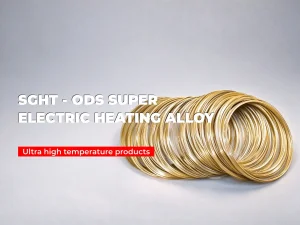
Optical clarity in architectural double-glazed units and automotive head-up displays (HUD) mandates zero oxide flaking. Conventional low-grade iron-chromium-aluminum wires release oxide flakes at high temperatures, ruining glass batches. Advanced alloys like SPARK SGHT utilize powder metallurgy to build an ultra-adherent α-Al₂O₃ protective film.
Decarbonization & LCOH Optimization
With soaring industrial energy costs across Europe, North America, and Asia, glass processing plants prioritize element materials with high electrical resistivity and low mass density. FeCrAl alloys offer a 15% lower density compared to NiCr, translating directly into reduced thermal inertia, faster heat-up times, and significant kWh savings per ton of processed glass.
Technical Insight: According to thermal field studies in modern 700°C–720°C glass heating chambers, the element wire surface temperature operates between 950°C and 1150°C. Choosing high-yield creep-resistant alloys extends element lifespan from 18 months to over 48 months, reducing unscheduled furnace shutdowns by up to 75%.
2. Global Enterprise Procurement Demand & Decision Matrix
Matching Intent: OEM Engineering Specifications vs. Factory Aftermarket Replacement Needs
B2B procurement teams, glass factory plant managers, and furnace OEMs approach heating element sourcing with distinct engineering priorities. Understanding these criteria guarantees that every heating tube, spiral coil, or resistance wire reel perfectly aligns with operational requirements.
Key Procurement Criteria by Buyer Persona
- Furnace Manufacturers (OEMs): Seek standardized electrical resistance tolerances (±3%), precise mechanical dimensions for automated installation, high dimensional stability at temperature, and comprehensive technical documentation (CAD drawings, MTR certificates).
- Glass Tempering Plant Maintenance Chiefs: Focus on drop-in replacement availability, high hot-strength (to prevent sag in horizontal tubes), compatibility with existing ceramic support tubes, and long lifespan under high-frequency PID thyristor power switching.
- Global Wholesale Buyers & Distributors: Demand competitive volume quotes, ISO 9001 quality compliance, corrosion-resistant export packaging, and flexible alloy grade options (FeCrAl vs NiCr) to serve diverse regional furnace brands (e.g., Glaston, Landglass, Northglass, LiSEC).
Engineering Comparison: FeCrAl vs. NiCr Alloys in Glass Tempering Applications
Selecting the right alloy family is a crucial decision impact factor for heating efficiency and equipment life span. Below is an engineering comparison compiled by Shougang Gitane’s metallurgical research facility:
| Technical Property / Metric | SPARK SGHT (FeCrAl PM) | SPARK SGHYZ (FeCrAl) | 0Cr25Al5 (FeCrAl Standard) | Cr20Ni80 (Nichrome) |
|---|---|---|---|---|
| Alloy Category | FeCrAl (Powder Met) | FeCrAl High-Temp | FeCrAl Standard | NiCr 80/20 |
| Max Operating Temperature | 1425°C (2597°F) | 1400°C (2552°F) | 1250°C (2282°F) | 1200°C (2192°F) |
| Resistivity at 20°C (μΩ·m) | 1.45 ± 0.07 | 1.45 ± 0.05 | 1.42 ± 0.05 | 1.09 ± 0.05 |
| Density (g/cm³) | 7.10 | 7.10 | 7.10 | 8.40 |
| High-Temp Sag / Creep Resistance | Outstanding (PM Structure) | Superior (RE Doped) | Moderate | Good |
| Oxide Layer Quality | Dense, Adherent α-Al₂O₃ | Stable α-Al₂O₃ Film | Standard Al₂O₃ Scale | Cr₂O₃ Scale |
| Ductility After Long Thermal Use | Brittle (Handle with care) | Brittle after aging | Brittle after aging | Excellent (Ductile) |
| Typical Glass Zone Application | Ultra-High Power Convection Zones | Main Heating Chamber Spirals | Standard Radiant Elements | Frequent On/Off Radiant Elements |
3. Macro Industry Solutions for Glass Tempering Operations
Overcoming Failure Modes: Sagging, Hot-Spot Burnout, and Optical Distortion
In tempered glass manufacturing lines, heating element failure translates directly to costly downtime, damaged ceramic rollers, and rejected glass panels. Shougang Gitane offers holistic metallurgical and structural solutions tailored to resolve common high-temperature failure modes.
Solution A: Sag-Free Horizontal Radiant Tube Elements
Problem: In horizontal radiant heating tubes, traditional FeCrAl wire suffers from grain growth above 1000°C, causing sagging under its own weight, electrical short-circuiting against ceramic support rods, and local hot-spot burnout.
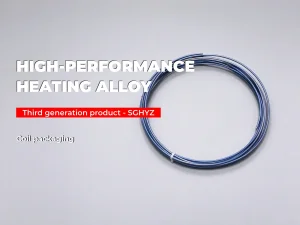
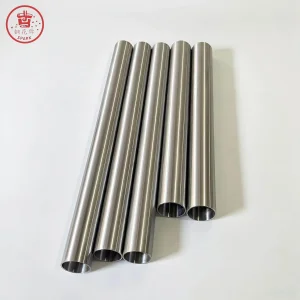
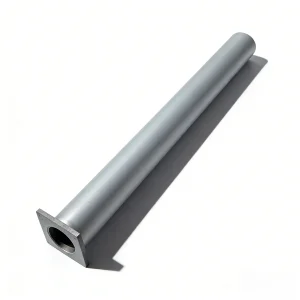
Gitane Engineering Fix: We deploy SGHYZ Rare-Earth Modified FeCrAl Wire or SGHT Powder Metallurgy Alloy Tubes. The refined micro-structure with oxide dispersion strengthening (ODS) prevents intergranular grain boundary sliding, boosting high-temperature creep strength by over 300% compared to standard 0Cr25Al5 wire.
Solution B: Edge-Tuning Multi-Zone Thermal Profiles
Problem: Glass edges heat faster than glass centers, causing optical distortion (roller waves) and bow defects during quench cooling.
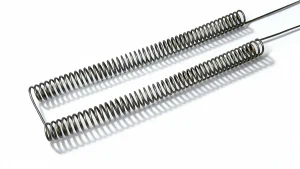
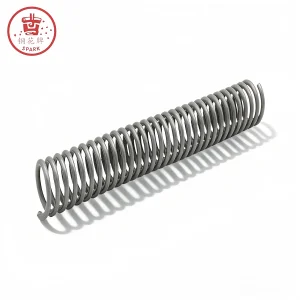
Gitane Engineering Fix: Custom-engineered variable-pitch spiral heating elements and multi-tapped heating elements. By altering coil spacing along a single heating element length, heat flux density is customized across the furnace chamber width, ensuring precise flat glass heating profiles.
4. Global Localization, Compliance & Quality Assurance
Backed by Beijing Shougang Gitane New Materials Co., Ltd. – A Shougang Group Enterprise
In high-stakes industrial procurement, Trust and Reliability (E-E-A-T) are paramount. Founded on decades of state-backed metallurgical excellence and now operating as a core enterprise under the legendary Shougang Group, Beijing Shougang Gitane New Materials Co., Ltd. delivers global-standard quality guarantees for demanding furnace heating applications.
Certified Manufacturing Quality
Certified to ISO 9001 quality management since 2003 (and ISO 9002 in 1996), our manufacturing processes strictly adhere to China's GB/T 1234-2012 high-resistance electric heating alloy standards, as well as international ASTM B603 and DIN 17470 specifications.
100% Traceable Testing
Every batch of resistance wire, strip, and fabricated tube element undergoes rigorous spectroscopic chemical analysis, micro-ohmmeter electrical resistance mapping, eddy current flaw detection, and accelerated life cycle tests (50-hour high-temperature endurance testing).
Global Technical Support & Logistics
With engineering export capabilities, custom technical support in English, sea/air-freight protective packaging (sealed spools inside moisture-proof wooden crates), and rapid turnarounds on direct factory quotes, we serve customers across Europe, the Middle East, Southeast Asia, and the Americas.
5. Technology Roadmap & Future Outlook (2025–2035)
Next-Generation Heating Alloys for Smart, Ultra-Thin, and Hydrogen-Assisted Glass Furnaces
As glass manufacturing evolves toward zero-carbon emissions and extreme precision, Shougang Gitane is actively developing next-generation electric heating technologies designed to meet future industrial demands:
- Powder Metallurgy Nano-Dispersion (PM-ODS): Expanding our flagship SGHT alloy series using ultra-fine nano-scale oxide dispersions (Y₂O₃) to achieve operating temperatures up to 1450°C while maintaining zero grain growth embrittlement.
- Smart Element Condition Monitoring: Integrating embedded micro-sensor wires that track localized changes in electrical resistance over time, alerting furnace control systems to impending localized oxidation before element failure occurs.
- Hydrogen Heating Chamber Compatibility: Engineering specialized alloy compositions resistant to embrittlement in hydrogen-enriched and mixed-gas heating environments, paving the way for decarbonized glass manufacturing.
Technical Q&A: Frequently Asked Sourcing Questions
Expert Engineering Answers to Assist Sourcing & Maintenance Decisions
Standard FeCrAl alloys like 0Cr25Al5 are rated up to 1250°C, while premium rare-earth FeCrAl grades such as SPARK SGHYZ reach 1400°C and powder metallurgy SGHT reaches 1425°C. In contrast, premium Nichrome (Cr20Ni80) is typically capped at 1200°C. In glass tempering furnaces where wire surface temperatures reach 1000°C–1150°C, FeCrAl offers a significantly higher safety margin and lower thermal creep risk.
Conventional ingot-cast FeCrAl wires suffer from rapid grain growth at high temperatures, causing them to sag under gravity and become extremely brittle. SGHT, produced via advanced powder metallurgy, features a fine, uniform grain structure with high oxide dispersion. This provides exceptional hot strength, prevents element sagging in long ceramic tubes, and forms a compact, non-flaking α-Al₂O₃ protective oxide layer that eliminates particle drop onto optical glass panels.
For radiant furnace elements operating in a 700°C chamber temperature environment, recommended surface load densities range from 2.5 W/cm² to 4.5 W/cm², depending on element diameter, coil pitch ratio, and ceramic tube enclosure. In forced convection zones, surface loads can safely reach 5.0 W/cm² to 6.5 W/cm² due to higher convective heat dissipation. Our engineering team can perform exact surface load calculations based on your CAD drawings and electrical schematics.
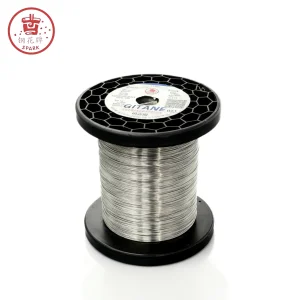
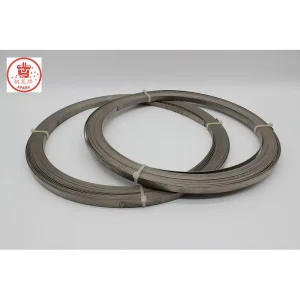
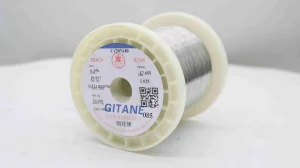
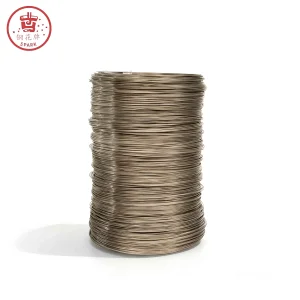
We supply materials in complete customizable forms: round wire (0.05mm to 12.0mm), flat wire/strip (thickness 0.2mm–5.0mm, width 5mm–120mm), pre-wound spiral coils, wave-shaped ribbons, radiant heating tube assemblies, and complete factory-tested heating tube elements ready for immediate drop-in replacement.
Through closed-loop continuous cold drawing, precision annealing, and continuous laser micrometer monitoring, we maintain a tight wire diameter tolerance (±0.01mm) and electrical resistance tolerance within ±3% per spool (meeting GB/T 1234-2012 grade A requirements). This guarantees balanced phase currents and uniform heat output across multi-zone furnace control loops.
Wholesale Heating Elements & Premium Alloy Wires
Complete Range of FeCrAl & NiCr Resistance Wires, Tubes & Custom Coils Direct from Factory