
Featured High-Temperature Alloys & Heating Wires
Precision-engineered electrical resistance materials directly sourced from our integrated manufacturing plant.


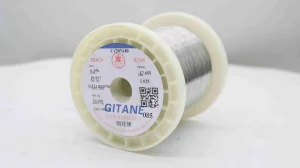



Integrated Manufacturing: From Ore Smelting to High-Spec Heating Elements
In modern thermal process engineering, the performance, lifespan, and dimensional stability of high-temperature electrical resistance alloys are strictly dictated by the purity, grain boundary chemistry, and mechanical processing history established during primary smelting. As global industries accelerate decarbonization through process electrification, demanding operational regimes—ranging from 1100°C glass tempering lines to 1425°C semiconductor wafer diffusion furnaces—require electric heating alloys that resist creep, thermal fatigue, and corrosive high-temperature gas interactions.
This technical document outlines the entire production chain of premier FeCrAl (Iron-Chromium-Aluminum) and NiCr (Nickel-Chromium) resistance alloys. By unifying raw material refining, ingot forging, rod rolling, fine wire drawing, and finished furnace component manufacturing within an ISO 9001 certified ecosystem, we eliminate batch-to-batch resistivity variance and guarantee tight resistance tolerances (±3%).
Primary Performance Indices
-
✔Continuous Service Limits:
Up to 1425°C (SGHT Powder Metallurgy FeCrAl) and 1250°C (Cr30Ni70 Nichrome).
-
✔Adherent Protective Oxides:
Self-healing α-Al₂O₃ (Alpha-Alumina) and Cr₂O₃ (Chromia) oxide scale barriers preventing continuous internal oxidation.
-
✔Resistivity Uniformity:
Controlled chemical tolerances yielding specific electrical resistance within ±0.03 μΩ·m across entire master spools.
-
✔Global Compliance:
Fully certified to GB/T 1234-2012, ASTM B344, DIN 17470, RoHS, and REACH international standards.
End-to-End Manufacturing Methodology: Raw Material Smelting to Finished Elements
A transparent breakdown of four critical metallurgical manufacturing phases that differentiate premium industrial heating wire from commercial commodity alloys.
Smelting & Refining
High-purity raw metals (Norway 99.99% Plum Nickel, electrolytic chromium, ultra-pure aluminum, low-carbon iron) undergo Vacuum Induction Melting (VIM) followed by Electroslag Remelting (ESR). Micro-doping of rare earth elements (Yttrium, Zirconium, Lanthanum) pins grain boundaries and maximizes scale adhesion.
Rolling & Billet Prep
Ingots are homogenized at elevated temperatures to dissolve precipitates and forged into billets. Controlled high-speed hot rolling transforms billets into wire rod coils (Ø5.5mm–Ø8.0mm). Ultrasonic and eddy current testing eliminates surface seams, inclusions, and structural voids before drawing.
Wire Drawing & Annealing
Multi-pass cold wire drawing utilizes polycrystalline diamond (PCD) dies to achieve exact dimensional tolerances (down to Ø0.05mm fine wire or thick strip). Interstage bright hydrogen annealing inside continuous atmosphere tube furnaces relieves work hardening while preserving a smooth, bright, oxide-free surface.
Spooling, Coiling & Delivery
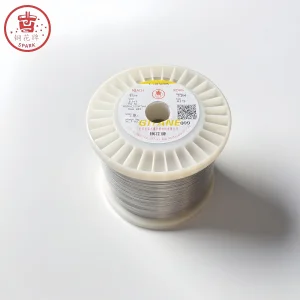
Finished wires are precision-spooled (DIN 160, DIN 200, DIN 250 plastic spools or heavy master coils). For custom OEM requirements, wire is automated-coiled into spiral furnace elements, corrugated ribbons, or formed wave shapes. Every shipment includes 100% spectral chemistry verification and mill certificates.
Powering Global Industrial Heating & Clean Electrification
From petrochemical cracking to zero-emission glass tempering, discover how engineered alloys solve severe high-temperature degradation challenges.
Petrochemical & Energy Industry
Pyrolysis, catalytic reformers, and industrial steel tubes (such as high-performance SGHT grade) operating under severe carburizing and sulfurous gas atmospheres require specialized alloy chemistries. SGHT tubes maintain high hot-yield strength and exceptional resistance to metal dusting, ensuring long campaign life in refinery heat exchangers and energy cracking units.
Glass Tempering & Ceramic Kilns
Architectural and automotive glass tempering furnaces require rapid response, zero particle shedding, and mechanical stability up to 1100°C–1200°C. Proprietary SG140 and Cr20Ni80 alloys provide outstanding sagging resistance, preventing sag-induced electrical short circuits across heavy horizontal ceramic support tubes.
Semiconductor Wafer & Solar PV Production
Photovoltaic ingot pulling and semiconductor thermal oxide diffusion furnaces demand ultra-clean heating elements. Advanced powder metallurgy FeCrAl alloys (such as SGHT and SGHYZ) deliver maximum service temperatures reaching 1400°C–1425°C while releasing negligible volatile trace impurities into pristine cleanroom chambers.
Electric Heating Alloy Grade Selection & Technical Comparison Table
Compare mechanical, chemical, and physical parameters to select the optimal wire, ribbon, or tube alloy for your thermal environment.
| Alloy Grade | Alloy Type | Max Service Temp (°C) | Resistivity (μΩ·m, 20°C) | Density (g/cm³) | Primary Industrial Application | Wholesale Pricing Drivers |
|---|---|---|---|---|---|---|
| Cr20Ni80 | Nickel-Chromium | 1200°C | 1.09 ± 0.05 | 8.40 | Industrial furnaces, medical devices, precision resistors | High Ni content (LME Nickel index tied) |
| Cr30Ni70 | Nickel-Chromium | 1250°C | 1.18 ± 0.05 | 8.10 | Heavy-duty heat treatment, high-temp oil heaters | 50-hr accelerated life rated; High Ni premium |
| Cr15Ni60 | Nickel-Chromium | 1150°C | 1.12 ± 0.05 | 8.20 | Domestic appliances, industrial heating elements | Cost-effective Ni-Cr balance |
| 0Cr25Al5 | Fe-Cr-Al | 1250°C | 1.42 ± 0.07 | 7.10 | Kilns, ceramic kilns, continuous industrial furnaces | Low density yields more meters per kg; High Fe economy |
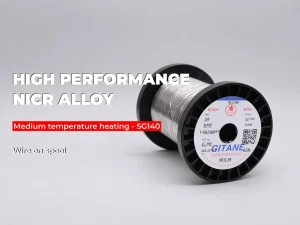
| SG140 | Specialty FeCrAl | 1300°C | 1.45 ± 0.07 | 7.10 | Glass tempering, specialized heat treatment furnaces | Rare earth micro-alloying surcharge |
| SGHT | Powder Metallurgy FeCrAl | 1425°C | 1.45 ± 0.08 | 7.10 | Semiconductor, PV wafer processing, high-temp kilns | PM process engineering & high-purity refining |
Wholesale Pricelist Valuation Formula: Factory pricing is calculated based on:
[Base Metal LME/SMM Index (Ni, Cr, Al)] + [Smelting/ESR Refining Charge] + [Wire Drawing Pass Multiplier (Fine wire < Ø0.2mm incurs higher processing cost)] + [Packaging & Spooling Spec]. Contact our technical sales team for real-time spot quotes and annual volume contract tiers.
Global Regulatory Compliance & Localized Engineering Support
Securing international supply chains requires more than superior metallurgy—it demands rigorous quality compliance, transparent documentation, and seamless localized import support. We provide complete chemical assay certificates and mechanical testing data for every batch shipped worldwide.
Quality Standards
Certified ISO 9001:2015, GB/T 1234-2012, ASTM B344, and DIN 17470 equivalent manufacturing processes.
Environmental Directives
Full compliance with EU RoHS 2.0, REACH SVHC, and Conflict-Free Material Sourcing guidelines.
Custom OEM & Warehousing Services
To support regional furnace builders and maintenance hubs across North America, Europe, Southeast Asia, and the Middle East, we offer tailored logistics and engineering services:
- Custom Spooling & Labeling: Barcoded DIN or NEMA spools with private label engineering tags for OEM distribution.
- Pre-Formed Element Fabrication: Automated coil winding, tail welding, and ceramic insulator assembly according to customer CAD prints.
- Consignment & VMI Stocking: Regional buffer inventory programs to reduce emergency downtime for industrial heat treatment facilities.
- Mill Test Reports (MTR): EN 10204 3.1 chemical composition, room temperature tensile testing, and high-temperature oxidation lifespan data shipped with every container.
Technology Roadmap: The Future of High-Temperature Resistance Alloys
Continuous metallurgical innovation driving the next generation of energy-efficient thermal processing equipment.
Nano-doped Rare Earth Alloys
Refining reactive element additions (Y, Zr, Hf, Ce) to suppress reactive grain growth in FeCrAl alloys at 1300°C–1400°C. This enhances scale adhesion under cyclic thermal shock, doubling thermal cycling lifespan in rapid-fire kilns.
Advanced Powder Metallurgy (PM)
Expanding Oxide Dispersion Strengthened (ODS) FeCrAl alloy wire production. ODS materials exhibit unmatched hot strength and creep resistance at operating temperatures up to 1425°C, eliminating element sagging without structural ceramic supports.
Zero-Decarbonization Smelting
Transitioning primary induction smelting furnaces to 100% green hydrogen and renewable electricity grids, reducing scope 1 and scope 2 embedded carbon footprint across all exported heating alloy products by 2030.
High-Performance Resistance Alloys & Specialized Tubing
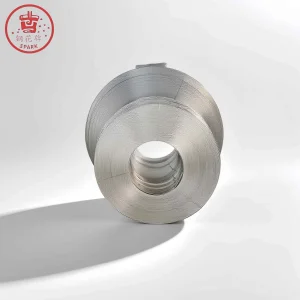
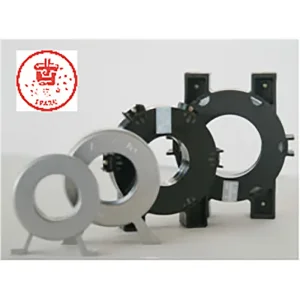
Complete your procurement specification with certified factory-direct elements, spooled wires, and alloy tubes.


Frequently Asked Questions: Technical & Sourcing Manual
Expert answers to common engineering questions regarding alloy selection, atmosphere compatibility, life expectancy, and factory wholesale ordering.
Select FeCrAl if your primary requirement is maximum operating temperature (up to 1425°C), higher electrical resistivity (approx. 1.45 μΩ·m), and lower material density (yielding ~15% more wire meters per kg, which reduces raw material cost). FeCrAl forms a protective alpha-alumina oxide scale ideal for oxidizing atmospheres. Choose NiCr if your equipment undergoes frequent cyclic heating/cooling, requires superior hot strength (sag resistance), or operates in humid or nitrogen-rich atmospheres. NiCr forms a nickel-chromia scale that remains ductile even after prolonged service, allowing elements to be reshaped or repaired.
Accelerated high-temperature life testing (per GB/T 1234 standards) subjects the resistance wire to extreme electrical surface watt loadings at temperatures exceeding its standard rating (e.g., 1200°C–1250°C) under forced thermal cycling. A 50-hour test rating verifies that the alloy composition, low impurity levels, and rare earth additions prevent rapid oxide spallation, embrittlement, or hot-spot burnout, guaranteeing long-term durability in heavy industrial continuous duty.
Atmosphere composition directly interacts with the protective oxide film:
• Air/Oxidizing: Optimal for both FeCrAl and NiCr alloys as it continuously heals oxide layers.
• Carburizing (Carbon-Rich): FeCrAl alloys resist carbon penetration better than NiCr due to the dense alumina oxide layer. Carbon pickup in NiCr leads to internal "green rot" oxidation.
• Reducing (Pure Hydrogen/Dissociated Ammonia): Reduces chromia oxides. FeCrAl elements must be pre-oxidized in air prior to hydrogen service to establish an alumina barrier.
• Sulfurous: Highly corrosive to NiCr; FeCrAl alloys should be specified exclusively.
Standard wire gauges (Ø0.5mm to Ø8.0mm) and standard flat strip sizes are maintained in master coil stocks with flexible MOQs starting at 50 kg per specification. Custom fine wire drawing (< Ø0.10mm) or special powder-metallurgy SGHT tube sizes are produced to order with MOQs typically ranging from 100 kg to 500 kg depending on die setup. Packaging options include DIN 160/200/250 spools, moisture-proof vacuum wrapping, wooden crates, and export pallets.
Ready to Optimize Your Industrial Heating Elements?
Connect directly with our senior metallurgical engineers for custom wire sizing calculations, surface watt loading optimization, and real-time wholesale pricelists.