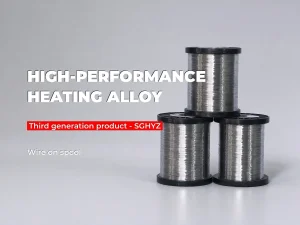
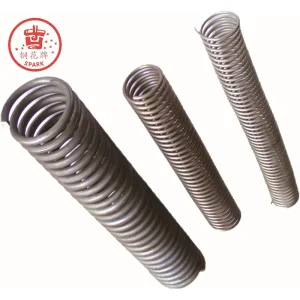
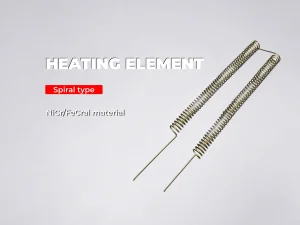
Featured High-Temperature Alloys & Furnaces (Part I)
Browse our certified electric heating wires, high-resistance alloy spools, and custom industrial furnace solutions manufactured to GB/T 1234-2012 standards.

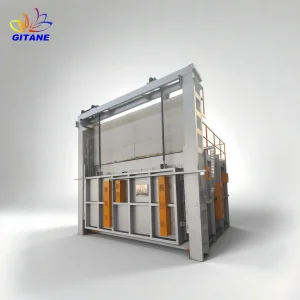




Engineering 1200°C Continuous Thermal Resilience
Continuous operation at ultra-high temperatures demands precise elemental ratios, controlled grain growth dynamics, and self-healing oxide scale formation. Here is how modern electrothermal alloys achieve structural permanence.
Passivation & Oxide Scale Kinetics
At temperatures exceeding 1000°C, ordinary metals undergo rapid catastrophic oxidation. FeCrAl alloys (such as 0Cr25Al5 and 0Cr23Al5) self-passivate by forming an ultra-dense, adherent surface layer of Alpha-Alumina ($\alpha$-Al₂O₃). This ceramic coating acts as an impenetrable barrier against oxygen diffusion, exhibiting a thermal expansion coefficient closely matched to the parent alloy to prevent thermal spallation during rapid temperature cycling.
Grain Boundary Stabilizers (Nb, Y, Zr)
Thermal creep—the slow deformation under constant mechanical load at elevated temperatures—is the primary failure mode of heating elements. By doping alloys with micro-alloying elements such as Niobium (as seen in 0Cr21Al6Nb) and Rare Earth Elements (Yttrium, Zirconium), grain boundary sliding is pinned. This microstructural stabilization yields superior hot-yield strength and prevents physical sag in horizontally suspended furnace coils.
NiCr vs. FeCrAl Thermodynamic Mechanics
Nickel-Chromium alloys (Cr20Ni80, Cr30Ni70, Cr15Ni60) form a protective Chromia ($\text{Cr}_2\text{O}_3$) scale. While Chromia offers excellent hot strength and post-use ductility (allowing coils to be reshaped after hundreds of heat cycles), FeCrAl alloys offer higher maximum operating temperatures (up to 1425°C), higher electrical resistivity, and a 15% lower specific density—resulting in substantial material weight savings for global OEMs.
| Alloy Grade | Material Family | Max Continuous Temp (°C) | Resistivity at 20°C ($\mu\Omega\cdot\text{m}$) | Density ($\text{g/cm}^3$) | Primary Industrial Advantage |
|---|---|---|---|---|---|
| 0Cr25Al5 / SPARK | FeCrAl | 1250°C | 1.42 | 7.10 | High electrical load, low material density, cost-efficient mass production. |
| 0Cr21Al6Nb | FeCrAl + Nb | 1350°C | 1.45 | 7.10 | Nb addition stops creep; exceptional sag-resistance in large furnace spans. |
| SGHYZ / SGHT | PM FeCrAl | 1400°C - 1425°C | 1.48 | 7.15 | Powder metallurgy refined; extreme resistance to high-temperature deformation. |
| Cr20Ni80 | NiCr | 1200°C | 1.09 | 8.40 | High mechanical strength, non-magnetic, supreme post-use ductility. |
| Cr30Ni70 | NiCr | 1250°C | 1.18 | 8.10 | Enhanced oxidation endurance under aggressive thermal cycling & chemical exposure. |
The China Supply Chain Moat: Unmatched Scale & Quality Control
Manufacturing world-class electrothermal resistance wire requires strict metallurgical control from raw ingot smelting down to sub-millimeter cold drawing. Here is how our factory delivers global technical dominance.
Vacuum Induction Smelting (VIM + ESR)
We eliminate harmful interstitial impurities such as sulfur, phosphorus, and dissolved gases by utilizing Vacuum Induction Melting followed by Electro-Slag Remelting. This double-vacuum process ensures ultra-clean alloy melts, eliminating non-metallic inclusions that trigger premature localized electrical burnout.
Precision Cold-Drawing & Bright Annealing
Our facility houses continuous multi-pass cold-drawing lines equipped with laser diameter monitors. Every meter of wire—from 0.05mm micro-filaments to 10.0mm heavy rods—undergoes hydrogen atmosphere bright annealing, guaranteeing uniform tensile strength, surface mirror finish, and zero oxidation before coiling.
Full Batch Traceability & ISO 9001 Compliance
Every wholesale delivery includes a comprehensive Mill Test Certificate (MTC) stating exact chemical ladle analysis, room-temperature electrical resistance ($\Omega/\text{m}$), elongation percentage, and accelerated life test results (in accordance with GB/T 1234-2012 / ASTM B603 standards).
Global Decarbonization & Industrial Heat Electrification
As global manufacturing shifts away from fossil-fuel combustion toward carbon-neutral electric heating, high-efficiency resistance alloys serve as the backbone of next-generation thermal engineering.
Gas-to-Electric Furnace Conversion
Heavy industries are actively replacing gas burners with clean electric resistance heating systems to eliminate direct Scope 1 carbon emissions. Our 1200°C certified FeCrAl alloys enable high-energy-density thermal conversion with net zero direct carbon footprint.
Photovoltaic & Semiconductor Expansion
The manufacturing of monocrystalline silicon ingots and solar wafer diffusion processes requires contaminant-free thermal environments operating reliably at 1200°C–1400°C. Pure alloy wire coils eliminate atmospheric particle contamination.
Battery Materials Sintering
Lithium-ion battery cathode materials (NMC, LFP) require ultra-precise temperature profiles during calcination in rotary and roller hearth furnaces. Stable electrical resistance ensures precise localized zone control within ±1°C.
Energy Efficiency Optimization
High-resistivity FeCrAl wires allow furnace builders to design thinner, lighter element spirals. Lower thermal mass means faster heat-up times, minimal thermal lag, and reduced overall kilowatt-hour energy consumption per heat treatment cycle.
Field Application Scenarios & Operating Environments
Selecting the proper electrothermal wire requires matching chemical composition to specific working atmospheres, physical geometric layouts, and duty-cycle demands.
Heavy Industrial Heat Treating
Used extensively in pit furnaces, box furnaces, and continuous belt annealing lines for steel quenching, tempering, and carburizing. 0Cr23Al5 and 0Cr25Al5 ribbon and heavy rod elements provide long service life under oxidizing atmospheres up to 1250°C.
Ceramic, Glass & Kiln Firing
High-temperature ceramic firing, glass bending, and tempering kilns demand structural immobility. Our 0Cr21Al6Nb and SGHYZ coiled elements maintain precise winding pitch without sagging or inter-turn short-circuiting at 1200°C–1400°C.
Commercial Appliances & Tubular Heaters
Cr20Ni80 and Cr15Ni60 fine wire grades are ideal for mica heaters, quartz tube elements, industrial hot air guns, and domestic heating appliances where frequent rapid power cycling and mechanical vibration are present.
B2B Sourcing Framework: Total Cost of Ownership (TCO)
For global EPC contractors, furnace OEMs, and maintenance engineering buyers, purchasing resistance wire extends beyond initial price per kilogram. Total Cost of Ownership dictates operational profitability.
1. Surface Load Rating ($W/\text{cm}^2$)
Overloading wire surface power density drastically shortens element life. Our technical engineering team provides free surface load calculations based on your furnace insulation type, operating temperature, and element pitch, ensuring maximum operational longevity.
2. Atmosphere Compatibility Matrix
While FeCrAl excels in air and oxidizing environments, NiCr alloys (Cr30Ni70) demonstrate superior resistance in reducing atmospheres, nitrogen, and endothermic gas environments where green rot (carburization attack) must be prevented.
3. Direct Wholesale & Custom Packaging
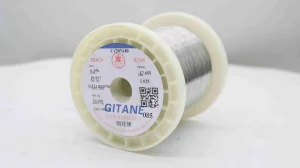
Supplied on DIN 200/250/350 plastic spools, heavy wooden drums, or custom coiled elements. Factory-direct pricing model cuts out intermediary distributors, delivering transparent tier-volume pricing with short lead times.
Technical & Procurement FAQ
Direct answers to technical queries frequently asked by thermal design engineers and international procurement managers.
What makes an electrothermal alloy certified for continuous operation at 1200°C?
How do I choose between FeCrAl (e.g., 0Cr25Al5) and NiCr (e.g., Cr20Ni80) for my furnace?
What role does Niobium (Nb) play in alloys like 0Cr21Al6Nb?
What delivery forms are available for wholesale orders?
How does furnace atmosphere affect element life at 1200°C?
What is the standard lead time and quality assurance for export orders?
Featured High-Temperature Alloys & Furnaces (Part II)
Explore our full line of specialized heating elements, high-temperature FeCrAl wires, and heat exchanger seamless tubes.