
High-Performance Electrothermal Products (Part I)
Direct factory supply of certified industrial heating elements, alloy wires, and high-purity thermal process components.





Global Semiconductor Heat Treatment Ecosystem & Technical Mandates
An exhaustive exploration into thermal processing dynamics, wafer annealing mechanics, and high-purity electrothermal alloy selection for modern semiconductor foundries.
Global Wafer Processing Demands
As semiconductor technology nodes compress below 7nm and transition toward 2nm gate-all-around (GAA) architectures, thermal processing has evolved into a critical yield-determining phase. Heat treatment processes—including Rapid Thermal Processing (RTP), high-temperature diffusion, drive-in oxidation, chemical vapor deposition (CVD), and atomic layer deposition (ALD)—demand absolute thermal stability, micro-second response speeds, and ultra-clean furnace environments. Modern 300mm wafer fabrication plants cannot tolerate metallic vapor contamination, grain boundary sagging, or thermal gradient fluctuations exceeding ±0.5°C across the entire heated zone.
Third-Gen Semiconductors (SiC/GaN)
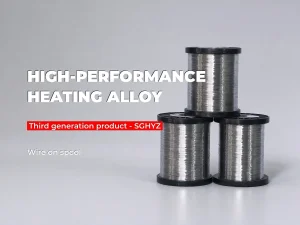
The global surge in electric vehicles (EVs), renewable energy inverters, and high-voltage industrial power supplies has driven unprecedented demand for Wide Bandgap (WBG) semiconductors, specifically Silicon Carbide (SiC) and Gallium Nitride (GaN). SiC wafer processing requires extreme thermal budgets: crystal growth and post-implantation dopant activation annealing occur at temperatures ranging between 1300°C and 1700°C. Standard resistance heating alloys fail rapidly under these conditions due to creep, accelerated oxidation, and structural deformation. Powder metallurgy FeCrAl alloys (such as SGHT) and rare-earth enhanced FeCrAl (such as SGHYZ) deliver the necessary dimensional stability and anti-sagging performance required for high-yield SiC manufacturing.
Low-Outgassing Purity Standards
In ultra-high vacuum (UHV) semiconductor processing, electrothermal elements must exhibit zero heavy metal vapor pressure. Trace contamination of iron (Fe), copper (Cu), or nickel (Ni) into single-crystal silicon wafers creates deep-level traps that ruin carrier lifetime and destroy device yield. Modern semiconductor furnace engineering utilizes optimized FeCrAl formulations with controlled micro-doping of rare earth elements (Yttrium, Zirconium, Hafnium). These elements instantly form a dense, non-spalling, self-passivating Alpha-Alumina ($\alpha\text{-Al}_2\text;O_3$) protective shell, insulating the metallic core and locking in trace constituents even under 1400°C continuous operation.
China Factory Efficiency & Wholesale Pricelist Benchmarking
How integrated metallurgy, raw material sovereignty, and advanced wire drawing infrastructure lower the Total Cost of Ownership (TCO) for global semiconductor OEMs.
Vertical Integration: From Liquid Metal to Coiled Element
Beijing Shougang Gitane New Materials Co., Ltd. operates an integrated metallurgical production footprint spanning 88,000 m² in Shahe, Beijing. Backed by the raw material processing capacity of the Shougang Group, our factory controls every production phase: Vacuum Induction Melting (VIM), Electroslag Remelting (ESR), hot rolling, precision cold drawing, continuous hydrogen annealing, and automatic CNC coil winding.
By eliminating middleman alloy stockists and sub-contracted wire drawers, Chinese manufacturing hubs yield a 25% to 40% cost efficiency over European and North American suppliers without compromising grain structure, electrical resistivity tolerance, or thermal lifespan.
Semiconductor Heat Treatment Wholesale Pricelist Guide
Wholesale pricing for semiconductor heat treatment alloys and industrial furnaces is governed by alloy purity, wire diameter, precision tolerances, and order volume. The matrix below outlines standardized pricing tiers for enterprise procurement managers evaluating direct China factory supply.
| Alloy Grade | Primary Temp Limit | Form Factor | Wholesale Price Range (USD/kg) |
|---|---|---|---|
| 0Cr25Al5 FeCrAl | 1250°C | Wire (0.5mm - 8.0mm) | $8.50 - $14.00 |
| Cr20Ni80 Nichrome | 1200°C | Strip / Flat Ribbon | $22.00 - $35.00 |
| HRE High-Temp Alloy | 1350°C | Spiral Heating Coils | $18.00 - $28.00 |
| SGHYZ Ultra Alloy | 1400°C | Precision Drawn Wire | $32.00 - $48.00 |
| SGHT Powder Metal | 1425°C | Custom Element Sets | $55.00 - $85.00 |
* Note: Prices vary based on raw material market fluctuations (Nickel, Chromium, Aluminum, Rare Earths), customization specs, and MOQs. Contact factory for formal commercial quotations.
FeCrAl vs NiCr Selection Matrix for Semiconductor Equipment
Choosing the ideal alloy family requires evaluating electrical resistivity, maximum element operating temperature, high-temperature creep strength, and atmosphere compatibility.
| Property / Specification | FeCrAl Family (e.g., 0Cr25Al5, SGHYZ) | NiCr Family (e.g., Cr20Ni80, Cr30Ni70) | Semiconductor Processing Impact |
|---|---|---|---|
| Max Operating Temperature | Up to 1425°C (SGHT Powder Metallurgy) | Up to 1250°C (Cr30Ni70) | FeCrAl enables high-temp SiC annealing & heavy oxidation processing. |
| Electrical Resistivity (20°C) | 1.35 - 1.45 $\mu\Omega\cdot\text{m}$ (Higher Efficiency) | 1.09 - 1.18 $\mu\Omega\cdot\text{m}$ | Higher resistivity allows smaller wire cross-sections and compact element design. |
| Density | 7.10 g/cm³ (Lightweight) | 8.40 g/cm³ | FeCrAl provides approx. 15% material weight savings per meter of element. |
| Protective Surface Oxide Scale | Dense Alpha-Alumina ($\alpha\text{-Al}_2\text;O_3$) | Chromium Oxide ($\text;Cr_2\text;O_3$) | Alumina scale prevents metallic vapor outgassing inside cleanroom quartz tubes. |
| Ductility After Prolonged Use | Brittle (Requires careful maintenance) | Ductile (Remains flexible after thermal cycling) | NiCr is preferred for furnace configurations subjected to frequent mechanical stress. |
| Atmosphere Compatibility | Oxidizing, Air, Vacuum, Carburizing | Nitrogen, Ammonia, Reducing, Inert Gas | NiCr excels in nitride furnace processes; FeCrAl excels in oxidation & diffusion. |
Localized Application Scenarios in Semiconductor Manufacturing
How modern semiconductor heat treatment facilities deploy tailored electrothermal systems across the fab ecosystem.
1. Horizontal & Vertical Diffusion Furnaces
Silicon wafer thermal oxidation, boron/phosphorus dopant drive-in diffusion, and LPCVD poly-silicon deposition rely on multi-zone vertical quartz tube furnaces. These systems utilize continuous helical heating elements manufactured from 0Cr21Al6Nb or SGHYZ wire. Precise resistance matching across zones guarantees tight thermal profiling (within ±0.5°C across a 1000mm heated zone), eliminating wafer bow and warp during thermal ramp up.
2. Rapid Thermal Processing (RTP) & RTA
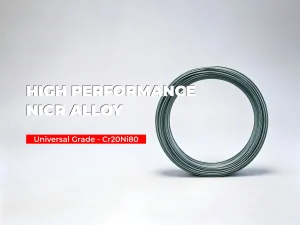
Rapid Thermal Annealing (RTA) requires heating rates exceeding 50°C/second to repair ion implantation crystal lattice damage without causing unwanted dopant diffusion. Custom-designed low-thermal-mass spiral heating elements and infrared filament arrays made from high-purity Cr20Ni80 or SGHT alloys deliver fast optical emissivity, precise power feedback, and rapid ramp-down capability essential for advanced sub-10nm chip production.
3. Wide Bandgap (SiC/GaN) Sintering & Epitaxy
Silicon Carbide epitaxial growth and post-implantation annealing demand processing environments between 1350°C and 1600°C. In these severe thermal zones, traditional heating alloys collapse due to grain coarsening. Powder-metallurgy SGHT heating coils—engineered with dispersion-strengthened oxide microstructures—resist sagging, creep, and atmosphere reaction, enabling continuous high-yield production of 150mm and 200mm SiC power electronics wafers.
Global Procurement Guide for Enterprise Buyers
Ensuring quality compliance, traceable metallurgical certification, and long-term supply chain resilience when sourcing electrothermal materials from China.
Key Technical Verification Checklist
When issuing RFQs for wholesale semiconductor heat treatment elements or heating wires, procurement managers should enforce the following technical parameters:
- Chemical Composition Tolerances: Request certified ladle analysis detailing exact percentages of Chromium, Aluminum, Nickel, and active rare-earth additions (Y, Zr, Hf).
- Resistivity Uniformity: Mandate electrical resistance testing per meter with a strict variance threshold below ±3% across the entire coil batch.
- Surface Finish & Cleanliness: Specify bright-annealed, degreased, or electro-polished surfaces to eliminate oil residue, carbonization, or drawing lubricant contaminants.
- Accelerated Life Testing: Request 50-Hour High-Temperature Accelerated Life Test reports (GB/T 1234 standard) to verify oxidation endurance before shipment.
Factory Qualification & Supply Chain Security
Partnering with a Tier-1 primary manufacturer like Shougang Gitane guarantees long-term material stability and engineering continuity:
- Quality System Accreditations: Fully compliant with ISO 9001:2015 quality management standards with complete heat-number batch traceability.
- Custom Fabrication & OEM Capability: Direct drawing, strip cold-rolling, coiling, and ceramic insulation assembly based on client CAD / STP files.
- Global Logistics Infrastructure: Export-grade packaging, including moisture-sealed vacuum bags, shock-proof wooden crates, and express air/sea freight routing.
- Direct Engineering Support: In-house metallurgists assist in thermal surface load calculations ($W/cm^2$) to maximize element operational lifespan.
Frequently Asked Questions (FAQ)
Addressing key technical, commercial, and operational queries from semiconductor equipment designers and procurement specialists.
What is the maximum continuous temperature rating of SPARK heating alloys for semiconductor heat treatment?
Our electrothermal alloys span multiple temperature tiers depending on metallurgical formulation. Standard FeCrAl alloys (such as 0Cr25Al5) operate continuously up to 1250°C. Advanced HRE alloys reach 1350°C, SGHYZ reaches 1400°C, and our flagship powder-metallurgy SGHT alloy achieves continuous operational stability up to 1425°C. For NiCr alloys (e.g., Cr20Ni80), the maximum operating temperature is 1200°C.
Why is FeCrAl preferred over NiCr for semiconductor oxidation and diffusion quartz furnaces?
FeCrAl alloys form a super-dense, non-spalling Alpha-Alumina ($\alpha\text{-Al}_2\text;O_3$) protective oxide layer on their surface when heated. This alumina scale acts as a thermal seal that prevents iron and chromium atoms from outgassing or vaporizing into the quartz furnace chamber, protecting silicon wafers from metallic impurity contamination. Additionally, FeCrAl offers higher electrical resistivity and a higher melting point compared to NiCr.
How does the factory ensure wire resistivity consistency across a wholesale order?
Beijing Shougang Gitane employs continuous online resistance monitoring during the fine wire drawing and strand hydrogen-annealing processes. Chemical compositions are strictly locked during Vacuum Induction Melting (VIM). Standard resistivity tolerance is maintained within ±3%, and precision grades can be held within ±1.5% according to customer specification, accompanied by certified Mill Test Reports (MTR) per EN 10204 3.1.
What information is required to receive an exact wholesale price quote and lead time?
To provide an accurate factory price quote, please specify: (1) Alloy grade (e.g., 0Cr25Al5, Cr20Ni80, SGHT), (2) Product form factor (round wire diameter, strip thickness/width, or pre-coiled element dimensions), (3) Total weight or linear meters required, (4) Special packaging or tolerance requirements, and (5) Destination port or delivery zip code.
Can you manufacture custom-designed spiral heating elements from client technical drawings?
Yes. We operate an in-house fabrication center equipped with automated CNC coiling, bending, and terminal welding machinery. We custom manufacture spiral heating elements, meander-shaped ribbon heaters, ceramic-mounted furnace modules, and complete industrial furnace chambers based on customer CAD, STP, or PDF engineering drawings.
What quality certifications and compliance standards govern your manufacturing process?
Our production facilities operate under ISO 9001:2015 Quality Management Systems (first certified in 1996 as ISO 9002). All heating alloys are manufactured, tested, and inspected in accordance with China National Standard GB/T 1234-2012 (High-resistance Electric Heating Alloys) as well as international equivalents such as ASTM B603, DIN 17470, and JIS C2520.
High-Performance Electrothermal Products (Part II)
Specialized high-temperature resistance materials, SGHT steel tubes, and custom furnace solutions for advanced thermal engineering.



Optimize Your Thermal Process Yield Today
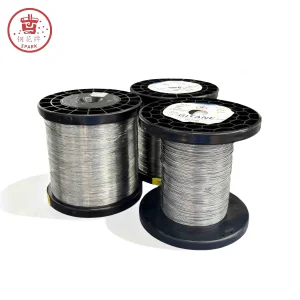
Consult with Beijing Shougang Gitane’s senior metallurgical engineering team to select the ideal electrothermal wire, spiral element, or custom industrial furnace for your semiconductor fab.