
⚡ Featured Semiconductor & Industrial Heating Elements (Part I)
Explore our top-tier precision-drawn heating alloy wires, spiral elements, and high-temperature furnace components engineered for zero-contamination thermal processing.

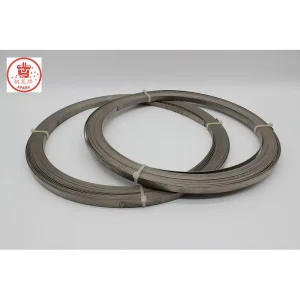


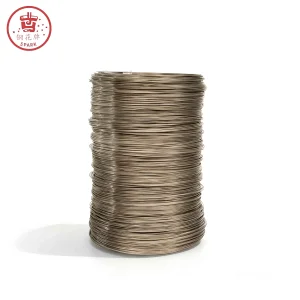

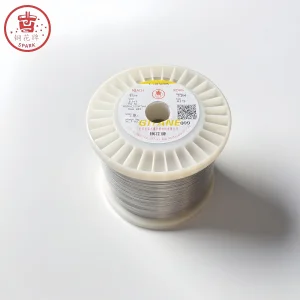
🔬 Semiconductor Thermal Processing: Metallurgical Requirements for Heating Alloys
In modern semiconductor fabrication—encompassing silicon wafer oxidation, diffusion, LPCVD (Low-Pressure Chemical Vapor Deposition), epitaxial growth, and advanced ceramic sintering—thermal control within the process chamber directly determines yields at sub-10nm nodes. The heating wire within horizontal and vertical diffusion furnaces serves as the core engine of heat generation. Achieving strict thermal uniformity ($\pm 0.5^\circ\text{C}$ across 1200mm hot zones) requires heating element wires manufactured to extraordinary purity, exact electrical resistivity tolerances, and extreme resistance to high-temperature sagging and particulate spallation.
When global original equipment manufacturers (OEMs) and semiconductor fabs search for Wholesale semiconductor furnace heating wire Suppliers & Factory partners, the decision extends far beyond basic cost-per-kilogram metrics. Semiconductor furnace heating elements operate under severe environmental strain, including fast thermal cycling, corrosive reactive gas ambient (hydrogen, ammonia, silane, halogen compounds), and prolonged exposure to temperatures ranging from $1000^\circ\text{C}$ to $1425^\circ\text{C}$.
⚡ FeCrAl vs. NiCr Alloys in Semiconductor Thermal Chambers
Selecting between Iron-Chromium-Aluminum (FeCrAl) alloys (such as 0Cr25Al5, 0Cr21Al6Nb, SGHYZ, and SGHT) and Nickel-Chromium (NiCr) alloys (such as Cr20Ni80, Cr15Ni60, and Cr30Ni70) is dictated by operating temperature, atmospheric chemistry, and hot-strength criteria:
| Alloy Class & Grade | Max Operating Temp | Resistivity (μΩ·m, 20°C) | Oxide Scale Type | Primary Semiconductor Application |
|---|---|---|---|---|
| SGHT (Powder Metallurgy FeCrAl) | 1425°C | 1.45 | $\alpha\text{-Al}_2\text{O}_3$ (Adherent Alumina) | Vertical/Horizontal Wafer Diffusion & LPCVD Furnaces |
| SGHYZ (Ultra-High Temp FeCrAl) | 1400°C | 1.42 | $\alpha\text{-Al}_2\text{O}_3$ (Dense Passivating) | SiC / GaN Crystal Growth & Sintering Furnaces |
| 0Cr25Al5 / 0Cr21Al6Nb | 1250°C - 1350°C | 1.42 / 1.40 | $\text{Al}_2\text{O}_3$ (Standard Alumina) | General Heat Treatment & Thermal Processing Elements |
| Cr30Ni70 (High-Purity NiCr) | 1250°C | 1.18 | $\text{Cr}_2\text{O}_3$ (Chromia Film) | Nitrogen/Reducing Gas Ambient Wafer Annealing |
| Cr20Ni80 / Cr20Ni80S | 1200°C | 1.09 | $\text{Cr}_2\text{O}_3$ (Chromia Film) | Fast Cycling Thermal Chambers & Quartz Tube Heaters |
🧪 Information Gain: Passivation Mechanics & Grain Structure Control
To deliver genuine "information gain" for thermal engineers, we must address the fundamental failure modes of furnace wire in fab environments: thermal sag (creep deformation) and particle flaking (contamination).
🛡️ Micro-Alloying with Reactive Elements
By doping our proprietary FeCrAl alloys with trace lanthanides—specifically Yttrium (Y), Hafnium (Hf), and Zirconium (Zr)—our SPARK metallurgical process modifies the parabolic oxidation rate constant. This forms an ultra-dense, self-healing $\alpha\text{-Al}_2\text{O}_3$ alumina protective layer that prevents further metal oxidation and completely eliminates micro-spallation that could contaminate quartz processing tubes.
⚖️ Powder Metallurgy (SGHT Grade)
Traditional ingot-melted FeCrAl suffers from grain growth above $1100^\circ\text{C}$, leading to low hot-strength and room-temperature brittleness post-heating. SPARK's powder-metallurgy SGHT grade creates an elongated, interlocking grain structure (high aspect ratio) that increases creep resistance at $1400^\circ\text{C}$ by over 300% compared to standard 0Cr25Al5 wire.
✨ Cleanroom-Ready Finishing
Semiconductor heating wires undergo multi-stage bright annealing, ultrasonic chemical degreasing, and golden-surface electrolytic polishing. This guarantees zero surface lubricants, oils, or carbon residues, preventing outgassing during initial furnace ramp-up in pristine cleanroom environments.
🏭 China Supply Chain Advantages: End-to-End Metallurgical Mastery
As a core manufacturing unit within Beijing Shougang Gitane New Materials Co., Ltd. (a member of the prestigious Shougang Group), our production complex spans over 88,000 m² with 39,268 m² dedicated to high-precision wire drawing, rolling, and thermal processing workshops. Partnering directly with a premier China factory supplier unlocks decisive strategic advantages for global semiconductor equipment builders:
1. Vertical Raw Material Integration
From Vacuum Induction Melting (VIM) and Electroslag Remelting (ESR) to hot rolling and diamond-die precision wire drawing, every step is controlled in-house. This eradicates upstream raw material variations and guarantees batch-to-batch chemical homogeneity.
2. Unmatched Cost Efficiency
By combining China's fully mature industrial supply chains with advanced automated continuous wire-drawing machinery, we supply premium-grade resistance wire at factory-direct wholesale prices, dramatically reducing capital expenditure for furnace OEMs.
3. Massive Production Scale & Agility
With over 500 dedicated employees—30% of whom are specialized metallurgical engineers—our production lines output thousands of tons of electric heating wire, ribbon, strip, and pre-formed heavy-duty heating coils annually with ultra-fast lead times.
🌐 Global Procurement Needs & Localized Compliance Guarantee
Global semiconductor supply chains require rigorous compliance, traceability, and localized engineering support. International procurement departments face mounting pressures regarding ESG, REACH/RoHS directives, and cross-border technical alignment.
📋 Quality Audits & Mill Test Certificates
Every shipment is delivered with EN 10204 3.1 Mill Test Certificates detailing exact ladle chemical analysis, ambient electrical resistance ($\Omega/\text{m}$), tensile strength, elongation, and yield point. Fully compliant with GB/T 1234-2012 and international standards.
🌿 Environmental & Regulatory Compliance
All SPARK FeCrAl and NiCr alloy wires are fully certified under ISO 9001:2015, ISO 14001 environmental management standards, RoHS 3.0, and EU REACH directives, ensuring frictionless import clearances into Europe, North America, and Southeast Asia.
🛠️ Localized Application Engineering
Our technical field team assists international buyers with surface load calculations ($\text{W/cm}^2$), pitch-to-diameter ratio design for pre-coiled elements, and alloy substitution analysis to replace legacy European/Japanese wire grades with identical or superior SPARK alternatives.
📈 Semiconductor Industry Trends & Application Scenarios (2025–2030)
The global surge in Artificial Intelligence (AI) chips, automotive power electronics (SiC/GaN), and 3D NAND flash memory is driving unprecedented expansion in semiconductor fab capacity. Thermal processing equipment is evolving toward higher temperatures, larger wafer sizes (300mm to 450mm), and accelerated cycle times.
⭕ Vertical Wafer Diffusion Tubes
Demands ultra-precise multi-zone heating spirals. SPARK SGHT wire ensures minimal resistance drift across thousands of thermal hours, holding inter-zone thermal gradients to near-zero levels during boron/phosphorus diffusion steps.
⚡ Silicon Carbide (SiC) Epitaxy & Sintering
Wide Bandgap (WBG) power semiconductors require processing temperatures exceeding $1350^\circ\text{C}$. SPARK SGHYZ and SGHT alloys provide stable continuous service at these elevated regimes where standard Nichrome melts or deforms.
💧 Rapid Thermal Processing (RTP) & LPCVD
RTP equipment imposes rapid heating and cooling ramps ($\Delta T > 50^\circ\text{C/sec}$). High-grade SPARK Cr20Ni80S and Cr30Ni70 deliver exceptional thermal fatigue resistance and mechanical toughness under cyclic stress.
⚙️ Featured Semiconductor & Industrial Heating Elements (Part II)
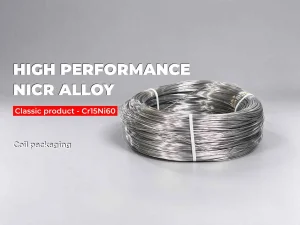
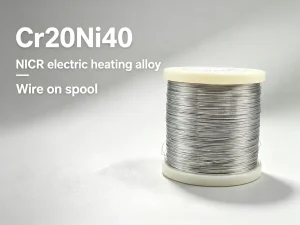
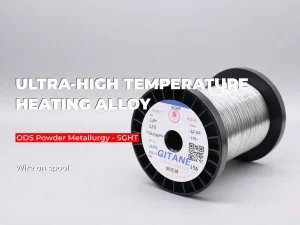
Browse additional high-temperature resistance alloy products, nickel-chrome wires, and heavy-duty industrial furnace components available for wholesale orders.


❓ Frequently Asked Questions (FAQ) for Global Buyers & Engineers
Get instant clarity on technical selection, factory minimum order quantities (MOQ), delivery forms, and quality verification processes.
SPARK SGHT is manufactured via advanced powder metallurgy rather than conventional ingot melting. This results in an ultra-clean microstructure with high hot strength and exceptional creep resistance at temperatures up to $1425^\circ\text{C}$. It forms an adherent, non-flaking $\alpha\text{-Al}_2\text{O}_3$ scale that prevents particulate release inside wafer processing chambers, protecting quartz components and semiconductor wafers from metallic contamination.
Choose FeCrAl (e.g., 0Cr25Al5, SGHYZ, SGHT) when operating temperatures exceed $1200^\circ\text{C}$, or when higher electrical resistivity and lower material density are needed to maximize energy efficiency and cut wire weight. Choose NiCr (e.g., Cr20Ni80, Cr30Ni70) if the heating elements are subjected to frequent cold-start thermal cycling, require high ductility after prolonged heating, or operate in nitrogen-containing reducing atmospheres.
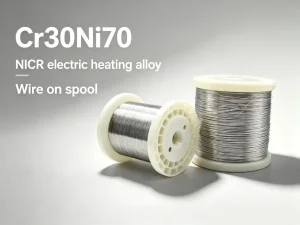
We supply products in versatile delivery forms tailored to your automation lines: bright-annealed round wires on DIN spools (DIN 125, 160, 200, 250, 355), heavy coils, flat wire ribbon, cold-rolled strip, or custom pre-wound spiral elements shaped according to OEM engineering drawings.
All orders from Beijing Shougang Gitane include an EN 10204 3.1 Mill Test Certificate detailing exact heat chemistry, resistance tolerances, mechanical tensile properties, and dimensional verification. Production facilities operate under strict ISO 9001:2015 and ISO 14001:2015 certified management systems, fully compliant with GB/T 1234-2012, RoHS, and REACH directives.
Yes. Our in-house engineering group comprises over 150 technical experts. We provide comprehensive thermal calculations, including maximum allowable surface load ($\text{W/cm}^2$), wire pitch ratios, cold-end connection design, and voltage-to-wattage sizing to maximize heating element service life in custom industrial and semiconductor furnaces.
Standard wire diameters and stocked alloy grades are dispatched within 5 to 7 business days. Custom alloy melts, precise flat rolling, or specialized pre-formed spiral element orders typically ship within 15 to 25 business days via air freight or ocean shipment with ocean-worthy moisture-proof packaging.