


Industrial Radiant Tubes: Fundamentals, Metallurgy & Thermal Kinetics
A technical synthesis of material selection, heat transfer efficiency, and structural integrity for modern continuous heat treatment and atmospheric processing furnaces.
The Role of Radiation Tubes in Process Heating
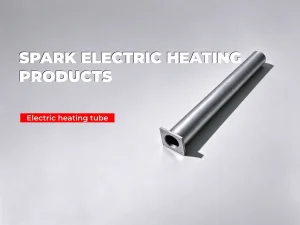
Radiation tubes (radiant tubes) function as critical physical barriers in industrial furnaces. Their primary purpose is to segregate combustion gases or open heating elements from the controlled furnace atmosphere (such as endothermic, carburizing, nitriding, or high-purity hydrogen environments). By transferring heat purely through infrared thermal radiation, radiation tubes prevent local workpiece contamination and carbon soot buildup while ensuring precise temperature uniformity across large heating zones.
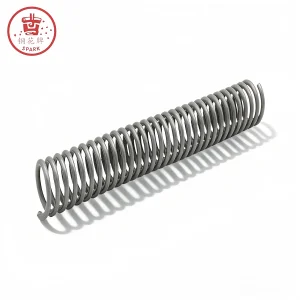
Engineered radiant tube assemblies consist of two main components: an outer protective metal alloy or ceramic sleeve and an inner thermal generation unit (either a high-resistance electric bayonet heater element or a gas/oil burner nozzle). The inner resistance element converts electrical energy into intense radiant flux according to the Stefan-Boltzmann law ($E = \epsilon \sigma T^4$), requiring high emissivity and thermal conductivity from the tube walls.
Metallurgical Alloy Breakdown
Selecting the optimal material for radiant tube sheathing and heating elements directly impacts furnace uptime and lifecycle costs. SPARK offers specialized high-temperature alloy matrix options:
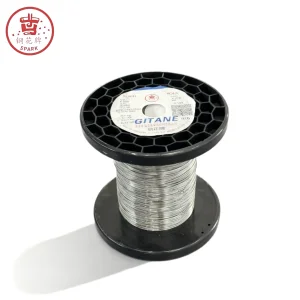
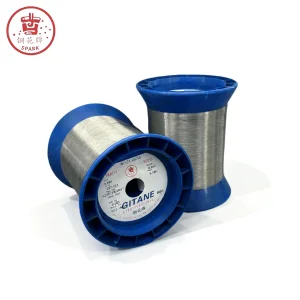
- FeCrAl Alloys (SGHT, SGHYZ, 0Cr21Al6Nb): Form a self-healing, dense Aluminum Oxide ($Al_2O_3$) scale. Outstanding creep strength up to 1425°C, high electrical resistivity, and low specific gravity, eliminating element sag in horizontal configurations.
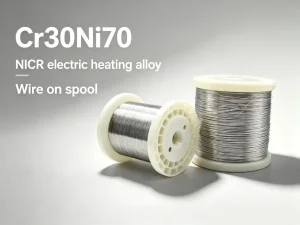
- NiCr Alloys (Cr30Ni70, Cr20Ni80, Cr15Ni60): Form a protective Chromium Oxide ($Cr_2O_3$) layer. Superior hot ductility, exceptional mechanical vibration tolerance, and resistance to thermal shock during rapid thermal cycling.
Engineering Insight: The Alumina Protection Layer
At temperatures exceeding 1000°C, FeCrAl alloys like SPARK SGHT develop a coherent, crystalline alpha-alumina scale on the tube surface. This layer exhibits extremely low ionic conductivity, blocking oxygen diffusion into the bulk metal and preventing catastrophic high-temperature corrosion or carburization in continuous steel annealing lines.
Wholesale Pricelist Benchmarks & Procurement Factors
Understanding the pricing variables, alloy surcharge indexes, and total cost of ownership (TCO) for OEM buyers and heat-treatment plant managers.
Wholesale pricing for industrial radiation tubes and heating cores is dictated by raw metal spot prices (Nickel LME, Chromium, Aluminum, Yttrium additions), wall thickness, seamless vs. welded tube construction, and custom fabrication complexity (e.g., W-shaped, U-shaped, Single-Ended Radiant Tubes, or Tri-tube configurations).
| Alloy Grade / Tube Type | Max Temp (°C) | Composition Highlight | Key Application | Est. Wholesale Price Range (USD) |
|---|---|---|---|---|
| SPARK SGHT FeCrAl Tube Element | 1425°C | Powder Metallurgy Fe-Cr-Al + RE | Ultra-high temp ceramic & semiconductor sintering | $45.00 – $98.00 / kg |
| SPARK SGHYZ Radiant Wire / Tube | 1400°C | High purity FeCrAl + Yttrium | Continuous annealing lines, powder metallurgy | $38.00 – $75.00 / kg |
| 0Cr21Al6Nb Alloy Heating Tube Core | 1350°C | 21% Cr, 6% Al, Niobium added | Industrial electric furnaces, carburizing units | $18.50 – $32.00 / kg |
| Cr30Ni70 Nichrome Radiant Core Wire | 1250°C | 70% Ni, 30% Cr premium grade | High vibration, frequent cycling heat treatment | $42.00 – $85.00 / kg |
| Cr15Ni60 Commercial Heating Wire | 1150°C | 60% Ni, 15% Cr, Fe Balance | Industrial baking ovens & medium temp kilns | $24.00 – $48.00 / kg |
| Custom Bayonet Radiant Tube Assembly | 1200°C - 1350°C | Centrifugally Cast Outer + FeCrAl Core | Turnkey steel strip galvanizing lines | $350.00 – $1,800.00 / unit |
1. Raw Material Surcharges
Nickel market volatility directly impacts NiCr alloy quotes. FeCrAl alloys offer significant price stability and a ~15% lower density, delivering up to 20% more thermal surface area per dollar spent compared to high-nickel tubing.
2. Manufacturing Tolerances
Precision cold-drawing and seamless tube forming eliminate internal stress hot-spots. Centrifugally cast outer sleeves matched with custom-wound bayonet heating cores ensure maximized watt density without localized burnout.
3. Logistics & Bulk Volume
Container-load shipments directly from Beijing & Eastern China factory clusters reduce FOB unit costs by 12–18%. Standard packaging includes anti-corrosion VCI barrier film and seaworthy reinforced wooden crating.
Why Source Radiation Tubes from Premier Chinese Manufacturers
Combining state-of-the-art melting technology, vertical supply chain integration, and rigorous international quality standards.
Advanced Metallurgy: VIM & ESR Processing
China's leading high-temperature alloy facilities utilize Vacuum Induction Melting (VIM) coupled with Electroslag Remelting (ESR). This double-vacuum process eliminates non-metallic inclusions, precise-tunes reactive rare-earth additions (Yttrium, Neodymium, Zirconium), and ensures zero gas porosity inside the radiant tube wall or core wire matrix.
The result is an ultra-pure alloy structure capable of maintaining structural stability under thermal fatigue tests exceeding 50+ hours at peak temperatures of 1400°C+ without cracking, warping, or localized wall thinning.
End-to-End Vertical Integration
Unlike intermediate repackagers or regional distributors, major Chinese manufacturers like Shougang Gitane manage every step of the value chain: from raw iron/nickel ingot refining, hot rolling, intermediate annealing, precision wire/tube drawing, to automated CNC spiral coiling and complete bayonet assembly.
This vertical synergy provides uncompromised quality tracking under ISO 9001 and GB/T 1234-2012 standards, while delivering unmatched factory-direct pricing for international original equipment manufacturers (OEMs).
100% Eddy Current Test
Every seamless radiation tube undergoes non-destructive eddy current and ultrasonic defect inspection to guarantee zero sub-surface fissures.
Spectrometric Verification
Optical Emission Spectrometry (OES) verifies exact elemental ratios for every melt heat prior to extrusion and coiling.
Rapid OEM Prototyping
In-house tooling allows rapid engineering customization of non-standard tube diameters, custom flanges, and power wattage distributions within 15 business days.
Seaworthy Export Logistics
Heavy-duty vacuum VCI shrink wrapping and custom steel-reinforced crate packing ensure zero oxidation or moisture damage during ocean transport.
Industry Trends Transforming Radiant Tube Engineering
Decarbonization mandates, electrical conversion, composite materials, and smart thermal monitoring are driving next-generation furnace design.
1. Decarbonization & Furnace Electrification
Global net-zero targets are forcing heavy industries (automotive steel, aluminum smelting, glass processing) to transition from fossil-fuel burner radiant tubes to zero-emission electric radiant heating systems. Electric radiant tubes offer 95%+ energy conversion efficiency, eliminate local $CO_2/NO_x$ stack emissions, and allow fine-tuned digital control of internal power distribution.
2. Powder Metallurgy & ODS Alloys
Traditional melt-cast alloys suffer from grain coarsening and creep distortion above 1200°C. Modern advanced materials—such as SPARK SGHT—utilize Oxide Dispersion Strengthened (ODS) powder metallurgy techniques. Fine yttria oxide dispersion traps grain boundaries, preventing sag in horizontal radiant tubes spanning over 3 meters in length at operating temperatures up to 1425°C.
3. Smart Sensors & Predictive Maintenance
Modern industrial installations are integrating fiber-optic temperature sensors and thermal resistance monitoring microchips directly into radiant tube terminal heads. Real-time monitoring of electrical resistance drift detects early oxide scale spallation or localized hot-spot formation, enabling predictive element replacement before catastrophic furnace shutdown occurs.
Heavy Industrial Deployments & Field Solutions
Tailored radiant heating solutions configured for harsh chemical, atmospheric, and continuous mechanical stress operating conditions.
Steel Continuous Annealing & Galvanizing Lines (CAGL)
Automotive steel strip production demands rigorous atmosphere preservation ($H_2/N_2$ gas mixtures) to prevent surface oxidation. SPARK W-shaped and U-shaped electric radiation tubes provide uniform radiant heat flux across the moving steel strip width (up to 2000 mm), maintaining line speeds up to 600 m/min at tight thermal tolerances ($\pm 2.5^\circ\text{C}$).
Controlled Atmosphere Carburizing & Sealed Quench Furnaces
In gear and bearing heat-treatment furnaces, high carbon potential atmospheres aggressively attack standard metal tubes via "green rot" oxidation and internal carburization embrittlement. SPARK 0Cr21Al6Nb and SGHYZ alloys establish a dense alumina barrier that prevents carbon ingress, extending tube service life from 8 months to over 36 months.
Aluminum Melting, Holding & Degassing Units
Direct exposure to molten aluminum rapidly dissolves most steel and nickel alloys through intermetallic corrosion. Submerged immersion radiant tubes constructed with SPARK FeCrAl alloy sheathing provide safe, indirect electric immersion heating, reducing dross formation by up to 70% and drastically cutting energy consumption per ton of cast aluminum.
Petrochemical Cracking & High-Temp Chemical Reactors
In high-pressure pyrolysis furnaces and calcining rotary kilns, radiant tube alloys must withstand severe sulfur dioxide ($SO_2$) gas environments. SPARK Cr30Ni70 and high-chromium FeCrAl elements resist sulfidation attack at continuous operating temperatures of 1150°C–1300°C.
Global Procurement Specifications & Quality Assurance
Streamlining technical compliance, mill certification, and international engineering standards for global B2B buyers.
1. Standards Compliance
All SPARK radiant tubes and heating alloys conform strictly to international specifications:
- GB/T 1234-2012: High Resistance Electric Heating Alloys
- ASTM B603 / B344: Standard Spec for FeCrAl & NiCr Alloys
- DIN 17470: Heating Resistor Alloys Technical Conditions
- ASME Boiler & Pressure Vessel Code: Section VIII Material Traceability
2. Mill Test Documentation
Every export shipment is dispatched with complete EN 10204 3.1 Certified Mill Test Reports (MTC), detailing:
- Exact Chemical Ladle Analysis (ICP-OES verified)
- Tensile Strength, Yield Stress & Room Temp Elongation
- Electrical Resistivity ($\mu\Omega\cdot\text{m}$) at 20°C
- Accelerated High-Temp Oxidation Test Results
3. Custom OEM Fabrication
Complete engineering support for custom drawings and retrofit projects:
- Custom terminal lead-out rod welding (310S / Inconel studs)
- Ceramic support disc insulation grading (C799 / 99% Alumina)
- Tailored watt-density grading along tube length
- 3D CAD modelling (STEP / IGES format support)
Frequently Asked Questions by Industrial Furnace Engineers
Direct answers to technical queries, design calculations, and material selection criteria for radiation tubes.
What is the difference between FeCrAl and NiCr heating elements inside a radiation tube?
How do I select the maximum allowable watt density (W/cm²) for a radiation tube?
Why is carbon atmosphere carburization harmful to radiant tubes, and how can it be prevented?
What are the structural advantages of Bayonet-style radiant tube heating cores?
What is the typical lifespan of a wholesale radiation tube assembly?
Can SPARK supply custom-bent or non-standard radiant tube configurations?



Request Your Customized Wholesale Radiant Tube Quote Today
Connect directly with SPARK's senior metallurgical application engineers to review your furnace drawings, select optimal alloy grades, and receive competitive factory-direct pricing within 24 hours.
Contact Metallurgical Engineers