
Featured Photovoltaic Thermal Resistance Components
High-performance electrothermal alloys and custom heating element assemblies engineered for diffusion, sintering, and annealing furnaces.

China High-Temperature Electric Heating Wire HRE 1350℃ - China Suppliers & Factory for Powder Metallurgy Applications Manufacturers, Factories

Wholesale High-Performance 0Cr23Al5 Electric Heating Alloy Wire from China Suppliers - Factory Direct for High-Temperature Resistance Factory, Factories

China China 0Cr25Al5 Electric Heating Wire - High-Quality Resistance Wire from Reliable Suppliers & Factory Manufacturers, Quotes

China High-Quality Electric Heating Tubes from China Suppliers - Efficient Heating Solutions by Factory Supplier, Pricelist

Wholesale SG140 Alloy for Tempering Furnace - High-Performance Heating Wire from China Suppliers & Factory Supplier, Factory
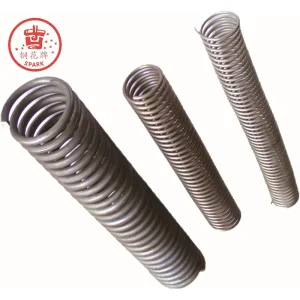
Wholesale Cheap price China St35.8 DIN17175 High Pressure Resistant Seamless Steel Tube ASTM A179-C Heat Exchanger Seamless Tube Manufacturers, Factories

China High-Temperature Cr30Ni70 Alloy Wire from China Suppliers - Durable 50-Hour Life in Extreme Conditions Factory, Quotes
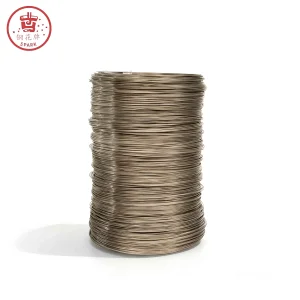
China China SPARK Electric Heating Wire - Golden Finished Product from Reliable Suppliers and Leading Factory Manufacturers, Factory
The Engineering Fundamentals of Photovoltaic Thermal Processing
Photovoltaic thermal processing represents the foundational core of modern solar cell manufacturing. From the initial crystallization of hyper-pure polysilicon into monocrystalline ingots via the Czochralski (CZ) process, to high-throughput POCl3 diffusion, PECVD anti-reflective coating deposition, and rapid contact metallization firing, every stage demands uncompromising thermal uniformity, extreme temperature endurance, and microscopic atmosphere purity.
Engineering Insight: Thermal Stability vs. Cell Efficiency
In N-Type TOPCon and Heterojunction (HJT) architecture production, a thermal gradient variation exceeding ±1.5°C across a diffusion furnace tube directly induces sheet resistance fluctuations. This results in carrier recombination losses and diminishes absolute photoelectric conversion efficiency by up to 0.35%. High-grade FeCrAl and NiCr heating elements serve as the baseline enablers of strict isothermal zones.
Critical Thermal Stages in Solar Cell Manufacturing
Selecting the optimal wholesale electrothermal alloy requires a precise understanding of the thermal profiles and environmental conditions native to each photovoltaic processing cell:
1. Silicon Ingot Growth (CZ Pulling)
Operating temperatures reach up to 1425°C - 1500°C under vacuum or inert argon shields. Materials like powder-metallurgy FeCrAl (e.g., SGHT grade) prevent carbonaceous contamination and offer resistance against heavy thermal shock during rapid melting cycles.
2. Wafer POCl3 Diffusion & Oxidation
Continuous thermal exposure between 850°C and 1050°C in corrosive, phosphorus-rich atmospheres. Requires alloys that build a dense, protective alpha-alumina (Al2O3) scale to prevent element flaking and furnace tube contamination.
3. Metallization Contact Fast-Firing
Ultra-fast ramp rates up to 100°C/second with peak firing temperatures of 750°C–900°C. Demands high hot-strength NiCr alloys (e.g., Cr20Ni80 or Cr30Ni70) with minimal thermal sag and extended cyclic fatigue resilience.
Metallurgical Comparison: FeCrAl Alloys vs. NiCr Alloys in PV Processing
Understanding when to specify Iron-Chromium-Aluminum (FeCrAl) versus Nickel-Chromium (NiCr) heating wire is key to reducing thermal equipment downtime and optimizing wholesale procurement budgets:
| Metallurgical Property | FeCrAl Alloys (e.g., 0Cr25Al5, HRE, SGHT) | NiCr Alloys (e.g., Cr20Ni80, Cr30Ni70) |
|---|---|---|
| Max. Continuous Working Temp. | Up to 1425°C (2597°F) | Up to 1250°C (2282°F) |
| Electrical Resistivity at 20°C | Higher (1.35 – 1.45 μΩ·m) | Moderate (1.09 – 1.18 μΩ·m) |
| Oxide Layer Structure | Adherent Alpha-Al2O3 (High purity, non-magnetic) | Chromium Oxide Cr2O3 (Ductile, dense) |
| Ductility After Long Heating | Becomes brittle upon cooling | Retains high ductility after long service |
| Density (Weight Efficiency) | Lower (~7.10 g/cm³) — 15% lighter than NiCr | Higher (~8.40 g/cm³) |
| Atmosphere Compatibility | Superior in air, oxygen, oxidizing & sulfur gases | Superior in wet hydrogen, nitrogen & ammonia |
The Structural Advantage of Chinese Factories in Thermal Alloys
How China's fully integrated metallurgical ecosystem delivers superior material purity, scale economics, and rapid customization to global furnace OEMs.
1. Vertical Raw Material Refining
Chinese factories leverage direct access to ultra-pure electrolytic iron, high-purity aluminum billets, and refined rare earth elements (Lanthanum, Cerium, Yttrium). Vacuum Induction Melting (VIM) removes trace tramp elements like Lead, Zinc, and Tin below 0.002%, preventing premature grain-boundary embrittlement.
2. Advanced Powder Metallurgy (PM)
By shifting from conventional casting to gas atomization and hot isostatic pressing (HIP), Chinese manufacturers produce PM FeCrAl wire (such as SPARK SGHT). This eliminates macro-segregation, significantly increases high-temperature creep strength, and doubles operational life at temperatures above 1350°C.
3. Rigorous Quality & Mill Traceability
Every wholesale batch undergoes continuous online eddy-current flaw detection, laser dimension monitoring (tolerances within ±0.005mm), and accelerated 50-hour high-temperature endurance life testing (GB/T 1234-2012 compliance). Full Mill Test Certificates (MTC) accompany every shipment.
Global Photovoltaic Trends & Procurement Solutions
Aligning resistance material specifications with the global transition toward high-efficiency n-type solar cells, larger wafer dimensions, and reduced carbon footprints.
Key Market Drivers Shaping Wholesale Procurement
A. Transition to TOPCon & Heterojunction (HJT) Technologies
The global PV industry has rapidly shifted away from P-type PERC cells toward N-Type TOPCon and HJT architectures, which demand ultra-precise thermal profiles. TOPCon boron diffusion requires prolonged holding times at high temperatures in highly active chemical environments. Suppliers are migrating toward specialized rare-earth-doped FeCrAl strip and heavy-gauge wire coils to minimize dimensional sagging over 12-month continuous campaign runs.
B. Larger Wafer Formats (M10, G12) Demanding Greater Power Density
The scale-up to 182mm (M10) and 210mm (G12) wafers requires larger internal furnace muffle diameters and higher power ratings. Photovoltaic thermal processing equipment now relies on heavy-duty, pre-formed spiral element coils and corrugated meander strips that deliver thermal surface loadings up to 2.5–3.2 W/cm² without overheating the internal core conductor.
C. Sustainability and Energy-Saving Thermal Insulation Integration
Rising energy prices drive furnace builders to demand high-resistivity heating wire options. High electrical resistivity allows for thicker wire gauges at identical voltage levels, drastically increasing physical lifespan while minimizing total resistive heat dissipation in non-active terminal zones.
Wholesale Pricing Determinants & Procurement Checklist
When requesting quotes and evaluating wholesale pricelists from Chinese electrothermal alloy manufacturers, international buyers should account for the following pricing factors:
- Raw Material Indexing: Nickel market volatility (LME Nickel index) directly impacts NiCr pricing, whereas FeCrAl pricing remains significantly more stable over large production horizons.
- Form Factor & Processing State: Bright annealed round wire vs. oxidized flat strip vs. custom coiled heating element spirals. Precision rolling of ultra-thin ribbon incurs drawing-step surcharges.
- Dimensional Tolerances: Standard industrial tolerance (±0.02mm) versus ultra-fine precision drawing for semiconductor-grade quartz furnace heaters (±0.005mm).
- Packaging & Spool Specification: DIN160, DIN200, DIN250 plastic spools, or heavy wooden crate packing for bulk coiled wire shipments.
Photovoltaic Thermal Processing FAQ
Expert technical answers to essential engineering and purchasing questions regarding high-temperature heating alloys.
More Industrial Alloys & Heat Processing Tubes
Complete range of resistance heating wires, alloy strips, and heat exchanger tubing engineered for high-durability thermal applications.
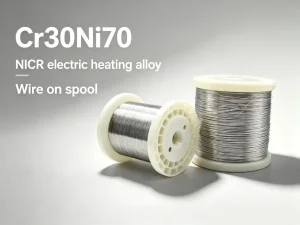
Wholesale High-Temperature Cr30Ni70 Alloy Wire from China Suppliers - Durable for 50 Hours in Electric Heating and Furnaces Factories, Pricelist
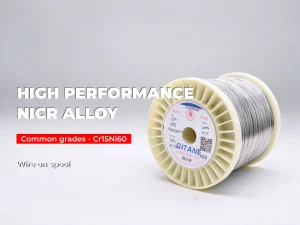
China Cr15Ni60 1150°C NiCrFe Heating Wire | 0.05-1.0mm Bright Spool Suppliers, Pricelist
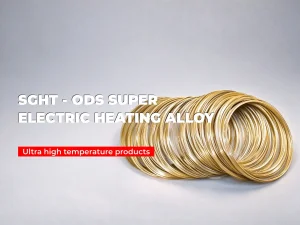
China SGHT Powder Metallurgy FeCrAl Heating Wire | 1425°C Ultra High Temperature Suppliers, Quotes
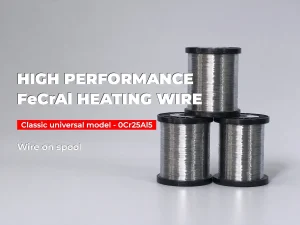
China 0Cr25Al5 FeCrAl 25/5 Heating Wire | Industrial Electric Resistance Alloy Manufacturers, Supplier
Wholesale High-Quality Cr30Ni70 High-Temperature Alloy Wire from China Factory - Durable with 50 Hours Life | Suppliers Manufacturers, Factory

China China Suppliers High Quality 2.00mm 0Cr25Al5 Bare Heating Wire - Wholesale Factory Price ISO9001:2005 Suppliers, Factories

China 0Cr21Al6Nb Electric Heating Wire - High-Temperature Alloy from China Suppliers and Factory Factory, Pricelist
China China 0Cr25Al5 Electric Heating Wire - Top Suppliers & Factory for High-Performance Resistance Wire Manufacturer, Suppliers
Accelerate Your Thermal Processing Engineering
Connect directly with our metallurgical application engineers to receive custom technical recommendations, material samples, and factory-direct wholesale pricing within 24 hours.
Request Wholesale Quote & Technical Datasheet