
High-Temperature Industrial Resistance Wire & Furnace Solutions
Explore our flagship oxidation-resistant FeCrAl and NiCr heating alloys, engineered for operational stability up to 1425°C.
Global Commercial & Industrial Landscape of Oxidation Resistant Alloys
Analyzing macroeconomic drivers, supply chain dynamics, and the accelerating electrification of global industrial thermal processes.
The global industrial demand for oxidation resistant resistance wire has experienced a structural paradigm shift over the past decade. Driven by aggressive international decarbonization mandates, the rapid expansion of semiconductor fabrication facilities, and the transformation of energy-intensive manufacturing toward electrification, advanced heating alloys are no longer treated as simple commodities. They are now evaluated as mission-critical thermal management infrastructure.
Modern industrial heating applications require thermal resistance wire to withstand extreme physical and chemical stress. Operating temperatures frequently exceed 1200°C to 1400°C in continuous operation cycles, exposed to oxygen-rich, carburizing, or chemically aggressive atmospheres. The global supply chain relies heavily on specialized manufacturers capable of producing ultra-pure Iron-Chromium-Aluminum (FeCrAl) and Nickel-Chromium (NiCr) master alloys with tightly controlled grain boundary microstructures and precise electrical resistivity tolerances.
Electrification of Heat
Heavy industries (steel, glass, ceramics) are replacing fossil fuel combustion with zero-emission, high-density electric furnace systems, causing a massive surge in demand for heavy-gauge FeCrAl element wire.
Raw Material Volatility
Fluctuations in global Nickel (Ni) and Chromium (Cr) markets have propelled engineering interest toward optimized FeCrAl alloys, which offer superior maximum operating temperatures at lower material mass per meter.
Semiconductor & Clean Energy
Next-generation photovoltaic silicon ingot growth and semiconductor diffusion furnaces demand resistance wires with minimal trace element vaporization to avoid wafer contamination.
High-Temperature Oxidation Kinetics & Alloy Thermodynamics
Understanding the self-passivating scale dynamics: Alpha-Alumina (α-Al₂O₃) versus Chromia (Cr₂O₃) protective films.
When selecting a wholesale oxidation resistant resistance wire, electrical engineering teams must look beyond initial room-temperature resistance ($R_{20}$). The true indicator of component longevity lies in the alloy's ability to maintain a self-healing, adherent oxide scale during high-temperature thermal cycling.
1. The Thermodynamics of Protective Scale Formation
Resistance heating alloys convert electrical energy into thermal energy ($P = I^2 R$). At elevated temperatures, the surface metal reacts instantly with ambient oxygen. The durability of the alloy depends entirely on which metal oxide is formed:
- Alpha-Alumina Scale (α-Al₂O₃): Formed predominantly on FeCrAl alloys (e.g., 0Cr25Al5, HRE, SGHYZ, SGHT). α-Al₂O₃ is thermodynamically extraordinarily stable, electrically insulating, and non-volatile up to 1425°C. It forms a dense, slow-growing light grey oxide layer that prevents further oxygen penetration.
- Chromia Scale (Cr₂O₃): Formed on NiCr alloys (e.g., Cr20Ni80, Cr30Ni70). Chromia scales provide excellent mechanical ductility and resistance to thermal shock. However, above 1200°C, Cr₂O₃ begins to oxidize further into volatile Chromium Trioxide gas ($\text{CrO}_3(g)$), accelerating metal degradation.
Technical Insight (E-E-A-T Principle): FeCrAl alloys have a lower specific density (~7.10 g/cm³) compared to NiCr alloys (~8.40 g/cm³). Combined with higher electrical resistivity (1.45 μΩ·m vs 1.09 μΩ·m), utilizing FeCrAl allows furnace builders to save up to 20-30% in raw material weight for identical electrical power output.
2. Reactive Element Effect (REE) & Grain Boundary Engineering
Standard binary or ternary alloys suffer from thermal spallation—where the oxide layer flakes off during heat/cool cycles due to differences in thermal expansion coefficients. Advanced SPARK alloys incorporate controlled micro-alloying additions of Reactive Elements (RE) such as Yttrium (Y), Zirconium (Zr), Hafnium (Hf), and Niobium (Nb):
- Grain Growth Pinning: Rare earth additions segregate to alloy grain boundaries, drastically slowing grain coarsening and preventing hot-sagging at temperatures above 1300°C.
- Pegging Effect: Yttrium atoms form microscopic oxide "pegs" that extend into the base metal substrate, anchoring the α-Al₂O₃ scale and completely eliminating scale peeling during aggressive ON/OFF cycling.
| Alloy Grade Family | Nominal Chemical Composition | Max Temp (°C) | Resistivity @20°C (μΩ·m) | Density (g/cm³) | Primary Scale Type | Key Industrial Strengths |
|---|---|---|---|---|---|---|
| SGHT (Powder Met) | Fe-Cr-Al + RE (PM Process) | 1425°C | 1.45 ± 0.07 | 7.10 | α-Al₂O₃ (Ultra-Dense) | Zero deformation, extreme temperature, semiconductor grade |
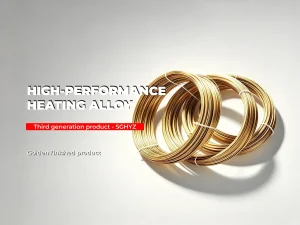
| SGHYZ FeCrAl | Fe-Cr-Al-Y-Zr Master Alloy | 1400°C | 1.42 ± 0.05 | 7.15 | α-Al₂O₃ (Doped) | High hot-strength, superior oxidation life, cost-efficient |
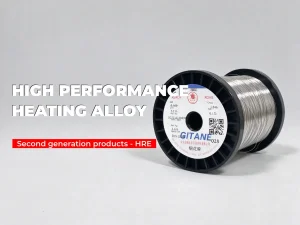
| HRE FeCrAl | 0Cr27Al7Mo2 / Rare Earth Doped | 1350°C | 1.40 ± 0.05 | 7.18 | α-Al₂O₃ | Excellent cost-to-performance ratio for heavy industrial kilns |
| 0Cr25Al5 | Fe + 24-26% Cr + 4.5-5.5% Al | 1250°C | 1.42 ± 0.05 | 7.25 | α-Al₂O₃ | Global standard for general industrial heat treatment |
| Cr30Ni70 | 70% Ni + 30% Cr | 1250°C | 1.18 ± 0.04 | 8.10 | Cr₂O₃ + NiO spinel | Exceptional wet/reducing atmosphere stability, high ductility |
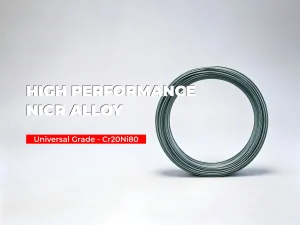
| Cr20Ni80 | 80% Ni + 20% Cr | 1200°C | 1.09 ± 0.04 | 8.40 | Cr₂O₃ | Maximum post-use ductility, ideal for tight coiling & appliances |
Metallurgical Evolution: Next-Generation Resistance Alloys (2025–2035)
How advanced powder metallurgy, disperse phase strengthening, and micro-structure control are pushing operating limits.
1. Powder Metallurgy (PM) Synthesis
Traditional ingot melting suffers from macro-segregation of heavy elements. SPARK SGHT utilizes gas atomization powder metallurgy followed by hot isostatic pressing (HIP). This achieves flawless chemical homogeneity, eliminating premature local melting and extending element life by 200–300% in 1400°C environments.
2. Zero-Sagging Creep Resistance
At temperatures above 1300°C, traditional FeCrAl wire suffers from low yield strength, leading to coil distortion and short circuits between turns. Dispersion-strengthened micro-textures pin movement across the lattice, creating rigid elements that maintain spiral geometry over thousands of thermal hours.
3. Hydrogen Atmosphere Compatibility
As green steel and chemical processes adopt pure H₂ atmospheres, traditional oxide scales face severe reduction risks. Next-gen alloys are optimized to form stable protective films under ultra-low oxygen partial pressures ($P_{O_2} < 10^{-20} \text{ atm}$).
Localized Application Scenarios & Sector Solutions
Custom metallurgical configurations tailored for specialized international manufacturing industries.
Semiconductor & Solar Wafer Processing
Required Grade: SPARK SGHT / SGHYZ Wire & Ribbons
Operating Conditions: 1150°C – 1350°C, cleanrooms, high-purity quartz tubes.
Engineering Focus: Zero particle spallation. Alumina scales must remain perfectly glassy and non-flaking to prevent micro-contamination of silicon wafers during dopant diffusion and LPCVD steps.
EV Battery Cathode Material Sintering
Required Grade: 0Cr21Al6Nb / HRE / SG140
Operating Conditions: 800°C – 1150°C in aggressive alkaline or corrosive vapor atmospheres inside roller hearth furnaces.
Engineering Focus: Resistance to lithium vapor chemical attack. Niobium-modified FeCrAl prevents localized pitting corrosion along grain boundaries.
Aerospace Vacuum & Controlled Atmosphere Heat Treating
Required Grade: Cr30Ni70 / Cr20Ni80 Strip & Wire
Operating Conditions: 900°C – 1200°C under nitrogen, argon, or carburizing atmospheres.
Engineering Focus: NiCr alloys exhibit near-zero carbon pickup compared to FeCrAl, preventing embrittlement during carburizing and solution annealing cycles of titanium and superalloys.
Technical Ceramics & Zirconia Sintering
Required Grade: SPARK SGHT / HRE Spirals
Operating Conditions: 1300°C – 1400°C continuous air firing.
Engineering Focus: High surface load rating (up to 2.5–3.0 W/cm²). Rapid heat-up capability without element thermal fatigue or hot-spot formation.
Heavy Industrial Steel Melting & Tempering Furnaces
Required Grade: Heavy-gauge 0Cr25Al5 / SG140 Coils (Ø 5mm – 10mm)
Operating Conditions: Continuous high-tonnage thermal cycles.
Engineering Focus: Robust structural rigidity, ease of maintenance, high electrical efficiency, and maximum service lifespan per dollar invested.
High-End Domestic & Commercial Appliances
Required Grade: Fine-gauge Cr20Ni80 Wire (Ø 0.1mm – 1.2mm)
Operating Conditions: Millions of short, rapid ON/OFF cycles (toasters, industrial heaters, hair dryers).
Engineering Focus: Superior ductility after years of service allowing maintenance/re-coiling without snapping.
Energy-Efficiency Furnace Retrofitting & Surface Load Optimization
Engineering strategies for reducing kilowatt-hour consumption and extending element replacement intervals.
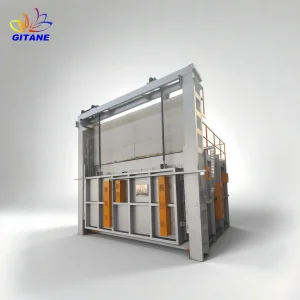
Replacing or upgrading furnace heating elements is not merely a repair task; it is an opportunity to optimize thermal power distribution and reduce operational expenditure (OPEX). Our engineering division provides holistic macro solutions for industrial clients globally:
1. Surface Load ($W/cm^2$) Scientific Calculation
The single most common cause of premature resistance wire burnout is improper surface load design. Surface load refers to the electrical power emitted per square centimeter of element surface area ($w = P / S$).
- Excessive Surface Load ($> 3.0 \text{ W/cm}^2$ at 1300°C): Creates a large thermal gradient between the element core and the furnace chamber, accelerating aluminum depletion and leading to localized melting.
- Optimized Surface Load (1.2 – 2.0 \text{ W/cm}^2): Ensures immediate thermal dissipation into the load, maintaining the element core temperature within safe operating margins and extending element life by up to 300%.
2. Conversion of Gas-Fired Furnaces to Zero-Emission Electric Systems
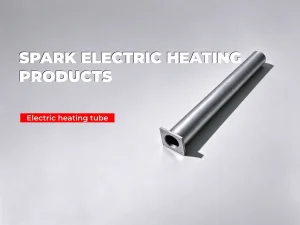
Transitioning from direct gas combustion to electric resistance heating delivers precise temperature control ($\pm 1^\circ\text{C}$ across zones), eliminates combustion byproducts, reduces noise, and lowers carbon taxation liabilities. Our customized FeCrAl and NiCr heating elements are pre-engineered on ceramic tubes or embedded in vacuum-formed ceramic fiber modules for seamless retrofitting into existing furnace shells.
B2B Procurement Benchmarks & Cost Structure Analysis
Understanding pricing variables, Minimum Order Quantities (MOQs), and total cost of ownership for volume purchasers.
Wholesale pricing for industrial oxidation resistant wire depends on several key parameters: alloy chemical purity, rare earth additions, wire/strip dimensional tolerances, surface finish (bright annealed vs oxidized), and order volume. Below is a reference commercial pricing structure for wholesale procurement consideration.
| Alloy Class | Dimension Range (Ø mm / Strip mm) | Delivery State | Est. Wholesale Price (USD/kg)* | Standard MOQ | Target Industrial Application |
|---|---|---|---|---|---|
| 0Cr25Al5 Standard FeCrAl | Ø 1.0mm – 8.0mm | Bright Annealed / Soft | $8.50 – $14.50 / kg | 100 kg | Industrial furnaces, load resistors |
| 0Cr23Al5 Alloy Wire | Ø 0.5mm – 6.0mm | Bright Annealed | $8.00 – $13.50 / kg | 100 kg | General thermal processing, kilns |
| 0Cr21Al6Nb Premium | Ø 1.5mm – 10.0mm | Oxidized / Bright | $14.00 – $22.00 / kg | 50 kg | Lithium battery kilns, heavy heat treat |
| HRE 1350°C Grade | Ø 2.0mm – 9.0mm | Custom Coiled / Spooled | $18.00 – $28.00 / kg | 50 kg | Powder metallurgy, high-temp kilns |
| SGHYZ 1400°C Grade | Ø 1.0mm – 8.0mm | Bright Annealed | $25.00 – $38.00 / kg | 25 kg | Ultra-high temp continuous furnaces |
| SGHT Powder Met 1425°C | Ø 1.5mm – 6.0mm | Precision Ground / Annealed | $45.00 – $75.00 / kg | 10 kg | Semiconductor, advanced ceramics |
| Cr20Ni80 Nichrome | Ø 0.1mm – 5.0mm | Bright Annealed / Soft | $28.00 – $42.00 / kg | 50 kg | Appliances, plastic sealing, precision elements |
| Cr30Ni70 Nichrome | Ø 0.8mm – 6.0mm | Bright Annealed | $32.00 – $48.00 / kg | 50 kg | Controlled atmosphere furnaces, heat treat |
*Disclaimer: Indicative wholesale prices based on international metal market averages (LME Nickel/Chromium spot prices). Final quotes are tailored based on drawing complexity, spooling, packaging, and total contract volume.
Specialty Resistance Wire, Elements & Furnace Components
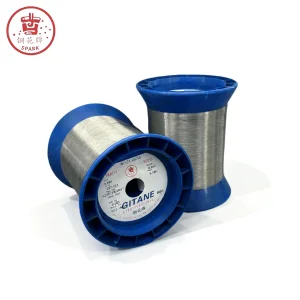
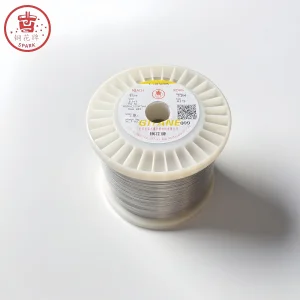
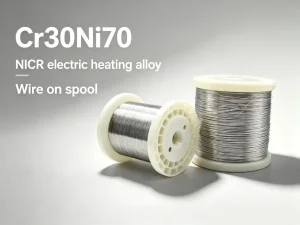
Complete product offerings engineered for precise electrical resistance, thermal longevity, and severe industrial service.
Frequently Asked Questions (Technical & Procurement FAQ)
In-depth engineering insights addressing critical queries from furnace designers, metallurgists, and B2B buyers.
What is the fundamental operational difference between FeCrAl and NiCr resistance wires?
FeCrAl alloys (such as 0Cr25Al5, HRE, and SGHYZ) feature higher maximum operating temperatures (up to 1425°C), higher electrical resistivity (1.35–1.45 μΩ·m), lower specific density (approx. 7.10 g/cm³), and superior oxidation resistance due to the formation of an Alpha-Alumina (α-Al₂O₃) surface scale. Conversely, NiCr alloys (such as Cr20Ni80 and Cr30Ni70) form a Chromia (Cr₂O₃) scale, max out around 1200°C–1250°C, but exhibit far superior mechanical ductility after prolonged use, making them far easier to service, re-coil, and use in environments requiring high thermal-shock resistance or nitrogen atmospheres.
How does the SGHT powder metallurgy grade achieve a 1425°C rating without sagging?
Traditional ingot-melted FeCrAl alloys experience dramatic grain growth at temperatures above 1300°C, causing the metal to become soft and succumb to thermal creep deformation (sagging). SPARK SGHT is manufactured using advanced powder metallurgy (PM). The atomized alloy powder is HIP-consolidated with microscopic oxide dispersions (ODS) and reactive rare earths (Y, Zr). These nanoscale inclusions pin the grain boundaries, preventing abnormal grain coarsening and enabling structural rigidity at full 1425°C furnace load.
Why is "Surface Load (W/cm²)" critical when calculating element wire dimensions?
Surface load ($W/cm^2$) dictates the temperature differential between the core of the heating wire and the ambient furnace air. If the surface load is designed too high for a given operating temperature, heat cannot radiate fast enough from the wire surface into the furnace chamber. This causes the internal temperature of the wire to exceed its solidus line, melting the element from within. Adhering to professional surface loading curves based on furnace atmosphere and element diameter is essential for long service life.
Can FeCrAl resistance wire be used in reducing or carburizing atmospheres?
FeCrAl relies on atmospheric oxygen ($P_{O_2}$) to maintain its protective α-Al₂O₃ layer. In strong reducing, vacuum, or high-carbon atmospheres, the protective scale can be chemically reduced or carbon can penetrate the grain boundaries to form brittle Chromium Carbides ("green rot"). When operating in carburizing environments, engineers should either pre-oxidize the FeCrAl wire in clean air at 1050°C for 8 hours prior to process gas exposure or utilize high-nickel Cr30Ni70 alloys which resist carbon penetration.
What quality assurance certifications and standards govern SPARK resistance wire?
Beijing Shougang Gitane operates under ISO 9001 quality management systems (certified since 2003) and ISO 14001 environmental standards. All resistance heating wire is manufactured in strict compliance with Chinese National Standard GB/T 1234-2012 (High-resistance electric heating alloys) and tested against international equivalents including ASTM B603, DIN 17470, and JIS C2520. Every wholesale shipment is delivered with traceable Mill Test Certificates (MTC) specifying exact heat chemistry, resistance tolerances, and mechanical tensile properties.
In what physical delivery forms can wholesale orders be customized?
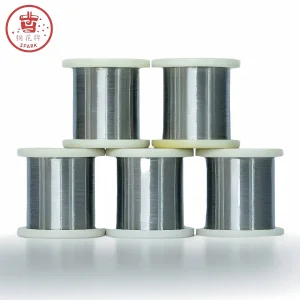
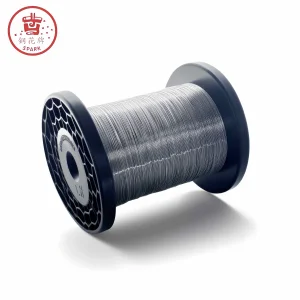
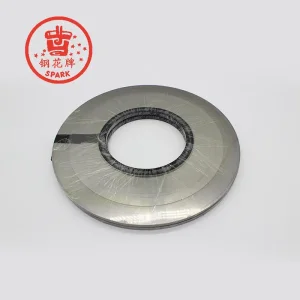
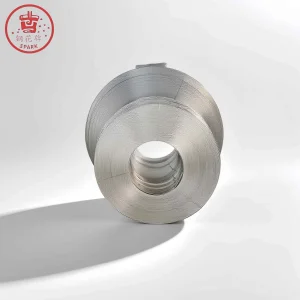
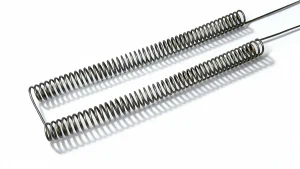
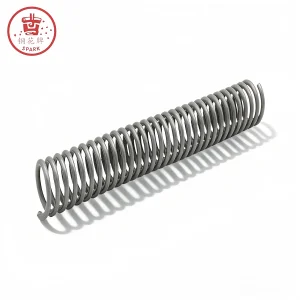
We provide full B2B customization across all alloy grades. Products are delivered as round wire (Ø 0.05mm to 12.0mm) on DIN spools or carrier coils, flat wire/ribbon, cold-rolled strip (width 5mm to 250mm, thickness 0.1mm to 4.0mm), pre-wound spiral coils, ceramic-supported heating elements, and fully welded industrial furnace heating frames made to custom CAD drawings.
What is the typical lead time and international shipping packaging for bulk wire orders?
Standard raw wire grades (0Cr25Al5, Cr20Ni80) are maintained in stock billets with production lead times of 10 to 15 business days for custom drawing and annealing. Special powder metallurgy grades (SGHT) or complex fabricated elements take approximately 20 to 25 business days. International sea/air shipments are packed in moisture-proof vacuum foil wrapping, cushioned inside reinforced wooden export crates to prevent mechanical damage or oxidation during ocean transit.