
Featured High-Temperature Alloys & Heating Systems
Select from our premium metallurgical inventory manufactured in strict accordance with ISO 9001 and GB/T 1234-2012 specifications.



Metallurgical Foundations of Nickel Chromium 2040 Alloys
In global industrial heating architecture, selecting the correct resistance heating alloy is a key factor affecting operational lifespan, electrical efficiency, and long-term cost of ownership (TCO). While standard Nickel-Chromium alloys such as 80/20 (Cr20Ni80) and 70/30 (Cr30Ni70) are well known for high-temperature service up to 1200°C–1250°C, Nickel Chromium 2040 (NiCr 2040 / Ni20Cr40) occupies a critical strategic position in mid-temperature industrial applications.
NiCr 2040 is an austenitic electric resistance heating alloy typically composed of 20% Chromium, 35–40% Nickel, and the balance Iron (Fe), alongside micro-additions of Rare Earth Elements (REE) such as Yttrium and Cerium. This specific Fe-Ni-Cr phase composition offers an optimal balance between oxidation resistance, mechanical ductility, workability, and raw material cost.
Phase Thermodynamics & Chromium Oxide (Cr₂O₃) Scale Kinetics
The primary durability mechanism of NiCr 2040 under thermal stress relies on the selective oxidation of chromium at elevated temperatures. When energized, the alloy forms a self-passivating, dense, adhesive chromium oxide layer ($\text{Cr}_2\text{O}_3$) on its outer surface. This microscopic scale serves as an ion-diffusion barrier, significantly slowing down inner metal oxidation.
Compared to binary Iron-Chromium-Aluminium (FeCrAl) alloys which form alumina ($\text{Al}_2\text{O}_3$) scales, NiCr 2040 maintains its austenitic matrix structure after prolonged thermal cycles. Consequently, it retains high hot-ductility and resists embrittlement when cooled to ambient temperature. Maintenance teams can rewind, clean, or service elements without causing catastrophic fracture—a distinct advantage over FeCrAl alternatives.
Global B2B Sourcing & Total Cost of Ownership Analysis
Raw Material Cost Optimization
By optimizing the Nickel content to 35–40% while replacing the remaining fraction with refined Iron, procurement teams can lower raw material expenditure by 25% to 35% compared to standard NiCr 80/20. This cost reduction is achieved without sacrificing the mechanical hot strength required for medium-temperature processing (up to 1100°C).
Cyclic Stress & Hot Creep Stability
Industrial batch furnaces, HVAC duct heaters, and braking resistor banks experience frequent thermal cycling. The thermal expansion coefficient of NiCr 2040 closely matches common ceramic insulators and structural supports, reducing mechanical distortion, sagging, and premature fatigue failures.
Precision Cold-Drawing & Tolerances
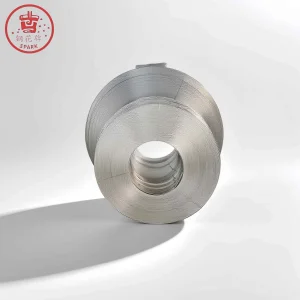
As a direct manufacturer, Beijing Shougang Gitane produces NiCr 2040 in fine wire (down to 0.05mm), heavy wire (up to 10.0mm), cold-rolled strip, and custom flat ribbons with strict dimensional tolerances ($\pm 0.002\text{ mm}$ for fine wire), ensuring consistent electrical resistance per meter.
Comparative Metallurgical Datasheet: NiCr 2040 vs Industry Alloys
The following technical data details the key physical, mechanical, and thermal parameters of SPARK NiCr 2040 alongside standard commercial heating alloys, compliant with GB/T 1234-2012 and international standards.
| Alloy Grade | Nominal Composition | Max Temp (°C) | Resistivity (µΩ·m, 20°C) | Density (g/cm³) | Yield Strength (MPa) | Elongation (%) |
|---|---|---|---|---|---|---|
| NiCr 2040 (SPARK) | 20% Cr, 35-40% Ni, Bal. Fe | 1100 | 1.04 | 8.10 | ≥ 240 | ≥ 20 |
| Cr20Ni80 (Nichrome 80) | 20% Cr, 80% Ni, Bal. Fe | 1200 | 1.09 | 8.40 | ≥ 300 | ≥ 20 |
| Cr30Ni70 | 30% Cr, 70% Ni, Bal. Fe | 1250 | 1.18 | 8.10 | ≥ 320 | ≥ 20 |
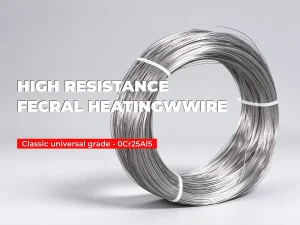
| 0Cr25Al5 (FeCrAl) | 25% Cr, 5% Al, Bal. Fe | 1250 | 1.42 | 7.10 | ≥ 280 | ≥ 12 |
| 0Cr21Al6Nb (FeCrAl) | 21% Cr, 6% Al, Nb Added | 1350 | 1.45 | 7.10 | ≥ 300 | ≥ 10 |
Macro Industry Solutions & Engineering Implementations
Industrial Heat Treatment & Tempering
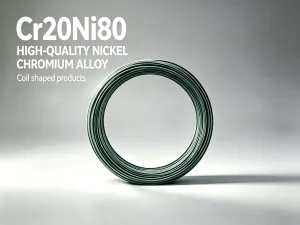
NiCr 2040 wire coils and flat ribbon elements are widely specified in low-to-medium temperature tempering furnaces, stress-relieving ovens, and drying kilns operating below 1000°C. Their high hot ductility ensures structural integrity under continuous air circulation.
Heavy-Duty Brake Resistors & Power Load Banks
Electric locomotives, cranes, wind turbine pitch controls, and industrial inverter drives generate significant back-EMF energy. NiCr 2040 grid ribbons provide high energy absorption, precise resistance stability, and vibration resistance during heavy dynamic braking cycles.
Commercial HVAC & Appliance Heating Elements
From industrial duct heaters and infrared heat lamps to commercial de-icing systems, NiCr 2040 is an excellent choice for tubular heating elements. Its physical flexibility enables tight bending radii inside magnesium oxide (MgO) compacted sheath tubes without micro-fracturing.
Technical Roadmap: Decarbonization & Next-Gen Metallurgy
As global industries transition toward carbon neutrality and zero-emission manufacturing, industrial heating process electrification is accelerating. Fossil fuel-fired burner systems in glass, steel, and chemical plants are increasingly being replaced by high-power electric resistance heating systems.
1. Micro-Alloying & REE Grain Refinement
Integrating precise ppm-level additions of Yttrium (Y), Zirconium (Zr), and Hafnium (Hf) suppresses intergranular oxidation, improving cyclic scale adhesion by up to 40% at maximum operational limits.
2. Green Hydrogen & Inert Atmosphere Shielding
Our advanced bright-annealing lines utilize high-purity hydrogen reduction atmospheres, delivering mirror-bright wire surfaces completely free from residual carbon or oil contaminants.
3. Automated High-Speed Coiling & Spooling
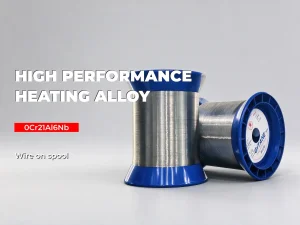
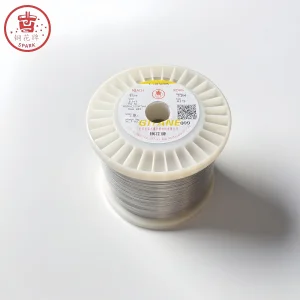
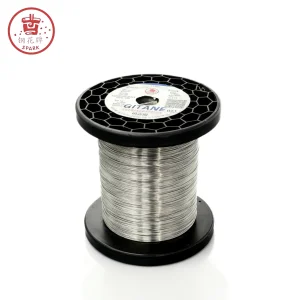
To support high-throughput automated assembly lines, SPARK provides precision layer-wound spools (DIN 160, DIN 200, DIN 250, K355) with zero-tangle tension guarantees.
Global Commercial Landscape & Supply Network
Beijing Shougang Gitane New Materials Co., Ltd. operates a modernized manufacturing facility spanning over 88,000 square meters in Changping, Beijing. Backed by Shougang Group's metallurgical heritage, SPARK products are exported to over 60 countries and regions across Europe, North America, Southeast Asia, and the Middle East.
North America & Europe
Supplying Tier-1 industrial furnace builders and OEM braking resistor manufacturers with custom strip and heavy wire, fully compliant with ASTM B344 and DIN 17470 standards.
Asia-Pacific & Emerging Markets
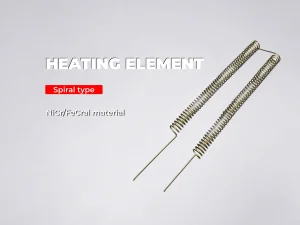
Supporting rapid infrastructure development and heating element manufacturing hubs with large-volume, cost-competitive NiCr 2040 rod, wire, and spiral coils.
Quality Assurance, Certifications & Engineering Support
Every melt batch of NiCr 2040 undergoes strict quality control protocols from vacuum induction melting (VIM) and electroslag remelting (ESR) through hot rolling, cold drawing, and final electrical testing.
ISO 9001 & GB/T Certification
Our quality management system has been ISO certified since 1996. All products are delivered with standard 3.1 Mill Test Certificates (MTC) detailing chemical composition, electrical resistance, and mechanical properties.
Full RoHS & REACH Compliance
All SPARK electrical resistance alloys strictly comply with EU RoHS directive 2011/65/EU and REACH regulations, ensuring environment-friendly supply chains for global OEMs.
Custom Packaging & Fast Shipping
From moisture-proof plastic spools and sea-worthy wooden crates to custom labeling and OEM packaging, we ensure your order arrives safely and on schedule.
Frequently Asked Questions: Wholesale NiCr 2040 Sourcing
What is the exact chemical composition and standard designation of NiCr 2040?
NiCr 2040 (also referred to as Ni20Cr40 or Chromel D equivalent) nominally contains 20% Chromium, 35% to 40% Nickel, and the balance Iron (Fe). It also includes controlled micro-additions of silicon, manganese, and rare earth elements to enhance oxide scale adhesion. It is governed by standards such as GB/T 1234-2012 and ASTM B344.
How does NiCr 2040 compare with FeCrAl alloys like 0Cr25Al5?
While FeCrAl alloys offer higher electrical resistivity and maximum temperature limits (up to 1250°C–1400°C), they suffer from thermal embrittlement after heating. NiCr 2040 maintains its ductile austenitic crystal structure after prolonged high-temperature exposure, allowing elements to be easily serviced, repaired, or re-coiled without fracture.
What forms and dimensions are available for wholesale orders?
Beijing Shougang Gitane supplies NiCr 2040 in round wire (0.05mm to 10.0mm diameter), flat wire/ribbon (thickness 0.1mm to 3.0mm, width 0.5mm to 40mm), cold-rolled strip, wound spiral elements, and custom brake resistor grids.
What is the typical lead time and Minimum Order Quantity (MOQ)?
For standard wire diameters and strip sizes, we maintain ready stock for immediate dispatch. For custom wire drawing or specialized spooling, typical factory lead time is 10 to 15 business days. MOQ varies depending on product dimensions—contact our export sales team for details.
Can Shougang Gitane provide custom resistance matching and engineering design?
Yes. Over 30% of our staff are senior metallurgical engineers and process specialists. We provide technical support for calculating required surface load ratings ($\text{W/cm}^2$), element wire length, and pitch recommendations tailored to your industrial furnace design.
Explore Our Complementary Heating Alloy & Element Inventory
Review our full range of resistance heating alloys, ceramic-supported elements, and high-temperature steel tubing.


Request a Wholesale Quote for NiCr 2040 Alloys
Partner directly with Beijing Shougang Gitane New Materials Co., Ltd. for factory-direct pricing, custom wire drawing, and comprehensive technical documentation.