
High-Temperature Resistance Alloys & Heating Elements
Explore our top-tier wholesale electric resistance materials, precision-drawn wires, and heavy-duty furnace elements manufactured under stringent ISO 9001 quality controls.

Wholesale High-Temperature Cr30Ni70 Alloy Wire - Durable, 50-Hour Life | China Suppliers & Factory
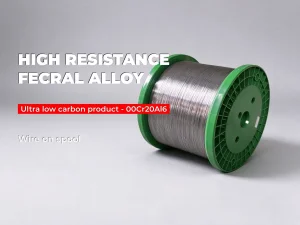
China 0Cr20Al6 Ultra Low Carbon FeCrAl Heating Alloy for High-Performance Industrial Applications

Wholesale High-Performance SGHT Steel Tubes - Trusted China Suppliers & Factory for Petrochemical Industries
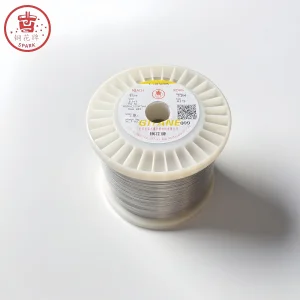
China High-Performance Cr20Ni80S Electric Heating Alloy for Demanding Thermal Environments

Wholesale High-Quality SPARK 0Cr25Al5 Electric Heating Wire - China Efficient Heating Solutions
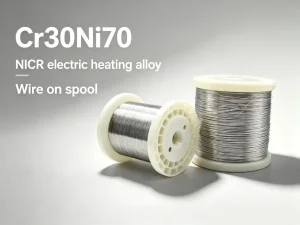
Wholesale High-Temperature Cr30Ni70 Alloy Wire - Durable for 50 Hours in Electric Heating & Furnaces

China 0Cr21Al6Nb Electric Heating Wire - High-Temperature Resistance Wire from Reliable Suppliers

Wholesale High-Performance 0Cr23Al5 Electric Heating Alloy Wire Direct Factory Supply
Executive Analysis: High-Temperature Resistance Heating Alloy Engineering
An in-depth metallurgical assessment of operational durability, micro-structural stability, and thermodynamic scale kinetics for modern industrial resistance furnaces.
Industrial resistance furnaces serve as the thermodynamic backbone for thermal processing industries worldwide, spanning semiconductor crystal growth, metallurgical heat treatment, photovoltaic silicon refining, and high-performance technical ceramics. Selecting the appropriate wholesale electric heating materials directly dictates operational uptime, thermal efficiency, furnace chamber temperature uniformity, and overall cost-of-ownership. As operating environments become increasingly severe—demanding temperatures exceeding 1300°C alongside aggressive cyclic thermal loading—traditional resistance alloys often suffer from catastrophic embrittlement, high-temperature creep sag, and accelerated scale spallation.
Key Metallurgical Takeaway: Modern long-life resistance furnace elements rely heavily on the precise thermodynamic formation of a self-healing, adherent alpha-alumina (α-Al₂O₃) or chromia (Cr₂O₃) oxide passivation film. Achieving extended life requires micro-alloying optimization using Reactive Elements (RE) such as Yttrium (Y), Zirconium (Zr), Cerium (Ce), and Hafnium (Hf).
1. Metallurgical Foundations: FeCrAl vs. NiCr Alloy Systems
When engineering high-efficiency electric heating systems, thermal design engineers must evaluate two primary metallic resistance families: Ferritic Iron-Chromium-Aluminum (FeCrAl) alloys and Austenitic Nickel-Chromium (NiCr) alloys. Each system exhibits distinct crystal structures, resistivity profiles, and physical mechanics under extreme thermal stress.
| Performance Metric | FeCrAl Alloys (e.g., SPARK SGHT, 0Cr25Al5) | NiCr Alloys (e.g., Cr20Ni80, Cr30Ni70) |
|---|---|---|
| Maximum Chamber Temp. | Up to 1425°C (2597°F) | Up to 1250°C (2282°F) |
| Passivation Oxide Layer | Alpha-Alumina (α-Al₂O₃) - White/Light Grey | Chromium Oxide (Cr₂O₃) - Dark Green/Black |
| Electrical Resistivity (20°C) | 1.25 – 1.45 μΩ·m (High efficiency) | 1.00 – 1.18 μΩ·m (Moderate) |
| Density | 7.10 – 7.25 g/cm³ (Lightweight, less mass) | 8.30 – 8.50 g/cm³ (Denser material) |
| Hot Strength & Creep | Moderate (Requires element support above 1100°C) | Superior (High structural rigidity post-heating) |
| Cyclic Thermal Fatigue | Susceptible to grain growth over extended hours | Excellent ductility; resists mechanical vibration |
2. Micro-Alloying Kinetics and Oxide Scale Adhesion Mechanisms
The lifetime of a resistance element is primarily limited by the oxidation rate of its protective surface scale. In FeCrAl alloys, aluminum diffuses outward to react with atmospheric oxygen, forming a dense, electrically insulating layer of α-Al₂O₃. However, repeated heating and cooling cycles induce severe CTE (Coefficient of Thermal Expansion) mismatch stresses between the oxide layer and the underlying metallic substrate. Without grain-boundary stabilization, this results in scale micro-cracking and loss of aluminum content, leading to premature burnout ("breakaway oxidation").
Our SPARK metallurgical engineering team mitigates breakaway oxidation through advanced Reactive Element Addition (REA) technology. By doping controlled trace quantities of Yttrium, Hafnium, and Zirconium into the melt, we achieve:
- Pegging Effect: Yttrium and Hafnium ions precipitate along grain boundaries, acting as chemical "pegs" that mechanically anchor the alumina scale to the alloy substrate.
- Grain Boundary Pinning: Rare-earth additions block rapid grain growth at temperatures above 1200°C, drastically reducing high-temperature creep sag.
- Purity Control: Ultra-low carbon and sulfur refining via Vacuum Induction Melting (VIM) prevents interfacial void formation, eliminating spallation sites.
Technical Roadmap & Future Outlook (2025–2035)
Pioneering next-generation thermal resistance materials to enable industrial decarbonization and ultra-high temperature processing.
Powder Metallurgy (PM) SGHT Alloys
Transitioning from traditional ingot melting to Powder Metallurgy (PM) processing allows homogeneous distribution of oxide dispersions (ODS). Our SGHT class alloys reach continuous operational limits of 1425°C with unprecedented dimensional stability and zero element sag.
Hydrogen Atmosphere Compatibility
As heavy industry shifts toward green hydrogen for metal reduction and sintering, resistance elements must withstand hydrogen embrittlement and severe carburization/decarburization cycles. SPARK alloys are engineered to maintain oxide stability across inert, reducing, and pure H₂ environments.
Smart Surface Functionalization
Integrating pre-oxidized, nanostructured surface finishes directly at the manufacturing facility. This golden/pre-conditioned oxide coating eliminates the customer's expensive initial commissioning and conditioning run, offering plug-and-play element deployment.
Macro Industry Solutions & Vertical Deployment Cases
Customized heating material specifications designed to withstand complex chemical atmospheres and thermal profiles across major industrial sectors.
Semiconductor & Photovoltaics
Challenge: Wafer oxidation, diffusion furnaces, and polysilicon crystal growers require absolute thermal uniformity (±0.5°C) and zero particulate contamination.
Solution: Ultra-pure FeCrAl grades (0Cr20Al6, SGHT) processed via electroslag remelting to eliminate volatile impurities and provide zero-scaling performance inside cleanroom processing chambers.
Automotive & Aerospace Heat Treatment
Challenge: Continuous vacuum carburizing, nitriding, and tempering furnaces subject elements to rapid thermal cycling and carbon deposition.
Solution: High-nickel Cr20Ni80S and Cr30Ni70 alloys exhibit superior structural ductility and resistance to "green rot" oxidation in carbon-rich, protective-gas environments.
Petrochemical & Industrial Furnaces
Challenge: Large-scale radiant tube heaters and cracking furnaces require high-wattage power output combined with long structural mechanical spans.
Solution: Heavy-gauge 0Cr25Al5 wire and strip coils paired with heavy-duty ceramic element supports, delivering extended service life up to 1250°C continuous duty.
China Factory 4.0: Metallurgical Precision & Supply Chain Resilience
Leveraging over 60 years of steelmaking heritage, automated wire drawing, and digital quality monitoring from Beijing Shougang Gitane New Materials.
End-to-End Vertical Process Integration
Unlike independent wire redrawers, our facilities control every stage of alloy synthesis: raw material melt selection, Vacuum Induction Melting (VIM), Electroslag Remelting (ESR), hot rolling, heavy-to-fine cold wire drawing, bright annealing, and continuous optical dimension testing. This complete supply chain control eliminates cross-contamination and ensures uniform electrical resistance along every meter of wire shipped globally.
Automated Quality Assurance & Tension Control
Utilizing high-speed laser diameter gauge feedback loops during multi-pass drawing, SPARK maintains dimensional tolerances within ±0.01 mm for fine wire and ±0.05 mm for heavy industrial strip. Every batch undergoes continuous eddy current testing to detect micro-cracks, followed by accelerated 50-hour high-temperature life testing in accordance with GB/T 1234-2012 quality standards.
Global Enterprise Engineering & Procurement Specification Manual
A comprehensive step-by-step engineering framework for specifying wholesale long-life electric heating materials.
1. Calculating Recommended Surface Watt Load ($W/cm^2$)
The primary factor determining element life is the surface power load ($w$), defined as the power emitted per unit area of wire surface. Operating an alloy above its recommended watt density causes internal overheating and rapid degradation.
Engineering Formula: $w = \frac{P}{\pi \cdot d \cdot L}$
Where $P$ is element power (Watts), $d$ is wire diameter (cm), and $L$ is total active wire length (cm).
- Industrial Furnaces (1100°C – 1250°C): Recommended Surface Load = 1.2 to 2.2 W/cm² (FeCrAl alloys).
- High-Temperature Kilns (1250°C – 1350°C): Recommended Surface Load = 0.8 to 1.5 W/cm² (HRE / SGHYZ grades).
- Precision Appliances & Fast Response Heaters: Recommended Surface Load = 3.0 to 6.0 W/cm² (Cr20Ni80 Nichrome).
2. Furnace Atmosphere Compatibility Reference Table
The operational atmosphere directly dictates the degradation chemistry of metallic resistance elements. Use this guide to match alloy grades to your furnace environment:
| Atmosphere Environment | FeCrAl Suitability (0Cr25Al5, SGHT) | NiCr Suitability (Cr20Ni80, Cr30Ni70) | Critical Engineering Notes |
|---|---|---|---|
| Air / Oxidizing | Excellent (Up to 1425°C) | Very Good (Up to 1250°C) | Forms protective α-Al₂O₃ scale on FeCrAl; Cr₂O₃ on NiCr. |
| Dry Nitrogen (N₂) | Good (Up to 1250°C) | Excellent (Up to 1250°C) | FeCrAl may form aluminum nitrides above 1300°C if scale breaks. |
| Pure Hydrogen (H₂) | Excellent (Up to 1400°C) | Excellent (Up to 1200°C) | Requires pre-oxidation treatment to establish protective oxide film. |
| Carburizing (CO / CH4) | Good (Resists carbon pick-up) | Poor to Fair | NiCr susceptible to "Green Rot" structural decay between 800-1000°C. |
| Vacuum | Fair (Al evaporation > 1150°C) | Excellent (Up to 1100°C) | Select lower surface loads to prevent metallic element vaporization. |
Localized Engineering Support & International Compliance
Streamlined global distribution, full regulatory adherence, and dedicated technical consulting for global OEMs and end-users.
Full Traceability & MTR Compliance
Every shipment is backed by official Mill Test Reports (MTR) detailing chemical heat analysis, electrical resistance per meter, tensile strength, elongation, and dimensional verification according to GB/T 1234-2012, ASTM, and DIN standards.
Environmental & Safety Certifications
All SPARK electric heating products strictly conform to EU RoHS 3 (Directive 2015/863) and REACH regulations, guaranteeing freedom from restricted heavy metals, hazardous substances, and conflict minerals.
Global OEM Engineering Support
Our team of metallurgical application engineers offers customized element geometry calculation, custom coil winding designs, retrofitting advice for legacy resistance furnaces, and fast-track sample prototyping for international buyers.
Additional Electric Heating Alloys & Specialty Wires
Browse our extended product inventory featuring premium NiCr wires, high-resistance FeCrAl alloys, and specialized furnace wire solutions.

China Cr15Ni60 High Temp Electric Heating Wire - Quality Suppliers & Factory Solutions
Wholesale Cr15Ni60 High Temp Electric Heating Wire - Superior Thermal Stability and Strength

Wholesale SG140 Alloy Supplier from China - High-Performance Wire for Tempering Furnaces
Wholesale Premium SPARK 0Cr25Al5 Resistance Heating Wire from China Factory Direct
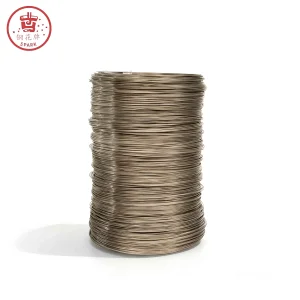
China High-Quality SPARK Golden Finished Electric Heating Wire Supplier & Factory Direct

Wholesale High-Quality 2.00mm 0Cr25Al5 Heating Wire - ISO9001 Certified Supplier Price
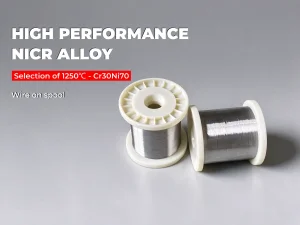
China Ni70Cr30 Nickel Chromium Wire | Industrial Grade Resistance Heating Wire Manufacturer
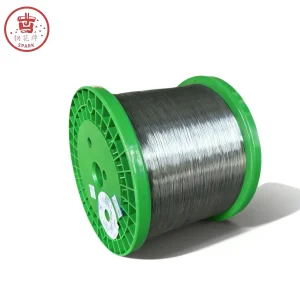
China High-Performance SPARK 0Cr20Al6 Electric Heating Wire 1350℃ Manufacturer Pricelist
Technical Q&A: Industrial Heating Materials & Procurement
Answers to common thermal engineering, alloy selection, and operational questions from plant managers and furnace OEM designers.
How do I determine whether FeCrAl or NiCr wire is best for my resistance furnace?
Select **FeCrAl (e.g., 0Cr25Al5, SGHT)** if your furnace operates at very high continuous temperatures (1100°C to 1425°C), requires high power output, or operates in oxidizing/sulfur-bearing atmospheres. FeCrAl is also lighter and more cost-effective per kilogram. Select **NiCr (e.g., Cr20Ni80, Cr30Ni70)** if your furnace undergoes frequent rapid thermal cycling, requires high hot ductility to prevent element breakage during vibration, or operates in nitrogen-rich/carburizing atmospheres below 1200°C.
What causes "hot spots" and premature burnout in electric furnace elements?
Hot spots are localized points of extreme temperature that exceed the alloy's melting point. Primary causes include localized cross-sectional reduction (due to mechanical nicking or non-uniform drawing), localized scale spallation exposing raw alloy to rapid oxidation, contact with furnace ceramic insulation containing reactive impurities (like iron oxides or silica), or improper coil pitch stretching resulting in adjacent turns touching.
What is the significance of the "50-Hour Accelerated Life Test" for Cr30Ni70 alloys?
The 50-hour accelerated high-temperature test (in accordance with standard GB/T 1234 methods) subjects the resistance wire to extreme thermal over-temperature cycling under high current density. Passing this test proves that the alloy melt possesses superior micro-structural purity, precise chromium-nickel stoichiometric balance, and high resistance to oxidation fatigue under severe industrial duty cycles.
Can FeCrAl elements be repaired or re-wound after long-term service?
Unlike NiCr elements which retain ductility, FeCrAl alloys undergo significant grain growth during extended exposure above 1000°C, becoming brittle at room temperature once cooled. While FeCrAl cannot be easily cold re-wound or stretched after usage, damaged coil sections can be carefully localized and repaired using specialized welding or mechanical terminal connector clamping under pre-heated conditions.
What lead times and packaging options are available for wholesale export orders?
Standard wire gauges (0.1mm to 10.0mm) and strip sizes are typically stocked or produced within 10–15 business days. Export shipments are wrapped in moisture-proof plastic film, packed with desiccant in export-grade wooden crates or spooled on standardized DIN plastic reels to guarantee zero physical damage or oxidation during ocean transit.