
High-Performance Resistance Alloy Wires & Furnace Tubes
Explore our premier selection of industrial resistance heating alloys, tailored for continuous operation up to 1425°C. Engineered with advanced metallurgy to guarantee low oxidation, high creep strength, and minimal resistance drift over extended production cycles.
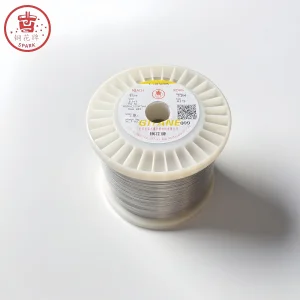
China High-Performance Cr20Ni80S Electric Heating Alloy for Demanding Thermal Environments
View Product Details
China Cr20Ni80 Electric Heating Wire Factory - High-Temperature Resistance Wire for Industrial Use
View Product Details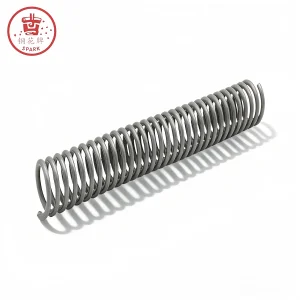
Wholesale High-Quality NiCr & FeCrAl Electric Heating Elements Solutions
View Product Details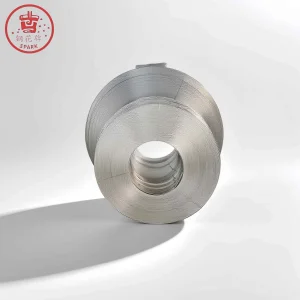
China SG140 Alloy Electric Heating Wire for Tempering Furnace - High Strength Solution
View Product Details
Wholesale 2.00mm 0Cr25Al5 Heating Wire ISO9001 Fast Delivery High Quality Offer
View Product Details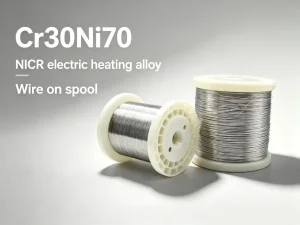
Wholesale High-Temperature Cr30Ni70 Alloy Wire - Durable 50 Hours @ High Temp Test
View Product Details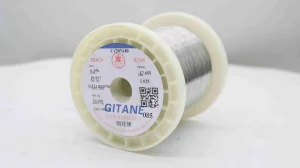
Wholesale Cr20Ni40 Nickel Chrome Heating Wire - High-Temperature Resistance Alloy
View Product Details
China High Performance SGHT Steel Tube Material for Energy and Petrochemical Industries
View Product DetailsIndustrial Furnace Heating Infrastructure by the Numbers
Global Commercial & Industrial Heating Alloy Landscape
The global thermal processing industry is undergoing a paradigm shift. Driven by carbon-neutrality mandates, electrification of industrial kilns, and high-throughput sintering for semiconductor and lithium-battery supply chains, industrial furnace builders and operators require elevated performance thresholds from resistance heating alloys.
Decarbonization & Electrification
Heavy industries—such as steel annealing, glass tempering, and automotive heat-treating—are replacing fossil-fuel combustion burners with electric radiant tube bundles and continuous wire spirals. This transition demands heating alloys that withstand higher surface load pressures (W/cm²) without thermal sag or premature oxide spallation.
Atmospheric Specialization
Modern heat treatment is no longer conducted in ambient air. Controlled atmospheres—including endothermic gas, nitrogen-hydrogen reduction mix, vacuum, and high-purity argon—impose distinct chemical stresses. Matching the precise alloy composition (FeCrAl vs NiCr) to furnace atmosphere chemistry is critical to prevent carbon pick-up and green rot breakdown.
Total Cost of Ownership (TCO)
Procurement managers are shifting focus from initial alloy cost per kilogram to Total Cost of Ownership. FeCrAl alloys (such as 0Cr25Al5 and SGHYZ) deliver up to 15% lower specific density and higher electrical resistivity than NiCr, enabling lighter element designs, reduced raw material mass, and significant energy savings over multi-year campaign cycles.
Information Gain: The Metallurgy of Protective Scale Self-Healing
The operational longevity of an industrial heating element hinges on the thermodynamic stability of its native oxide layer. FeCrAl alloys form a slow-growing, highly insulating alpha-alumina (α-Al₂O₃) surface layer at temperatures exceeding 1000°C. When rare-earth additions (Yttrium, Zirconium, Reactive Elements) are introduced into grades like SGHYZ (1400°C) and powder-metallurgy SGHT (1425°C), the scale adhesion is dramatically enhanced, preventing keyhole oxidation and thermal fatigue cracking during rapid thermal cycling.
FeCrAl Alloys vs. Nickel-Chromium (NiCr) Alloys
Selecting the correct heating alloy requires balancing operating temperature, atmosphere compatibility, physical strength, and mechanical ductility after prolonged thermal exposure. The following matrix outlines standard industrial parameters per GB/T 1234-2012 and international standards.
| Alloy Grade | Alloy Family | Max Element Temp. | Resistivity (20°C μΩ·m) | Density (g/cm³) | Primary Industrial Applications |
|---|---|---|---|---|---|
| SPARK SGHT | FeCrAl (PM) | 1425°C | 1.45 | 7.10 | Semiconductor diffusion, high-purity ceramic sintering, ultra-high temp kilns |
| SPARK SGHYZ | FeCrAl + RE | 1400°C | 1.42 | 7.10 | Powder metallurgy sintering, continuous industrial roller hearth furnaces |
| HRE | FeCrAl | 1350°C | 1.42 | 7.10 | Heavy-duty industrial furnace coils, high-temperature radiant tubes |
| 0Cr25Al5 | FeCrAl | 1250°C | 1.42 | 7.10 | General heat treating furnaces, ceramic kilns, electrical heating equipment |
| 0Cr23Al5 | FeCrAl | 1250°C | 1.35 | 7.25 | Tempering furnaces, pit furnaces, industrial heating resistance banks |
| Cr30Ni70 | NiCr | 1250°C | 1.18 | 8.10 | Reducing atmospheres, nitriding applications, cyclic high-frequency heating |
| Cr20Ni80 / Cr20Ni80S | NiCr | 1200°C | 1.09 | 8.40 | Precision lab furnaces, medical appliances, high-ductility heating coils |
| Cr20Ni40 | NiCr | 1100°C | 1.04 | 8.60 | Commercial baking ovens, lower-temperature industrial heaters, defrosting tubes |
Innovations Shaping Industrial Heating Element Sourcing
As thermal equipment OEMs demand longer operating lifespans, precise dimensional tolerances, and higher power densities, several manufacturing and metallurgical trends have emerged as key competitive differentiators.
Powder Metallurgy (PM) Alloys
Traditional melt metallurgy faces physical limits at temperatures above 1350°C due to rapid grain growth and creep deformation. Powder Metallurgy processing (found in SGHT) yields an ultra-homogeneous grain structure with dispersed oxide nanoparticles, extending maximum service limits up to 1425°C while maintaining exceptional sag resistance.
Integrated Ceramic Bundle Radiant Tubes
Rather than purchasing bare wire coils and retrofitting refractory spools locally, global procurement teams are sourcing fully assembled ceramic bundle rod cores. Products like the SPARK Ceramic Bundle Rod Radiant Tube Core integrate high-purity alumina ceramics with pre-wound heavy-gauge spiral wire, dramatically shortening installation maintenance downtime.
Golden-Surface Pre-Oxidation Treatments
Factory pre-oxidation (such as Golden Finished SPARK Wire) creates a pre-formed, uniform protective alumina skin prior to installation. This eliminates the risk of early-stage initial heating burnouts, reduces carbon contamination during startup, and ensures consistent thermal emissivity across all heating zones.
Global Enterprise Procurement & Vendor Qualification Criteria
Industrial heat-treatment facility downtime can cost enterprise operators tens of thousands of dollars per hour. Strategic sourcing leads must evaluate alloy suppliers beyond immediate unit cost, inspecting raw material purity, thermal testing capabilities, and batch-to-batch consistency.
1. Electrical Resistance Uniformity
In multi-zone industrial furnaces, a resistance variance greater than ±3% along a single wire spool leads to uneven temperature distribution, localized hot spots, and localized strand failure. Top-tier factories enforce continuous online resistance testing during wire drawing to maintain variance strictly within ±1.5%.
2. Creep and High-Temp Sag Resistance
At temperatures above 1100°C, resistance wire coils installed horizontally can sag under their own weight if grain boundary cohesion is insufficient. Evaluating high-temperature mechanical yield strength and metallurgical grain stability is mandatory during supplier audit stages.
3. Traceability & Mill Test Reports
Every coil shipped should be backed by heat-number traceability, mapping back to Vacuum Induction Melting (VIM) furnace batches. Certified MTRs must confirm exact chemical composition (Cr, Ni, Al, Fe, and micro-alloying additives like Y, Zr, Ti) alongside tensile strength and elongation metrics.
Supply Chain Resilience & Shougang Gitane Ecosystem
Leveraging over 60 years of metallurgical excellence as part of the state-owned Shougang Group ecosystem, Beijing Shougang Gitane New Materials Co., Ltd. represents the apex of Chinese high-end alloy wire and element manufacturing.
88,000 m² Manufacturing Facility
Our Changping, Beijing production complex houses 39,268 m² of specialized workshops featuring precision vacuum induction melting, continuous hot-rolling, diamond-die wire drawing, and hydrogen-atmosphere annealing furnaces.
30% Technical Staff Density
With approximately 500 total employees, nearly 30% are dedicated metallurgical engineers, quality assurance inspectors, and process researchers continuously advancing high-temperature alloy formulations.
ISO 9001:2015 & GB/T Standards
Holding ISO quality management certifications continuously since 1996, our production protocols fully comply with GB/T 1234-2012, ensuring global compliance for international furnace export projects.
Agile OEM & Custom Sizing
From fine wires (0.10mm diameter) to heavy industrial rod spirals (12mm+) and rolled flat ribbon, our factory provides tailored spooling, coiling, and packaging solutions with fast global freight dispatch.
Localized Application Scenarios & Case Studies
Discover how SPARK brand heating elements and alloy wires perform across diverse, demanding industrial production sectors worldwide.
Photovoltaic & Semiconductor
In silicon wafer diffusion, ingot growth, and solar cell sintering kilns, ultra-clean high-temperature alloys (such as SGHT & SGHYZ) eliminate particle flaking and contamination, ensuring high chip yield rates.
Automotive Heat Treatment
Continuous mesh-belt carburizing and tempering furnaces require heating elements that resist carbon deposition and mechanical vibration. SG140 and Cr30Ni70 wires deliver stable long-term heating for gear and shaft heat treatment.
Lithium Battery Cathode Sintering
Roller hearth kilns (RHK) processing LFP and NCM cathode materials operate continuously in aggressive corrosive gas environments. SPARK FeCrAl alloys provide dense surface protection against chemical attack.
Petrochemical & Energy Tubes
Petrochemical cracking furnaces, high-pressure reformer systems, and heat exchanger tubes rely on SGHT High Performance Tube Materials engineered to handle high pressures and extreme thermal gradients.
Ultra-High Temp Alloys, Cores & Finished Heating Wire
Explore additional specialized product configurations, including engineered ceramic rod bundles, creep-resistant FeCrAl wire, and pre-oxidized finished resistance coils ready for furnace integration.
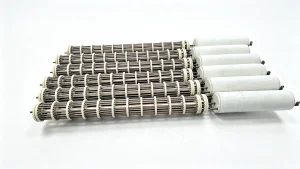
China SPARK Ceramic Bundle Rod Radiant Tube Heating Core for Industrial Furnaces
View Product Details
Wholesale SG140 Alloy for Tempering Furnace - High-Performance Electric Heating Wire
View Product Details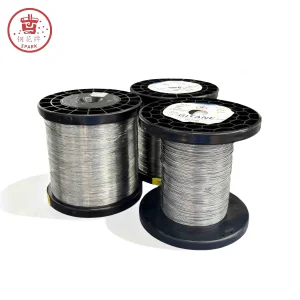
Wholesale Ultra High Temperature Electric Heating Wire SGHT Ideal for High Performance Heating
View Product Details
Wholesale SGHYZ 1400°C High Temp FeCrAl Heating Wire Creep Resistant Alloy
View Product Details
China 0Cr25Al5 Electric Heating Wire - Top Suppliers & Factory for High Resistance Wire
View Product Details
Wholesale Cr15Ni60 High Temp Electric Heating Wire - Superior Thermal Stability & Strength
View Product Details
China Golden Finished SPARK Electric Heating Wire - Pre-Oxidized Premium Quality Alloy
View Product Details
Wholesale China 0Cr25Al5 Electric Heating Wire - High-Performance Resistance Wire Direct Supply
View Product DetailsFrequently Asked Procurement & Engineering Questions
Expert insights provided by Senior Metallurgical Engineers at Beijing Shougang Gitane New Materials Co., Ltd.
Q: What are the fundamental differences between FeCrAl and Nickel-Chromium (NiCr) alloys in industrial heating?
FeCrAl alloys (such as 0Cr25Al5, HRE, SGHYZ) feature higher maximum operating temperatures (up to 1425°C), higher electrical resistivity (1.35–1.45 μΩ·m), and roughly 15% lower density compared to NiCr. This allows furnace engineers to use less total alloy weight for equivalent electrical output. Conversely, NiCr alloys (such as Cr20Ni80, Cr30Ni70) maintain superior hot strength and room-temperature ductility after prolonged exposure, making them easier to service, bend, and repair, while offering superior resistance to carbon atmospheres and frequent rapid thermal cycling.
Q: How does surface load ratio (W/cm²) affect the life expectancy of heating elements?
Surface load rating represents the electrical power dissipated per unit area of wire surface area. Exceeding recommended surface load thresholds causes element core temperatures to soar far above ambient furnace temperature, accelerating oxide breakdown and hot-spot formation. For standard FeCrAl operating at 1200°C in continuous air, a surface load of 1.5 to 2.5 W/cm² is typical, whereas radiant tube bundle elements or pre-oxidized powder-metallurgy SGHT alloys can sustain higher surface loads up to 3.5 W/cm² depending on atmosphere dynamics.
Q: Why is SGHT rated for 1425°C, and how does Powder Metallurgy prevent element sag?
Conventional cast-melt FeCrAl alloys undergo rapid coarse grain growth when held above 1300°C, causing mechanical softening and sag under gravitational stress. SGHT is manufactured using advanced Powder Metallurgy (PM) processes. By consolidating fine alloy powders with micro-dispersed refractory rare-earth oxide particles, SGHT forms a locked, interlocking grain structure that resists creep deformation, preserving coil shape and element pitch stability up to 1425°C.
Q: What steps prevent element corrosion in endothermic or carburizing furnace atmospheres?
In carbon-rich carburizing atmospheres, carbon gas can diffuse into standard heating wire grain boundaries, forming brittle chromium carbides (a phenomenon known as "green rot" in NiCr or structural embrittlement in FeCrAl). To prevent this, elements should undergo factory pre-oxidation to form a continuous α-Al₂O₃ barrier. Additionally, periodic re-oxidation cycles (running elements in clean air at 1050°C for 4 to 8 hours) restore eroded oxide skins and purge carbon deposits.
Q: What quality documentation and testing reports are supplied with wholesale factory shipments?
Every production batch shipped from Beijing Shougang Gitane includes a comprehensive Mill Test Report (MTR). Documentation covers spectrographic chemical analysis (guaranteeing exact Cr, Ni, Al percentages and trace elements), cold resistance value per meter (Ω/m), tensile strength, elongation percentage, dimensional wire gauge tolerance checks, and compliance certificates for ISO 9001:2015 and GB/T 1234-2012 standards.