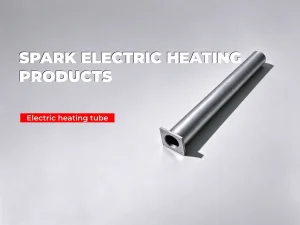
Featured Industrial Heating Alloys & Elements (Part I)
Explore our top-tier metallurgical resistance heating alloys, ultra-high temperature FeCrAl wires, and customized spiral elements engineered for continuous duty up to 1425°C.
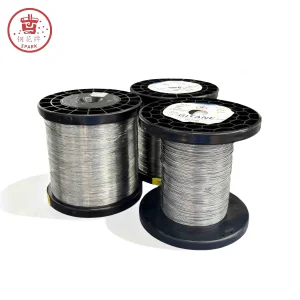
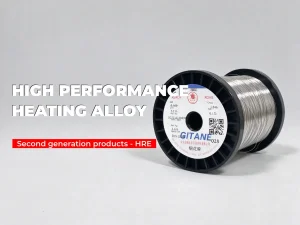


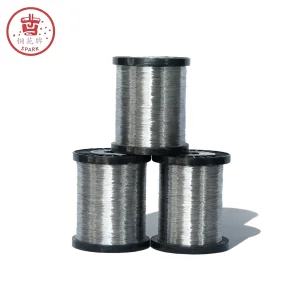
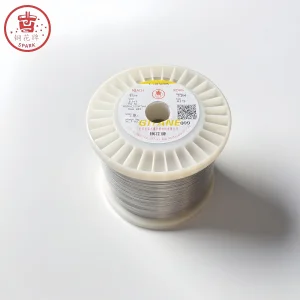


Global Industrial Furnace Heating Technology Landscape & Commercial State
A comprehensive metallurgical breakdown of global thermal process demand, decarbonization imperatives, and the evolution of electrothermal alloys.
The global industrial heating sector is undergoing a massive structural shift. Driven by international carbon-neutrality mandates, stringent thermal efficiency protocols, and the expansion of advanced materials processing (such as semiconductor silicon, EV battery lithium-ion cathodes, and aerospace composites), the demand for high-reliability industrial furnace heating elements has reached an unprecedented peak. Transitioning away from fossil-fueled direct combustion toward high-efficiency electric thermal conversion is no longer merely an environmental preference; it is a core operational necessity for industrial enterprises globally.
Industrial electric furnaces rely heavily on electrothermal resistance alloys—primarily Iron-Chromium-Aluminum (FeCrAl) and Nickel-Chromium (NiCr) alloy systems. These materials operate under extreme conditions characterized by continuous thermal cycling, oxidizing, reducing, or carburizing atmospheres, and structural mechanical stress at temperatures ranging from 800°C to above 1400°C. Selecting the optimal wholesale industrial furnace heater factory and mastering the underlying cost-performance matrices in current factory pricelists directly correlates with a plant's operational expenditure (OpEx), mean time between failures (MTBF), and overall production yield.
Thermal Efficiency & Electrification
Modern electric heat treatment processes yield over 95% thermal efficiency at point of use compared to 30-45% for direct gas firing, dramatically slashing indirect Scope 1 greenhouse emissions.
High-Temperature Oxidation Kinetics
Advanced FeCrAl alloys form a self-healing, highly protective alpha-alumina ($\alpha\text{-Al}_2\text{O}_3$) scale at temperatures exceeding 1000°C, providing exceptional lifespan even in harsh operational environments.
Powder Metallurgy Breakthroughs
Dispersed Powder Metallurgy (PM) FeCrAl alloys eliminate traditional high-temperature creep and sag, enabling furnace operation up to 1425°C without structural element breakdown.
FeCrAl vs. NiCr Alloy Systems: Engineering Selection Matrix
Understanding the chemical, electrical, and mechanical trade-offs between Iron-Chromium-Aluminum and Nickel-Chromium resistance materials.
| Material Grade | Alloy Family | Max Temp (°C) | Resistivity (μΩ·m, 20°C) | Density (g/cm³) | Primary Protective Scale | Key Application Field |
|---|---|---|---|---|---|---|
| SGHT / SGHYZ | FeCrAl (PM / Rare Earth) | 1400°C - 1425°C | 1.45 - 1.50 | 7.10 | Dense $\alpha\text{-Al}_2\text{O}_3$ | Semiconductor, High-temp Sintering |
| HRE / 0Cr27Al7Mo2 | High-Resistance FeCrAl | 1350°C - 1400°C | 1.45 | 7.10 | $\alpha\text{-Al}_2\text{O}_3$ Film | Ceramic Kilns, Heavy Industrial Furnaces |
| 0Cr25Al5 / 0Cr23Al5 | Standard FeCrAl | 1250°C - 1300°C | 1.35 - 1.42 | 7.15 | $\text{Al}_2\text{O}_3$ Layer | Heat Treatment, Industrial Heaters |
| Cr20Ni80 / Cr20Ni80S | Premium NiCr Alloy | 1200°C | 1.09 | 8.40 | $\text{Cr}_2\text{O}_3$ Oxide Film | Precision Annealing, Cyclic Appliances |
| Cr15Ni60 / Cr20Ni40 | Economy NiCr Alloy | 1100°C - 1150°C | 1.11 - 1.13 | 8.20 | Chromium Oxide | Tempering Furnaces, Commercial Heating |
Why China Wholesale Factories Deliver Unmatched Price-Performance Efficiency
Analyzing the supply chain integration, raw material sourcing advantages, and quality control systems driving Chinese industrial furnace heater manufacturing.
Procurement officers and furnace designers evaluating global wholesale pricelists quickly recognize the distinct commercial advantage of sourcing high-temperature heating alloys directly from specialized Chinese manufacturing hubs. Companies like Beijing Shougang Gitane New Materials Co., Ltd. leverage complete vertically integrated metallurgical supply chains—from raw iron ore, refined nickel, chromium, and aluminum melting in vacuum induction furnaces (VIF) and electro-slag remelting (ESR) setups to multi-pass precision wire drawing, hydrogen atmosphere bright annealing, and continuous coil winding.
Full Structural Vertical Integration
Direct ownership and partnership with state-level metallurgical steel groups eliminate intermediate distributor markups, securing raw material price stability even during global commodity volatility.
Rigorous ISO 9001 & GB/T Quality Protocols
Every batch undergoes strict microstructural grain size verification, cold/hot state resistance testing, high-temperature creep lifetime evaluation, and non-destructive eddy current flaw detection.
Understanding wholesale pricelist structures requires analyzing the key variables that determine final landed cost per kilogram or per fabricated element unit:
- Raw Material Indexing: NiCr alloys carry pricing tied heavily to LME (London Metal Exchange) Nickel spot prices. FeCrAl alloys offer significant raw material cost stability due to their iron-base composition.
- Dimensional Precision & Delivery Form: Ultra-fine wires (below 0.10mm) and high-thickness rolled ribbons require specialized drawing dies and tension-controlled annealing, adding fabrication value compared to standard heavy-gauge wire coils (3.0mm–10.0mm).
- Fabrication Complexity: Pre-formed spiral coils, corrugated strip elements, ceramic tube-mounted heating arrays, and custom-welded terminal leads add labor and engineering value while drastically cutting on-site installation time for furnace builders.
Localized Industrial Furnace Applications & Thermal Integration
How high-temperature electrothermal elements are customized for specific global manufacturing processes.
Lithium-Ion Battery Cathode Sintering Kilns
Continuous roller hearth kilns processing LFP (Lithium Iron Phosphate) and NCM cathode powders demand pristine, non-contaminating atmospheres. SPARK SGHT and HRE FeCrAl alloys prevent scale flaking, avoiding metallic particle contamination in battery powders during 1000°C–1200°C calcination cycles.
Photovoltaic & Semiconductor Diffusion Furnaces
Silicon wafer processing requires thermal uniformity within ±0.5°C across multi-zone horizontal and vertical furnaces operating at 1100°C–1300°C. Precision-drawn Cr20Ni80S and SGHYZ wire coils mounted on quartz or high-purity alumina tubes guarantee tight resistance tolerances and zero micro-zonal hot spots.
Automotive & Aerospace Metal Heat Treatment
Carburizing, nitriding, vacuum quenching, and solution annealing pit furnaces utilize heavy-section 0Cr25Al5 or Cr20Ni40 strip elements. Their robust mechanical strength resists atmospheric carbon pickup and chemical attack under endothermic and synthetic atmosphere conditions.
Advanced Ceramic & Glass Sintering Kilns
High-temperature shuttle kilns for technical ceramics (zirconia, alumina) and glass bending/annealing lehrs require continuous long-duration firings at 1300°C–1350°C. Heavy-gauge HRE wire coils and SGHT tubular heating elements provide unmatched creep resistance, minimizing sagging and replacement frequency.
Global Technical Quality Standards & Buyer Inspection Guidelines
Ensure project compliance by verifying critical metallurgical parameters before placing wholesale orders.
When issuing RFQs (Request for Quotations) to wholesale industrial furnace heater manufacturers, global engineering teams must specify strict compliance standards. Below is the standard inspection checklist implemented by elite thermal engineering procurement departments:
1. Electrical Resistivity Uniformity
Verify that resistivity ($\mu\Omega\cdot\text{m}$) variations stay within ±3% along the entire spool or coil length per GB/T 1234-2012 or ASTM B603 standards to guarantee balanced zone power distribution.
2. High-Temperature Accelerated Life Test
Require standard Bash & Harsch accelerated life cycle test reports. Premium FeCrAl alloys should demonstrate continuous high-temperature resistance stability without early localized hot-spot burnouts.
3. Surface Integrity & Tensile Ductility
Ensure drawn wires exhibit zero surface scratches, micro-cracks, or oxide seams. Cold-state elongation must exceed 12–20% to allow smooth automatic coil winding without wire fracturing.
Next-Generation Electrothermal Innovations: 2025–2035 Outlook
Emerging metallurgical developments reshaping the high-temperature industrial heating market.
Nano-Dispersion Strengthening (ODS)
Incorporating oxide dispersion strengthening (Yttria $\text{Y}_2\text{O}_3$ nanoparticles) into FeCrAl matrices increases creep strength at 1400°C by up to 400%, allowing ultra-heavy vertical element installations without ceramic support saggers.
Smart Resistance-Monitoring Systems
Integration of dynamic online resistance sensing allows automated thermal management software to predict element degradation curves, scheduling predictive maintenance before sudden open-circuit failures occur.
Green Hydrogen Metallurgy Production
Transitioning primary alloy melting furnaces to zero-carbon green hydrogen atmospheres and renewable electric arc melting, reducing embodied carbon in resistance heating components exported to European and North American markets.
Industrial Heating Alloy Technical & Procurement FAQ
Expert answers to key technical questions encountered by furnace engineers and wholesale buyers.
Featured Industrial Heating Alloys & Elements (Part II)
Browse our extended product line of furnace tubes, custom customized heating equipment, and high-temp resistance alloys ready for direct OEM procurement.