Industrial Heating Elements & Resistance Wires
Explore high-temperature electrothermal materials, precision spiral elements, and high-nickel/high-chromium alloys engineered for extreme thermal environments.
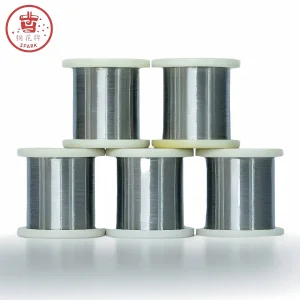
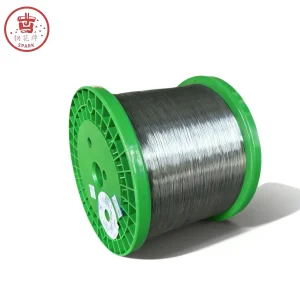

Global Commercial & Industrial Furnace Alloy Status (2025–2030)
Analyzing the global transition toward industrial electrification, high-temperature thermal processing demands, and supply chain dynamics driving wholesale furnace alloy procurement.
Industrial Decarbonization & Electrification
Global manufacturing is accelerating the replacement of fossil-fuel-fired thermal equipment with zero-emission electric industrial furnaces. Heavy industries—including specialized steel heat treatment, ceramic matrix composite (CMC) sintering, glass manufacturing, and semiconductor crystal growth—are driving unprecedented demand for ultra-high-temperature resistance alloys operating reliably between 1100°C and 1425°C.
Operational Expense & Lifespan Economics
Modern industrial thermal processes prioritize continuous campaign longevity over low initial material cost. Furnace operators calculate total cost of ownership based on element lifetime, anti-sagging performance, oxidation rate kinetics, and resistance to thermal fatigue during high-frequency cycling. High-purity iron-chromium-aluminum (FeCrAl) and nickel-chromium (NiCr) alloys with specialized rare-earth dopants represent the technical gold standard.
Semiconductor & Clean-Tech Demand Surge
The global expansion of semiconductor wafer fabrication plants, photovoltaic solar cell production lines, and lithium-ion battery cathode sintering kilns has created stringent purity standards for electrothermal elements. Industrial furnace alloys must exhibit minimal volatile trace metal emissions, superior oxide scale adhesion, and structural integrity under prolonged thermal exposure.
FeCrAl vs. NiCr Metallurgical Physics & Oxide Passivation
Understanding the microstructural grain dynamics, oxidation film formation mechanisms ($Al_2O_3$ vs $Cr_2O_3$), and thermal load formulas that govern high-temperature resistance alloy engineering.
Industrial electrical heating relies on the Joule heating effect ($P = I^2 R = V^2 / R$). However, continuous operation at high temperatures requires materials that resist rapid oxidation, creep deformation, and chemical degradation by furnace atmospheres. The two dominant alloy systems—Iron-Chromium-Aluminum (FeCrAl) and Nickel-Chromium (NiCr)—achieve thermal longevity through distinct microstructural phase behaviors and protective oxide scale kinetics.
FeCrAl Alloy System Kinetics ($\alpha$-Ferritic Phase)
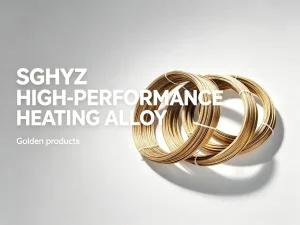
FeCrAl alloys (such as 0Cr25Al5, 0Cr23Al5, HRE, and SGHYZ) feature a body-centered cubic (BCC) ferritic structure. When exposed to temperatures above 900°C in oxidizing atmospheres, aluminum selectively diffuses outward to form a thermodynamically stable, continuous layer of alpha-alumina ($\alpha-Al_2O_3$). This alumina scale provides exceptional electrical insulation, extremely low oxygen permeability, and resistance to oxidation at temperatures reaching 1425°C. The addition of reactive elements (such as Yttrium, Zirconium, and Hafnium) stabilizes the oxide-metal interface, preventing scale spallation during thermal shock.
NiCr Alloy System Kinetics ($\gamma$-Austenitic Phase)
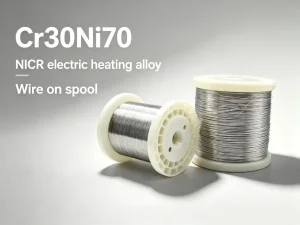
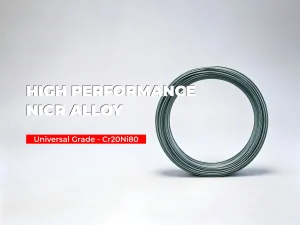
NiCr alloys (such as Cr20Ni80, Cr30Ni70, and Cr15Ni60) possess a face-centered cubic (FCC) austenitic matrix. When heated, chromium selectively oxidizes to form a protective chromia ($\text{Cr}_2\text{O}_3$) oxide layer. NiCr alloys exhibit outstanding hot mechanical strength, high ductility after long service life, and excellent resistance to thermal shock and mechanical vibration. Unlike FeCrAl, which becomes brittle after high-temperature exposure due to grain growth, NiCr retains its cold-workability, facilitating easier furnace maintenance and element re-coiling.
| Alloy Family / Grade | Structure | Max Temp (°C) | Resistivity (μΩ·m, 20°C) | Density (g/cm³) | Protective Oxide Film | Primary Industrial Application |
|---|---|---|---|---|---|---|
| SGHT (PM FeCrAl) | BCC (Powder Met) | 1425°C | 1.45 | 7.10 | $\alpha-Al_2O_3$ (RE Doped) | Advanced ceramic sintering, semiconductor diffusion furnaces |
| SGHYZ (Ultra FeCrAl) | BCC (Ferritic) | 1400°C | 1.42 | 7.10 | $\alpha-Al_2O_3$ High Purity | High-temperature industrial kilns, powder metallurgy |
| 0Cr25Al5 / HRE | BCC (Ferritic) | 1350°C | 1.42 | 7.10 | Dense $Al_2O_3$ Scale | Heat treatment furnaces, radiant tube heaters |
| 0Cr23Al5 | BCC (Ferritic) | 1250°C | 1.35 | 7.25 | $Al_2O_3$ Scale | Commercial furnace elements, industrial air heaters |
| Cr30Ni70 | FCC (Austenitic) | 1250°C | 1.18 | 8.10 | $Cr_2O_3 / NiCr_2O_4$ | Frequent-cycling industrial furnaces, nitrogen atmospheres |
| Cr20Ni80 | FCC (Austenitic) | 1200°C | 1.09 | 8.40 | Chromia Scale | Precision heat treating, laboratory furnaces, appliances |
Localized Application Scenarios across Global Industries
Specific operational environments where specialized FeCrAl and NiCr furnace alloys provide optimized thermodynamic resistance and long service lifespans.
1. Steel Heat Treatment & Carburizing Furnaces
Continuous mesh-belt, push-rod, and pit-type heat treatment furnaces require stable heating elements in carbon-rich or controlled atmospheres. FeCrAl elements with high aluminum content resist carbon penetration and green-rot corrosion, ensuring long-term thermal stability during bright annealing, hardening, and tempering of auto components.
2. Glass Bending, Tempering & Ceramic Kilns
Flat glass tempering furnaces and ceramic roller kilns demand precise temperature distribution and non-spalling heating materials. Flaking oxide particles can ruin glass optics or ceramic glazes. High-purity SG140 and 0Cr25Al5 elements form smooth, non-flaking alumina films that prevent contamination while operating at temperatures up to 1350°C.
3. Semiconductor Wafer Epitaxy & Photovoltaics
Diffusion furnaces and LPCVD reactors used in semiconductor manufacturing operate under ultra-clean conditions. Powder-metallurgy SGHT elements deliver ultra-low trace-element evaporation, maintaining high structural rigidity without element sagging during rapid thermal cycling between room temperature and 1350°C.
4. Powder Metallurgy Sintering & MIM Furnaces
Metal Injection Molding (MIM) and metal powder sintering require continuous high-temperature reduction atmospheres (hydrogen or dissociated ammonia). Heavy-gauge FeCrAl strip and rod-over-bend elements deliver the thermal density required to achieve complete intermetallic bonding without chemical breakdown.
China Factory Supply Chain Resilience & Manufacturing Efficiency
Leveraging fully integrated metallurgical raw material sourcing, state-of-the-art melt processing, and global logistics nodes to ensure unbeatable cost-efficiency and delivery speed.
Full Vertical Integration: From Melt to Finished Element
Unlike regional re-drawers, top Chinese industrial furnace alloy manufacturers operate end-to-end production pipelines: Vacuum Induction Melting (VIM), Electroslag Remelting (ESR), hot forging, heavy rolling mills, precision wire drawing, and continuous bright hydrogen annealing. This vertical integration guarantees strict heat-to-heat chemical uniformity and eliminates intermediary markup costs.
Advanced Quality Assurance & Dimensional Control
Equipped with laser micrometer online feedback systems, continuous digital resistance testing, and automated eddy-current flaw detection, Chinese factory lines produce wire and strip with tight dimensional tolerances ($\pm 0.01\text{ mm}$). Every wholesale shipment is delivered with comprehensive EN 10204 3.1 Mill Test Certificates verifying exact alloy chemistry and cold resistance.
Scalability, Buffer Stocking & Rapid Turnaround
Supported by vast raw material reserves (pure Nickel, Chromium, Aluminum, and Rare Earth elements) and high-capacity multi-wire drawing benches, orders ranging from 50 kg specialized coils to multi-ton container shipments are processed with industry-leading lead times. Large-scale stocking programs for standard grades (0Cr25Al5, Cr20Ni80 wire/strip) enable rapid emergency dispatch for furnace overhaul projects.
Technology Roadmap & Future Electrothermal Innovation
Next-generation materials engineering: Oxide Dispersion Strengthened (ODS) alloys, AI-assisted grain boundary design, and zero-carbon thermal processing solutions.
1. Powder Metallurgy & ODS Alloy Evolution
Traditional melt-cast FeCrAl alloys face mechanical creep limits above 1300°C due to rapid grain growth. The future lies in Oxide Dispersion Strengthened (ODS) powder metallurgy techniques. By uniformly dispersing nanoscale Yttrium oxide ($\text{Y}_2\text{O}_3$) particles throughout the metal matrix, future furnace alloys will operate at continuous temperatures of 1450°C with near-zero creep sagging and multi-fold extended service lifespans.
2. AI-Driven Grain Boundary & Rare-Earth Doping
Utilizing machine learning models trained on thermodynamic phase diagrams and high-temperature oxidation kinetics, researchers are refining quaternary and quinary element doping ratios. Precision micro-additions of Zirconium (Zr), Hafnium (Hf), and Tantalum (Ta) lock grain boundaries against thermal growth, drastically lowering oxide scale growth rates ($k_p$) and preventing scale micro-cracking.
3. Compatibility with 100% Green Hydrogen Furnaces
As global thermal processing shifts toward green hydrogen fuels, resistance heating materials must withstand pure $H_2$ reducing atmospheres at high temperatures without experiencing hydrogen embrittlement or moisture-induced oxide stripping. Specialized pre-oxidized FeCrAl grades form impenetrable alumina barriers designed to maintain stable electrical resistance in intense hydrogen environments.
Localized Technical Support & Global Regulatory Compliance
Ensuring seamless international procurement through rigorous compliance certifications, customized element design engineering, and end-to-end technical consultation.
International Standard Compliance (ISO, GB/T, ASTM)
All wholesale electrothermal products strictly conform to international industrial standards, including GB/T 1234-2012, ASTM B603, ASTM B344, and DIN 17470. Products are fully RoHS and REACH compliant, ensuring freedom from hazardous heavy metals and guaranteeing frictionless customs clearance across Europe, North America, and Asia-Pacific regions.
Custom Heating Element Coiling & Fabrication Support
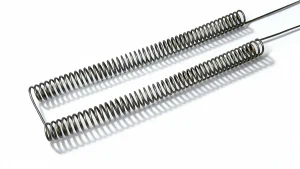
Beyond bulk wire and strip supply, our engineering team offers complete design and pre-fabrication services for custom heating elements: spiral coils, meander elements, rod-over-bend structures, and ceramic-supported heating modules. Engineers calculate wire gauge, pitch ratio, stretch ratio ($S/D$), and surface power load based on client furnace CAD drawings.
End-to-End Export Logistics & Duty/Customs Support
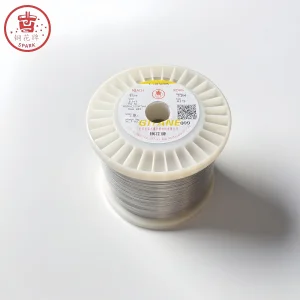
Global B2B procurement is supported by dedicated export logistics management, offering CIF, FOB, DDP, and DAP terms. Products are packaged in sea-worthy vacuum-sealed foil wrappings on heavy-duty wooden spools or crates to eliminate moisture exposure during ocean freight transit.
Industrial Furnace Alloy Engineering FAQ
Answers to common technical questions regarding element selection, surface load calculations, oxidation life extension, and wholesale procurement.
What is the fundamental difference between choosing FeCrAl and NiCr alloys for an industrial furnace?
How do I select the maximum surface load density (W/cm²) for my heating elements?
Why is pre-oxidation treatment recommended for new furnace alloy elements?
What causes "Green Rot" corrosion in NiCr alloys and how can it be avoided?
What delivery forms and custom dimensions are available for wholesale orders?
What quality documentation accompanies international factory direct shipments?
Additional High-Temperature Products & Furnace Accessories
Explore our full range of specialty heating elements, inductive components, powder-metallurgy wires, and specialized glass tempering alloys.