Industrial Electric Heating Tape & Strip Engineering
A comprehensive whitepaper on physical thermal tracing mechanics, advanced metallurgical substrate selection, and industrial heating tape manufacturing for ultra-demanding global applications.
Thermal Mechanics & Substrate Physics
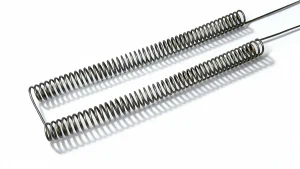
Industrial electric heating tapes (also referred to as flexible heating strips or heat tracing tapes) represent an essential class of electrothermal equipment engineered to deliver linear, uniform thermal energy directly to process piping, storage vessels, valves, manifolds, and high-temperature industrial kilns. Unlike standard commercial freeze-protection cables, heavy-duty industrial heating tapes utilize highly specialized resistance alloys (primarily iron-chromium-aluminum FeCrAl and nickel-chromium NiCr) wrapped or braided with high-grade dielectric insulation, such as fiberglass, fluoropolymer (PFA/FEP), or quartz sleeve jackets.
The operational longevity of an industrial electric heating tape depends squarely upon the oxidation kinetics of its alloy core. Under continuous electrical load, the resistance wire within the tape generates thermal energy governed by Joule's Law ($P = I^2 R$). At elevated temperatures (ranging from 200°C to over 1200°C), premium FeCrAl substrates form a self-healing, impermeable surface scale of alpha-alumina ($\alpha\text{-Al}_2\text{O}_3$), protecting the internal core against chemical attack, sulfidation, and mechanical degradation.
Information Gain: Structural Classifications
Modern procurement specifications categorize industrial heating tapes into three distinct architectural archetypes based on thermal load and operational requirements:
- Constant Wattage Series Tapes: Delivers uniform power density ($W/m$) regardless of circuit length. Ideal for high-temperature process maintenance up to 500°C–900°C where precise thermal stability is mandatory.
- Self-Regulating Conductive Polymer Tapes: Features a PTC matrix that automatically throttles heat output locally as ambient pipe temperatures rise. Perfect for freeze protection and low-to-medium temperature maintenance (up to 150°C).
- Heavy-Duty Mineral-Insulated (MI) Metal Sheathed Tapes: Utilizes a solid alloy outer sheath housing resistance wire embedded in magnesium oxide (MgO) powder. Capable of enduring extreme temperatures up to 1000°C+ with unparalleled mechanical resistance.
Industrial Heating Tape Substrate & Sheath Specifications
Direct comparison of industrial alloy cores, sheath dielectrics, operating limits, and chemical resistance profiles for engineering specification teams.
| Alloy Core / Tape Type | Max Maintain Temp (°C) | Max Exposure Temp (°C) | Dielectric Jacket | Resistivity (μΩ·m) | Primary Industrial Application |
|---|---|---|---|---|---|
| FeCrAl (0Cr25Al5) Strip Tape | 1100°C | 1250°C | High-Purity Quartz / Ceramic Braid | 1.42 ± 0.05 | High-temp industrial kilns, furnace heating elements, gas line tracing. |
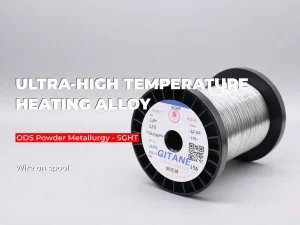
| FeCrAl (SGHT Powder Metal) | 1300°C | 1425°C | Sintered Alumina Ceramic Sleeving | 1.45 ± 0.05 | Advanced semiconductor diffusion furnaces, ceramic sintering lines. |
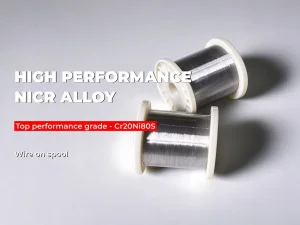
| NiCr (Cr20Ni80) Premium Tape | 1000°C | 1200°C | Knitted E-Glass Fiber / Stainless Braid | 1.09 ± 0.04 | Cyclic thermal processing, power plant boiler line tracing, lab equipment. |
| PFA Fluoropolymer Tracing Tape | 200°C | 260°C | Extruded PFA / Metal Braid Outer | Variable / Self-Reg | Corrosive chemical pipelines, acid transport, pharmaceutical processing. |
| Silicone Rubber Flexible Tape | 200°C | 232°C | Reinforced Silicone Elastomer | Constant Watt Core | Vessel heating, drum heaters, freeze protection in moist environments. |
Dielectric Breakdown Resistance
Industrial heating tapes are manufactured with multi-layer dielectric insulation rated for up to 2500V AC testing, ensuring complete electrical isolation and zero stray leakage in wet or conductive environments.
Mechanical Flexibility & Bending Radius
Engineered with multi-strand woven resistance ribbons that allow tight wrapping radiuses down to 12.5mm without fracturing the conductor or risking localized hot-spot formation.
Thermal Uniformity & Watt Density
Flat ribbon wire profiles provide up to 70% more contact surface area than round wire, drastically improving heat transfer efficiency and reducing internal conductor sheath operating stress.
Unmatched Manufacturing Synergy & Scale in China
Why global EPC contractors, industrial heating OEMs, and chemical conglomerates rely on Chinese specialized production hubs like Beijing Shougang Gitane / SPARK.
Vertical Integration: From Raw Ore Melt to Woven Tape
The core structural advantage of China's premier industrial electric heating tape manufacturers lies in vertical integration. Leading factories do not simply buy wire on the open market and braid it; they control Vacuum Induction Melting (VIM), Electroslag Remelting (ESR), hot rolling, cold wire drawing, precise ribbon flattening, hydrogen atmosphere bright annealing, and high-speed automated fiber braiding under one roof.
This end-to-end metallurgical sovereignty eliminates inter-batch electrical resistance drift ($\pm 3\%$ tolerance guaranteed), ensuring every meter of heating tape performs identically across massive chemical processing plant installations spanning kilometers.
Rigorous International Compliance & Cost Efficiency
China's manufacturing ecosystem combines advanced automation with unmatched material supply chain proximity. Products are manufactured in strict compliance with GB/T 1234-2012, IEC 60079 (for hazardous explosion-proof areas), ATEX, and CE standards.
By eliminating multiple layers of middle distributors and leveraging ultra-efficient production workflows, Chinese manufacturers deliver engineering-grade industrial heating tapes at a 30% to 50% cost advantage over Western competitors, without sacrificing a single degree of performance or reliability.
Macro Industry Dynamics Shaping Thermal Management
Key global economic, environmental, and technological tailwinds driving the transition toward high-efficiency electric heating tapes.
Industrial Decarbonization & Clean Electrification
Global net-zero mandates are forcing chemical refineries, steel mills, and pharmaceutical processors to replace fossil-fueled steam tracing systems with zero-emission electric heat tracing. Electric heating tapes offer 98%+ thermal conversion efficiency, zero direct carbon output, and micro-precision digital temperature monitoring, dramatically shrinking industrial carbon footprints.
Hydrogen Energy & LNG Super-Cryo Infrastructure
The boom in liquefied natural gas (LNG) terminals and green hydrogen distribution requires ultra-reliable freeze protection and thermal boil-off prevention. Heavy-duty flexible MI and fluoropolymer electric heating tapes are engineered to maintain operational integrity under extreme cryogenic ambient conditions down to -196°C.
IoT Smart Tracing & Predictive Maintenance
Modern industrial processing plants demand continuous health monitoring of thermal infrastructure. Advanced constant wattage and MI heating tape installations are now integrated with fiber-optic temperature sensors and IoT controllers, enabling real-time impedance tracking, automated fault detection, and predictive maintenance before pipe freeze-ups can occur.
Field-Tested Deployments Across Key Industries
Examining how wholesale industrial electric heating tapes resolve complex thermal control challenges in real-world operating environments.
1. Petrochemical Viscosity Control & Refinery Piping
In heavy crude refineries and asphalt processing plants, fluids solidify quickly if pipeline temperatures drop below specific thresholds (e.g., 80°C–150°C). High-output fluoropolymer and stainless steel braided constant wattage heating tapes are spiraled around feed pipes, pumps, and manifold valves.
Result: Prevents fluid crystallization, eliminates line plugging, and preserves steady volumetric flow rates across thousands of meters of outdoor pipe racks even in sub-zero winter blasts.
2. Power Generation Boiler Lines & FGD Systems
Thermal power stations and Flue Gas Desulfurization (FGD) plants utilize chemical reagents (such as limestone slurry or ammonia water) that are highly sensitive to frost. High-temperature fiberglass insulated heating tapes lined with FeCrAl 0Cr25Al5 ribbon ensure line temperatures stay above dew points.
Result: Protects crucial environmental scrubbing equipment against acid condensation and freeze downtime, extending plant service life.
3. High-Temperature Glass Tempering & Ceramic Kilns
Industrial kilns and glass tempering chambers require localized booster heating strips capable of generating radiant heat up to 900°C–1200°C. Quartz-sleeved SPARK SGHT FeCrAl heating tapes are directly mounted onto internal refractory walls or wrapped around process tubes.
Result: Delivers rapid heat recovery times, flawless surface glass annealing, and superior resistance to thermal shock.
4. Food & Pharmaceutical Sanitary Fluid Handling
Sanitary processing lines delivering chocolate, syrups, fats, or culture media require gentle, non-hotspot heating to prevent thermal degradation or scorching of delicate organic compounds. Silicone rubber or smooth PFA braided flexible heating tapes fit seamlessly around stainless steel sanitary tubing.
Result: Maintains strict temperature tolerances ($\pm 1^\circ\text{C}$) while meeting stringent FDA and EHEDG hygienic standards.
Global OEM Buyer's Engineering Selection Framework
Standard operating procedure for industrial procurement directors, EPC buyers, and technical engineers when selecting wholesale electric heating tape manufacturers.
1. Verify Alloy Purity & Mill Test Certificates (MTC)
Never compromise on core conductor metallurgical quality. Demand 3.1 Mill Test Certificates verifying exact chemical composition (Cr, Al, Ni, Fe, and rare earth additions like Yttrium/Neodymium). Traceability from raw melt heat numbers ensures long-term creep strength and stable resistance.
2. Cold-Tail Connection Integrity & Sealed Ends
Over 80% of heat tracing field failures occur at the junction between the active heating zone and the unheated cold lead wire. Premium manufacturers utilize laser-welded transitions and factory-molded IP67/IP68 moisture-proof end seals, eliminating ingress-induced dielectric shorts.
3. Electrical Voltage & Circuit Length Optimization
Ensure the factory can supply custom voltage configurations (110V, 220V, 380V, 480V, or 600V AC). For long pipe runs in petrochemical complexes, higher operating voltages reduce current draw ($I$), allowing longer continuous circuit lengths per power supply point and reducing transformer infrastructure costs.
Frequently Asked Technical Questions
Detailed technical responses covering design, installation, maintenance, and ordering guidelines for wholesale industrial electric heating tapes.
What is the fundamental difference between standard heat trace cable and heavy-duty industrial electric heating tape?
Should I choose FeCrAl or NiCr alloy core for my wholesale heating tape order?
Select NiCr (e.g., Cr20Ni80, Cr15Ni60) if your system experiences frequent cyclic heating and cooling, requires maximum ductility after prolonged high-temperature exposure, or operates in reducing/nitrogen atmospheres where FeCrAl might embrittle.
Can industrial electric heating tapes be overlapped during field installation?
Only self-regulating heat tracing cables can be safely overlapped because their conductive polymer core automatically reduces local power output as temperatures rise.
How do you calculate the required total heating tape wattage for a pipe tracing project?
$$Q = \frac{2 \pi k (T_{\text{maintain}} - T_{\text{ambient}})}{\ln(D_{\text{outer}} / D_{\text{inner}})}$$
where $k$ is the thermal conductivity of the insulation jacket, $T_{\text{maintain}}$ is the target process temperature, $T_{\text{ambient}}$ is the lowest expected outdoor temperature, and $D$ represents the insulation diameters. Once total watt loss per meter ($W/m$) is established, multiply by a safety factor (typically 1.15–1.20) to determine the required heating tape output power.