
Global Thermal Electrification & High-Performance Element Metallurgy
As global manufacturing shifts rapidly toward zero-carbon thermal processing, high-efficiency industrial electric heating elements have become pivotal to modern metallurgical, semiconductor, chemical, and ceramic production systems.
This authoritative technical whitepaper evaluates high-temperature resistance alloy formulations—including FeCrAl (Iron-Chromium-Aluminum), NiCr (Nickel-Chromium), and Powder Metallurgy (PM) advanced alloys (e.g., SGHT, SGHYZ). Designed specifically for procurement executives, process thermal engineers, and furnace designers, this guide covers material selection metrics, atmospheric oxidation kinetics, surface load limits ($W/cm^2$), and total cost of ownership (TCO) optimization for wholesale element sourcing.
Featured Industrial Heating Alloys & Custom Element Quotes
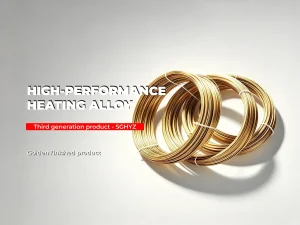
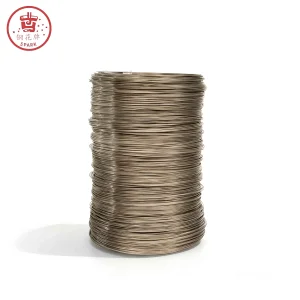
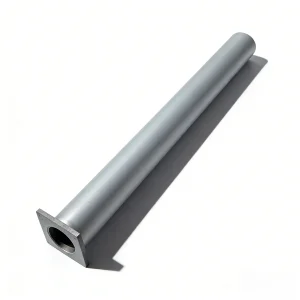
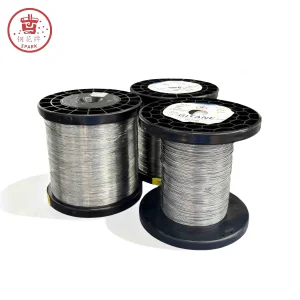
Explore factory-direct wholesale heating wire, coiled spirals, structural alloy tubes, and precision ribbon solutions engineered for extreme thermal environments.
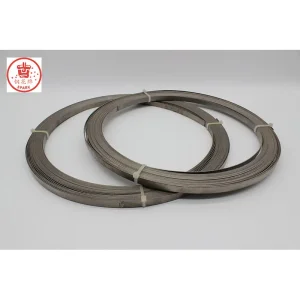


Comparative Alloy Physics: FeCrAl vs. NiCr Systems
Selecting the correct resistance alloy requires balancing working temperatures, electrical resistivity, mechanical creep strength, and atmospheric chemical stability.
FeCrAl Alloys (Iron-Chromium-Aluminum)
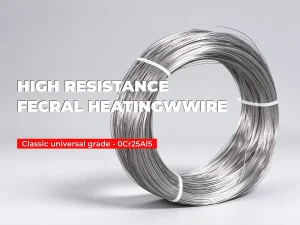
FeCrAl alloys (such as 0Cr25Al5, 0Cr23Al5, and SGHYZ) form a tenacious, self-healing protective scale of alpha-alumina ($\alpha\text{-Al}_2\text{O}_3$) when exposed to temperatures above 1000°C. This oxide scale exhibits exceptional electrical resistivity and chemical inertness, preventing further internal oxidation.
- Max Temperature: Up to 1425°C in continuous operation.
- Higher Resistivity: Typically $1.35 - 1.45\,\mu\Omega\cdot\text{m}$, reducing conductor weight.
- Density Advantage: ~7.10 $g/cm^3$ (approx. 15% lighter than Nichrome).
- Atmospheres: Outstanding in oxidizing, sulfur-containing, and carburizing environments.
NiCr Alloys (Nickel-Chromium)
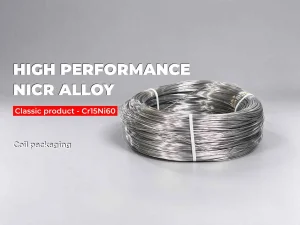
NiCr alloys (such as Cr20Ni80 and Cr15Ni60) rely on a chromium oxide ($\text{Cr}_2\text{O}_3$) protective scale. While rated for slightly lower maximum service temperatures compared to FeCrAl, NiCr maintains superior hot strength, high ductility after long service, and non-magnetic properties.
- Max Temperature: Up to 1200°C - 1250°C.
- Mechanical Ductility: Remains ductile post-heating; easy to rewind or service.
- Thermal Cycling: Superior resistance to spalling under frequent thermal shock.
- Atmospheres: Excellent in humid air and nitrogen-rich reduction zones.
Powder Metallurgy (SGHT & SGHYZ)
Produced via dispersion-strengthened powder metallurgy, SPARK SGHT and SGHYZ alloys represent the pinnacle of FeCrAl technology. Fine dispersion of rare-earth oxides (Yttrium, Zirconium, Hafnium) pins crystal grain boundaries, resisting high-temperature deformation and sag.
- Ultra-High Service: Rated for $1400^\circ\text{C} - 1425^\circ\text{C}$ continuous load.
- Creep Resistance: 4x higher sag resistance than standard rolled FeCrAl.
- Grain Growth Inhibition: Maintains mechanical strength during extended holds.
- Target Use: Semiconductor crystal growth, ceramic kilns, lab furnaces.
| Alloy Grade | Material Classification | Max Temp (°C) | Resistivity at 20°C ($\mu\Omega\cdot\text{m}$) | Density ($\text{g/cm}^3$) | Thermal Expansion ($10^{-6}/\text{K}$) | Primary Industrial Applications |
|---|---|---|---|---|---|---|
| SPARK SGHT | PM FeCrAl + Rare Earth | 1425°C | 1.45 | 7.10 | 14.7 | Semiconductor, ceramic sintering, quartz tube heaters |
| SGHYZ | High-Purity Golden FeCrAl | 1400°C | 1.42 | 7.10 | 15.0 | Ultra-high-temp industrial kilns, vacuum furnaces |
| 0Cr25Al5 | Standard Ferritic FeCrAl | 1250°C | 1.42 | 7.10 | 15.0 | Heat treatment furnaces, radiant tubes, ceramic heaters |
| 0Cr23Al5 | Cost-Effective FeCrAl | 1250°C | 1.35 | 7.15 | 15.1 | Baking ovens, industrial drying ducts, domestic appliances |
| Cr20Ni80 | Austenitic Nichrome | 1200°C | 1.09 | 8.40 | 18.0 | Heavy industrial furnaces, medical sterilizers, plastic molds |
| Cr15Ni60 | Ni-Cr-Fe Alloy | 1150°C | 1.11 | 8.20 | 17.0 | Rhostat units, storage heaters, process gas heaters |
Macro Industry Solutions & Localized Deployment Scenarios
Custom engineered electric heating elements tailored for demanding thermal processing applications across energy, automotive, and electronics manufacturing.
Petrochemical & Hydrocarbon Refining
In petrochemical gas processing and pyrolysis cracking units, electric process gas heaters utilize heavy-wall SGHT stainless steel tubes and dense heating wire bundles to maintain gas temperatures up to 900°C under high pressure. FeCrAl elements resist hydrogen sulfide ($H_2S$) and hydrocarbon carburization far better than nickel-rich alloys.
Semiconductor & Photovoltaic Solar
Diffusion furnaces for silicon wafer oxidation and solar cell doping require ultra-clean thermal profiles. SPARK SGHYZ and 0Cr25Al5 elements engineered into ceramic fiber heaters ensure zero particulate flaking and precise $\pm0.5^\circ\text{C}$ zone control, critical for yield optimization in 300mm wafer fabrication.
Automotive Heat Treatment & Lithium Battery
Continuous mesh-belt furnaces for press-hardening steel chassis components and sintering EV lithium-ion battery cathode materials (NMC/LFP) rely on high-capacity ribbon heating elements. Fast heat transfer, low thermal inertia, and robust structural stability minimize line downtime.
Element Surface Load ($W/cm^2$) & Lifetime Optimization
Determining the optimal watt density prevents thermal runaway, element sagging, and premature oxidation failure.
To calculate total required wire length ($L$) and surface load ($w$):
2. Wire Cross-Sectional Area ($A$): $A = \frac{\rho \cdot L}{R}$
3. Surface Load Watt Density ($w$): $w = \frac{P}{\pi \cdot d \cdot L} \quad [W/cm^2]$
Where $U$ = Voltage (V), $P$ = Power Rating (W), $\rho$ = Resistivity at operating temperature ($\Omega\cdot cm$), $d$ = Wire Diameter (cm), and $L$ = Active Wire Length (cm).
Recommended Surface Load Limits
For standard industrial air heating at 1000°C: 1.5 to 2.5 $W/cm^2$.
For ceramic fiber embedded elements at 1200°C: 0.8 to 1.4 $W/cm^2$.
Excessive surface loads dramatically accelerate element burn-out by increasing internal wire temperature far above furnace ambient.
Furnace Atmosphere Factor ($C_a$)
Operating in non-oxidizing or corrosive gases changes maximum allowable element temperature:
- Air / Oxygen: Factor 1.0 (Optimal oxide scale growth)
- Endothermic Gas: Factor 0.85 (Carburization risk)
- Pure Nitrogen / Ammonia: Factor 0.80 (Nitridation risk)
- Vacuum ($10^{-2}$ Torr): Factor 0.70 (Al/Cr vaporization risk)
Element Structural Coiling Ratios
For helical coiled elements, maintaining proper pitch ($S$) to wire diameter ($d$) ratio prevents thermal mutual shielding:
Optimal Coil Ratio: $2d \le S \le 4d$.
Ratio of Coil Outside Diameter ($D$) to Wire Diameter ($d$): $5 \le D/d \le 12$.
Wholesale Quotation Drivers & Sourcing Checklist
How B2B procurement managers can evaluate factory direct quotes, optimize shipping logistics, and verify certified metallurgical quality.
Raw Material Index & LME Alignment
Wholesale price quotes for Nichrome (Cr20Ni80) track London Metal Exchange (LME) Nickel spot prices closely. FeCrAl alloys offer significant cost insulation against market nickel volatility due to their iron-aluminum base chemistry, providing stable, long-term procurement pricing.
RFQ Sourcing Data Points
To receive an accurate and rapid factory quote, include:
- Alloy Grade (e.g., 0Cr25Al5, SGHYZ, Cr20Ni80)
- Product Form (Round Wire, Strip/Ribbon, Coiled Spiral, Tube)
- Exact Dimensions (Diameter, Thickness, Width, Spool Weight)
- Total Quantity (kg, Meters, or Piece Count)
- Delivery Term (FOB, CIF, DDP to local port)
Export Packaging & Freight Security
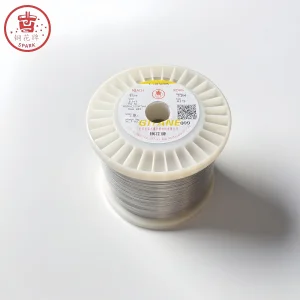
SPARK electric heating wires are supplied on high-impact plastic spools or in wooden export crates lined with moisture-barrier vacuum packaging, preventing oxide contamination or mechanical deformation during ocean transit.
Certifications, Standards & Local Technical Support
Ensuring full regulatory compliance across North America, European Union, and Asian industrial markets.
ISO 9001:2015 Quality Management
Every heat batch undergoes spectrographic melt analysis, cold-drawing dimensional verification, and room temperature/high temperature resistivity testing according to GB/T 1234-2012 standards.
RoHS & REACH Compliance
Our alloys are strictly refined to eliminate hazardous heavy metals (Lead, Cadmium, Mercury, Hexavalent Chromium), satisfying European Directives for industrial and home application equipment.
Batch Traceability & MTRs
All shipments are accompanied by official Mill Test Reports (MTR) stating chemical ladle analysis, tensile strength, elongation, and batch-specific electrical resistance values.
Technology Roadmap: Next-Generation Electric Heating Alloys
Pioneering advancements in oxide dispersion strengthened (ODS) alloys, micro-alloying, and smart heating element modeling.
1. Nanoscale Rare Earth Doping
By precise introduction of sub-micron Yttrium and Zirconium oxide particles, new FeCrAl grades form denser scale layers, extending element service lifetime by up to 40% at operating temperatures above 1350°C.
2. Green Hydrogen Furnace Integration
As industrial heat transitions from natural gas to hydrogen and electric power, heating elements must withstand high ambient moisture vapor ($H_2O$) created in hydrogen combustion hybrid zones. Novel alloy compositions prevent hydrogen embrittlement.
3. AI-Driven Thermal Simulation
Using computational fluid dynamics (CFD) and finite element analysis (FEA), SPARK engineers simulate complex coil geometries to eliminate local hot-spots before fabrication, maximizing element energy conversion efficiency.
High-Resistance Resistance Wires & Alloy Strips
Explore our secondary catalog of specialized tempering furnace wires, high-resistivity foils, and nickel-chromium alloys.



Frequently Asked Questions: Wholesale Industrial Electric Heating Elements
Direct answers to crucial procurement, technical engineering, and material compliance inquiries.