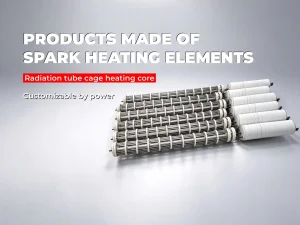
Precision High-Temperature Resistance Alloys
Explore our factory-direct wholesale selection of high-nickel and FeCrAl heating alloys engineered for intense oxidation resistance, dimensional stability, and prolonged service life.

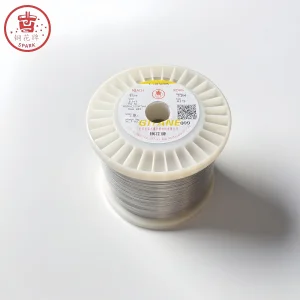



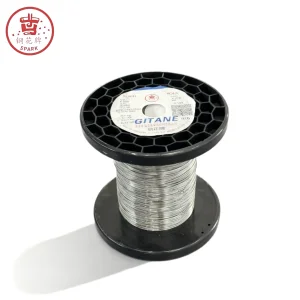
Executive Metallurgical Report: Nickel-Chromium & High-Temperature Resistance Alloys
An authoritative whitepaper detailing atomic structure, oxide film dynamics, phase transitions, and operational limits of industrial resistance heating alloys.
1. Microstructural Equilibrium & Chromia Passivation Mechanics
2. Accelerated Life Testing & The Bash & Harsch ASTM B78 Standard
Comprehensive Resistance Heating Alloy Technical Matrix
Engineering specification comparison table for furnace designers, procurement managers, and thermal equipment manufacturers.
| Alloy Grade | Alloy Family | Nominal Chemical Composition | Max Temp (°C) | Resistivity (μΩ·m @ 20°C) | Density (g/cm³) | Primary Industrial Applications |
|---|---|---|---|---|---|---|
| Cr20Ni80 / Cr20Ni80S | Ni-Cr Austenitic | 80% Ni, 20% Cr (Trace RE) | 1200°C | 1.09 ± 0.05 | 8.40 | Precision heat-treatment, plastic extruders, high-end appliances, medical kilns. |
| Cr30Ni70 | Ni-Cr Austenitic | 70% Ni, 30% Cr | 1250°C | 1.18 ± 0.05 | 8.10 | Industrial furnaces, heavy sulfur-free atmosphere heating, continuous belt kilns. |
| Cr15Ni60 | Ni-Cr-Fe Austenitic | 60% Ni, 15% Cr, Bal. Fe | 1150°C | 1.12 ± 0.05 | 8.20 | Domestic heating appliances, defrost elements, braking resistors, low-temp ovens. |
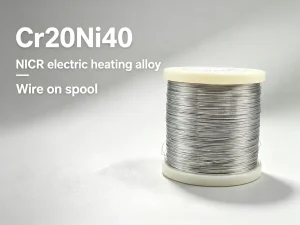
| Cr20Ni40 / Cr20Ni35 | Ni-Cr-Fe Austenitic | 35-40% Ni, 20% Cr, Bal. Fe | 1100°C | 1.04 ± 0.05 | 7.90 | Storage heaters, industrial convection heaters, budget furnace elements. |
| HRE / SGHYZ | Fe-Cr-Al Ferritic | 25% Cr, 6% Al, Bal. Fe + RE | 1350°C - 1400°C | 1.45 ± 0.07 | 7.10 | Powder metallurgy sintering, ceramic firing, high-temp diffusion tubes. |
| SGHT | PM Fe-Cr-Al | Powder Metallurgy Dispersion | 1425°C | 1.48 ± 0.07 | 7.10 | Semiconductor wafer processing, ultra-high temp laboratory kilns. |
China Factory & Integrated Supply Chain Advantages
How direct manufacturer integration in China delivers unparalleled cost efficiency, metallurgical precision, and global delivery reliability.
1. Vertical Metallurgy Integration
From raw electrolytic Nickel and Chromium melting in Vacuum Induction Melting (VIM) furnaces to Electro-Slag Remelting (ESR), hot rolling, heavy drawing, and micro-wire drawing, Chinese manufacturing hubs control every phase. This verticality eliminates intermediary markups and guarantees tight chemical tolerance controls ($Ni \pm 0.5\%$).
2. Precision Hydrogen Annealing
Advanced continuous bright annealing lines operating under 100% pure hydrogen atmosphere ensure that wholesale wire, ribbon, and strip products feature a spotless, oxide-free surface finish with perfectly consistent tensile strength, elongation, and uniform electrical resistance per meter.
3. Unmatched Production Scale
China's mega-factories process thousands of metric tons of resistance alloys annually. This massive production volume creates immense economies of scale, allowing global OEM buyers to secure top-tier resistance alloys at competitive wholesale pricing with rapid manufacturing turnaround times.
4. Custom Form Factors & OEM Packaging
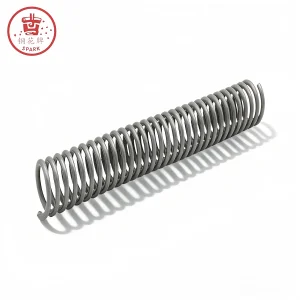
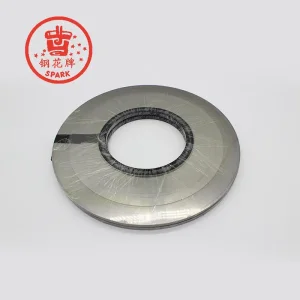
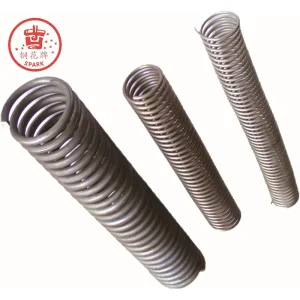
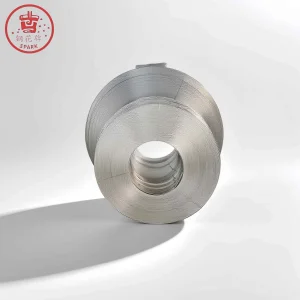
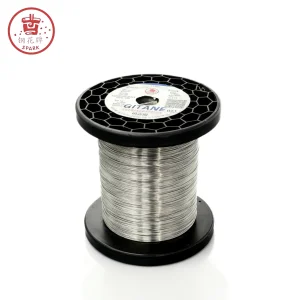
Whether your production requires ultra-fine wire ($0.05\text{ mm}$), heavy industrial rods ($12\text{ mm}$), cold-rolled strip/ribbon ($0.1 \times 1.0\text{ mm}$ to $5 \times 50\text{ mm}$), or pre-coiled spiral elements, Chinese factories offer bespoke manufacturing tailored to exact technical drawings.
Global Enterprise Procurement Requirements & Quality Governance
Meeting the strict quality assurance, certification, and traceability standards required by international engineering procurement corporations (EPCs).
1. Certification & Standards Compliance
All products comply with ASTM B344 (Standard Specification for Drawn or Rolled Nickel-Chromium and Nickel-Chromium-Iron Alloys for Electrical Heating Elements), DIN 17470, and GB/T 1234. Quality systems are certified under ISO 9001:2015, ISO 14001, and ISO 45001.
2. Spectrophotometry & Chemical Testing
Every melt heat undergoes strict optical emission spectrometry (OES) analysis to verify chemical composition. Mill Test Certificates (MTC) formatted according to EN 10204 3.1 accompany every shipment, detailing exact trace impurity percentages ($\text{S} < 0.015\%$, $\text{P} < 0.020\%$).
3. Electrical Resistance & Dimensional Uniformity
Precision laser micrometers measure wire diameters continuously during spooling to guarantee diameter tolerances down to $\pm 0.002\text{ mm}$. Micro-ohmmeters verify that electrical resistivity remains strictly within $\pm 3\%$ along the entire spool length.
Localized Application Scenarios & Thermal Engineering Design
Tailored technical implementation strategies across major heavy industries and advanced manufacturing sectors.
Industrial Heat Treatment & Annealing Furnaces
In automotive, aerospace, and metallurgy plants, Tempering, Carburizing, and Annealing furnaces utilize heavy-gauge Cr20Ni80 strip and rod elements. The superior hot strength prevents element sagging under continuous operation at 900°C–1150°C in protective atmospheres.
Semiconductor & Photovoltaic Wafer Processing
Diffusion tube heaters and crystal growth furnaces require contamination-free heating environments. Specialized low-carbon, high-purity Nichrome and ultra-high-temp FeCrAl alloys (such as SGHT and SGHYZ) deliver stable thermal zones up to 1400°C without particle shedding.
Petrochemical & Power Plant Tubular Radiant Heating
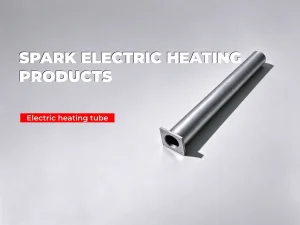
Severe industrial environments involving fluid cracking, high-pressure steam heating, and aggressive chemical processing employ ceramic radiant tube cores insulated with high-temperature Cr20Ni40 and Cr15Ni60 heating spirals for uniform heat distribution.
Domestic Appliances & Precision Medical Equipment
Precision fine wire ($0.1\text{ mm} - 0.8\text{ mm}$) of Cr20Ni80 powers laboratory sterilizers, medical centrifuges, commercial toaster coils, hair dryers, and precision temperature-controlled heating cartridges.
Thermal Design Guidelines: Surface Load ($W/cm^2$) Calculation
To maximize element lifetime, engineers must calculate the allowable surface load ($w$). Excess surface load causes element overheating and rapid oxidation.
Where $P$ is power input (Watts), $d$ is wire diameter (cm), and $L$ is total active element length (cm). For Ni-Cr alloys operating in air at 1000°C, target surface loads typically range between 1.5 and 2.5 $W/cm^2$.
Localized Support, Compliance & Global Logistics Governance
Assuring seamless cross-border procurement, environmental compliance, and local engineering responsiveness.
Environmental & Chemical Compliance (RoHS & REACH)
All exported Nichrome alloys comply strictly with European Union directives including RoHS (Restriction of Hazardous Substances) and REACH (Registration, Evaluation, Authorisation and Restriction of Chemicals). Products are certified free of lead, mercury, cadmium, hexavalent chromium, and restricted phthalates.
Responsible Mineral Sourcing (3TG Conflict Minerals)
Leading factories operate transparent supply chain auditing to ensure that raw Nickel, Iron, Chromium, and trace alloys are ethically sourced from certified, conflict-free smelters, fully aligned with OECD due diligence guidance.
Customs Clearance & DDP Logistics Support
To simplify cross-border transactions, manufacturers offer comprehensive international trade terms including FOB, CIF, DDU, and DDP (Delivered Duty Paid), taking care of tariff classification (HS Code: 7505.22 for Nickel-Alloy Wire), export documentation, and sea/air freight booking.
Industry Trends & Technological Outlook (2025–2030)
Key technical advancements shaping the future of resistance alloys and industrial thermal processing.
1. Hydrogen-Fueled Atmosphere Compatibility
As global metallurgical industries transition from fossil gas firing to green hydrogen furnaces, resistance alloys must resist green rot (carburization-oxidation) and steam-induced scale spallation. Advanced modified Cr30Ni70 grades are leading this green energy evolution.
2. Rare-Earth Nanostructure Micro-Alloying
Doping Nichrome alloys with precise nanometer-scale additions of Yttrium, Zirconium, and Hafnium drastically tightens oxide scale adhesion, extending cyclic fatigue lifetime by over 40% in high-frequency power cycling environments.
3. Smart Heating Elements & IoT Integration
Integration of resistance monitoring algorithms directly into digital power controller units allows real-time tracking of element degradation by detecting minute shifts in $TCR$ (Temperature Coefficient of Resistance), enabling predictive maintenance before element failure.
Frequently Asked Questions (FAQ) for Procurement & Engineers
Addressing technical, logistical, and commercial queries from wholesale buyers and thermal design managers.
Complete Resistance Heating Alloy Product Line
Select from our extended portfolio of premium grade Nickel-Chrome heating wires, FeCrAl tubes, ceramic elements, and high-pressure alloy components.