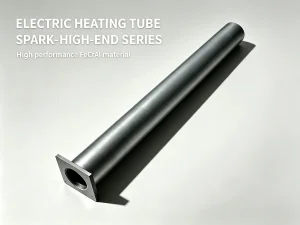
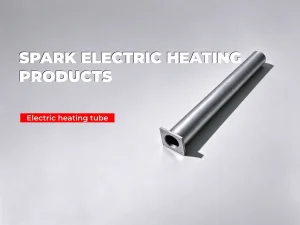
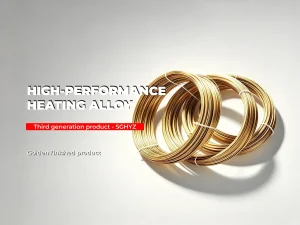
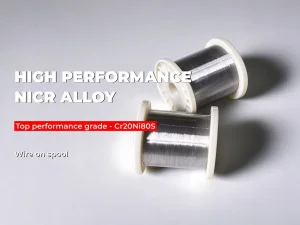
Featured High Temperature Heating Alloy Products
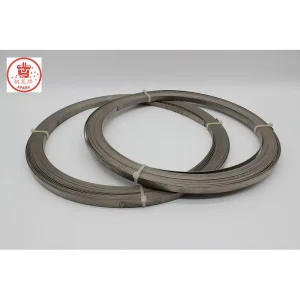
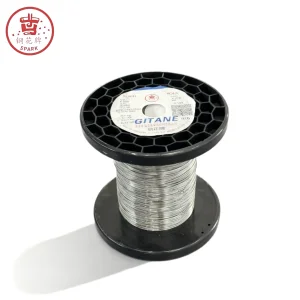
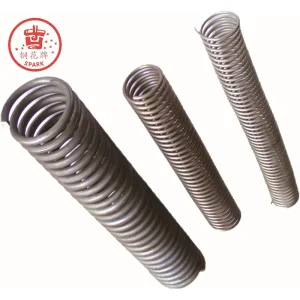
Direct factory supply of premium resistance wires, strip alloys, and high-pressure tubular elements for industrial and thermal process engineering applications up to 1425°C.



1. Global Industrial Landscape & Thermal Macro Trends
The global high-temperature heating alloy market is undergoing a paradigm shift driven by the decarbonization of industrial processes, rapid expansion of advanced semiconductor thermal manufacturing, and aggressive electrification of fossil-fueled thermal systems. Industrial heating accounts for over 20% of global primary energy consumption; replacing gas-fired combustion with precise, high-efficiency electrothermal resistance elements has become a cornerstone of global net-zero industrial strategies.
Electrification & Decarbonization Dynamics
Heavy industries across North America, Europe, and Asia-Pacific are transitioning from natural gas burners to electric radiant heating systems. High-resistance heating alloys—specifically engineered Iron-Chromium-Aluminum (FeCrAl) and Nickel-Chromium (NiCr) matrix formulations—provide direct thermal energy conversion with thermal conversion efficiencies exceeding 98%. Demand for ultra-high-temperature resistance wires and customized tubular element systems is surging in high-purity glass manufacturing, steel tempering, and lithium-ion battery precursor calcination furnaces.
Regional Supply Chain & Manufacturing Hubs
As the epicenter of primary metallurgical transformation, China represents over 60% of the world's production capacity for electrothermal alloys. Leading industrial manufacturers like Beijing Shougang Gitane New Materials (SPARK) utilize advanced vacuum induction melting (VIM), continuous hot-rolling, and micro-alloy precision cold-drawing techniques. Wholesale buyers benefit from streamlined factory-direct supply chains, rigorous ISO quality compliance, and competitive wholesale pricelists engineered for global OEMs.
2. Metallurgy & Technical Engineering Roadmap: FeCrAl vs. NiCr
Selecting the ideal resistance heating alloy requires a deep metallurgical understanding of temperature limits, oxide scale passivating mechanics, high-temperature creep strength, and chemical compatibility with furnace atmospheres.
FeCrAl Alloys (Ferritic Matrix)
FeCrAl alloys (such as 0Cr25Al5, 0Cr23Al5, 0Cr20Al6, and ultra-high-temperature SGHYZ / SGHT powder metallurgy grades) consist of a body-centered cubic (BCC) ferritic structure. When subjected to elevated temperatures (>1000°C) in oxidizing environments, FeCrAl forms a surface scale of pure, dense alpha-alumina ($\alpha\text{-Al}_2\text{O}_3$).
- Maximum Operating Temperatures: Up to 1425°C for specialized PM grades (SGHT), outperforming standard NiCr alloys.
- High Electrical Resistivity: Typically 1.35 to 1.45 μΩ·m, enabling compact element designs with thinner wire gauges.
- Density Advantage: Lower density (~7.10 g/cm³) compared to NiCr (~8.40 g/cm³), reducing total material weight per heater build by 15–20%.
- Atmospheric Resilience: Superior resistance to sulfur compounds and carbonaceous atmospheres compared to nickel-based systems.
NiCr Alloys (Austenitic Matrix)
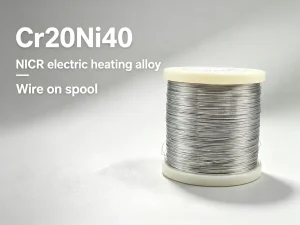
NiCr alloys (such as Cr20Ni80, Cr30Ni70, and Cr20Ni40) possess a face-centered cubic (FCC) austenitic structure. During high-temperature thermal cycling, NiCr forms a protective layer of chromium oxide ($\text{Cr}_2\text{O}_3$).
- Hot Mechanical Strength: Outstanding tensile and creep rupture strength at temperatures up to 1200°C, preventing coil sagging and deformation over prolonged duty cycles.
- Post-Heating Ductility: Remains ductile after prolonged high-temperature exposure, allowing easy repair, reshaping, or winding maintenance.
- Thermal Cycling Stability: The adherence of the $\text{Cr}_2\text{O}_3$ protective scale under frequent on/off power modulation makes NiCr the preferred alloy for commercial appliances, industrial ovens, and medical heaters.
- Non-Magnetic Properties: Complete absence of ferromagnetism in austenitic grades across operational temperatures.
Information Gain Benchmark: In continuous furnace operations exceeding 1300°C, rare-earth element (REE) addition—such as Yttrium (Y), Zirconium (Zr), and Hafnium (Hf)—in advanced FeCrAl grades (e.g., SPARK SGHYZ and SGHT) significantly enhances alumina scale adhesion, mitigating Kirkendall void growth and preventing premature element failure.
Comprehensive Material Engineering Matrix & Technical Specifications
| Alloy Grade | Structure Family | Max Temp (°C) | Resistivity at 20°C (μΩ·m) | Density (g/cm³) | Oxide Scale Type | Primary Industrial Application |
|---|---|---|---|---|---|---|
| SPARK SGHT | FeCrAl (PM / ODS) | 1425°C | 1.45 | 7.10 | $\alpha\text{-Al}_2\text{O}_3$ Dense | Semiconductor, High-Purity Ceramic Sintering |
| SPARK SGHYZ | FeCrAl (Micro-alloyed) | 1400°C | 1.42 | 7.10 | $\alpha\text{-Al}_2\text{O}_3$ Adherent | Ultra-High Temp Industrial Kilns & Furnaces |
| 0Cr25Al5 | FeCrAl Standard | 1250°C | 1.42 | 7.10 | $\text{Al}_2\text{O}_3$ Standard | Industrial Heat Treatment, Radiant Heaters |
| 0Cr23Al5 | FeCrAl Economy | 1250°C | 1.35 | 7.25 | $\text{Al}_2\text{O}_3$ Standard | Domestic Appliances, Industrial Resistors |
| Cr30Ni70 | NiCr High-Cr | 1250°C | 1.18 | 8.10 | $\text{Cr}_2\text{O}_3$ Dense | Corrosive Environment Industrial Elements |
| Cr20Ni80S | NiCr Premium | 1200°C | 1.09 | 8.40 | $\text{Cr}_2\text{O}_3$ Adherent | Precision Heaters, Thermal Cycling Ovens |
| Cr20Ni40 | Ni-Fe-Cr Alloy | 1100°C | 1.04 | 8.20 | $\text{Cr}_2\text{O}_3 / \text{Fe}_2\text{O}_3$ | Low-Temp Industrial Heaters & Braking Resistors |
3. Localized Industrial Application Scenarios & Solutions
High-temperature resistance alloys are tailor-engineered to solve complex thermal management challenges across key industrial sectors worldwide.
Semiconductor & Photovoltaic Manufacturing
Diffusion furnaces, LPCVD processing, and silicon ingot crystal-growing systems demand ultra-pure thermal profiles up to 1400°C without particulate contamination. SPARK SGHT powder-metallurgy FeCrAl tubes deliver exceptional dimensional stability, avoiding sagging and sag-induced short circuits during long-duration thermal cycles.
Lithium-Ion Battery Cathode Calcination
Rotary and roller hearth kilns synthesizing NMC and LFP cathode materials operate under aggressive chemical atmospheres. FeCrAl alloys with controlled chromium and aluminum micro-alloying resist oxidation and chemical attack from volatilized lithium salts, maximizing continuous campaign life.
Aerospace Heat Treatment & Vacuum Furnaces
Precision tempering and stress-relieving of titanium aerospace components require exact electrical resistivity tolerances. Premium Cr20Ni80S wires provide consistent resistance values, uniform thermal emissivity, and resistance to thermal shock during rapid gas quenching.
4. Wholesale Pricing Economics & Total Cost of Ownership (TCO)
Procurement strategy for high-temperature resistance materials requires balancing raw material surcharges (LME Nickel, Ferro-Chromium, Metallic Aluminum) against long-term operational element longevity.
Market Price Factors & Cost Structure
Wholesale prices for high-temperature resistance alloys are dictated by chemical composition volatility:
- Nickel (LME Market Sensitivity): NiCr alloys (Cr20Ni80) are directly indexed to London Metal Exchange (LME) nickel spot prices. Fluctuations significantly impact per-kilogram costs.
- Iron-Chromium-Aluminum Cost Advantage: FeCrAl alloys utilize iron as the base element, rendering them 30% to 50% more cost-effective per kilogram than NiCr alloys, while offering superior temperature thresholds.
- Micro-Alloying Premium: Advanced grades (SGHYZ, SGHT) incorporate controlled rare-earth elements (Y, Hf, Zr) via powder metallurgy, yielding higher initial procurement costs offset by a 2x to 3x increase in element operating life.
Total Cost of Ownership (TCO) Formula
Engineers and procurement officers calculate TCO over a 5-year campaign using the following framework:
Utilizing high-resistivity FeCrAl reduces element weight requirements by ~18% for equivalent wattage output, lowering energy consumption and raw material expenditures simultaneously.
5. Quality Assurance, ASTM/DIN Standards & Accelerated Life Testing
Rigorous quality assurance protocols guarantee that every batch of SPARK high-temperature alloy meets uncompromising international standards.
Chemical Spectrum Analysis
Optical Emission Spectroscopy (OES) and ICP-MS verify compositional accuracy down to parts-per-million (PPM) for trace impurities such as Sulfur, Phosphorus, and Carbon, ensuring zero low-melting-point eutectic formations at grain boundaries.
Accelerated Life Test (GB/T 1234)
Wires undergo rapid cyclic heating tests (50-hour accelerated burn tests under elevated voltage) to measure resistance change ($\Delta R/R_0$), oxide scale adherence, and time-to-burnout.
Dimensional & Resistivity Uniformity
Continuous online laser micrometers enforce tight wire diameter tolerances ($\pm0.01\text{ mm}$), while digital bridge meters verify resistance uniformity per meter within a $\pm2\%$ margin along the entire coil length.
6. Frequently Asked Questions (Engineering & Sourcing FAQ)
Expert answers to common engineering questions regarding alloy selection, wholesale pricing, and custom thermal element fabrication.
Complete High Temperature Heating Element & Alloy Portfolio
Explore our full catalog of high-performance alloy tubes, ultra-high-temperature FeCrAl wires, and specialized industrial heat treatment solutions.