Iron-Chromium-Aluminum (FeCrAl) Resistance Alloys: Engineering Principles & Passivation Thermodynamics
Understanding the core solid-state physics, oxide growth kinetics, and microstructural evolution of FeCrAl electrical resistance heating alloys under thermal fatigue.
The Mechanics of Alpha-Alumina (α-Al₂O₃) Surface Protection
High-temperature FeCrAl alloys derive their exceptional thermal stability from the thermodynamic preference of aluminum to react with atmospheric oxygen at temperatures exceeding 900°C. Unlike Nickel-Chromium (NiCr) alloys that form a chromia (&Cr₂O₃) scale, FeCrAl alloys develop a highly adherent, non-porous, and electrically insulating layer of alpha-alumina (α-Al₂O₃).
This continuous alumina barrier exhibits an extremely low parabolic growth rate constant ($K_p$), preventing further inward oxygen diffusion and chemical degradation of the underlying metallic matrix. In high-efficiency industrial kilns running continuously above 1200°C, this passivation layer acts as a self-healing thermal shield against severe oxidizing, sulfurous, and carbonaceous gas stream environments.
Microstructural Stability, Reactive Elements & Doping
Standard ferritic FeCrAl matrices suffer from thermal grain growth and secondary phase embrittlement (such as 475°C embrittlement) when subjected to prolonged thermal cycles. Advanced wholesale FeCrAl chemistry incorporates precise micro-alloying additions of reactive elements—specifically Yttrium (Y), Zirconium (Zr), Hafnium (Hf), and Neodymium (Nd).
These reactive rare-earth additions segregate to the grain boundaries of both the metal matrix and the growing oxide film. By pinning grain boundary movement, REE doping dramatically increases sag resistance, eliminates oxide scale spallation during rapid thermal shock, and extends the operational element life by up to 300% compared to basic commodity alloys.
Technical Calculation: Surface Load Optimization ($W/cm^2$)
To maximize heating element lifespan, the maximum allowable surface load ($p$) must be calibrated to furnace temperature and atmosphere. The surface load is expressed as: $p = P / (\pi \cdot d \cdot L)$, where P is total power (Watts), d is wire diameter (cm), and L is active heating coil length (cm). For FeCrAl alloys operating at 1300°C in clean air, recommended surface loads range between 1.8 to 2.5 W/cm², whereas in heavy reducing atmospheres, $p$ must be derated by 30-40% to prevent rapid aluminum depletion.
FeCrAl vs. NiCr Alloys: Total Cost of Ownership & Performance Benchmark
A direct engineering evaluation comparing Iron-Chromium-Aluminum and Nickel-Chromium resistance materials across physical, electrical, and commercial parameters.
| Property / Engineering Metric | FeCrAl Alloys (e.g., SGHT, 0Cr27Al7Mo2) | NiCr Alloys (e.g., Cr20Ni80, Ni70Cr30) | Operational Impact & Value Advantage |
|---|---|---|---|
| Max Operating Temperature | 1350°C - 1425°C | 1200°C - 1250°C | FeCrAl enables higher thermal flux and higher furnace throughput. |
| Electrical Resistivity (20°C) | 1.35 - 1.45 μΩ·m | 1.08 - 1.18 μΩ·m | Higher resistivity allows larger wire cross-sections and longer service life. |
| Density (g/cm³) | 7.10 g/cm³ | 8.40 g/cm³ | 15% weight reduction: FeCrAl yields more meters of wire per kg purchased. |
| Protective Oxide Scale | α-Al₂O₃ (Alpha-Alumina, White/Grey) | Cr₂O₃ (Chromium Oxide, Dark Green) | Alumina provides superior resistance to spallation and sulfur contamination. |
| Hot Strength & Creep Resistance | Lower (Ferritic matrix requires ceramic support) | Higher (Austenitic matrix retains hot ductility) | NiCr is easier to repair post-use; FeCrAl requires engineered coil support. |
| Atmospheric Compatibility | Exceptional in Oxidizing, Sulfurous, and Carburizing air | Superior in Ammonia, Nitrogen, and Vacuum environments | Application-specific furnace design determines alloy family selection. |
| Raw Material Cost & Pricelist Stability | Cost-Effective & Stable (Nickel-Free) | Subject to LME Nickel market volatility | FeCrAl delivers long-term procurement cost predictability. |
15-20% Direct Material Savings
Due to its significantly lower density ($7.10\text{ g/cm}^3$ vs $8.40\text{ g/cm}^3$), buying 1,000 kg of FeCrAl wire yields approximately 18% more linear meters than the equivalent weight in NiCr 80/20 wire. Combined with lower per-kilogram raw material pricing, FeCrAl slashes heating element bill-of-materials (BOM) costs.
Extended Kiln Life in Carbonaceous Gases
In heat treatment furnaces utilizing endothermic gas or hydrocarbon breakdown, NiCr alloys suffer from green rot corrosion (carburization followed by rapid oxidation). FeCrAl forms a impenetrable alumina film that prevents carbon uptake, eliminating green rot and preventing catastrophic element short circuits.
Thermal Efficiency & Energy Reduction
The high electrical resistivity of FeCrAl ($1.45\ \mu\Omega\cdot\text{m}$) enables heating systems to operate with thicker wire gauges without sacrificing resistance design. Thicker elements exhibit higher structural mass, greater surface area, faster thermal ramp times, and reduced electrical power loss across leads.
Macro-Industry Heating Solutions: High-Precision Thermal Engineering
Custom engineered FeCrAl heating alloys tailored for advanced manufacturing, renewable energy production, semiconductor processing, and heavy industrial heat treatment.
Photovoltaic & Semiconductor Crystal Growth
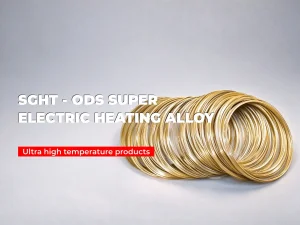
In single-crystal silicon ingot pulling furnaces (Czochralski CZ method) and MOCVD reactors, ultra-high purity FeCrAl grades (such as powder metallurgy SGHT) are utilized for radiant heaters. Operating at 1380°C–1425°C under high vacuum or inert argon streams, SGHT provides zero volatile heavy-metal outgassing, ensuring ultra-clean semiconductor wafer crystallization.
Lithium-Ion Battery Cathode Calcination Kilns
Synthesis of LFP (Lithium Iron Phosphate) and high-nickel NCM active cathode materials requires continuous roller hearth kilns (RHK) operating in corrosive alkaline oxygen-rich or nitrogen-controlled atmospheres. FeCrAl 0Cr27Al7Mo2 heavy strip elements withstand aggressive lithium vapor attack, maintaining thermal uniformity across 80-meter long tunnel kilns.
Automotive & Aerospace Thermal Treatment
Continuous carburizing, nitriding, and solution annealing furnace systems for automotive transmission gears and aerospace fasteners demand stable thermal flux. SPARK FeCrAl meander-ribbon elements mounted on ceramic tubing prevent sagging during rapid thermal cycling, maintaining exact heat profiles for heat-treated metal parts.
Environmental VOC Incineration & Clean Energy
Regenerative Thermal Oxidizers (RTO) and catalytic waste-gas purification systems utilize FeCrAl wire mesh and catalytic metal substrates. FeCrAl's high aluminum content enables rapid bonding with catalytic washcoats (gamma-alumina/platinum/palladium), delivering maximum VOC destruction efficiency at operating temperatures up to 1100°C.
Advanced Technical Ceramics & Glass Fusing
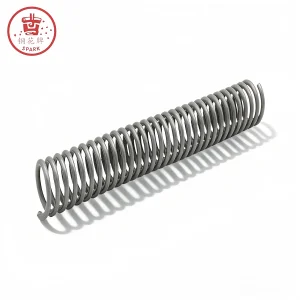
Sintering Zirconia, Alumina, and Silicon Nitride ceramic components requires continuous temperatures above 1350°C. Heavy gauge FeCrAl spiral coils combined with ceramic fiber module systems ensure rapid heating cycles, low thermal mass loss, and precise furnace atmosphere protection against unwanted discoloration.
Commercial Appliances & Industrial Boilers
High-power commercial baking ovens, instant water heaters, and industrial duct heaters benefit from FeCrAl flat wire and coiled elements. The high surface area-to-cross section ratio of flat ribbon alloy optimizes heat transfer to air streams while minimizing overall element mass and electrical inertia.
China Industry 4.0: Integrated Melt-to-Wire Precision Manufacturing
How end-to-end metallurgical control, continuous laser gauging, and vacuum melting technology deliver unmatched coil-to-coil consistency.
1. Vacuum Induction Melting (VIM) & Electro-Slag Remelting (ESR)
Quality electrothermal alloy manufacturing starts at the liquid metal stage. Production utilizes high-vacuum induction melting furnaces (VIM) to eliminate gas impurities (Oxygen, Nitrogen, Hydrogen) and prevent trace element segregation. Secondary refining via Electro-Slag Remelting (ESR) yields ultra-clean alloy ingots with isotropic grain orientation and minimal non-metallic inclusions.
2. Continuous Hot Rolling & Multi-Pass Cold Drawing
Ingots are hot-rolled on high-precision continuous rod mills, followed by controlled atmosphere annealing to prevent premature work hardening. Wire drawing operations employ polycrystalline diamond (PCD) dies across multi-step automated drawing machines, transforming heavy rods into fine resistance wire down to 0.05 mm diameter with exceptional surface smoothness.
3. Hydrogen Bright Annealing & Online Optical Gauging
To deliver mirror-like surface finishes without oxide contamination, all FeCrAl and NiCr wire passes through continuous tube annealing furnaces bathed in 100% pure dry hydrogen gas ($H_2$). Real-time dual-axis laser micrometers measure wire diameter dynamically across 100% of the production run, guaranteeing strict resistance tolerances per meter.
4. Automated Optical Inspection (AOI) & Resistance Testing
Finished coils undergo automated optical surface inspection (AOI) to detect micro-cracks, slivers, or die marks. Every batch is tested on micro-ohmmeter stations to verify electrical resistance per meter against GB/T 1234-2012, ASTM B603, and DIN 17470 standards before mill test certificate (MTC) release.
Future Horizons: Powder Metallurgy FeCrAl & Green Hydrogen Heating
Next-generation material engineering breaking traditional high-temperature barriers and supporting industrial decarbonization.
Oxide Dispersion Strengthened (ODS) Powder Metallurgy
Traditional ingots melted at high temperatures exhibit rapid grain growth above 1300°C, leading to thermal sagging under its own weight. Advanced powder metallurgy (PM) techniques bypass melting entirely. By gas-atomizing alloy powders and mechanically alloying them with nanometer-scale Yttrium Oxide ($Y_2O_3$) nanoparticles, ODS FeCrAl alloys retain structural creep resistance at operating temperatures up to 1450°C.
This structural stability allows furnace designers to engineer large-span hanging heating elements without heavy ceramic support racks, dramatically increasing furnace chamber working volume and thermal response times.
Decarbonization & Green Hydrogen Furnace Compatibility
As global metallurgy transitions from fossil fuel combustion burners to zero-emission electric heating powered by renewable energy, industrial furnaces are increasingly adopting hydrogen ($H_2$) atmospheres for direct reduced iron (DRI) and green steel annealing. FeCrAl alloys exhibit immunity to hydrogen embrittlement at elevated temperatures.
Ongoing research focuses on optimizing surface pre-oxidation techniques to form ultra-stable alumina shells that withstand high-velocity pure hydrogen flow without reduction or scaling degradation, establishing FeCrAl as the backbone material for 2030 climate-neutral heavy industry.
Global Compliance, Mill Testing & Customized Logistics Support
Seamless international trade execution backed by rigorous quality documentation and flexible delivery packaging.
Certifications & Standards Compliance
All FeCrAl resistance heating wire and strip materials are produced under ISO 9001, ISO 14001, and ISO 45001 certified management systems. Full chemical and mechanical test compliance is provided according to EN 10204 3.1 Mill Test Certificates, detailing actual ladle analysis, resistivity values, elongation percentage, and dimensional tolerances. Materials fully satisfy EU REACH, RoHS, and US TSCA regulations.
Custom Spooling, Coiling & Packaging
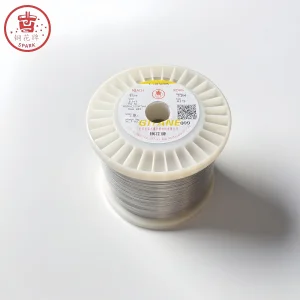
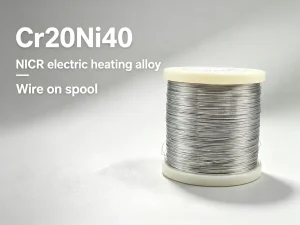
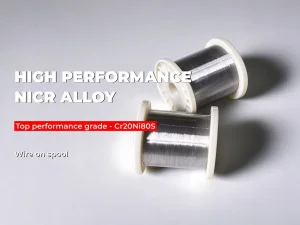
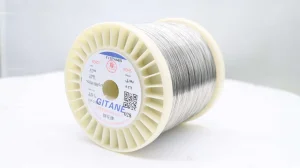
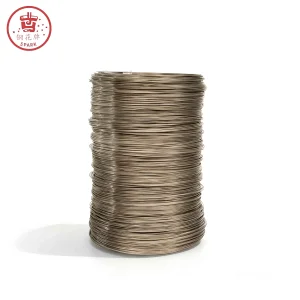
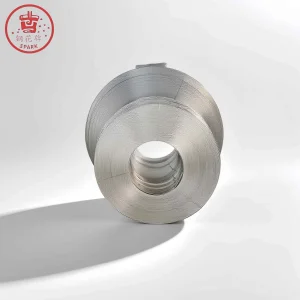
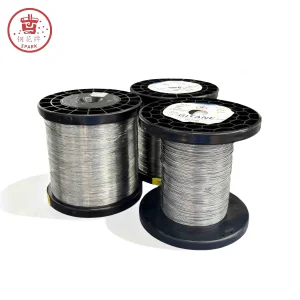
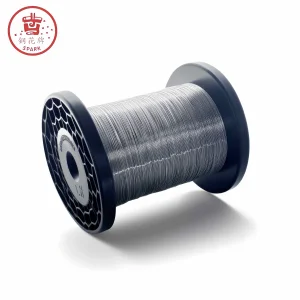
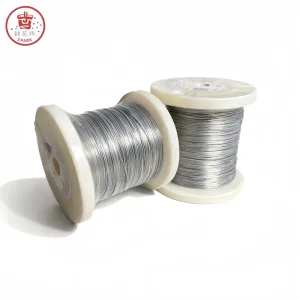
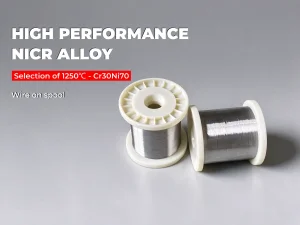
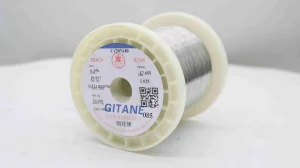
Materials are supplied in tailored delivery forms designed for automated element winding equipment. Fine wire is wound on plastic spools (DIN 100, DIN 160, DIN 200, DIN 250, Z2, Z3). Heavy gauge wire ($d > 1.0\text{ mm}$) is shipped in catchweight coils or coreless carriers up to 500 kg. Strip products are delivered as tightly wound rolls packed in heat-sealed vapor-corrosion-inhibitor (VCI) plastic within reinforced seaworthy wooden cases.
Customs Tariff & HS Code Classification Guide
For streamlined international customs clearance, our logistics department provides exact Harmonized System (HS) code documentation:
- 7222.20: FeCrAl alloy wire (Iron-based alloy wire)
- 7226.99: FeCrAl cold-rolled flat strip & ribbon
- 7505.22: Nickel-Chromium (NiCr) alloy wire
- 8516.80: Fabricated electric heating elements
Wholesale Enterprise Procurement & Bulk Pricelist Structure
Transparent commercial pricing tiers, contract hedging strategies, and custom engineering sample programs.
1. Wholesale Pricing Dynamics & Cost Factors
FeCrAl pricing is dictated by raw material purity levels (Chromium, Aluminum, and Rare Earth metal additions), wire diameter drawing difficulty, and thermal treatment requirements. Unlike nickel-bearing alloys that fluctuate wildly with London Metal Exchange (LME) nickel indexes, FeCrAl offers enterprise buyers exceptional budget stability.
Bulk orders benefit from scalable tiered pricing: Standard MOQ starts at 50 kg for standard wire sizes, with significant price breaks at 500 kg, 2,000 kg, and full container load (FCL) annual supply contracts.
2. Rapid Prototyping & Sample Program
For OEM furnace builders developing new heating elements, engineering sample spools (5 kg to 15 kg) are available for immediate dispatch via DHL/FedEx air freight. Our thermal application engineers assist with element sizing calculations, coil stretch ratios ($I/D$ coil ratio recommendation: 3:1 to 5:1), and surface load optimization prior to full-scale production ramp-up.
Frequently Asked Questions by Industrial Heating Engineers
Direct technical answers addressing design, atmosphere selection, failure prevention, and alloy installation.
What is the maximum operating temperature of SPARK FeCrAl alloy wire?
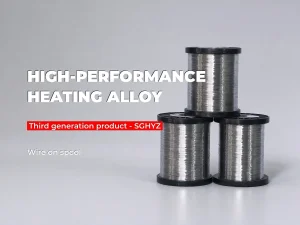
Standard commercial FeCrAl grades such as 0Cr23Al5 and 0Cr25Al5 are rated up to 1250°C. High-grade modified FeCrAl alloys like HRE operate reliably up to 1350°C, SGHYZ up to 1400°C, and powder metallurgy SGHT wire reaches maximum continuous service temperatures of 1425°C in clean air environments.
Why does FeCrAl become brittle after initial furnace operation, and how should it be handled?
When FeCrAl alloys are heated above 900°C, rapid grain growth occurs within the ferritic crystal structure. Upon cooling to room temperature, the metal matrix loses ductility. If an element requires maintenance or repositioning after initial use, it must be pre-heated to a dull red heat (around 500°C–600°C) using a torch before bending to prevent cracking.
How does furnace atmosphere affect the service life of FeCrAl elements?
FeCrAl performs best in oxidizing atmospheres (Air, $O_2$) where the alpha-alumina scale constantly regenerates. In reducing atmospheres (Pure $H_2$, Dissociated Ammonia), the oxide layer thins, lowering the maximum continuous rating by 50°C–100°C. In carburizing or sulfurous gas streams, FeCrAl far outlasts NiCr because alumina prevents carbon intrusion and sulfur attack.
What is "pre-oxidation" treatment, and is it necessary before full furnace commissioning?
Pre-oxidation is the process of heating newly installed FeCrAl elements in clean air to 1050°C–1100°C for 8 to 12 hours without workload. This forms a uniform, dense alpha-alumina surface barrier before exposure to process contaminants, extending overall element service life by up to 40%.
Can FeCrAl heating elements come into direct contact with ceramic refractory insulation?
FeCrAl elements must be supported by high-alumina ceramic materials (minimum 60% $Al_2O_3$ content). Direct contact with silica-heavy ($SiO_2$) refractories, iron oxide scale, or asbestos must be avoided, as silica reacts with alumina at temperatures above 1100°C to form low-melting-point eutectics that cause localized element burnout.