
High-Temperature Electrothermal Alloy Products
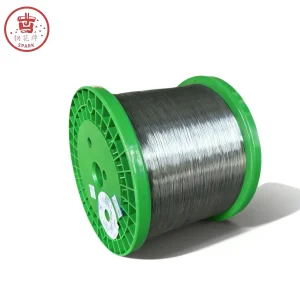
Explore our premium wholesale selection of iron-chromium-aluminum (FeCrAl) and nickel-chromium (NiCr) electric heating wires, strip, and pre-formed heating elements direct from China's leading metallurgical facility.




Global Landscape of Electrothermal Alloys in Advanced Manufacturing
An in-depth metallurgical breakdown of electrothermal alloy engineering, high-temperature oxidation kinetics, and strategic procurement paradigms for global OEM furnace builders.
Energy Transition & Kiln Electrification
As global industries decarbonize, industrial heating is rapidly shifting from fossil-fuel burner systems to electric resistance heating. High-performance electrothermal alloys are the foundational infrastructure powering continuous mesh belt kilns, roller hearth furnaces, and green hydrogen thermal processing lines up to 1425°C.
Semiconductor & Photovoltaic Growth
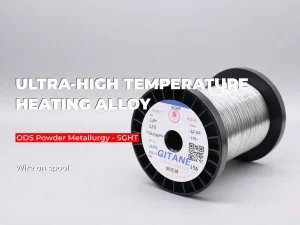
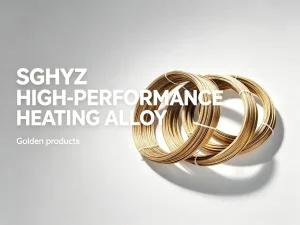
Thermal diffusion, LPCVD, and silicon ingot crystal pulling demand absolute temperature uniformity and thermal stability. Advanced powder-metallurgy FeCrAl grades (such as SGHT and SGHYZ) deliver ultra-low thermal sag, preventing hot-spot formation and particle contamination during critical semiconductor manufacturing steps.
Total Cost of Ownership (TCO) Shift
Modern procurement strategies have moved beyond raw wire price per kilogram. Buyers prioritize long-term oxidation stability, creep resistance under continuous load, and predictable service lifetime. High-grade alloys engineered with rare-earth additions dramatically reduce unplanned furnace downtime.
Comparative Material Science: FeCrAl vs. NiCr Electrothermal Alloys
Selecting the optimal electrothermal alloy grade requires balancing thermodynamic limits, mechanical strength at elevated temperatures, electrical resistivity, and oxide scale passivation mechanisms.
FeCrAl Alloys (Iron-Chromium-Aluminum)
Oxidation Mechanism: Forms a dense, highly protective surface layer of alpha-alumina ($\alpha\text{-Al}_2\text{O}_3$). This scale is electrically insulating, highly resistant to spallation, and acts as an impermeable diffusion barrier against further oxidation.
Key Advantages: Superior maximum operating temperatures (up to 1425°C), higher electrical resistivity (1.25–1.45 $\mu\Omega\cdot\text{m}$), lower density ($7.10\text{ g/cm}^3$ vs $8.40\text{ g/cm}^3$ for NiCr), and significantly lower raw material mass requirement per kilowatt generated.
NiCr Alloys (Nickel-Chromium)
Oxidation Mechanism: Forms a protective chromia ($\text{Cr}_2\text{O}_3$) or nickel-chromite spinel ($\text{NiCr}_2\text{O}_4$) oxide layer. While limited to lower peak temperatures (1200–1250°C), this oxide offers excellent resistance to chemical attack in nitrogen or reducing gas environments.
Key Advantages: Outstanding hot strength and creep ductility. NiCr alloys remain ductile after prolonged heating, allowing easy maintenance, winding, or element restructuring without cracking. Ideal for frequent rapid cycling applications.
| Alloy Family / Grade | Chemical Composition Basis | Max Temp (°C) | Resistivity @ 20°C ($\mu\Omega\cdot\text{m}$) | Density ($\text{g/cm}^3$) | Oxide Layer Type | Primary Industrial Application |
|---|---|---|---|---|---|---|
| SPARK SGHT (Powder Met) | Fe-Cr-Al + Y/Zr Doping | 1425°C | 1.45 | 7.10 | $\alpha\text{-Al}_2\text{O}_3$ (Ultra-Dense) | Semiconductor, Advanced Ceramics, Solar Wafer Kilns |
| SPARK SGHYZ | 0Cr27Al7Mo2 + RE | 1400°C | 1.41 | 7.10 | $\alpha\text{-Al}_2\text{O}_3$ (Self-Healing) | High-Temp Lab Furnaces, Heavy Industrial Heaters |
| 0Cr25Al5 (FeCrAl) | 23-26% Cr, 4.5-5.5% Al, Bal. Fe | 1250°C | 1.42 | 7.10 | $\text{Al}_2\text{O}_3$ Scale | Industrial Heat Treatment, Radiant Tubes |
| 0Cr21Al6Nb (FeCrAl) | 21-23% Cr, 5.5-6.5% Al, Nb Added | 1350°C | 1.40 | 7.10 | $\text{Al}_2\text{O}_3$ Scale | High-Temperature Industrial Kilns, Powder Metallurgy |
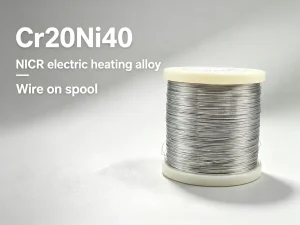
| Cr20Ni80 (Nichrome) | 20-23% Cr, Bal. Ni (min 77%) | 1200°C | 1.09 | 8.40 | $\text{Cr}_2\text{O}_3 / \text{NiCr}_2\text{O}_4$ | Home Appliances, Precision Medical Heaters, Jet Engines |
| Cr30Ni70 (Nichrome) | 28-31% Cr, Bal. Ni | 1250°C | 1.18 | 8.10 | $\text{Cr}_2\text{O}_3$ Scale | Controlled Atmosphere Furnaces, Chemical Processing |
Engineering Formula: Calculating Element Surface Load ($W/cm^2$)
A critical metric in element lifecycle engineering is the surface load ($p$). Exceeding maximum recommended surface loading leads to localized thermal runaway and premature oxidation failure:
p = P / (\pi \cdot d \cdot L) \quad [\text{Watts/cm}^2]
Where P is power output (Watts), d is wire diameter (cm), and L is active heated length (cm). Recommended maximum surface loads range from $1.5\text{ W/cm}^2$ for enclosed ceramic tube elements up to $4.5\text{ W/cm}^2$ for open-suspension radiant coils in clean oxidizing air.
China Factory Supply Chain Resilience & Manufacturing Synergy
How Beijing Shougang Gitane New Materials leverages industrial vertical integration, continuous quality assurance, and metallurgical scale to deliver unmatched global cost-efficiency.
Full-Cycle Vertical Integration
From initial high-purity raw material melting in Vacuum Induction Melting (VIM) and Electroslag Remelting (ESR) units, to hot rolling, precision wire drawing, and continuous bright annealing — every process is executed within our 39,268 m² manufacturing workshops.
Stringent GB/T 1234-2012 Testing
Each melt heat undergoes spectrographic analysis, continuous eddy-current flaw detection, laser-micrometer dimensional tracking, and 50-hour accelerated high-temperature life testing to guarantee uniform resistivity and zero micro-cracking across kilometers of wire.
Supply Chain Speed & Agility
Supported by Shougang Group's raw material security and direct access to rare-earth dopants (Yttrium, Neodymium, Zirconium), our factory maintains stock of standard wire gauges (0.10mm to 10.0mm) and ribbon sizes, enabling dispatch within days rather than months.
Precision Application Engineering Across Strategic Sectors
Different industrial heating processes present unique thermodynamic and environmental challenges. SPARK alloys are tailor-engineered for maximum resilience in specific furnace atmospheres.
1. Semiconductor Wafer Processing & Photovoltaic Furnaces
Environment: Clean, high-vacuum, ultra-pure oxygen, or inert argon atmospheres up to 1350°C–1400°C.
Recommended Grade: SPARK SGHT & SGHYZ. These ultra-pure FeCrAl alloys eliminate heavy metal migration (such as Cu or Fe vapor) into silicon wafers during boron/phosphorus diffusion, ensuring solar cell conversion efficiency and microchip yield.
2. Automotive & Aerospace Heat Treatment
Environment: Carburizing, carbonitriding, nitriding, and endothermic gas atmospheres (900°C–1150°C).
Recommended Grade: 0Cr21Al6Nb & Cr30Ni70. For carburizing furnaces prone to carbon soot deposition, Cr30Ni70 prevents "green rot" oxidation, while 0Cr21Al6Nb provides high resistance to carburization spallation.
3. Lithium-Battery Cathode Sintering (Roller Hearth Kilns)
Environment: Highly corrosive alkaline vapors (Lithium Hydroxide / Carbonate) combined with pure oxygen atmospheres (700°C–1050°C).
Recommended Grade: SPARK 0Cr25Al5 & 0Cr23Al5. The continuous alumina film acts as a sacrificial barrier against reactive lithium vapor attack, preserving structural wire integrity over extended campaign runs.
4. Petrochemical Thermal Crackers & Heavy Industrial Radiant Tubes
Environment: High thermal stress, continuous heavy mechanical loads, sulfur-bearing gases up to 1250°C.
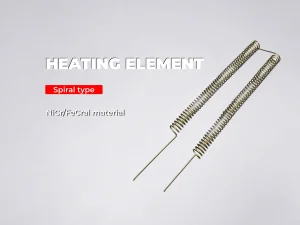
Recommended Grade: SPARK SGHT Powder Metallurgy Wire. Offers unparalleled high-temperature sag resistance and creep strength, allowing large-diameter spiral elements to maintain geometry inside vertical radiant tubes without short-circuiting.
Technical Roadmap & Future Outlook (2025–2035)
Anticipating next-generation thermal demands through advanced powder metallurgy, nanostructured grain boundary engineering, and smart IoT thermal elements.
Oxide Dispersion Strengthened (ODS) Alloys
By incorporating nano-scale Yttria ($\text{Y}_2\text{O}_3$) particles into the iron-chromium-aluminum lattice, next-generation ODS alloys maintain mechanical yield strength at temperatures exceeding 1400°C, virtually eliminating thermal creep and sag in tall furnace elements.
Self-Healing Nanocrystalline Passivation
R&D is focused on modifying rare-earth doping ratios to accelerate self-healing rates when oxide scales suffer mechanical scratching or thermal shock during furnace loading cycles, effectively doubling element lifespan in aggressive atmospheres.
Smart IoT-Integrated Heating Elements
Integrating online electrical resistance drift diagnostics with predictive maintenance algorithms. Real-time tracking of micro-ohmic changes alerts operators before element failure occurs, enabling seamless zero-downtime maintenance scheduling.
International Quality Assurance & Localized Support Architecture
Ensuring compliance with stringent international environmental, safety, and metallurgical standards while providing global OEM engineering support.
Regulatory Compliance & Eco-Standards
All SPARK electrothermal alloy wire, strip, and spiral elements comply fully with European and North American environmental directives:
- RoHS & REACH Compliance: Zero toxic heavy metals, lead, cadmium, or hexavalent chromium.
- ISO 9001:2015 & ISO 14001: Certified quality and environmental management systems.
- Mill Test Certificates (EN 10204 3.1): Provided with every shipment detailing precise chemical melt heat analysis and electrical resistivity measurements.
Custom OEM Packaging & Overseas Dispatch
Electrothermal wires require protection against ambient moisture, sea-salt corrosion, and mechanical bending during transit:
- Precision Spooling: DIN 160, DIN 200, DIN 250 plastic spools with vacuum-sealed foil packing.
- Heavy Coil Protection: Soft paper wrapping, moisture-proof plastic film, and fumigated solid wooden crates for heavy wire coils up to 500 kg.
- Global Engineering Desk: Multilingual technical assistance (English, German, Russian, Japanese) for custom coil coiling geometry calculation.
Specialized Electrothermal Alloys, Tubes & Pre-Formed Elements
Discover our complete range of specialized SGHT grades, spiral heaters, and industrial heating tubes engineered for extreme industrial environments.



Frequently Asked Questions by Industrial Furnace Engineers
In-depth engineering answers covering technical grade selection, surface load guidelines, atmospheric stability, and wholesale procurement parameters.