
High-Temperature Electrothermal Alloy Wire & Tubes
Explore our premium wholesale selection of high-creep-resistant nickel chrome wires, FeCrAl alloys, and customized heating elements direct from China's premier metallurgical facility.

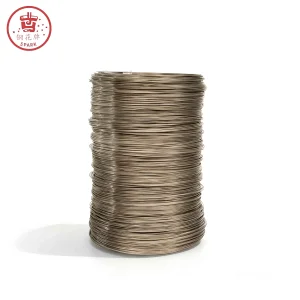
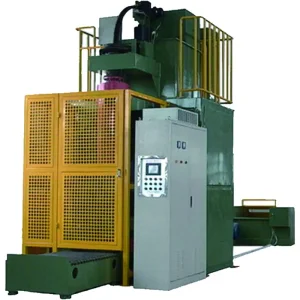



Engineering High Creep Resistance in Nickel-Chromium Alloys
A comprehensive analysis of high-temperature mechanical deformation, grain-boundary pinning mechanics, and material selection for long-life industrial thermal systems.
In modern high-temperature industrial heating, thermal efficiency and operational longevity depend fundamentally on element dimensional stability. When electrical resistance heating wires operate at homologous temperatures exceeding 0.6 $T_m$ (typically above 900°C to 1250°C), they suffer from time-dependent plastic deformation under sustained tensile or gravitational stress—a phenomenon known in metallurgy as thermal creep. For furnace original equipment manufacturers (OEMs) and high-temperature thermal process engineers, selecting a certified high creep resistance nickel chrome wire manufacturer is critical to preventing element sagging, coil distortion, inter-turn short-circuiting, and premature furnace failure.
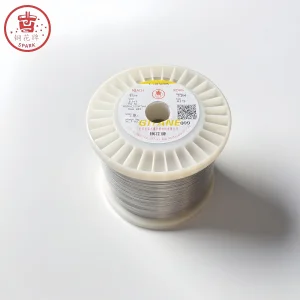
As a core subsidiary of the renowned Shougang Group, Beijing Shougang Gitane New Materials Co., Ltd. has spent over six decades pioneering vacuum induction melting (VIM), electroslag remelting (ESR), and precision wire drawing processes. Under our flagship brand SPARK, we engineer nickel-chromium (Ni-Cr) and iron-chromium-aluminum (Fe-Cr-Al) resistance alloys optimized specifically to withstand extreme creep, thermal fatigue, and atmospheric corrosion.
Dislocation Climb Mitigation
Solid-solution hardening via tightly controlled Nickel (Ni) and Chromium (Cr) matrix ratios inhibits dislocation movement through the crystal lattice at elevated operating temperatures, drastically reducing plastic flow rates.
Grain Boundary Pinning
Strategic micro-alloying with active rare earth elements (Yttrium, Cerium, Zirconium) creates stable oxide and carbide precipitates along grain boundaries, effectively halting grain boundary sliding (GBS).
Adherent $Cr_2O_3$ Protective Scale
Optimized NiCr chemistry forms a dense, self-healing chromia protective oxide scale that resists spallation under cyclic thermal loading, preserving internal wire cross-section and mechanical strength.
Microstructural Mechanics: Why Standard Resistance Wires Fail Under Sustained Stress
In high-temperature industrial kilns, heating elements suspended horizontally across ceramic tubes or mounted vertically on furnace walls experience constant gravitational pull. In standard resistance wires without micro-alloying enhancements, elevated temperatures trigger vacancies migration and grain growth. As adjacent crystals slide past one another along unpinned grain boundaries, the wire undergoes continuous elongation. This physical sag reduces the pitch between wire coils, creating high localized current densities (hot spots) that accelerate oxidation and lead to catastrophic melt-through.
SPARK's proprietary high-creep-resistance NiCr alloy formulation (including Cr20Ni80, Cr30Ni70, and specialized Cr20Ni80S grades) incorporates nanoscale rare-earth oxide dispersoids. These particles act as physical anchors against grain boundary movement, elevating the alloy's Larson-Miller creep rupture strength by up to 300% compared to commodity 80/20 Nichrome wire.
Quantitative Metallurgical Performance Metrics
Real-world testing parameters validated under GB/T 1234-2012, ASTM E139 creep testing standards, and rigorous factory batch inspections.
| Alloy Grade | Alloy Family | Max Temp (°C) | Resistivity at 20°C (μΩ·m) | Density (g/cm³) | Creep Rupture Strength (1000h @ 1000°C) | Primary Industrial Application |
|---|---|---|---|---|---|---|
| SPARK Cr20Ni80 | Ni-Cr Alloy | 1200°C | 1.09 ± 0.05 | 8.40 | High (Pin-Stabilized) | Precision furnaces, heat treatment, electronics |
| SPARK Cr30Ni70 | Ni-Cr Alloy | 1250°C | 1.18 ± 0.05 | 8.10 | Ultra-High (High Chromia Scale) | Atmosphere kilns, industrial heat treating |
| SPARK Cr20Ni80S | Special Ni-Cr | 1200°C | 1.10 ± 0.04 | 8.44 | Maximum Sag Resistance | Heavy industrial furnace coils, severe thermal cycle |
| SPARK SGHT | PM FeCrAl | 1425°C | 1.45 ± 0.07 | 7.10 | Extreme (Dispersion Hardened) | Semiconductor sintering, powder metallurgy |
| SPARK SGHYZ | Adv. FeCrAl | 1400°C | 1.43 ± 0.06 | 7.15 | Very High | Continuous high-temp industrial kilns |
| SPARK 0Cr25Al5 | Fe-Cr-Al | 1250°C | 1.42 ± 0.06 | 7.10 | Standard High Temp | Radiant tube heaters, industrial heating elements |
Global Industry Development Trends in High-Creep Resistance Wire
Key technological shifts driving demand for advanced nickel-chromium and electrothermal heating wire alloys across global supply chains.
Decarbonization & Electrification of Thermal Processing
Global net-zero mandates are accelerating the conversion of gas-fired industrial furnaces to electric heating systems. Electric furnaces demand ultra-reliable resistance alloys capable of maintaining long-term dimensional stability without frequent maintenance shut-downs.
Semiconductor & Advanced Ceramic Rapid Growth
The manufacturing of silicon carbide (SiC) wafers, photovoltaic ingots, and engineering ceramics requires furnace chambers operating stably between 1200°C and 1400°C under controlled gas or vacuum atmospheres, driving high adoption of rare-earth enriched NiCr and PM FeCrAl wires.
Demand for Total Cost of Ownership (TCO) Optimization
Industrial thermal facilities are shifting from initial procurement cost evaluation to lifetime cost models. High-creep-resistance wires drastically cut labor replacement costs, downtime losses, and thermal insulation degradation caused by element sag.
Global Enterprise Procurement & Engineering Selection Criteria
How procurement managers and metallurgical engineers specify high-creep resistance nickel chrome wire for optimal furnace efficiency.
1. Creep Resistance vs. Temperature & Atmosphere Evaluation
When sourcing electrothermal alloy wires, technical procurement teams must evaluate the interaction between maximum furnace operating temperature, mechanical load, and process atmosphere:
- Oxidizing Air Atmospheres: SPARK Cr20Ni80 and Cr30Ni70 build robust protective chromia layers ($Cr_2O_3$) up to 1250°C. For temperatures up to 1400°C–1425°C, FeCrAl grades such as SPARK SGHYZ and powder-metallurgy SGHT build alumina layers ($Al_2O_3$), providing exceptional oxidation resistance.
- Carburizing & Nitriding Atmospheres: Nickel-chromium alloys exhibit superior resistance to carbon pick-up compared to standard iron-based alloys, making NiCr wire the preferred material for heat treatment carburizing furnaces.
- Vacuum Systems: High-vacuum furnaces require low-vapor-pressure elements. Purified NiCr alloys prevent chromium volatilization under deep vacuum environments.
2. Surface Load ($W/cm^2$) Calculation & Element Sizing
Thermal creep rate increases exponentially with surface load (Watts per square centimeter of wire area). Designing heating coils with optimal surface loading ensures element longevity:
| Furnace Application Type | Recommended Surface Load (NiCr Wire) | Creep Risk Factor | Design Recommendation |
|---|---|---|---|
| Industrial Heat Treatment (800°C - 1000°C) | 1.8 - 2.5 W/cm² | Low to Moderate | Standard coil pitch with ceramic rod supports |
| High-Temp Ceramic Kiln (1000°C - 1150°C) | 1.2 - 1.8 W/cm² | Moderate to High | Use SPARK Cr20Ni80S with heavy gauge wire (≥ 3mm) |
| Continuous Heavy Load (1150°C - 1250°C) | 0.8 - 1.2 W/cm² | Critical Creep Area | Specify SPARK Cr30Ni70 or SGHT PM alloy strip/wire |
Macro Industry Solutions Powered by SPARK Alloys
Customized metallurgical supply solutions for key global manufacturing and engineering sectors.
Aerospace & Defense Thermal Processing
Engineered Cr20Ni80 wires engineered for vacuum heat treatment furnaces requiring precise temperature uniformity (±3°C) and zero outgassing contamination for titanium and superalloy aerospace parts.
Semiconductor & Solar Wafer Production
Ultra-pure SGHT and SGHYZ heating element coils deployed in crystal pulling, diffusion, and annealing furnaces requiring extreme non-sag performance up to 1425°C.
Glass Tempering & Ceramic Kiln Manufacturing
Heavy-gauge NiCr flat strip and coiled wire elements built for continuous roller hearth kilns, providing resistance to severe mechanical vibration and high thermal shocks.
Localization Support, Quality Compliance & Standards
Rigorous quality controls backing every meter of wire shipped from Beijing Shougang Gitane to international industrial centers.
ISO 9001 & ISO 14001 Quality System
Certified quality management since 1996. Full heat-number traceability from raw VIM melting through final spooling, packaging, and export certification.
International Standard Compliance
Products fully meet or exceed GB/T 1234-2012, ASTM B344 (Standard Specification for Drawn or Rolled Nickel-Chromium Alloys), DIN 17470, and JIS C2520.
Seamless Global Logistics & OEM Customization
Custom packaging options (DIN spools, wooden crates, coils), expedited air freight for critical furnace spare parts, and localized technical support across Europe, Americas, and Asia-Pacific.
Next-Generation Electrothermal Metallurgical Innovation
Shougang Gitane's R&D vision for advanced creep-resistant materials over the coming decade.
Oxide Dispersion Strengthening (ODS)
Advancing powder metallurgy processing to embed yttria nano-particles directly within the NiCr matrix, aiming for continuous long-term creep resistance at 1300°C for extreme-duty aerospace furnaces.
Ultra-Fine Grain Pinning Architecture
Developing micro-alloying techniques utilizing Hafnium (Hf) and Tantalum (Ta) additions to form ultra-stable complex carbides, reducing high-temperature elongation rates by an additional 40%.
Digital Dynamic Heating Control Integration
Partnering with global furnace builders to match proprietary alloy electrical resistivity temperature coefficients ($C_t$) with modern SCR power controllers for maximum energy efficiency.
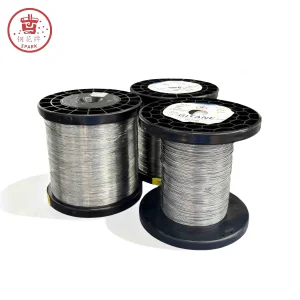
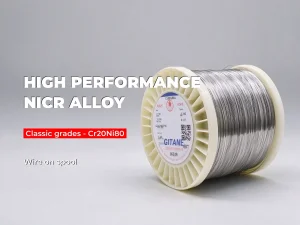
High Performance Resistance Alloys & Tubes
Explore additional high-creep resistance products, heating tubes, and alloy wires tailored for global industrial applications.


Frequently Asked Questions (FAQ)
In-depth answers to common metallurgical, procurement, and application questions regarding high creep resistance nickel chrome wires.