

1. Global Industry Trends: Electrification & Decarbonization in Glass Melting
The global glass manufacturing sector is currently undergoing a transformative shift from traditional fossil-fuel combustion to hybrid electric and 100% all-electric glass melting and conditioning systems. Driven by stringent global net-zero mandates, European EU-ETS carbon tariffs, and rising natural gas volatility, major glass manufacturers—producing container glass, float glass, flat architectural panels, display glass, and continuous basalt/glass fiber—are rapidly electrifying their thermal processing lines.
In this decarbonization landscape, the glass furnace heating ribbon (also referred to as electric resistance flat wire, heating strip, or element ribbon) plays a pivotal operational role. Modern glass forehearths, working ends, and feeder channels rely heavily on precise electrical resistance heating to maintain precise glass gob temperatures, uniform viscosity, and thermal homogeneity prior to forming. Electric heating ribbons eliminate combustion exhaust gas velocities that cause volatile boron, alkali oxide, and silica evaporation, thereby significantly reducing particulate emissions while dramatically improving glass optical quality.
Technical Information Gain: Unlike standard round heating wire, heating ribbons provide a significantly higher surface area-to-cross-section ratio. This optimizes radiant heat transfer to the molten glass surface while operating at a lower watt loading (W/cm²), effectively extending element life by preventing localized overheating and slag vapor corrosion.
2. Technical Procurement Intent & Engineering Specification Drivers
When enterprise procurement managers, industrial furnace builders, and glass plant engineering directors source wholesale glass furnace heating ribbons, their intent goes beyond basic price-per-kilogram queries. B2B procurement demands high-reliability alloys capable of maintaining long-term dimensional stability, high oxidation resistance, minimal high-temperature sag, and resistance to chemical attack by volatile glass bath vapors (e.g., Na2O, K2O, B2O3, PbO, and fluorides).
Core Metallurgical Selection Parameters:
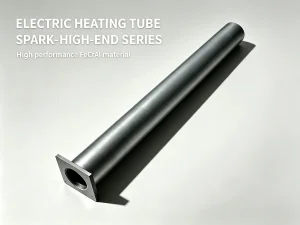
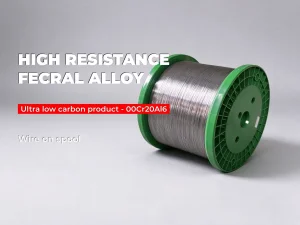
- Iron-Chromium-Aluminium (FeCrAl) Alloys: Grades such as 0Cr25Al5, 0Cr21Al6Nb, HRE, SGHYZ, and powder-metallurgy SGHT are preferred for temperature ranges between 1100°C and 1425°C. FeCrAl alloys form a dense, protective, self-healing alpha-alumina (α-Al2O3) scale that offers exceptional electrical resistivity (1.45 µΩ·m) and resistance to oxidation in corrosive atmospheres.
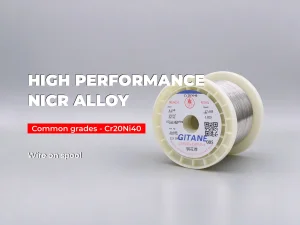
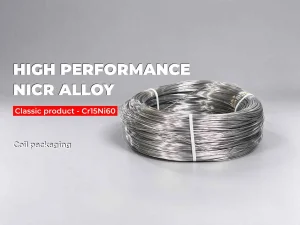
- Nickel-Chromium (NiCr) Alloys: Grades like Cr20Ni80 and Cr30Ni70 exhibit superior high-temperature mechanical ductility, hot strength, and thermal shock resistance during frequent cycling. While restricted to max temperatures around 1200°C, NiCr elements do not become brittle after prolonged use, making them ideal for glass annealing lehrs and frequent maintenance zones.
- High-Temperature Sag & Creep Resistance: In roof-suspended or side-mounted corrugated ribbon configurations within glass channels, creep strength is critical. Advanced micro-alloying with rare earth elements (Yttrium, Cerium, Zirconium) pins grain boundaries, preventing high-temperature deformation and intergranular oxidation.
| Alloy Grade / Family | Chemical Composition (%) | Max Service Temp (°C) | Resistivity @ 20°C (µΩ·m) | Primary Glass Industry Application |
|---|---|---|---|---|
| SPARK SGHT (FeCrAl) | Powder Metallurgy + RE | 1425°C | 1.45 | Ultra-high temp forehearths, special borosilicate glass furnaces |
| SPARK SGHYZ (FeCrAl) | Cr25-27, Al6.5-7.5 + RE | 1400°C | 1.45 | High-efficiency feeder channels, ceramic/glass kilns |
| HRE (FeCrAl) | Cr26, Al6.0 + Micro Alloy | 1350°C | 1.42 | Continuous glass fiber melters, container glass forehearths |
| 0Cr25Al5 (FeCrAl) | Cr25, Al5.0, Bal. Fe | 1250°C | 1.42 | Standard glass feeder roof heating, working ends |
| Cr20Ni80 (NiCr) | Ni80, Cr20 | 1200°C | 1.09 | Glass annealing lehrs, precision optical heat treat |