
Featured Wholesale Resistance Alloys & Heating Elements
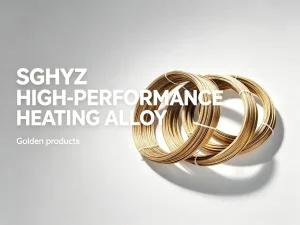
Direct factory pricing on premium Golden FeCrAl wire, Ultra-High Temperature SGHYZ/SGHT alloys, NiCr resistance elements, and customized industrial thermal hardware.

Global Landscape of Glass Deep Processing Thermal Systems
An executive whitepaper on how advanced electrothermal resistance alloys optimize heat flux, minimize optical distortion, and revolutionize glass tempering, bending, and coating operations worldwide.
Global Market Dynamics
The global glass deep processing industry is experiencing rapid evolution driven by architectural energy efficiency standards (double/triple Low-E glazing), automotive lightweighting, and solar PV module growth. Glass tempering and bending furnaces require specialized electrical heating elements capable of delivering rapid, uniform thermal transfer up to 700°C–800°C furnace ambient temperatures without structural sagging or chemical degradation.
Thermal Uniformity & Optical Quality
In glass deep processing, thermal inhomogeneity directly causes optical distortion, roller wave deformation, and bi-axial stress failure during rapid quenching. High-grade resistance heaters utilizing FeCrAl (0Cr25Al5, SGHYZ, SGHT) and NiCr (Cr20Ni80, Ni70Cr30) alloys ensure exact zone-controlled thermal output within ±1°C tolerances across large ceramic roller beds.
Manufacturing Excellence at Scale
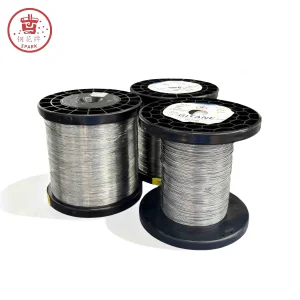
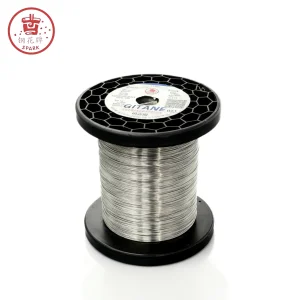
As a member of Shougang Group, Beijing Shougang Gitane New Materials Co., Ltd. brings over 60 years of metallurgical expertise to the glass machinery OEM sector. Utilizing vacuum induction melting, precision wire drawing, and controlled atmospheric annealing, SPARK brand alloys offer consistent electrical resistance ($\mu\Omega\cdot\text{m}$) and extreme oxidation resistance up to 1425°C.
Key Technological Trends Shaping Glass Thermal Processing
How modern glass tempering and bending plants are adapting to forced convection, rapid energy switching, and green electrification using advanced metallurgical formulations.
1. Transition to Forced Convection & Hybrid Heating
Traditional radiant heating furnaces struggle with soft-coated Low-E glass due to high emissivity variations between the coated and uncoated surfaces. Modern glass processing lines utilize high-velocity hot air convection combined with radiant electric heating elements. Heaters must withstand high air velocities, micro-vibrations, and rapid thermal cycling without scale shedding or fatigue fracturing.
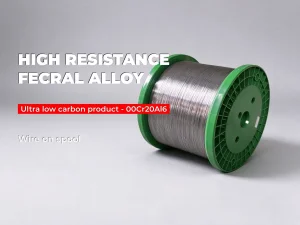
SPARK’s specialized FeCrAl grades (00Cr20Al6, SGHYZ) form a tight, self-healing $\alpha\text{-Al}_2\text{O}_3$ (alumina) surface oxide film that prevents particle flaking—protecting pristine optical glass from hot contamination during processing.
2. Ultra-Thin Glass (UTG) & Curved Glass Precision
The booming market for automotive HUD windshields, panoramic sunroofs, and foldable electronic display glass requires glass thickness down to 0.1mm–2.0mm. Softening and bending UTG demands micro-zone matrix heaters with ultra-dense wire spacing and rapid thermal response.
NiCr alloys (Cr20Ni80, Ni70Cr30) are increasingly specified for UTG bending furnaces due to their exceptional hot strength, low thermal expansion coefficient, and non-magnetic property. NiCr elements maintain exact structural geometry under repeated thermal cycling, eliminating dimensional distortion during glass sagging.
Localized Application Engineering for Glass Machinery
Tailored heating element geometries and alloy selections engineered for specialized glass deep processing machinery.
Flat Glass Tempering Furnaces
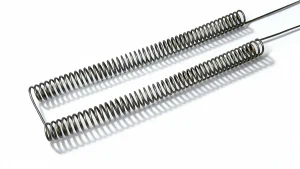
Used extensively in architectural facade glass production. SPARK spiral elements (wound from 0Cr25Al5 or HRE 1350 wire) are housed in porcelain tubes or ceramic fiber plates above and below the ceramic rollers. High watt density capability ensures rapid temperature recovery when cold glass enters the heating chamber.
Automotive Bending & Sagging Molds
Complex 3D automotive windshields require multi-zone matrix heating frames. SPARK Cr20Ni80 strip and open-coil wire elements allow independent voltage modulation, enabling localized heat gradient control to match complex gravity glass molds without optical distortion.
Photovoltaic & Solar Glass Lines
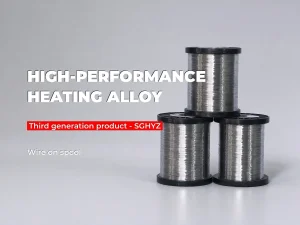
Continuous thermal processing of ultra-clear patterned solar glass requires continuous 24/7 reliability. SPARK SGHYZ and SGHT powder-metallurgy FeCrAl alloys offer minimal resistance drift and zero creep at continuous 900°C–1100°C furnace operations, drastically lowering OEM maintenance costs.
Metallurgical Property Comparison & Grade Selection Matrix
Select the ideal alloy grade based on operating temperature, chemical atmosphere, physical resistivity, and mechanical strength requirements.
| Alloy Grade | Alloy Type | Max Temp (°C) | Resistivity ($\mu\Omega\cdot\text{m}$, 20°C) | Density ($\text{g/cm}^3$) | Key Advantage in Glass Processing |
|---|---|---|---|---|---|
| SPARK SGHT | FeCrAl (Powder Met.) | 1425°C | 1.45 | 7.10 | Extreme creep resistance; zero structural sag in heavy hanging elements. |
| SPARK SGHYZ | FeCrAl + Rare Earth | 1400°C | 1.42 | 7.10 | Adherent golden alumina scale; no particle contamination on hot glass. |
| HRE 1350 | FeCrAl Alloy | 1350°C | 1.42 | 7.10 | High hot strength; excellent performance in rapid thermal cycling. |
| 0Cr25Al5 | FeCrAl Standard | 1250°C | 1.42 | 7.10 | Cost-effective workhorse grade for standard glass tempering furnaces. |
| Cr20Ni80 | Nickel-Chromium | 1200°C | 1.09 | 8.40 | Non-magnetic; high ductility post-service; ideal for precision bending. |
| Ni70Cr30 | Nickel-Chromium | 1250°C | 1.18 | 8.10 | Exceptional resistance to green rot and reducing furnace gas environments. |
| Cr15Ni60 | Nickel-Chromium-Iron | 1150°C | 1.12 | 8.20 | Economical NiCr option for mid-temperature glass annealing lehrs. |
Comprehensive Turnkey Thermal Solutions for OEMs
From customized heating element design to energy efficiency retrofits—how Beijing Shougang Gitane empowers global furnace builders.
Custom Element Coiling & Fabrication
We manufacture ready-to-install spiral coils, meander ribbons, ceramic-supported radiant tubes, and modular heating cassettes according to client engineering drawings and electrical specifications.
Energy Efficiency Audits & Re-Engineering
By upgrading older glass tempering lines from standard NiCr to ultra-high resistivity FeCrAl (SGHYZ), thermal output per kilogram of wire increases up to 20%, resulting in significant kWH energy savings per ton of tempered glass.
Quality Control & Mill Test Traceability
Every master coil shipped from our Beijing facility comes with complete metallurgical batch test certification, detailing chemical analysis, room-temperature resistivity, high-temperature life cycle testing, and dimensional tolerance checks.
Complete Wholesale Heating Element & Wire Series
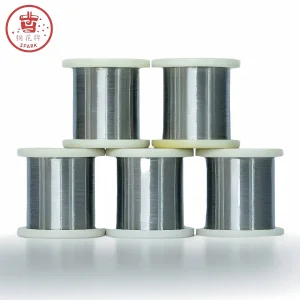
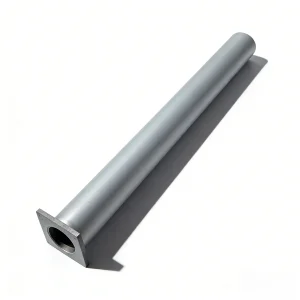
Explore our full line of industrial resistance wires, strips, and pre-formed heating elements available for direct factory export.

Frequently Asked Questions by Glass Machinery Engineers & Procurement Teams
Detailed technical and commercial answers regarding alloy selection, furnace retrofitting, element lifespan, and factory pricing.