
Featured High-Temperature Alloys & Heating Elements
Industrial-grade resistance wires engineered for extreme thermal environments, powder metallurgy sintering, and precise furnace atmosphere control.





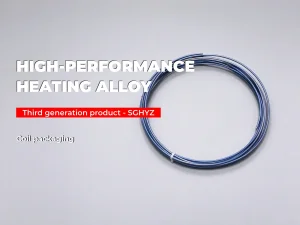
Metallurgical Architecture & Creep Resistance of GHYZ Alloys
Understanding the solid-state physics, rare-earth micro-alloying, and thermal dynamics that allow SGHYZ heating wire to maintain long-term dimensional stability up to 1400°C.
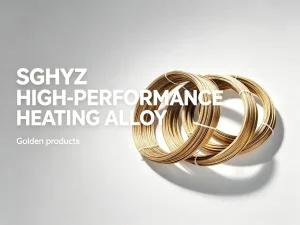
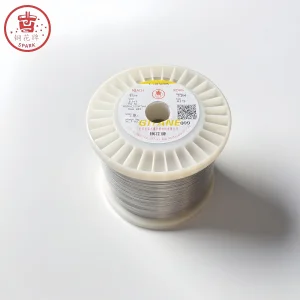
In the realm of industrial thermo-processing, the demand for heating elements that survive extreme temperatures without structural degradation has driven significant innovations in iron-chromium-aluminum (FeCrAl) metallurgy. Among these advancements, GHYZ (SGHYZ) heating wire represents a pinnacle of high-temperature alloy design. Engineered specifically to overcome the classic failure mechanisms of standard FeCrAl alloys—namely thermal sagging, grain growth embrittlement, and oxide scale spallation—SGHYZ has established itself as an indispensable material for heavy-duty industrial furnaces operating up to 1400°C.
Core Technical Advantage: GHYZ heating wire utilizes a controlled addition of Reactive Elements (RE) such as Yttrium (Y), Zirconium (Zr), and Hafnium (Hf). This micro-alloying formulation forms sub-micron oxide dispersion barriers along grain boundaries, effectively pinning grain boundary sliding and enhancing creep resistance by more than 300% compared to traditional 0Cr25Al5 grades.
Oxidation Kinetics & Protective α-Al₂O₃ Scale Formation
The operational longevity of resistance wire depends primarily on its ability to form a self-healing, thermodynamically stable oxide barrier. When GHYZ wire is energized in an oxidizing atmosphere at elevated temperatures ($T > 950^\circ\text{C}$), aluminum atoms selectively migrate outward to react with oxygen, creating a continuous, ultra-dense layer of alpha-phase alumina ($\alpha-\text{Al}_2\text{O}_3$).
This protective layer features exceptional dielectric strength, extremely low ionic diffusivity, and matching coefficient of thermal expansion (CTE) parameters with the parent alloy matrix. As a direct result, even during frequent thermal cycling (on/off furnace operations), the oxide scale resists micro-cracking and spallation. The inclusion of rare-earth elements neutralizes the outward growth stress of the scale, preventing the catastrophic degradation commonly observed in lower-tier resistance alloys.
Prevention of High-Temperature Sagging & Structural Deformation
One of the primary engineering challenges faced by furnace builders utilizing standard FeCrAl wire is thermal sagging. At operating temperatures exceeding 1200°C, the yield strength of traditional alloys drops precipitously, causing unsupported horizontal coils to deform, short-circuit, or collapse under their own weight. GHYZ alloy counters this behavior through engineered microstructural stabilization. Through optimized cold-working cycles and precisely controlled recrystallization annealing, GHYZ wire develops a coarse, interlocking bamboo-grain structure upon initial heat-up. This unique grain morphology minimizes grain boundaries oriented perpendicular to tensile stress vectors, suppressing high-temperature creep and maintaining coil geometry over thousands of operational hours.
Global Commercial Landscape & Sector-Specific Deployments
From semiconductor wafer manufacturing to clean energy infrastructure, explore how wholesale GHYZ heating wire drives productivity across key global industries.
Photovoltaic & Solar Ingot Furnaces
In the production of monocrystalline silicon ingots via the Czochralski (CZ) process, thermal uniformity is critical. GHYZ heating elements provide ultra-stable radiation profiles up to 1380°C without shedding oxide particles that could contaminate high-purity silicon melts.
Lithium Battery Cathode Sintering
Continuous roller hearth kilns producing LFP and NCM cathode powders require heating wires capable of resisting aggressive chemical vapors andalkali gas side-reactions. GHYZ's dense alumina skin offers superior chemical inertness against corrosive off-gassing.
Diffusion & Oxidation Furnaces
Semiconductor thermal processing demands tight temperature tolerances and minimal particle emissions. GHYZ wire elements manufactured to fine gauge tolerances ensure repeatable thermal zones across high-density quartz tube diffusion setups.
Technical Ceramics & Powder Metallurgy
Sintering structural ceramics (such as zirconia and alumina) requires rapid ramp rates and prolonged dwell times at 1350°C–1400°C. GHYZ alloys deliver high surface power loading without premature element burn-out or hot-spot formation.
Regional Market Demand Dynamics
The global transition toward decarbonization and industrial electrification has fundamentally shifted procurement strategies for resistance heating materials:
- European Union: High energy costs have pushed EU furnace OEMs toward high-resistivity FeCrAl alloys like SGHYZ, which allow thinner wire gauges, reduced element weight, and immediate electrical energy efficiency gains over legacy NiCr installations.
- North America: Growth in domestic semiconductor fabrication facilities and aerospace heat-treatment demands certified materials with complete batch traceability and proven high-temperature creep resistance.
- Asia-Pacific: Rapid expansion of battery gigafactories and solar cell production facilities drives massive volume demand for wholesale coil and spiral heating elements manufactured under strict cost-efficiency frameworks.
Why Source GHYZ Heating Wire from China: The Shougang Gitane Paradigm
Leveraging over six decades of state-of-the-art metallurgical R&D, fully integrated raw material processing, and unmatched economies of scale.
China has evolved into the world's primary hub for advanced electrothermal alloy production, offering global buyers an unassailable balance of technical excellence, manufacturing velocity, and structural cost efficiency. At the forefront of this industrial capability stands Beijing Shougang Gitane New Materials Co., Ltd., a specialized enterprise backed by the industrial legacy of the Shougang Group.
End-to-End Vertical Manufacturing Integration
Unlike secondary wire redrawers who source generic wire rod on the open market, Shougang Gitane controls every phase of production within an 88,000 m² modern manufacturing complex. This vertical integration guarantees complete metallurgical sovereignty across the entire value chain:
VIM / ESR Vacuum Melting
High-purity raw materials are melted under strict vacuum induction (VIM) and electro-slag remelting (ESR) conditions to eliminate micro-inclusions, tramp elements, and dissolved gases.
Hot Rolling & Billeting
Precision thermo-mechanical rolling transforms ingots into uniform wire rod, establishing the foundational grain structure required for creep resistance.
Automated Cold Drawing
Multi-pass high-speed drawing machines with continuous online diamond-die measurement maintain diameter tolerances within micrometers (±0.01 mm).
Hydrogen Bright Annealing
Continuous atmosphere bright annealing prevents pre-oxidation, ensuring a ultra-clean, mirror-like surface finish ready for immediate coiling or fabrication.
Cost-Efficiency & Supply Chain Resilience
Sourcing GHYZ heating wire directly from premier Chinese manufacturers yields distinct operational advantages for global procurement leaders:
- Raw Material Supply Stability: Direct integration with primary refined metal supply chains insulates production schedules from global supply disruptions.
- Batch-to-Batch Resistivity Consistency: Advanced chemical metering ensures electrical resistance variations remain strictly within ±3% across different production heats.
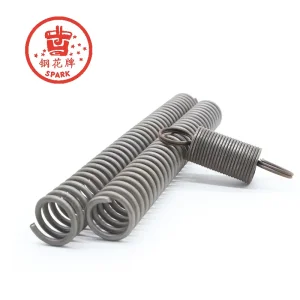
- Custom Delivery Configurations: Available in fine wire (0.05 mm), heavy industrial wire (up to 12.0 mm), flattened ribbon, cold-rolled strip, or custom-wound pre-formed furnace elements.
Technical Grade Matrix: GHYZ vs HRE vs SGHT vs NiCr Alloys
Selecting the optimal high-temperature alloy requires balancing maximum service temperature, electrical resistivity, mechanical strength, and atmospheric compatibility.
| Alloy Grade | Alloy Family | Max Temp (°C) | Resistivity at 20°C (μΩ·m) | Density (g/cm³) | Oxidation & Creep Performance | Primary Industrial Use |
|---|---|---|---|---|---|---|
| SGHT | FeCrAl (Powder Met) | 1425°C | 1.45 | 7.10 | Ultra-High Creep / Zero Sag | Semiconductor, Advanced Ceramics |
| SGHYZ / GHYZ | FeCrAl (RE Enhanced) | 1400°C | 1.45 | 7.10 | Superior Creep / High Scaling Resistance | Industrial Heat Treat, Solar Kilns |
| HRE | FeCrAl Standard | 1350°C | 1.42 | 7.15 | High Temp / Good Ductility | Powder Metallurgy, Tunnel Kilns |
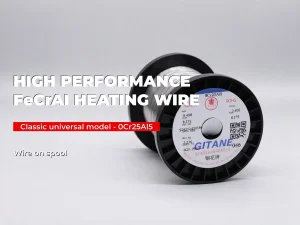
| 0Cr25Al5 | FeCrAl General | 1250°C | 1.42 | 7.10 | Standard Oxidation / Moderate Creep | Domestic Appliances, Small Furnaces |
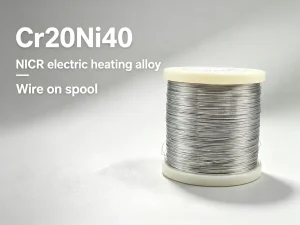
| Cr20Ni80 | Nickel-Chromium | 1200°C | 1.09 | 8.40 | Ductile After Use / Excellent Cycling | Precision Heaters, Carburizing Atmospheres |
| Cr30Ni70 | Nickel-Chromium | 1250°C | 1.18 | 8.10 | High Hot Strength / Green Rot Resistant | Industrial Ovens, Chemical Processing |
Engineering Interpretation of Technical Metrics
When comparing FeCrAl alloys like GHYZ to traditional Nickel-Chromium (NiCr) alloys, several critical economic and thermodynamic insights emerge:
1. Weight Savings: With a density of 7.10 g/cm³ compared to Cr20Ni80's 8.40 g/cm³, GHYZ wire yields approximately 15.5% more length per kilogram of material for identical wire diameters, delivering immediate procurement cost savings.
2. Electrical Efficiency: The higher resistivity of GHYZ (1.45 μΩ·m vs 1.09 μΩ·m for Cr20Ni80) permits furnace engineers to utilize thicker wire cross-sections. Thicker wire substantially extends element lifespan by reducing the surface-area-to-volume ratio, thereby slowing down the rate of aluminum depletion over extended thermal cycles.
Engineering Application & Surface Power Load Calculations
Maximizing element operational lifetime requires accurate calculation of surface load (W/cm²), coil geometry ratios, and furnace atmosphere correction factors.
The Mathematics of Element Design
The surface power load ($w$) represents the electrical power dissipated per unit surface area of the heating wire, expressed in Watts per square centimeter ($\text{W/cm}^2$). Choosing the correct surface load is the single most critical factor in preventing localized hot-spots and premature element burnout.
Primary Formula for Wire Surface Load:
w = P / (π · d · L)
Where: P = Total Power (Watts), d = Wire Diameter (cm), L = Total Active Wire Length (cm).
Recommended Maximum Surface Loads for GHYZ Wire
Because GHYZ forms a highly protective oxide scale, it tolerates higher surface loading than standard grades. However, the maximum allowable surface load decreases as operating temperature increases:
- At 1000°C: Maximum recommended load = 4.5 – 6.0 W/cm²
- At 1200°C: Maximum recommended load = 2.5 – 3.5 W/cm²
- At 1350°C: Maximum recommended load = 1.2 – 1.8 W/cm²
- At 1400°C: Maximum recommended load = 0.6 – 1.0 W/cm²
Atmosphere Impact & Correction Factors
The maximum operating temperature of GHYZ heating wire must be derated depending on the ambient gas composition within the furnace cavity:
Air & Oxidizing
100% Performance rating. Ideal environment for maintaining self-healing α-Al₂O₃ protective film up to 1400°C.
Dry Hydrogen (H₂)
Reduces protective oxide layer. Maximum continuous temperature should be limited to 1250°C–1300°C.
Nitrogen / Ammonia
Nitridation risk at $T > 1000^\circ\text{C}$. Forms brittle aluminum nitride (AlN) inclusions; limit temp to 1150°C.
Carburizing (CO/CH₄)
Carburization leads to internal carbide formation and swelling. Requires periodic pre-oxidation cycles in air.
Global Procurement Strategy: Total Cost of Ownership (TCO) Framework
Evaluating the macro-economic benefits of direct wholesale factory procurement for enterprise heat-treatment operations.
For B2B procurement managers, technical directors, and OEM buyers, evaluating resistance wire costs purely on a per-kilogram initial purchase price is a flawed approach. True operational efficiency is measured through Total Cost of Ownership (TCO), which incorporates element longevity, energy efficiency, furnace maintenance downtime, and replacement labor.
The Four Pillars of Resistance Wire TCO Evaluation
1. Lifecycle Longevity Factor: Due to its enhanced creep resistance and dense alumina scaling kinetics, GHYZ heating wire typically delivers 1.8x to 2.5x the service life of conventional 0Cr25Al5 elements in high-temperature kilns, dramatically reducing maintenance intervention frequencies.
2. Unplanned Downtime Reduction: In high-throughput manufacturing plants—such as solar silicon wafer annealing or lithium battery sintering lines—a single unexpected heating element failure can freeze an entire production line, costing tens of thousands of dollars per hour. Sourcing high-purity GHYZ wire mitigates catastrophic element breakage risk.
3. Freight & Packaging Integrity: Wholesale shipments from Shougang Gitane are packaged according to strict export protocols. Wire spools are sealed in moisture-proof plastic wrapping with silica desiccant, packed in reinforced wooden crates with internal dampening, preventing oxidation or mechanical deformation during ocean transit.
4. Mill Test Certificate (MTC) Compliance: Every wholesale batch is shipped alongside comprehensive EN 10204 3.1 Mill Test Certificates detailing exact chemical spectrographic analysis, electrical resistance measurements, tensile strength testing, and dimensional compliance reports.
Strategic Future Trends: The Next Decade in Heating Wire Technology
How thermal processing electrification, powder metallurgy innovations, and AI-driven quality control are reshaping the global alloy industry.
Combustion-to-Electric Transition
Global decarbonization mandates are forcing industrial heavy industries (steel, glass, ceramics) to replace gas burner systems with zero-emission electric resistance heating systems powered by renewable energy.
Oxide Dispersion Strengthened (ODS) Alloys
Next-generation GHYZ derivatives are incorporating nano-scale yttria dispersion via mechanical alloying, pushing standard FeCrAl upper temperature boundaries toward 1450°C without dimensional distortion.
AI-Controlled Laser Wire Inspection
Modern production lines are incorporating continuous 360-degree inline laser measurement systems and eddy-current flaw detectors, ensuring 100% surface defect detection at full drawing speed.
Custom Pre-Formed Element Modules
Industrial users are shifting from raw wire purchasing toward modular, ceramic-embedded or vacuum-formed fiber heating cassettes pre-wired with GHYZ coils for rapid drop-in installation.
Explore Our Extended Resistance Alloy Portfolio
Discover our comprehensive range of high-performance nickel-chromium, iron-chromium-aluminum, and specialized furnace heating components.

Frequently Asked Questions: Technical & Wholesale Procurement Guide
Expert answers addressing metallurgical specifications, furnace design troubleshooting, atmosphere selection, and purchasing logistics.