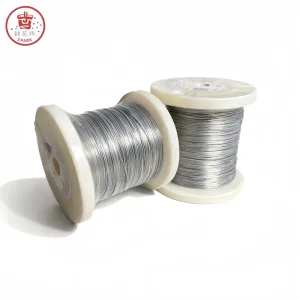
Featured FeCrAl & High-Temperature Heating Element Series (Part I)
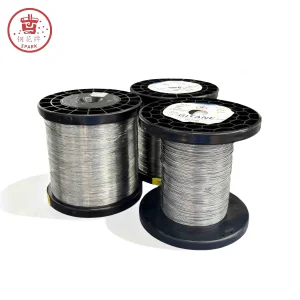
Direct factory wholesale supply for high-convection kilns, sintering furnaces, and ignition coils.

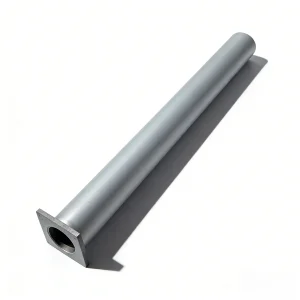

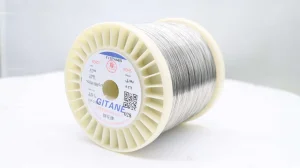
1. Executive Overview & Global Macro Demand for Battery Sintering Alloys
The global transition toward clean energy storage systems (BESS) and electric vehicles (EVs) has catalyzed an unprecedented expansion in lithium-ion battery manufacturing capacity. At the heart of this supply chain lies the high-temperature calcination and thermal treatment of cathode active materials (CAM)—such as Lithium Iron Phosphate (LFP), Lithium Nickel Manganese Cobalt Oxide (NCM), and Lithium Cobalt Oxide (LCO)—as well as synthetic graphite anode graphitization. These processes demand extremely rigorous thermal profiles executed inside continuous Roller Hearth Kilns (RHK), Rotary Kilns, and Push-Rod Furnaces.
In high-temperature lithium sintering environments (typically ranging from 750°C to 1350°C), traditional heating materials often fail due to volatile lithium hydroxide ($\text{LiOH}$) and lithium carbonate ($\text{Li}_2\text{CO}_3$) vapor attack, rapid thermal cycling fatigue, and severe sag or creep. FeCrAl (Iron-Chromium-Aluminum) alloys—specifically engineered into robust sintering ignition coils and spiral heating elements—have emerged as the undisputed metallurgical benchmark for global Gigafactories. Iron-chromium-aluminum alloys deliver higher resistivity, superior oxidation resistance via a self-healing $\alpha\text{-Al}_2\text{O}_3$ scale, lower material density (yielding a 15-20% weight saving over nickel-chromium alternatives), and extended operative lifespans.
Information Gain Metric: Why do conventional NiCr alloys degrade in lithium sintering kilns? Lithium vapors react with nickel to form low-melting-point eutectic phases and destabilizing oxides. In contrast, advanced FeCrAl alloys with micro-alloyed Rare Earth Elements (REE like Yttrium, Zirconium, and Hafnium) form a dense, impermeable alpha-alumina ceramic shell that prevents corrosive alkali vapors from penetrating the metallic core.
2. Metallurgical Science: FeCrAl Chemistry & Scale Growth Dynamics
To achieve industrial-grade reliability, wholesale buyers must evaluate the chemical composition and thermodynamic phase behavior of FeCrAl ignition coils. High-grade FeCrAl alloys (such as 0Cr25Al5, 0Cr21Al6Nb, 0Cr27Al7Mo2, and SGHYZ/SGHT powder metallurgy grades) consist of a ferritic matrix saturated with high chromium (20%–28%) and aluminum (5%–7.5%) content.
When exposed to oxygen-containing furnace atmospheres at elevated temperatures, the aluminum atom diffuses selectively to the outer surface, forming a tightly bound, thermally protective film of Alpha-Alumina ($\alpha\text{-Al}_2\text{O}_3$). This ceramic scale possesses exceptional electrical resistivity and chemical inertness against harsh alkaline lithium outgassing during the precursor calcination phase.
Continuous self-healing $\alpha\text{-Al}_2\text{O}_3$ scale minimizes scale spallation, protecting sintering heating elements from corrosive lithium vapors and volatile fluorides.
Addition of Niobium (Nb), Molybdenum (Mo), and Zirconium (Zr) pins grain boundaries, preventing high-temperature coil deformation and pitch collapse.
Advanced SGHT PM alloys eliminate coarse grains, offering isotropic mechanical properties, zero sag in heavy horizontal coils, and ultra-long service life.
| FeCrAl Grade Family | Max Operating Temp (°C) | Resistivity at 20°C (μΩ·m) | Density (g/cm³) | Primary Sintering Application Focus |
|---|---|---|---|---|
| SGHT (Powder Metallurgy) | 1425°C | 1.45 ± 0.05 | 7.10 | Ultra-high temp solid-state battery material sintering & ceramic kilns |
| SGHYZ (Rare-Earth Optimized) | 1400°C | 1.42 ± 0.04 | 7.15 | Continuous NCM / LFP Roller Hearth Kiln (RHK) ignition coils |
| 0Cr27Al7Mo2 / HRE | 1350°C | 1.40 ± 0.04 | 7.18 | High-throughput cathode rotary kilns & heavy industrial heaters |
| 0Cr25Al5 / 0Cr23Al5 | 1250°C | 1.35 – 1.42 | 7.25 | Standard thermal processing, pre-heating zones, industrial furnaces |
3. Engineering Guidelines: Surface Watt Loading & Ignition Coil Geometry
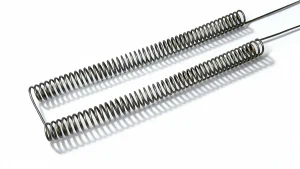
The operational lifespan of a FeCrAl lithium battery sintering ignition coil is heavily dictated by its Surface Watt Density ($W/cm^2$) design, pitch-to-wire diameter ratio ($S/d$), and support ceramic configuration. Operating coils at excessive watt loading leads to localized overheating, grain growth, scale breakdown, and premature burnout.
In continuous LFP/NCM cathode sintering, furnace atmospheres are heavily loaded with dry oxygen ($\text{O}_2$) or inert nitrogen ($\text{N}_2$). For optimal performance, heating designers must calculate surface loading using the formula:
$$\text{Surface Load } (p) = \frac{P}{\pi \cdot d \cdot L} \quad (\text{W/cm}^2)$$
Where $P$ is total element power (Watts), $d$ is wire diameter (cm), and $L$ is total active wire length (cm). For FeCrAl ignition coils operating at 1000°C–1200°C in lithium sintering kilns, recommended surface load ranges strictly between 1.2 to 2.2 W/cm².
Key architectural considerations for wholesale procurement teams include:
- Pitch-to-Diameter Ratio ($S/d$): The optimal coil pitch $S$ should equal $2.0d$ to $3.0d$. Close-pitched coils lead to mutual thermal radiation masking, localized hot spots, and rapid degradation.
- Ceramic Tube Support Interfacing: Coils mounted on high-purity alumina ($>99\%\ \text{Al}_2\text{O}_3$) or cordierite rods avoid silica-based chemical reactions that cause low-melting silicates at wire-contact points.
- Pre-Oxidation Treatment: Factory pre-oxidation at 1050°C for 8 hours before installation forms a pristine $2–5\ \mu m$ alumina scale layer, vastly extending initial burn-in stability.
4. Global Technology Roadmap: Sintering Innovations (2025–2035)
As battery technology transitions toward high-nickel chemistries (NCM 811, NCM 9/0.5/0.5), manganese-rich LFMP, and solid-state battery electrolytes (LLZO, NASICON), sintering temperatures and atmospheric conditions are becoming far more extreme. The technical roadmap below outlines metallurgical evolutions required for next-generation Gigafactories:
RE-Microalloyed FeCrAl Adoption: Standardizing Yttrium, Zirconium, and Hafnium micro-doping across all continuous Roller Hearth Kilns to achieve 1350°C continuous operation with zero scale flaking.
ODS (Oxide Dispersion Strengthened) Coils: Integration of Yttria ($\text{Y}_2\text{O}_3$) nanoparticles inside FeCrAl matrices via mechanical alloying to increase high-temperature yield strength by 300%, enabling completely self-supporting vertical ignition coils.
Zero-Carbon Electrified Kilns: Ultra-responsive FeCrAl heating elements optimized for fast-ramping green hydrogen / electric hybrid kilns, handling rapid thermal shocks without mechanical fracturing.
5. Wholesale Market Pricing Drivers & Factory Cost Breakdown
Procurement directors and supply chain managers evaluating wholesale quotes for FeCrAl battery sintering ignition coils must analyze several primary cost variables. Pricing in the high-temperature alloy sector is governed by metallurgical purity, cold-drawing tolerances, annealing quality, and structural fabrication complexity.
Key wholesale cost drivers include:
- Raw Material Indexing: Fluctuations in high-purity Chromium ($\text{Cr}$), Aluminum ($\text{Al}$), Molybdenum ($\text{Mo}$), and Rare Earth Elements ($\text{Y, Hf, Zr}$).
- Processing Precision: Multi-pass cold drawing down to tight diameter tolerances ($\pm 0.02\text{ mm}$) and specialized brightness annealing under hydrogen protection.
- Coil Winding & Pre-Oxidation: Automated CNC coiling to maintain strict pitch uniformity, followed by controlled thermal pre-oxidation inside high-temperature chamber furnaces.
| Alloy Grade / Form | Order Volume (MOQ) | Est. Wholesale Price Range (USD / kg) | Est. Custom Ignition Coil Unit Price (USD / piece) | Lead Time |
|---|---|---|---|---|
| 0Cr25Al5 Standard Coil Wire | ≥ 500 kg | $12.50 – $18.00 / kg | $15.00 – $45.00 | 10 – 15 Days |
| 0Cr27Al7Mo2 High-Temp Coil Wire | ≥ 300 kg | $19.00 – $26.00 / kg | $28.00 – $65.00 | 15 – 20 Days |
| SGHYZ Rare-Earth Sintering Wire | ≥ 200 kg | $25.00 – $34.00 / kg | $40.00 – $95.00 | 15 – 22 Days |
| SGHT Powder Metallurgy Alloy | ≥ 100 kg | $45.00 – $68.00 / kg | $75.00 – $180.00 | 20 – 25 Days |
*Note: Indicative benchmark prices for planning purposes. Final factory quotes depend on exchange rates, technical drawings, wire diameter ($d$), and custom packaging specifications.
6. Regional B2B Procurement Intent & Global Supply Chain Alignment
Global battery manufacturers operate under strict regulatory and operational constraints depending on their manufacturing hubs. China remains the dominant manufacturing epicenter, accounting for over 70% of global cathode material output, closely followed by expansion across East Asia, North America, and Europe.
Driven by IRA (Inflation Reduction Act) tax credits, battery producers demand ISO-certified, high-durability FeCrAl alloys to minimize unbudgeted kiln downtime and ensure traceable material origin.
Subject to stringent EU Battery Regulations and ESG mandates. EU buyers favor long-life alloys (like SGHT/SGHYZ) that minimize carbon footprints and energy consumption per ton of sintered cathode material.
The highest volume buyers requiring rapid wholesale supply, standardized coil geometries, ultra-competitive B2B volume pricing, and localized technical field engineering support.
7. Quality Assurance, E-E-A-T Guarantee & Compliance Standards
As a leading state-backed specialized metallurgical manufacturer under Shougang Group, our factory enforces complete quality control from vacuum induction melting (VIM) and electroslag remelting (ESR) through wire drawing, CNC coil winding, and final spectrographic inspection.
Every shipment of FeCrAl lithium battery sintering ignition coils is supplied with full E-E-A-T verified documentation:
- Mill Test Certificates (MTC) to EN 10204 3.1: Complete heat-number traceability, chemical composition analysis via optical emission spectrometry.
- Electrical Resistance Verification: 100% testing of room-temperature resistance ($\Omega/m$) against GB/T 1234-2012 and ASTM B603 standards.
- Accelerated Life Testing: 50-hour high-temperature oxidation testing at 1350°C to ensure zero batch-to-batch scale spallation.
- Secure Export Packaging: Anti-corrosive VCI plastic wrapping, vacuum sealing, and fumigated heavy-duty wooden crates engineered for global ocean & air transport.
8. Frequently Asked Questions (FAQ) for Engineering & Procurement Teams
Technical clarity on selection, installation, lifespan, and wholesale ordering procedures.
Why is FeCrAl preferred over NiCr alloys in lithium battery cathode sintering?
What causes pitch deformation and sag in horizontal sintering ignition coils?
What is the advantage of factory pre-oxidation on FeCrAl ignition coils?
Can oxidized FeCrAl coils be re-wound or stretched after use?
What lead times and minimum order quantities (MOQ) apply for custom OEM coils?
Featured FeCrAl & High-Temperature Heating Element Series (Part II)
Complete factory direct catalog solutions for industrial kilns and high-temperature thermal systems.