
Industrial FeCrAl & NiCr Heating Elements & Resistance Wires
Direct factory supply featuring high-resistivity, oxidation-resistant alloys engineered for extreme thermal environments up to 1425°C.
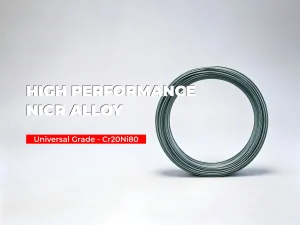
China Cr20Ni80 Nickel Chromium Heating Wire Factory Direct
View Specifications
China Cr15Ni60 High Temp Oxidation Resistant Alloy Wire
View Specifications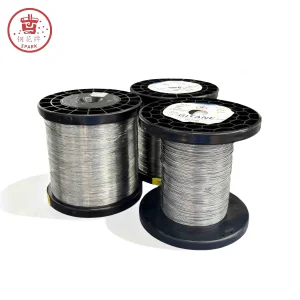
Wholesale Ultra-High Temperature SGHT Wire for 1420°C Elements
View Specifications
Wholesale High-Quality Electric Heating Tubes from China Factory
View Specifications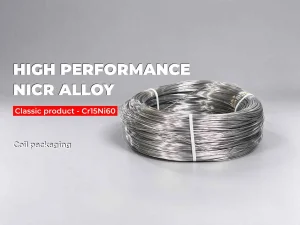
China Cr15Ni60 Nickel-Chromium-Iron Wire for 1150°C Resistance
View Specifications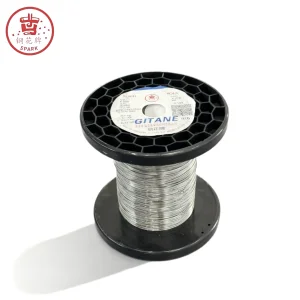
Wholesale 1400°C High Temperature Resistance Wire - SGHYZ
View Specifications
China GITANE Customized Industrial Furnaces & Solutions
View Specifications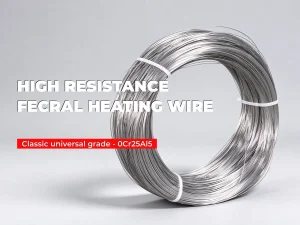
Wholesale 0Cr25Al5 FeCrAl High Temp Industrial Heating Wire
View SpecificationsFeCrAl Alloys: The Metallurgical Backbone of High-Temperature Thermal Processing
Understanding the material physics, thermodynamic oxidation kinetics, and structural advantages of Iron-Chromium-Aluminum heating elements in modern industrial applications.
Thermodynamic Protective Oxide Scale ($\alpha\text{-Al}_2\text{O}_3$)
The operational supremacy of FeCrAl (Iron-Chromium-Aluminum) alloys over traditional Nickel-Chromium (NiCr) conductors stems fundamentally from their surface oxidation chemistry. When heated above 1000°C in oxidizing conditions, FeCrAl alloys spontaneously form an ultra-dense, thermodynamically stable layer of alpha-alumina ($\alpha\text{-Al}_2\text{O}_3$).
This ceramic scale acts as a chemical barrier against aggressive atmospheric oxygen, sulfur, and carbonaceous contamination. Unlike the chromium oxide ($\text{Cr}_2\text{O}_3$) scale generated on NiCr wires—which volatilizes at temperatures exceeding 1200°C—the $\alpha\text{-Al}_2\text{O}_3$ layer maintains electrical insulation and physical adherence up to 1425°C, suppressing further metal consumption and preventing catastrophic element thermal runaway.
Economic & Weight Efficiency Metrics
From an engineering and procurement standpoint, FeCrAl alloys provide a significant double-benefit regarding mass density and electrical resistivity:
- Lower Density: FeCrAl alloys possess a density of ~7.10 g/cm³, compared to ~8.40 g/cm³ for NiCr 80/20. This 15% reduction in mass translates directly into lighter heating element assemblies and reduced structural support requirements.
- Higher Specific Resistivity: Standard FeCrAl grades (e.g., 0Cr25Al5, 0Cr21Al6Nb) deliver resistivity ratings between 1.35 and 1.45 μΩ·m, whereas NiCr alloys average 1.09 μΩ·m. Higher resistivity permits larger wire cross-sectional diameters for a given resistance value, drastically increasing element service life.
Strategic Sourcing: Why Leading OEMs Partner with China FeCrAl Factories
Combining state-of-the-art vacuum induction melting, precision micro-wire drawing, and rigorous national metallurgical standards (GB/T 1234-2012).
Integrated Metallurgy & Smelting
China's premier FeCrAl manufacturing centers utilize fully integrated production lines—starting from Vacuum Induction Melting (VIM) and Electroslag Remelting (ESR) to hot rolling and continuous cold drawing. This vertical integration guarantees precise chemical composition control, eliminating trace impurities like sulfur and phosphorus that degrade high-temperature life.
Powder Metallurgy (PM) Mastery
Advanced Chinese manufacturers have mastered Powder Metallurgy (PM) techniques to produce next-generation FeCrAl grades such as SGHT and SGHYZ. By consolidating atomized alloy powders under High Vacuum Hot Isostatic Pressing (HIP), PM alloys eliminate high-temperature creep and sag, enabling vertical element hanging up to 1425°C.
Quality Control & Standard Compliance
Wholesale FeCrAl elements manufactured in top Chinese facilities comply stringently with international and domestic quality codes, including GB/T 1234-2012, ASTM B603, and DIN 17472. Fully equipped laboratories perform routine spectral analysis, laser micrometric tolerance testing, and 50-hour accelerated high-temperature life tests prior to export.
Comparative Technical Specifications: FeCrAl vs. NiCr Alloys
Comprehensive metallurgical properties to guide furnace design engineers and international B2B buyers in selecting optimal resistance alloys.
| Alloy Grade | Alloy Family | Max Temp (°C) | Resistivity (μΩ·m) | Density (g/cm³) | Primary Industrial Applications |
|---|---|---|---|---|---|
| SGHT / SGHYZ | FeCrAl (PM) | 1400°C - 1425°C | 1.45 | 7.10 | Semiconductor diffusion, ceramic sintering, high-temp kilns |
| 0Cr25Al5 | FeCrAl Standard | 1250°C | 1.42 | 7.10 | Industrial heat treatment furnaces, radiant tube heaters |
| 0Cr23Al5 | FeCrAl Standard | 1250°C | 1.35 | 7.25 | Kiln heating elements, domestic electrical heating tubes |
| HRE | FeCrAl Rare-Earth | 1350°C | 1.45 | 7.10 | Powder metallurgy furnaces, heavy-duty industrial kilns |
| Cr20Ni80 | NiCr 80/20 | 1200°C | 1.09 | 8.40 | Precision medical heaters, appliances, cycling industrial elements |
| Cr15Ni60 | NiCr 60/15 | 1150°C | 1.12 | 8.20 | Medium-temperature processing, heating resistors, night storage heaters |
Macro-Level Applications & Industry Integration
How tailored FeCrAl heating element geometries solve complex thermal engineering challenges across critical high-tech manufacturing sectors.
Photovoltaic & Semiconductor Manufacturing
In solar cell production and silicon ingot growth furnaces, temperature uniformity within ±1°C is crucial. FeCrAl heating elements configured as ceramic bundle rods and coiled radiant tubes supply steady, contamination-free radiant heat. Their superior resistance to thermal fatigue prevents structural distortion, safeguarding multi-million-dollar cleanroom thermal processing runs.
Lithium Battery Cathode Material Sintering
The rapid growth of the electric vehicle (EV) sector demands massive production of NCM and LFP cathode active materials. Roller Hearth Kilns (RHK) operating continuously between 800°C and 1150°C rely on custom-wound FeCrAl spiral wire coils. FeCrAl elements resist oxidation and alkaline vapor corrosion released during precursor calcination, delivering extended campaign life.
Automotive Heat Treatment & Component Hardening
Modern automotive gearboxes, bearings, and drive shafts require precise carburizing, nitriding, and annealing. Heavy-gauge FeCrAl strip elements (corrugated or meander ribbon) mounted on ceramic hooks provide optimal surface load distribution ($W/\text{cm}^2$), minimizing hotspots while ensuring efficient heat transfer in continuous mesh belt furnaces.
Advanced Ceramics & Technical Glass Processing
Sintering structural ceramics ($\text{ZrO}_2, \text{Al}_2\text{O}_3$) and bending automotive glass demands operation near maximum alloy thermal limits. Ultra-high-temperature FeCrAl grades (such as SGHT and SGHYZ) deliver outstanding mechanical stability at 1350°C–1425°C, providing a robust, cost-effective alternative to costly Silicon Carbide (SiC) elements.
Global Procurement Methodology: Calculating Surface Load & Element Geometry
How international procurement directors and furnace engineering teams optimize element longevity through precise mechanical and electrical design.
1. Surface Load ($W/\text{cm}^2$) Optimization
Surface load represents the electrical power dissipated per unit area of wire surface ($p = \frac{P}{\pi \cdot d \cdot L}$). Operating at excessive surface load accelerates local overheating and scale spallation. For FeCrAl in industrial heat-treatment furnaces, recommended surface loads range between $1.5 \text{ W/cm}^2$ and $2.8 \text{ W/cm}^2$, depending on furnace atmosphere and operating temperature.
2. Atmosphere Correction Factors
Furnace atmosphere heavily influences element maximum operating temperature. While clean air permits operation up to 1400°C for SGHYZ, nitrogen ($\text{N}_2$) atmospheres lower the maximum threshold to ~1200°C due to nitridation. Carburizing gases require pre-oxidation of FeCrAl elements to form a complete $\alpha\text{-Al}_2\text{O}_3$ barrier prior to gas introduction.
3. Wire Diameter & Pitch Ratios
To avoid mutual thermal radiation blocking in coiled spiral elements, the ratio of coil outer diameter ($D$) to wire diameter ($d$) should ideally sit between $5:1$ and $8:1$. Furthermore, the pitch ($S$) between adjacent turns should equal $2d$ to $3d$, optimizing radiant heat output while preserving mechanical integrity.
High-Performance Alloys & Custom Fabricated Heating Elements
Explore factory-direct resistance solutions tailored for custom industrial furnace builds and high-temperature replacement projects.
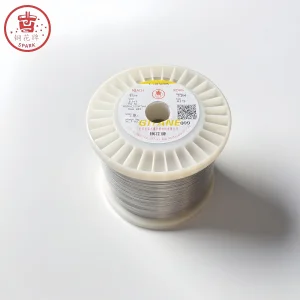
China High-Performance Cr20Ni80S Electric Heating Alloy Wire
View Specifications
China 0Cr23Al5 High Resistance Electric Heating Alloy Wire
View Specifications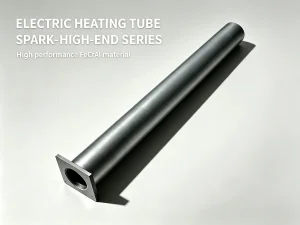
Wholesale Ultra-High Temperature 1425°C FeCrAl Heating Tube
View Specifications
China High-Quality Custom Electric Heating Tube Assemblies
View Specifications
China High-Quality Cr15Ni60 Durable Electric Heating Alloy Wire
View Specifications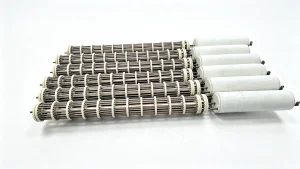
China SPARK Ceramic Bundle Rod Radiant Tube Heating Core
View Specifications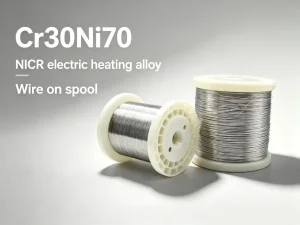
Wholesale High-Temperature Cr30Ni70 Resistance Alloy Wire
View Specifications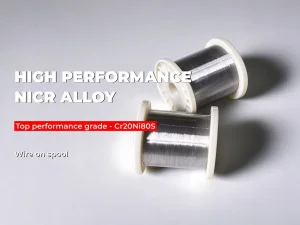
China Cr20Ni80S Nickel Chromium Heating Wire 1200°C High Temp
View SpecificationsFrequently Asked Questions for B2B Enterprise Procurement
Direct answers to technical questions raised by global furnace builders, quality managers, and industrial procurement agents.