
Primary Electrothermal Product Catalog & Factory Direct Quotes (Part I)
Verified factory supply solutions optimized for chemical stability, continuous thermal stress tolerance, and surface oxide scale integrity.
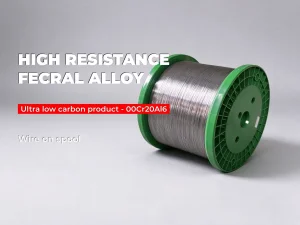
China Ultra Low Carbon 00Cr20Al6 FeCrAl Heating Alloy | China Suppliers & Factory for High-Performance Heating Applications Suppliers, Pricelist
View Product Specs & Pricelist
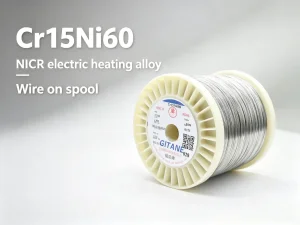
China China Cr15Ni60 High Temp Electric Heating Wire - Quality Suppliers & Factory for Industrial Heating Solutions Manufacturer, Factories
View Product Specs & Pricelist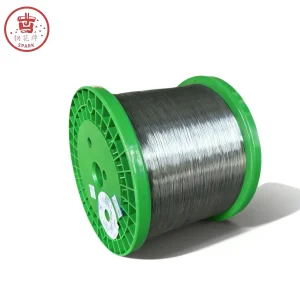
China High-Performance SPARK 0Cr20Al6 Heating Wire 1350℃ - China Suppliers & Factory for Electrothermal Applications Factory, Pricelist
View Product Specs & Pricelist
China High-Temperature Cr30Ni70 Alloy Wire - Durable 50 Hours @ High Temp | China Suppliers & Factory Manufacturer, Pricelist
View Product Specs & Pricelist
Wholesale High-Quality NiCr & FeCrAl Electric Heating Elements - China Suppliers and Factory Solutions Suppliers, Pricelist
View Product Specs & Pricelist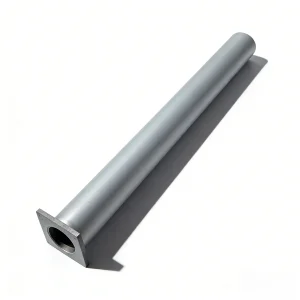
China High-Quality Electric Heating Tubes from China Suppliers - Efficient Heating Solutions by Factory Supplier, Pricelist
View Product Specs & Pricelist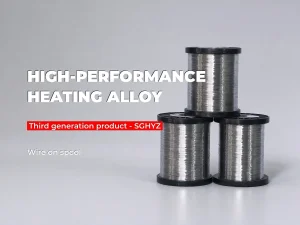
Wholesale SGHYZ Resistance Heating Wire | Premium FeCrAl Alloy for 1400°C High-Temperature Industrial Service Supplier, Suppliers
View Product Specs & PricelistThermodynamic Principles of Matrix Substrate Isolation from Oxidative Atmospheres
How self-healing passivating oxide scales ($\alpha\text{-Al}_2\text{O}_3$ and $\text{Cr}_2\text{O}_3$) protect core metallic structures against catastrophic high-temperature oxidation.
In high-temperature industrial electric heating applications operating between 800°C and 1425°C, the service lifespan of resistance heating alloys depends strictly on their capacity to form a thermodynamically stable, continuous, and non-porous protective oxide scale. The core engineering objective is the effective isolation of the internal alloy substrate matrix from direct contact with oxidative atmospheres containing $O_2$, $H_2O$, $CO_2$, or sulfur-bearing gases.
When exposed to elevated temperatures, iron-chromium-aluminum (FeCrAl) and nickel-chromium (NiCr) alloys undergo selective oxidation. Rather than allowing oxygen anions to penetrate deep into the metallic bulk—which causes rapid embrittlement and destructive internal oxidation—these specialized alloys transport specific constituent elements (Aluminum or Chromium) toward the outer surface. This selective transport forms a sub-micron to micron-thick ceramic layer that acts as a physical kinetics barrier against further chemical transport.
Alpha-Alumina ($\alpha\text{-Al}_2\text{O}_3$) Scale Dynamics
FeCrAl alloys rely on aluminum diffusion to synthesize a thermodynamically ultra-stable $\alpha\text{-Al}_2\text{O}_3$ scale at temperatures above 1000°C. This film exhibits an extremely low parabolic oxidation rate constant ($k_p$), rendering it virtually impermeable to oxygen ions and isolating the iron-rich core substrate from ambient thermal degradation.
Chromia ($\text{Cr}_2\text{O}_3$) Passivation in NiCr Alloys
Nickel-chromium alloys synthesize a tenacious chromia scale. While effective up to 1200°C in standard air, chromia scales are preferred in applications requiring high ductility post-heating, high hot strength, and resistance to cyclic thermal shock where spallation resistance is paramount.
Pilling-Bedworth Ratio (PBR) & Adhesion
A critical factor in isolating the substrate matrix is maintaining a favorable Pilling-Bedworth Ratio ($1.2 < PBR < 2.0$). If the volumetric expansion of the oxide layer relative to the consumed metal is correctly engineered through rare-earth micro-alloying (Y, Zr, Hf), compressive stress is optimized, preventing scale buckling or spallation.
| Alloy Grade | Alloy System | Max Operating Temp (°C) | Primary Oxide Barrier | Resistivity at 20°C ($\mu\Omega\cdot\text{m}$) | Matrix Protection Efficiency |
|---|---|---|---|---|---|
| SPARK SGHT | FeCrAl (Powder Metallurgy) | 1425°C | Dense $\alpha\text{-Al}_2\text{O}_3$ + Reactive Element Dispersion | 1.45 | Maximum (Zero Creep Spallation) |
| SPARK SGHYZ | FeCrAl (Ultra-High Temp) | 1400°C | Continuous $\alpha\text{-Al}_2\text{O}_3$ Film | 1.42 | Superior Surface Isolation |
| 00Cr20Al6 | Ultra Low Carbon FeCrAl | 1350°C | High-Purity $\alpha\text{-Al}_2\text{O}_3$ Scale | 1.38 | High Resistance to Carburization |
| Cr20Ni80 | Nickel-Chromium 80/20 | 1200°C | Adherent $\text{Cr}_2\text{O}_3$ Film | 1.09 | Excellent Hot Mechanical Ductility |
| Cr30Ni70 | Nickel-Chromium 70/30 | 1250°C | Enhanced $\text{Cr}_2\text{O}_3$ Scale | 1.18 | High Green Rot Resistance |
| Cr15Ni60 | Nickel-Chromium-Iron | 1150°C | Mixed Chromia-Iron Oxide Scale | 1.11 | Cost-Effective Cyclic Protection |
Technical Roadmap & Future Metallurgy Outlook
Advancing beyond conventional melt casting toward powder-metallurgy micro-alloying and oxide dispersion strengthened (ODS) architectures.
Phase I: Micro-Alloying
Reactive Element Effect (REE) Doping
Integration of trace Yttrium (Y), Cerium (Ce), and Zirconium (Zr) into FeCrAl matrices to neutralize sulfur impurities at grain boundaries. This prevents sulfur segregation, eliminating interfacial void formation and ensuring 100% scale adhesion during severe thermal cycling.
Phase II: Powder Metallurgy
Rapid Solidification SGHT Series
Utilizing gas-atomized powder metallurgy to fabricate homogeneous FeCrAl alloys free from macro-segregation. Powder-metallurgy processing significantly enhances creep resistance at temperatures above 1300°C, enabling elements to maintain structural geometry without sagging.
Phase III: Nanoscale Oxide Dispersion
ODS High-Temperature Substrates
Dispersing nano-scale yttrium oxide ($Y_2O_3$) particles uniformly throughout the metallic matrix. These oxide nanoparticles pin dislocation movements, dramatically increasing long-term stress-rupture strength and optimizing the kinetic growth rate of outer passivating scales.
Phase IV: Smart Passivation
Self-Healing Dynamic Film Architectures
Developing next-generation smart electrothermal alloys capable of localized self-healing when mechanical abrasion or chemical attack ruptures the protective alumina layer, restoring matrix isolation within minutes of oxidative exposure.
Localized Industrial Application Scenarios
Engineered resistance alloys customized for critical process equipment requiring complete substrate protection against aggressive process gases.
Semiconductor & Solar Photovoltaic Wafer Processing
Diffusion furnaces and LPCVD reactors operate under strict cleanliness standards at elevated temperatures. Ultra-low carbon FeCrAl alloys (such as 00Cr20Al6 and SGHT) form an imperative $\alpha\text{-Al}_2\text{O}_3$ layer that isolates the core matrix, completely stopping metallic particulate flaking and heavy metal contamination during silicon wafer oxidation and doping cycles.
Lithium-Ion Battery Cathode Calcination Kilns
Continuous roller hearth kilns (RHK) calcining lithium iron phosphate (LFP) or nickel-manganese-cobalt (NMC) cathode materials generate highly corrosive chemical vapors. SPARK SGHYZ wire coils provide a dense protective oxide layer that blocks lithium vapor infiltration, preventing catastrophic green rot and matrix embrittlement.
Automotive Precision Heat Treatment & Nitriding
Carburizing, carbonitriding, and bright annealing furnaces operate under carbon-rich or dissociated ammonia ($H_2/N_2$) atmospheres. Specialized NiCr alloys (such as Cr20Ni80) and rare-earth FeCrAl alloys ensure the core metal is completely shielded from carbon ingress, avoiding internal carbide precipitation and premature fracture.
Ceramic Kilns & Industrial Glass Bending
High-temperature glass annealing and technical ceramic sintering require precise thermal homogeneity up to 1400°C. SPARK FeCrAl spiral elements deliver stable electrical resistance throughout their operating life, minimizing voltage adjustments while isolating internal alloy grains from thermal oxidation.
China Supply Chain Resilience & Fully Integrated Factory Capabilities
Backed by Shougang Group's century-long metallurgical heritage, providing world-class quality assurance, end-to-end traceabilty, and scale economics.
Full-Process Vertical Integration
From Electric Arc Furnace (EAF) melting, Vacuum Induction Melting (VIM), Argon Oxygen Decarburization (AOD) refining, to hot rolling, cold drawing, micro-wire drafting, and hydrogen atmosphere annealing—every process step is executed within our state-of-the-art facility in Beijing.
Strict Quality Assurance Protocols
Operating under ISO 9001:2015 and ISO 14001 certified management systems. Every heat undergoes spectrographic chemical analysis, laser digital dimensional tolerance checking, continuous resistance testing, and high-temperature accelerated oxidation life testing according to GB/T 1234-2012 standards.
Global Logistics & Strategic Reserve Stocks
Maintain large strategic reserves of high-purity raw materials (Electrolytic Nickel, Chromium metal, High-purity Aluminum). Our automated warehousing infrastructure guarantees rapid turnaround for standard wire diameters (0.10mm to 10.0mm) and strip dimensions, eliminating lead-time vulnerabilities for global OEMs.
60+
Years Metallurgical Expertise
88,000m²
Factory Floor Footprint
1425°C
Max Operating Rating
100%
Heat Traceability & MTR
Global Commercial Landscape: Total Cost of Ownership (TCO) Optimization
Why leading global furnace manufacturers and thermal process engineering companies are transitioning to direct China factory sourcing for high-temperature resistance materials.
In the global market for industrial electrothermal heating materials, procurement executives face a dual challenge: maintaining strict technical compliance for thermal process continuity while reducing operational expenditure. Traditional European and Japanese suppliers often impose substantial brand markups and extended delivery lead times.
By leveraging advanced powder metallurgy, ultra-pure raw material selection, and continuous inline annealing, SPARK resistance alloys deliver physical parity and direct dimensional interchangeability with international brand standards (such as Kanthal A1, APM, Nikrothal 80) at a reduced capital outlay.
Extended Element Operating Lifetime
Sustained matrix isolation directly translates to longer component service life. By preventing premature oxide spallation, localized overheating hotspots are eliminated, increasing overall furnace element MTBF (Mean Time Between Failures) by up to 35% in continuous processing kilns.
Lower Density & Weight Reduction
FeCrAl alloys feature a lower density ($\sim 7.10 \text{ g/cm}^3$) compared to NiCr alloys ($\sim 8.40 \text{ g/cm}^3$). When replacing NiCr with high-temperature FeCrAl grades in appropriate thermal environments, furnace designers achieve a significant material weight reduction for identical heating power output.
Direct Wholesale Factory Pricing
Factory-direct supply chains eliminate intermediary distribution markups. Our transparent B2B wholesale pricing structure, tiered volume discounts, and customized packaging options enable furnace builders to maximize operating profit margins without compromising technical specifications.
Technical Support, Compliance & Quality Assurance
Ensuring complete international regulatory compliance, engineering design verification, and comprehensive material certification for seamless integration.
Full Mill Test Certificates (MTR)
Every shipment is accompanied by certified EN 10204 3.1 Mill Test Reports detailing exact heat chemical composition, physical wire dimensions, cold resistance per meter, tensile strength, and elongation performance.
Global Environmental Compliance
Fully compliant with EU RoHS 3 Directive (2015/863/EU) and REACH (EC 1907/2006) regulations. Free from hazardous heavy metals, SVHC substances, and conflict minerals, meeting strict ESG sourcing guidelines.
Custom Thermal & Element Engineering
Our engineering support staff assists clients with surface load calculations ($W/\text{cm}^2$), pitch-to-diameter ratio optimization for spiral elements, wire gauge selection, and terminal rod sizing to prevent localized thermal degradation.
Primary Electrothermal Product Catalog & Factory Direct Quotes (Part II)
High-performance FeCrAl and NiCr heating elements, precision wires, and specialized high-temperature alloy strips.

China China Suppliers Factory Price 2.00mm 0Cr25Al5 16 Heating Elements Wholesale - ISO9001:2005 Certified Factory, Pricelist
View Product Specs & Pricelist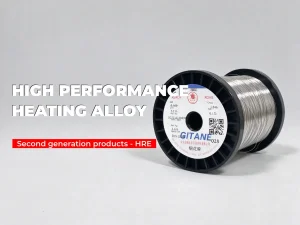
China High-Temperature FeCrAl Heating Alloy HRE 1350℃ - China Suppliers & Factory for Ceramic and Glass Applications Manufacturer, Supplier
View Product Specs & Pricelist
China High-Quality NiCr & FeCrAl Electric Heating Elements from China Suppliers and Factory for Efficient Heating Solutions Supplier, Pricelist
View Product Specs & Pricelist
China High-Quality Cr15Ni60 Electric Heating Wire from China Suppliers - Premium Factory Alloy for Industrial Heating Applications Suppliers, Factory
View Product Specs & Pricelist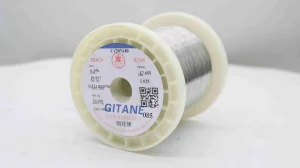
China Cr20Ni40 Nickel Chrome Heating Wire - High Temp Resistance Alloy from China Suppliers and Factory Manufacturers, Pricelist
View Product Specs & Pricelist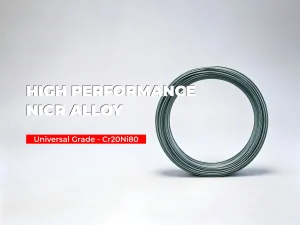
China Cr20Ni80 Nickel Chromium Heating Wire | 80/20 NiCr Resistance Wire for Industrial High-Temperature Heating Manufacturer, Manufacturers
View Product Specs & Pricelist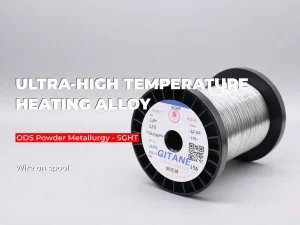
China 1425°C High Temperature FeCrAl Heating Alloy | SPARK SGHT Grade Supplier, Pricelist
View Product Specs & Pricelist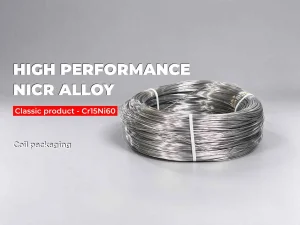
China High-Quality Cr15Ni60 Nickel-Chromium-Iron Heating Wire | China Suppliers & Factory for 1150°C Resistance Manufacturers, Quotes
View Product Specs & PricelistFrequently Asked Questions (FAQ) & Technical Guidance
Addressing key technical inquiries regarding electrothermal alloy selection, oxide scale kinetics, and factory procurement.
How does the alloy matrix effectively isolate itself from an oxidative atmosphere at high temperatures?
The isolation mechanism relies on selective chemical oxidation. At high temperatures (above 900°C), aluminum or chromium atoms within the metal matrix rapidly migrate to the exposed outer surface, reacting with ambient oxygen to form a thin, dense ceramic barrier ($\alpha\text{-Al}_2\text{O}_3$ for FeCrAl, $\text{Cr}_2\text{O}_3$ for NiCr). This uniform ceramic layer acts as a physical diffusion barrier, stopping additional oxygen molecules from reaching the interior unoxidized metallic core and preventing catastrophic oxidation.
What is the difference in temperature capabilities between FeCrAl and NiCr heating alloys?
FeCrAl alloys form an $\alpha\text{-Al}_2\text{O}_3$ scale, allowing them to operate at higher maximum element temperatures up to 1425°C (such as SPARK SGHT grade). NiCr alloys form a $\text{Cr}_2\text{O}_3$ scale, typically rated up to 1200°C–1250°C. However, NiCr alloys retain superior hot mechanical strength and post-use ductility, making them less susceptible to mechanical fracture during cold maintenance shutdowns.
Why is rare-earth element doping (Y, Zr, Hf) vital for high-temperature FeCrAl wire durability?
Rare-earth elements alter the diffusion kinetics of oxygen ions across the oxide layer. Trace amounts of Yttrium and Zirconium neutralize trace sulfur impurities at grain boundaries, preventing sulfur segregation at the oxide-metal interface. This eliminates microscopic interface voids, improving scale adhesion and preventing oxide spallation during rapid heating and cooling cycles.
What parameters are needed to request a formal B2B wholesale factory pricelist?
To obtain an accurate quote and formal pricelist, please specify: (1) Target Alloy Grade (e.g., 0Cr25Al5, Cr20Ni80, SGHYZ), (2) Product Form (round wire, flat strip, or pre-coiled spiral element), (3) Dimensions (diameter/thickness/width in mm), (4) Total quantity in kilograms or meters, and (5) Specific packaging or delivery standards (e.g., DIN spools, coils).
Can SPARK FeCrAl wire be used in reducing or carburizing furnace atmospheres?
Yes, provided the elements are pre-oxidized in clean air at 1050°C–1100°C for 8–12 hours prior to introducing reducing or carbon-bearing gases. Pre-oxidation forms a thick $\alpha\text{-Al}_2\text{O}_3$ layer that prevents carbon atom penetration into the matrix, preventing internal carburization and premature wire embrittlement.