
Featured Industrial Resistance Heating Alloys (Batch 1)
Explore our top-tier wholesale heating wires, strip, and furnace components designed for precise thermal calibration, high resistance, and effortless maintenance.
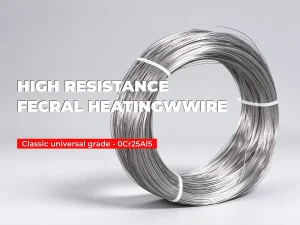
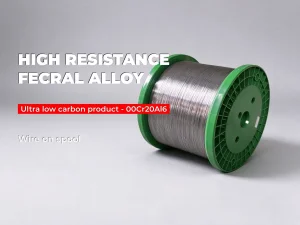


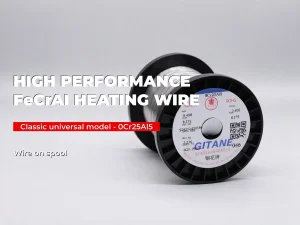


Executive White Paper: Metallurgical Engineering for Industrial Maintainability
In modern high-temperature industrial processing, thermal efficiency and element durability are paramount. However, total operational cost is ultimately determined by ease of maintenance, weldability, and structural readjustment capability.
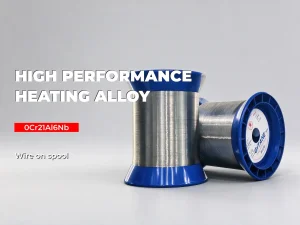
When managing large-scale heat treatment kilns, glass annealing lines, and petrochemical cracking units, heating elements undergo severe thermal stress, surface oxidation, and microstructural coarse grain growth. Traditional FeCrAl alloys often suffer from post-service room-temperature embrittlement, making routine equipment maintenance, readjustment, and localized repairs exceptionally difficult. This white paper examines how advanced alloy formulations—specifically ultra-low carbon FeCrAl (such as 00Cr20Al6), rare-earth reactive-element-doped grades (0Cr25Al5, 0Cr21Al6Nb), and powder metallurgy alloys (SGHT)—facilitate fast equipment maintenance and structural readjustment due to their superior weldability, high hot ductility, and stable oxide scales.
Unlike standard resistance wires that crumble under mechanical deformation after prolonged thermal exposure, modern high-weldability alloys utilize micro-alloying additives such as Yttrium (Y), Zirconium (Zr), and Niobium (Nb) to pin grain boundaries. This microstructural stabilization limits rapid grain coarsening during high-temperature cycles, preserving sufficient post-annealing ductility to enable hot/warm bending, mechanical recalibration, and arc re-welding directly inside the furnace chamber.
Deep Metallurgical Breakdown: Weldability and Hot Ductility
Achieving excellent weldability in Iron-Chromium-Aluminum (FeCrAl) and Nickel-Chromium (NiCr) alloys requires precise control over interstitial carbon, nitrogen, and tramp impurities. When resistance alloys are exposed to operating temperatures exceeding 1100°C, the ferrite matrix of standard FeCrAl undergoes rapid grain growth. Upon cooling, unrefined large grains lower the cleavage fracture toughness, leading to cracking when field technicians attempt to re-align sagged elements or weld replacement leads.
Grain Boundary Pinning Mechanism
By dispersing nanoscale Yt2O3 or ZrC precipitates along grain boundaries, niobium-doped (0Cr21Al6Nb) and SGHT grades retard grain boundary migration. This preserves grain refinement, ensuring superior post-use mechanical integrity and excellent GTAW/TIG re-weldability.
Self-Healing Protective Scale (α-Al2O3)
During welding and hot readjustment, the alloy instantly forms an adherent, highly dense alpha-alumina oxide layer. This scale prevents internal oxidation and carburization, ensuring the repair patch matches the parent wire's thermal performance.
Ultra-Low Interstitial Purity
Specialized vacuum melting (VIM + ESR) keeps carbon and nitrogen content below 0.02% (as in 00Cr20Al6), virtually eliminating hot cracking in weld zones and providing outstanding malleability during cold/warm forming.
Technical Specification & Maintainability Comparison
Choosing the correct alloy grade directly influences furnace servicing protocols. The following matrix details the metallurgical profiles, weldability scores, and readjustment factors for primary industrial alloys:
| Alloy Grade | Composition Breakdown | Max Temp (°C) | Resistivity (μΩ·m) | Weldability Rating | Maintenance & Readjustment Capability |
|---|---|---|---|---|---|
| SGHT (Powder Met) | Fe-Cr-Al + Y, Zr (Dispersion) | 1425°C | 1.45 | Excellent | Superior creep resistance; re-alignment via local heating above 300°C without risk of fracture. |
| 00Cr20Al6 | Fe-20Cr-6Al (Ultra-Low C) | 1280°C | 1.38 | Optimal | Exceptional ductility; cold readjustment and standard TIG butt welding with minimal preheat. |
| 0Cr25Al5 | Fe-25Cr-5Al + RE | 1250°C | 1.42 | High | Standard industrial workhorse; requires localized torch preheating (200–300°C) before bending post-service. |
| 0Cr21Al6Nb | Fe-21Cr-6Al-0.5Nb | 1350°C | 1.45 | High | Nb addition prevents grain growth; facilitates lead terminal re-welding and high sag resistance. |
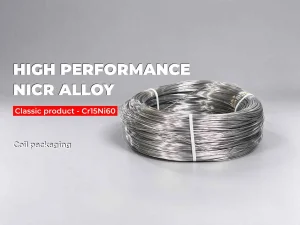
| Cr20Ni80 (Nichrome) | 80Ni-20Cr | 1200°C | 1.09 | Optimal | Retains full room-temperature ductility post-service; ideal for frequent opening, reshaping, and field splicing. |
China Factory Superiority: Shougang Gitane Scale & Metallurgy Precision
When global buyers seek reliable wholesale sources for resistance heating wire and equipment maintenance solutions, China's advanced manufacturing clusters lead the world in vertical integration and quality compliance.
1. Integrated Metallurgical Processing
As a key subsidiary of the state-owned Shougang Group, Beijing Shougang Gitane New Materials Co., Ltd. controls the entire production chain: Vacuum Induction Melting (VIM), Electroslag Remelting (ESR), precision hot rolling, continuous wire drawing, and bright hydrogen annealing. This total supply control guarantees batch-to-batch chemical homogeneity and exact resistance tolerance (±3%).
2. Advanced Powder Metallurgy Capabilities
Producing super-temperature alloys like SGHT (rated to 1425°C) requires powder metallurgy equipment capable of uniform micro-dispersion. China’s state-of-the-art facilities produce dense billet preforms that deliver up to 30% longer creep life than conventional ingot-cast alloys, reducing equipment sagging and maintenance frequency.
3. Wholesale Economy of Scale & Rapid Logistics
Spanning over 88,000 square meters, our manufacturing hub supplies hundreds of metric tons of resistance wire, flat ribbon, and pre-coiled heating spirals annually. Global OEMs benefit from direct factory pricing, expedited sea/air shipping, custom spooling, and full Mill Test Certificates (MTC) with trace heat numbers.
Macro Industry Solutions & Localized Application Scenarios
From clean energy transition to semiconductor manufacturing, facilitating quick furnace maintenance and element readjustment directly protects operational profitability.
Petrochemical & Energy Processing
High-performance SGHT steel tubes and radiant heating elements operate in aggressive carburizing and sulfur-bearing atmospheres. Weldable alloys enable rapid field splicing during scheduled shutdowns, eliminating weeks of factory re-ordering delay.
Photovoltaic & Semiconductor Diffusion
Continuous monocrystalline silicon growth furnaces demand stringent thermal uniformity across 1300°C chambers. High-purity FeCrAl elements prevent particle shedding while allowing maintenance teams to recalibrate spacing precisely.
Automotive Heat Treatment & EV Battery
Roller-hearth and mesh-belt furnaces for gear carburizing and lithium battery cathode sintering rely on spiral heating elements. The alloy's excellent weldability allows local coil replacement without dismantling entire ceramic support banks.
Field Guide: Equipment Maintenance, Mechanical Readjustment & Welding
To maximize the operational life of high-temperature heating elements and maintain furnace geometry, plant technicians should adhere to the following engineered maintenance protocol:
Step 1: In-Situ Inspection & Thermal Pre-Conditioning
Prior to mechanical adjustment of sagged or distorted FeCrAl coils, never apply cold bending force. Heat the affected coil section locally using an oxy-propane torch to a dull cherry-red color (approx. 250°C to 400°C). At this temperature, the ferrite latticeRegains hot plastic flow, allowing reshaping without cracking.
Step 2: Surface Preparation & Oxide Film Removal
When splicing broken elements or joining new lead terminals, mechanically grind off the protective aluminum oxide (α-Al2O3) scale at the joint region using a clean stainless steel wire brush or alumina-grit grinding wheel. Clean white metal contact is essential for electric arc stability.
Step 3: GTAW / TIG Welding Execution
Use Gas Tungsten Arc Welding (TIG) with direct current straight polarity (DCEN). Utilize matching filler metal (e.g., 0Cr25Al5 or 0Cr21Al6Nb wire) or perform autogenous fusion welding for thin wires. Employ 99.999% pure Argon shielding gas to prevent nitrogen absorption and porosity in the weld pool.
Featured Industrial Resistance Heating Alloys (Batch 2)
Complete your furnace supply requirements with our specialized nickel-chromium wires, niobium-stabilized alloys, and pre-formed heating tubes.


Comprehensive Industry Q&A: Procurement, Maintenance & Metallurgy
Get authoritative engineering answers regarding alloy selection, welding techniques, factory certifications, and wholesale procurement parameters.