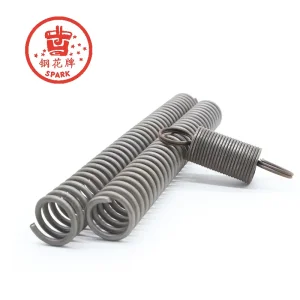
High-Temperature Resistance Alloys & Heating Elements (Batch 1)
Direct factory supply featuring optimized tensile yield, precise micro-alloying, and international standard compliance.

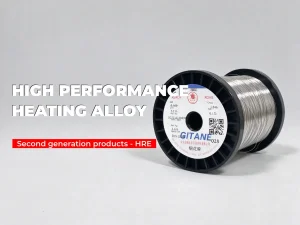

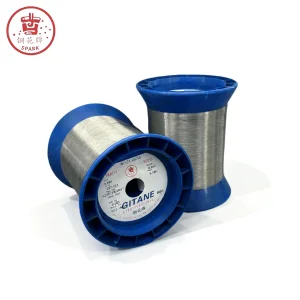
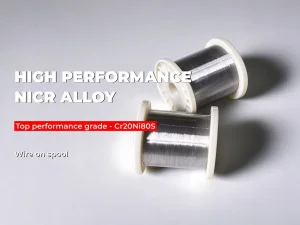

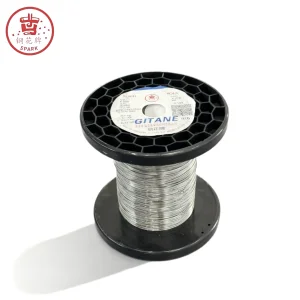
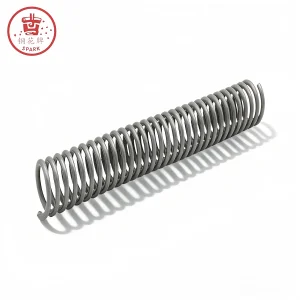
Why Room-Temperature Tensile Strength ≥ 810 MPa Dictates High-Temperature Reliability
In modern industrial thermal systems, mechanical integrity at room temperature directly governs long-term deformation resistance, coiling structural stability, and failure mitigation during violent temperature cycling.
Elimination of Mechanical Sagging
Alloys exhibiting room-temperature tensile strength below 700 MPa frequently suffer from grain boundary sliding when cold-wound into tight pitch coils. By maintaining a threshold of ≥ 810 MPa via cold-drawing micro-refinement, the wire resists permanent elongation, preserving coil pitch uniformity even under rapid thermal ramp speeds.
Constant Thermal-Power Ratio
Temperature fluctuations induce cyclic expansion and contraction. The inclusion of rare-earth elements (such as Yttrium, Zirconium, and Niobium) stabilizes the matrix lattice. This limits resistance drift (ΔR/R) to under 1.5% across 1,000 thermal shock cycles, guaranteeing steady kilowatt output for critical processes.
Adherent Alpha-Al₂O₃ Scale Protection
High tensile strength combined with controlled oxidation metallurgy promotes the growth of a dense, non-spalling surface alumina film. This protective oxide prevents localized hot-spot formation and catastrophic dielectric breakdown in dense industrial furnace linings.
Global Demand Analysis for Thermal-Stable Electric Heating Alloys
As global industries transition toward electrified thermal processing, engineering teams require heating materials capable of enduring unpredictable ambient shifts, continuous power cycling, and harsh chemical atmospheres.
1. Photovoltaic Ingot & Semiconductor Processing
In CZ silicon crystal growth and wafer diffusion tube furnaces, unexpected power fluctuations result in thermal gradient shifts that yield crystal dislocation defects. Alloys with tensile strength ≥ 810 MPa prevent element sagging inside quartz tubes, ensuring uniform radial heat distributions up to 1350°C for months of uninterrupted runs.
2. Lithium Battery Material Calcination
Rotary kilns and roller hearth furnaces producing cathode materials (NCM/LFP) generate corrosive lithium vapor and moisture. High-tensile FeCrAl alloys modified with Niobium form self-healing oxide barriers that resist corrosive vapor attack while sustaining constant power dissipation under high air flow conditions.
3. Industrial Heat Treatment & Metal Powder Sintering
Continuous mesh-belt furnaces operating under protective atmospheres (Endothermic gas, Dissociated Ammonia, Nitrogen-Hydrogen mixtures) experience localized thermal shock when cold metal parts enter the heating zone. High room-temperature yield strength ensures elements do not fracture or shear during high-vibration thermal loads.
4. Automotive Energy Braking & Power Resistor Systems
Off-highway electric vehicles, locomotive braking banks, and renewable grid energy storage systems expose resistors to weather extremes (-40°C ambient to +600°C peak operating state). Stable resistance behavior prevents current spikes and protects upstream IGBT power electronics.
The China Factory Advantage: Scale, Metallurgy Control & Cost-Efficiency
Integrating state-owned steel group metallurgical heritage with modern automated wire-drawing technology to supply global buyers with high-performance alloys at competitive wholesale prices.
Fully Integrated Supply Chain
From raw ferro-alloy selection and vacuum melting to continuous hot-rolling, cold-drawing, and bright annealing, every step is executed within controlled industrial zones. This eliminates intermediary markups and guarantees complete chemical composition traceability.
Precision Tensile & Resistance Tuning
In-line multi-pass diamond drawing dies, paired with laser diameter monitoring, guarantee wire tolerances down to ±0.01 mm. Automated tension-controlled annealing cycles dial in the room-temperature tensile strength to exact customer specs (≥ 810 MPa, ≥ 850 MPa, or custom yield limits).
Rapid Turnaround & Custom Wholesale Packaging
With an annual output of thousands of metric tons, China manufacturing hubs maintain large stocks of master spools, flat ribbons, and pre-coiled elements ready for immediate export shipment with mill test reports (MTR) meeting ISO 9001 and GB/T 1234-2012 standards.
FeCrAl vs. NiCr Grade Comparison for High Thermal Fluctuation Duty
Evaluate key mechanical, electrical, and thermal properties to select the optimal alloy grade for your high-temperature industrial system.
| Alloy Grade | Alloy Family | Room-Temp Tensile Strength (MPa) | Max Operating Temp (°C) | Electrical Resistivity (20°C, μΩ·m) | Density (g/cm³) | Primary Industrial Application |
|---|---|---|---|---|---|---|
| SPARK SGHT | FeCrAl (PM/ODS) | ≥ 850 | 1425 | 1.45 | 7.10 | Semiconductor, Advanced Ceramics |
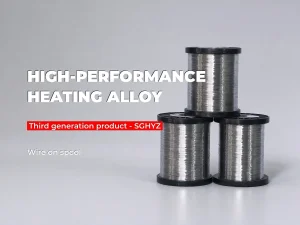
| SGHYZ 1400 | FeCrAl Premium | ≥ 820 | 1400 | 1.42 | 7.10 | High-temp Kilns, Solar Ingot Furnaces |
| HRE 1350 | FeCrAl High-Temp | ≥ 810 | 1350 | 1.40 | 7.15 | Powder Metallurgy, Rotary Calcination |
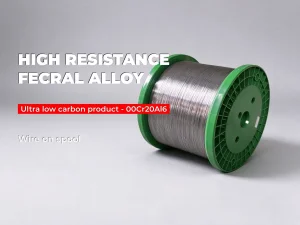
| 0Cr21Al6Nb | FeCrAl Rare-Earth | ≥ 810 | 1300 | 1.38 | 7.15 | Industrial Heat Treatment, Heavy Elements |
| Cr20Ni80S | NiCr Premium | ≥ 750 | 1200 | 1.09 | 8.40 | Precision Appliances, Fast Cycle Furnaces |
| Cr30Ni70 | NiCr High-Chromium | ≥ 780 | 1250 | 1.18 | 8.10 | Corrosive Chemical Heating, Nitrogen Atmospheres |
Application Scenarios & Engineering Case Guidelines
How localized design modifications maximize lifespan and minimize energy draw under demanding operating parameters.
Scenario A: High-Power Radiant Tube Heaters
Design Challenge: Horizontal radiant tubes in steel sheet annealing lines undergo severe sagging due to element weight at 1150°C, causing short-circuit contact with tube walls.
Metallurgical Solution: Standardizing on 0Cr21Al6Nb wire with a room-temperature tensile strength of ≥ 810 MPa provides high initial spring back tension. The fine dispersion of NbC precipitates pins grain boundaries, extending horizontal tube element life from 8 months to over 24 months.
Scenario B: Rapid Cycling Lab & Dental Furnaces
Design Challenge: Fast ramp-up speeds (up to 50°C/min) generate extreme thermal gradient stresses across element cross-sections, resulting in brittle micro-cracking.
Metallurgical Solution: Utilizing SGHYZ wire modified with active Yttrium elements produces a highly ductile grain structure that accommodates thermal stress shocks while maintaining constant kilowatt rating throughout the ramping cycle.
Global Procurement Checklist for Resistance Heating Wire & Elements
Key quality verification steps for supply chain directors, industrial purchasing managers, and furnace engineers.
1. Mechanical Strength Verification
Demand a batch-specific Mill Test Certificate (EN 10204 3.1) displaying verified tensile test data. Ensure room-temperature tensile strength meets or exceeds 810 MPa with uniform elongation to avoid wire breaking during automated winding.
2. Electrical Resistance Uniformity
Specify resistance tolerance within ±3% per meter. Inconsistent resistivity across master coils leads to dangerous hot-spots, unbalanced circuit phases, and early element burnout.
3. Surface Oxide & Cleanliness
Ensure wire surfaces are free from drawing oil residues, deep scratches, or oxidation scale. Clean, bright-annealed or pre-oxidized wire guarantees optimal initial alumina layer formation.
Future Technological Trends in Resistance Heating Alloys
Innovations shaping next-generation industrial electrification, decarbonization, and extreme-temperature processing.
Powder Metallurgy & ODS Alloys
Oxide Dispersion Strengthened (ODS) FeCrAl alloys prepared via mechanical alloying and powder metallurgy elevate high-temperature creep strength by 300%, allowing continuous service up to 1425°C without deformation.
Electrification of Gas Furnaces
Global decarbonization mandates are driving the replacement of gas burners with high-power electric heating element banks. This transition demands thicker wire gauges (>8mm) with extreme cold yield strength for structural self-support.
AI-Assisted Thermal Design
Integrating finite element thermal simulation with micro-alloying chemistry optimization allows engineers to predict resistance drift and oxide spalling rates before furnace construction begins.
Frequently Asked Questions (FAQ)
Answers to common engineering and procurement queries regarding tensile metrics, temperature stability, and factory sourcing.
High-Temperature Resistance Alloys & Elements (Batch 2)
Explore our complete range of specialized wire, tubular elements, and custom furnace components available for global distribution.