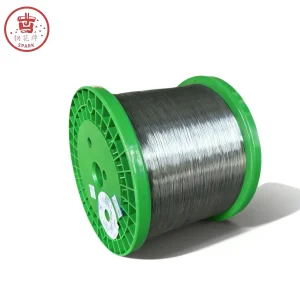
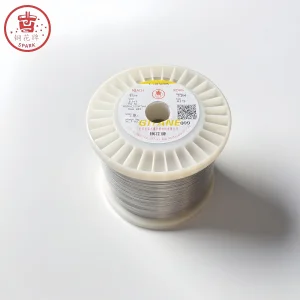
Precision Resistance Wire & Heating Elements
Explore our core wholesale catalog featuring heavy-duty Iron-Chromium-Aluminum (FeCrAl) and Nickel-Chromium (NiCr) electric resistance alloy wires, engineered for extreme oxidative environments up to 1400°C.

Global Market Dynamics of Industrial Resistance Alloys
The global demand for wholesale electric resistance alloy wire is experiencing a structural metamorphosis. Driven by the worldwide transition toward net-zero industrial emissions, industries are rapidly replacing fossil-fuel combustion burners with high-efficiency electric thermal processing systems. Electric heating alloys—primarily Iron-Chromium-Aluminum (FeCrAl) and Nickel-Chromium (NiCr)—serve as the foundational heating elements inside modern thermal equipment.
Today's thermal processing requirements demand alloys capable of operating under continuous thermal shock, extreme high temperatures (up to 1425°C), and corrosive atmospheric conditions. As specialized factories and manufacturers expand production capacity, sourcing managers and system engineers prioritize metallurgical homogeneity, precise electrical resistance tolerance, and extended service life to minimize operational downtime.
From semiconductor silicon ingot growth to lithium-ion battery cathode calcination, high-purity electric heating wire ensures tight process-zone control. Original Equipment Manufacturers (OEMs) and wholesale distributors require mill-certified consistency to satisfy high-throughput industrial standards.
Comparative Metallurgy: FeCrAl vs. NiCr Resistance Systems
Selecting the optimal electric resistance wire requires an understanding of thermodynamic behavior, crystal lattice structures, and oxide layer growth mechanisms. Both FeCrAl and NiCr system families offer distinct advantages based on furnace atmosphere, mechanical strain, and peak operating temperature.
FeCrAl Alloy System
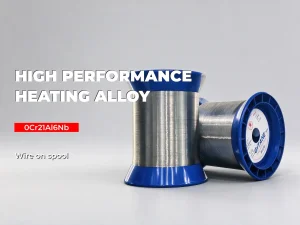
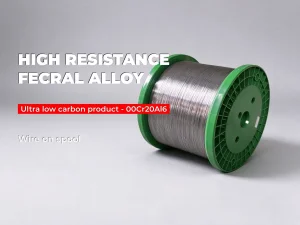
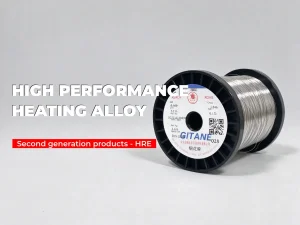
FeCrAl alloys (e.g., 0Cr25Al5, 0Cr21Al6Nb, HRE, 00Cr20Al6) feature a ferritic crystal structure. Upon heating, aluminum migrates to the alloy surface, forming a dense, continuous, protective layer of alpha-alumina (α-Al2O3). This oxide layer provides superior oxidation resistance at temperatures above 1200°C, high electrical resistivity, and lower material density, resulting in lighter element weight per thermal output.
NiCr Alloy System
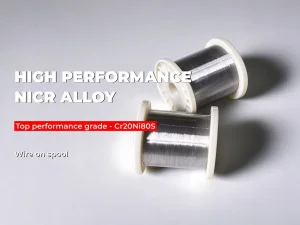
NiCr alloys (e.g., Cr20Ni80, Cr15Ni60, Cr30Ni70) feature an austenitic crystal structure. They form a protective chromic oxide (Cr2O3) surface scale. NiCr materials possess superior hot mechanical strength, high creep resistance, and ductility after prolonged high-temperature exposure. Unlike FeCrAl, NiCr does not suffer from room-temperature embrittlement after thermal cycling, making it ideal for frequent power-cycling applications.
Rare Earth Addition (RE Micro-Alloying)
Modern wholesale manufacturers incorporate trace reactive elements such as Yttrium (Y), Zirconium (Zr), and Niobium (Nb). Micro-alloying alters the transport kinetics of aluminium and chromium ions, pegging the oxide scale tightly to the parent metal lattice, preventing scale spallation during sudden heating and cooling cycles.
Engineering Specification Matrix
| Alloy Grade | Alloy Family | Max Working Temp (°C) | Electrical Resistivity (μΩ·m, 20°C) | Density (g/cm³) | Primary Oxide Layer | Key Industrial Use Case |
|---|---|---|---|---|---|---|
| SGHT / HRE | FeCrAl (PM) | 1350 - 1425 | 1.45 | 7.10 | α-Al2O3 (Alumina) | Semiconductor Diffusion & Kilns |
| 0Cr21Al6Nb | FeCrAl | 1350 | 1.40 | 7.10 | α-Al2O3 (Alumina) | Industrial Heat Treatment Furnaces |
| 0Cr25Al5 | FeCrAl | 1250 | 1.42 | 7.10 | α-Al2O3 (Alumina) | Ceramic Kilns & Tubular Heaters |
| Cr20Ni80S | NiCr | 1200 | 1.09 | 8.40 | Cr2O3 (Chromia) | Precision Lab Furnaces & Appliances |
| Cr30Ni70 | NiCr | 1250 | 1.18 | 8.10 | Cr2O3 (Chromia) | Heavy-Duty Industrial Heating Tubes |
| Cr15Ni60 | NiCr | 1150 | 1.12 | 8.20 | Cr2O3 (Chromia) | Domestic Appliances & Resistors |
Macro-Industry Solutions & System Integration
High-grade resistance alloy wire serves as the thermal core across diverse industrial verticals. Custom engineering of wire diameter, cross-sectional ribbon geometry, and coil pitch ratio determines power density (W/cm²) and element longevity.
Semiconductor & Photovoltaics
In monocrystalline silicon crystal pulling and wafer diffusion furnaces, thermal uniformity must be maintained within ±0.5°C. Ultra-low carbon FeCrAl wires (e.g., 00Cr20Al6) prevent outgassing contamination, enabling stable thermal zones up to 1350°C without introducing trace metallic impurities into cleanroom chambers.
Automobile & Battery Manufacturing
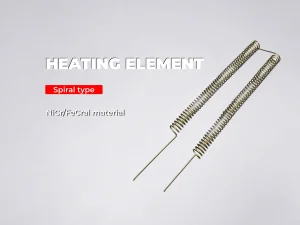
Continuous mesh-belt sintering furnaces for powder metallurgy parts and rotary kilns for lithium battery cathode calcination require robust resistance to reductive, oxidative, or corrosive off-gas environments. Custom NiCr and FeCrAl spiral coils are optimized for high mechanical yield strength under thermal vibration.
Heavy Glass & Ceramic Production
Tunnel kilns and glass annealing lehrs demand elements that resist sagging across long horizontally suspended spans. Specialized powder metallurgy FeCrAl alloys eliminate structural sag by maintaining high creep rupture strength at temperatures exceeding 1300°C.
Commercial Electric Heating Tubes
In tubular immersion heaters, duct heaters, and domestic appliance coils, thin-gauge fine wire (0.1mm to 1.0mm) must offer exceptional ductility for high-speed automated coiling without micro-fissuring or breaking.
Next-Generation Resistance Alloy Technology Roadmap
The electric resistance alloy sector is advancing rapidly. Driven by industrial demand for higher temperature limits, longer operational lifespans, and reduced maintenance cycles, leading factories are deploying advanced metallurgical techniques.
1. Powder Metallurgy (PM) Dispersion Strengthening
Traditional ingot melting techniques hit physical performance ceilings at around 1350°C. Modern advanced factories utilize Powder Metallurgy (PM) processing. By atomizing pre-alloyed liquid metals into micro-powders and incorporating oxide dispersion strengthening (ODS), PM-grade FeCrAl achieves operating thresholds up to 1425°C while increasing creep resistance by up to 300% compared to melt-cast alloys.
2. Vacuum Induction Melting (VIM) & ESR Refining
To produce high-reliability resistance alloys like Cr20Ni80S and 00Cr20Al6, state-of-the-art factories employ double-vacuum processing: Vacuum Induction Melting (VIM) followed by Electroslag Remelting (ESR). This dual-refining process purges trace gaseous impurities (Nitrogen, Oxygen, Hydrogen), eliminates non-metallic inclusions, and guarantees clean grain boundaries for precise resistance performance.
3. AI-Assisted Surface Load Optimization
Calculating the surface load ($W = P / S$, expressed in $W/cm^2$) is critical for element lifecycle design. Future furnace integration utilizes digital twin modeling and thermal simulation algorithms to predict local hot-spots, dynamically matching alloy wire composition to specific furnace atmosphere profiles (Hydrogen, Ammonia, Nitrogen, or Inert Gas).
Factory Quality Control & Testing Rigor
As a specialized manufacturer and wholesale factory network, maintaining compliance with global standards (such as GB/T 1234, ASTM B603, and DIN 17470) is paramount. Every production heat undergoes rigorous quality verification before shipment.
Chemical Composition Analysis
Optical Emission Spectrometry (OES) and Carbon-Sulfur analyzer testing guarantee exact alloy chemistry within tight percentage tolerances across all master heats.
Accelerated High-Temperature Life Testing
Wires undergo cyclic accelerated burnout tests in accordance with national and international standard procedures to measure time-to-failure at elevated temperatures (e.g., 50-hour continuous thermal stress test).
Dimensional & Resistance Uniformity
Laser micrometer gauge checks ensure wire diameter tolerance within ±0.01mm. Micro-ohm meter testing confirms consistent resistance per meter across the entire spool length.
Frequently Asked Questions (FAQ)
Direct engineering insights answering critical sourcing and installation questions for buyers, system designers, and furnace operators.
Answer: The choice depends primarily on working temperature, atmosphere, and thermal cycling frequency:
- Select FeCrAl if your operation requires high working temperatures (1200°C to 1425°C), high surface loads, or cost optimization. FeCrAl provides higher electrical resistivity and lower material density (saving weight).
- Select NiCr if your furnace undergoes frequent heating/cooling power cycles, requires high mechanical strength after aging, or operates in nitrogen-rich atmospheres. NiCr maintains superior ductility and ease of repair after extended use.
Answer: Common premature failure root causes include: (1) Excessive surface electrical load ($W/cm^2$) leading to localized overheating; (2) Contamination by low-melting-point metals like Zinc, Lead, or Copper which react with the oxide scale; (3) Carburizing or reducing atmospheres disrupting the protective alumina or chromia scale; (4) Sagging or improper element support causing turn-to-turn short circuits.
Answer: Maximum wire temperature ratings are quoted for air environments. In reducing or active atmospheres, maximum operating thresholds decrease:
- In Dry Hydrogen (H2): FeCrAl can operate effectively, but the protective alumina oxide scale must be periodically regenerated in air.
- In Nitrogen (N2): NiCr alloys perform reliably, whereas FeCrAl alloys can suffer from nitridation at temperatures above 1100°C unless protected by a dense oxide scale.
- In Carburizing Environments: Specialized low-carbon grades or pre-oxidized elements are required to prevent internal embrittlement.
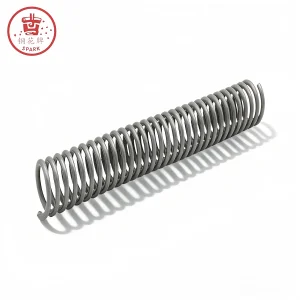
Answer: As a direct factory supplier, resistance alloys are provided in: (1) Round Wire (diameters from 0.05mm to 12.0mm); (2) Flat Wire / Strip / Ribbon (thickness 0.1mm–4.0mm, width 0.5mm–120mm); (3) Pre-wound Spiral Heating Elements coiled to customer drawing specifications; (4) Straight Rods for heavy industrial element hangers.
Answer: Micro-alloying elements like Yttrium, Zirconium, or Rare Earths (RE) alter oxide growth kinetics. They prevent the formation of voids at the oxide-metal interface and increase scale adhesion. This reduces thermal stress spallation during rapid temperature changes, boosting total element life by up to 200–300%.
Extended Resistance Wire & Alloy Elements
Complete your procurement requirements with our specialized NiCr, FeCrAl, and pre-fabricated element series for high-temperature thermal systems.