
High-Performance Industrial Heating Elements & Alloys
Direct factory wholesale supply for furnace OEM builders, thermal processing plants, and energy infrastructure projects worldwide.
Industrial Electric Heating Alloy Fundamentals
A comprehensive metallurgical guide to selecting FeCrAl and NiCr alloys for continuous high-temperature thermal systems.
In modern industrial manufacturing, high-temperature electric heating alloys serve as the core thermal transformation medium for everything from advanced semiconductor wafer diffusion furnaces to heavy industrial heat treatment lines. Selecting the optimal electrical resistance heating wire requires balancing metallurgical composition, surface power loading ($W/cm^2$), atmospheric compatibility, and long-term creep deformation resistance.
Industrial electric heating alloys are divided into two main metallurgical families: Iron-Chromium-Aluminum (FeCrAl) alloys and Nickel-Chromium (NiCr) alloys. Each offers specific mechanical, physical, and chemical advantages depending on the target temperature regime, duty cycle frequency, and atmospheric chemistry.
FeCrAl Alloy System
FeCrAl alloys (such as 0Cr25Al5, 0Cr21Al6Nb, HRE, SGHYZ, and SGHT) operate up to 1425°C. When heated above 1000°C, FeCrAl forms a protective, highly adherent layer of alpha-alumina ($Al_2O_3$). This alumina scale provides exceptional resistance to oxidation and sulfurous gases while exhibiting higher electrical resistivity (up to 1.45 $\mu\Omega\cdot m$) and 15% lower density compared to NiCr, offering substantial material weight savings.
NiCr Alloy System
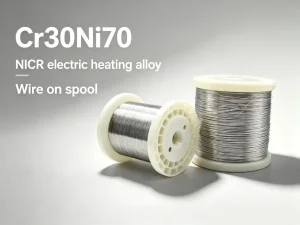
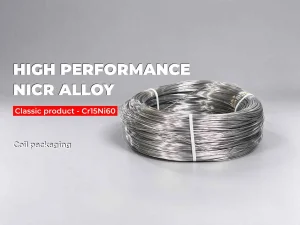
NiCr alloys (such as Cr20Ni80, Cr30Ni70, and Cr15Ni60) form a chromia oxide scale ($Cr_2O_3$). Operating up to 1250°C, NiCr alloys retain superior hot strength and ductility after prolonged thermal exposure. This makes them resistant to sagging under mechanical load and highly stable under frequent rapid-cycling (on/off) operational regimes where thermal shock would otherwise crack less ductile scale formations.
Global Procurement Intent & Engineering Specifications
Standardizing selection criteria for enterprise procurement officers and industrial process engineers.
Enterprise procurement teams ordering electric heating wire in wholesale quantities must evaluate technical indicators beyond unit cost per kilogram. Lifecycle cost ($Total\ Cost\ of\ Ownership$) is dictated by wire diameter stability, batch-to-batch resistivity uniformity ($\pm 3\%$), and oxidation kinetics.
Resistivity & Temperature Comparison Matrix
The table below details standard high-performance alloy grades produced under GB/T 1234-2012, ASTM B603, and DIN 17470 international standards:
| Alloy Grade | Metallurgical Class | Max Element Temp (°C) | Resistivity @ 20°C (μΩ·m) | Density (g/cm³) | Primary Industrial Intent |
|---|---|---|---|---|---|
| SPARK SGHT | FeCrAl (PM) | 1425°C | 1.45 | 7.10 | Semiconductor, advanced ceramics, vacuum furnaces |
| SPARK SGHYZ | FeCrAl (Rare Earth) | 1400°C | 1.42 | 7.10 | Heavy industrial furnaces, ceramic sintering kilns |
| HRE | FeCrAl | 1350°C | 1.42 | 7.10 | Powder metallurgy, high-temp annealing lines |
| 0Cr25Al5 | FeCrAl | 1250°C | 1.42 | 7.10 | Industrial resistance heaters, radiant tubes |
| Cr20Ni80 | NiCr | 1200°C | 1.09 | 8.40 | Precision heat treatment, commercial appliances, automotive |
| Cr30Ni70 | NiCr | 1250°C | 1.18 | 8.10 | Severe chemical atmospheres, high-power heating bands |
Surface Load ($W/cm^2$) Optimization Guidelines
Surface load ($p$) defines the power emitted per square centimeter of wire element surface area ($p = \frac{P}{\pi \cdot d \cdot L}$). Selecting an improper surface load leads to element burnout. Procurement engineers must match surface loading against operational furnace atmospheres:
- Air Atmosphere: Standard continuous operation allows $1.5 \text{ -- } 2.5\ W/cm^2$ for FeCrAl up to 1300°C; up to $3.5\ W/cm^2$ for intermittent heating elements.
- Carburizing / Reducing Atmospheres: Requires reducing surface load by 20–30% to prevent protective alumina oxide scaling disruption and catastrophic internal carburization ("green rot").
- Inert Gas (Argon/Nitrogen): Thermal conductivity changes require custom surface load calculations based on convective heat transfer coefficients.
Macro Industry Heating Solutions
Turnkey resistance heating alloy deployments across critical global manufacturing sectors.
Semiconductor & Photovoltaics
Silicon crystal growing, diffusion furnaces, and PECVD processing demand high-purity ultra-temperature alloys like SGHT and SGHYZ. Zero particulate spalling prevents wafer contamination during 1350°C+ thermal processing steps.
Automotive & EV Battery Heat Treatment
Precision annealing of EV battery foils, continuous carburizing furnaces for drivetrain gears, and aluminum solution treatment require durable Cr20Ni80 and 0Cr21Al6Nb wire elements capable of thousands of thermal cycles.
Petrochemical & Energy Processing
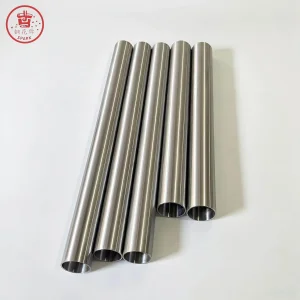
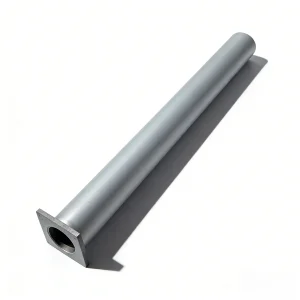
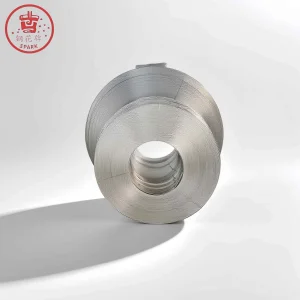
Heavy oil cracking, gas reforming, and high-pressure radiant tube heating rely on high-grade SGHT Steel Tube materials and high-resistivity alloy strip designed to withstand corrosive, high-sulfur hydrocarbons.
Ceramics, Glass & Metallurgical Kilns
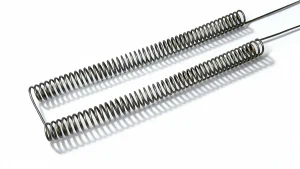
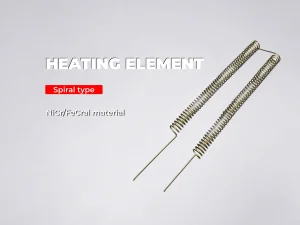
High-capacity tunnel kilns, glass tempering, and sintering furnaces utilize heavy-gauge spiral type elements and HRE 1350°C wire, ensuring uniform zone temperature control across wide heating chambers.
Medical & Precision Instruments
Ultra-fine resistance wire and foil (including Chromel A) provide predictable resistance tolerances for specialized medical diagnostic heaters, laboratory sterilizers, and military aerospace components.
Industrial Tempering & Heat Processing
High-efficiency heat processing facilities employ SG140 and 0Cr20Al6 alloys in heavy-duty tempering furnaces to ensure structural integrity and stress relief in forged metals.
Technical Roadmap & Metallurgical Outlook
Next-generation electrical resistance technologies driving industrial decarbonization and higher operational efficiency.
As global industries transition from fossil-fuel burners to zero-emission electric thermal processing, heating wire manufacturers face demands for longer operating lifespans, higher power densities, and resistance to aggressive chemical environments. The technical evolution focuses on three critical metallurgical frontiers:
1. Powder Metallurgy Dispersion Strengthening (PM FeCrAl)
Traditional melted FeCrAl alloys suffer from rapid grain growth at temperatures above 1100°C, leading to severe room-temperature brittleness and creep elongation (sagging). Advanced powder metallurgy processing—utilized in grades like SPARK SGHT—introduces nanoscale oxide dispersions (Y2O3, ZrO2) directly into the alloy matrix. This locks grain boundaries, yielding:
- 3x Creep Strength: Eliminates structural sagging in vertical and horizontal furnace elements up to 1425°C.
- Thermal Cycle Stability: Prevents spalling of the alumina protective layer during rapid power modulation.
- Dramatically Extended Lifespan: Extends element life by 200% to 400% compared to conventional ingot-melted wire.
2. Rare Earth Element (REE) Micro-Alloying
By precisely introducing trace quantities of Yttrium (Y), Neodymium (Nd), Hafnium (Hf), and Zirconium (Zr)—as engineered in SPARK SGHYZ and 0Cr21Al6Nb—metallurgists alter the growth dynamics of the protective oxide scale. Micro-alloyed REE ions segregate to the alumina grain boundaries, suppressing outward aluminum diffusion and creating an interlocking oxide "peg" system that permanently binds the oxide shell to the parent wire substrate.
3. Electrification of Heavy Industrial Heating
Replacing natural gas burners with electric resistance heating in steel tempering, glass melting, and chemical calcination requires ultra-thick wire diameters ($8.0\text{mm} \text{ -- } 12.0\text{mm}$) and heavy strip coils. Manufacturers are optimizing cold-drawing parameters and bright-annealing lines to supply heavy-gauge alloy coils with consistent mechanical bend radii and uniform electrical resistance over multi-kilometer production runs.
Localization Support & Compliance Assurance
Ensuring full traceability, standardized quality control, and seamless international shipping for global OEM supply chains.
Strict Quality Assurance
Every heat lot undergoes rigorous quality testing: optical emission spectrometry for chemical purity, digital resistance testing across every meter of wire, tensile/elongation testing, and accelerated high-temperature life tests (50-hour test @ 1200°C+ per standard GB/T 1234-2012).
Standardization & Equivalency
Products are manufactured in strict compliance with GB/T 1234-2012 and fully aligned with global standards such as ASTM B603 (FeCrAl), ASTM B344 (NiCr), DIN 17470, and JIS C2520. Mill Test Certificates (MTC) according to EN 10204 3.1 are supplied with all shipments.
OEM Packaging & Fast Deliveries
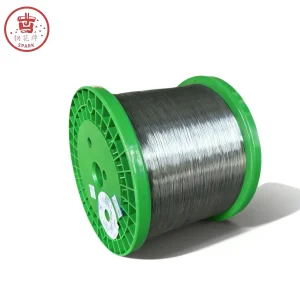
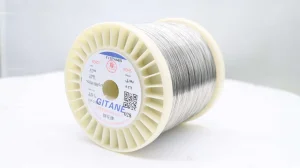
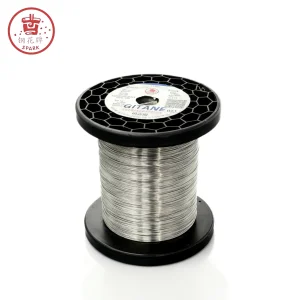
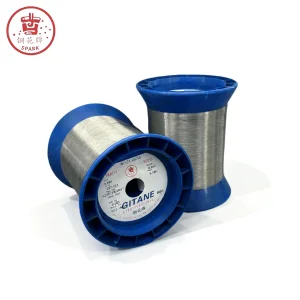
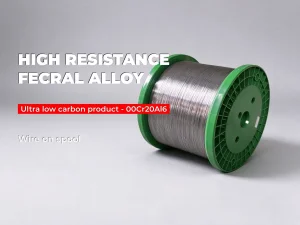
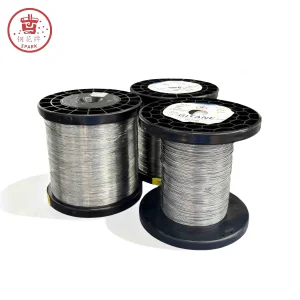
Wire is delivered on plastic spools (DIN 160, DIN 200, DIN 250, DIN 355), in coils, or as pre-formed spiral elements in protective wooden crates. Expedited air freight and ocean freight shipments serve global manufacturing hubs in North America, Europe, SE Asia, and the Middle East.
Specialized Alloys, Strips & Custom Heating Elements
Browse our extended product portfolio for high-temp industrial applications.
Frequently Asked Questions (FAQ)
Expert answers to critical procurement and metallurgical engineering queries.
Optimize Your Industrial Heating Systems
Partner directly with a premier Chinese resistance heating alloy manufacturer. Get custom alloy quotes, technical element sizing, and factory-direct pricing for your global operations.