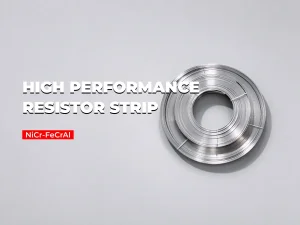
Featured Electric Heating Alloy Inventory (Catalog Part I)
Direct factory inventory featuring ultra-high temperature FeCrAl and premium Nichrome alloys engineered for glass tempering, heat treatment, and precision sintering.
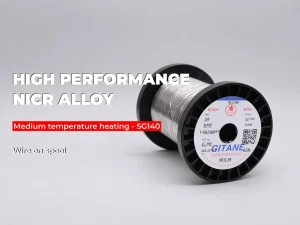
China SG140 Heating Wire | 1100°C Oxidation Resistant Alloy for Glass Tempering Supplier, Pricelist
Request Product Specs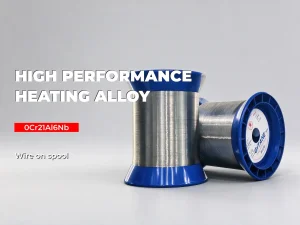
Wholesale 0Cr21Al6Nb High Performance Fe-Cr-Al Electric Heating Alloy | 1350°C Grade for Industrial High-Temperature Heating Manufacturers, Pricelist
Request Product Specs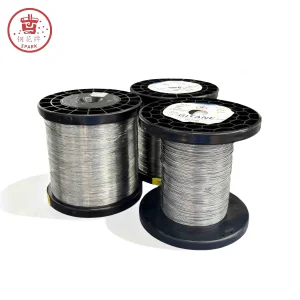
Wholesale Ultra High Temperature Electric Heating Wire SGHT from China Suppliers & Factory - Ideal for High-Performance Heating Solutions Manufacturers, Suppliers
Request Product Specs
Wholesale China Suppliers Factory Spiral Electric Heating Element for Efficient Heating with High-Quality Alloys Manufacturer, Manufacturers
Request Product Specs
Wholesale SG140 Alloy for Tempering Furnace - High-Performance Heating Wire from China Suppliers & Factory Supplier, Factory
Request Product Specs
China Spiral Type Electric Heating Element from China Suppliers - High-Quality Factory Manufacturing for Efficient Heating Factories, Pricelist
Request Product Specs
Wholesale High-Quality SPARK 0Cr25Al5 Electric Heating Wire from China Suppliers and Factory - Premium Resistance Wire Supplier, Suppliers
Request Product Specs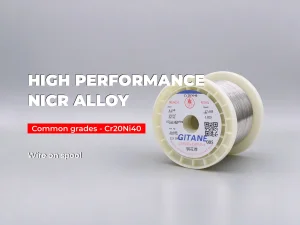
Wholesale Cr20Ni40 NiCrFe Heating Wire | 1100°C Industrial Resistance Wire Manufacturers, Suppliers
Request Product Specs1. Global Commercial & Industrial Thermal Engineering Landscape
Macro-economic trends demand higher thermal efficiency, zero thermal creep, and exact electrical resistance uniformity across automated production lines.
Modern industrial processing lines operate under unprecedented thermal, electrical, and mechanical stresses. Across high-tech sectors—including semiconductor diffusion, photovoltaic wafer sintering, automotive heat treatment, and precision glass tempering—the demand for reliable, stable, and highly uniform resistance heating elements has grown exponentially. Electric heating alloys, predominantly Nickel-Chromium (NiCr, such as Cr20Ni80) and Iron-Chromium-Aluminum (FeCrAl, such as 0Cr25Al5 and SGHT), form the thermal backbone of modern thermal processing systems.
In global industrial manufacturing, electric resistance heating offers distinct efficiency advantages over fossil-fuel heating: near 100% electrical-to-thermal energy conversion, zero localized greenhouse gas emissions during operation, and digital precision control down to fraction-of-a-degree tolerances. However, as operational furnace temperatures climb beyond 1100°C and approach 1425°C, thermal degradation phenomena—such as grain growth, hot-strength creep, furnace atmosphere attack, and localized electrical hot-spotting—pose persistent challenges for facility operators.
Information Gain Metric: Cr20Ni80 (80% Nickel, 20% Chromium) remains the industry gold standard for applications requiring high mechanical ductility post-heating, high hot-strength up to 1200°C, non-magnetic properties, and resistance to cyclic oxidation without flaking. Controlling resistance tolerances within strictly bounded margins is paramount to preventing thermal variance across multi-zone industrial furnaces.
The global transition toward high-precision smart manufacturing means that off-the-shelf resistance wire no longer satisfies automated furnace design parameters. Custom engineering services—specifically tight resistance tolerance matching, tailored surface passivations, and specialized continuous spool packaging—have transitioned from premium add-ons to essential baseline requirements for Tier-1 OEMs and industrial end-users.
2. Specialized Engineering Services: Tolerances, Surface Finishing & Packaging
Technical breakdown of specialized manufacturing options provided for wholesale industrial procurement.
Ultra-Tight Resistance Tolerances
Standard international specifications (GB/T 1234, ASTM B344) allow resistance variations of ±5% to ±8%. Through advanced cold-drawing alignment, online multi-axis laser micrometry, and real-time resistance bridge testing, we supply specialized batches engineered down to ±1% or ±3% electrical resistance tolerance. This eliminates localized hot spots and ensures identical thermal dissipation across complex parallel heating element grids.
Tailored Surface Engineering
Surface condition directly affects thermal emissivity, oxidation formation rate, and contact resistance. Options include:
• Bright Annealed (BA): Hydrogen atmosphere processed, mirror-smooth, oxide-free surface ideal for vacuum environments.
• Oxidized Passivated: Controlled thermal pre-oxidation forming an adherent, protective $Cr_2O_3$ scale for immediate installation.
• Acid Pickled / Matte Finish: Enhanced surface area for maximum ceramic fiber adhesion.
Custom Industrial Packaging
To prevent physical deformation, wire crossing, or atmospheric corrosion during long-distance oceanic freight, we deliver tailored packaging solutions:
• Precision-wound plastic DIN spools (DIN 125, 160, 200, 250, 355) with zero-overlap winding.
• Desiccant-infused, vacuum-sealed foil barriers protecting against marine humidity.
• Heavy-duty, ISPM-15 compliant heat-treated wooden crates for heavy wire coils and strip shipments.
| Alloy Grade | Alloy Type | Nominal Composition | Max Temp (°C) | Resistivity (μΩ·m, 20°C) | Density (g/cm³) | Standard Tolerances | Custom Tolerance Available |
|---|---|---|---|---|---|---|---|
| Cr20Ni80 | NiCr | 80% Ni, 20% Cr | 1200°C | 1.09 ±0.05 | 8.40 | ±5.0% | ±1.0% / ±2.0% |
| Cr30Ni70 | NiCr | 70% Ni, 30% Cr | 1250°C | 1.18 ±0.05 | 8.10 | ±5.0% | ±1.5% / ±2.5% |
| 0Cr25Al5 | FeCrAl | 25% Cr, 5% Al, Bal. Fe | 1250°C | 1.42 ±0.07 | 7.10 | ±6.0% | ±2.0% / ±3.0% |
| 0Cr21Al6Nb | FeCrAl | 21% Cr, 6% Al, +Nb | 1350°C | 1.45 ±0.07 | 7.10 | ±6.0% | ±2.0% / ±3.0% |
| SGHT | FeCrAl (PM) | Ultra-Pure Fe-Cr-Al + RE | 1425°C | 1.45 ±0.05 | 7.10 | ±5.0% | ±1.5% / ±2.0% |
3. Quality Assurance & Full-Process Compliance Framework for Cr20Ni80
Rigorous quality gate monitoring from vacuum induction melting to final spool packaging ensures zero-defect manufacturing.
Quality in high-temperature resistance materials is not merely verified at final inspection; it is fundamentally engineered into the alloy micro-structure. All Cr20Ni80 products pass through a rigorous 6-stage metallurgical quality control gateway designed to eliminate non-metallic inclusions, prevent micro-cracking during cold drawing, and maintain strict grain size distribution.
Stage 1: VIM & ESR Melting
Melting originates in Vacuum Induction Melting (VIM) furnaces to eliminate volatile impurities (S, P, Lead, Bismuth) followed by Electroslag Remelting (ESR). ESR refinement ensures exceptional chemical homogeneity, minimal segregation, and pristine micro-cleanliness.
Stage 2: Hot Forging & Rolling
Ingots undergo multi-directional hot forging to break down cast structures, followed by precision rod rolling. Ultrasonic testing is executed across 100% of the billet length to verify structural integrity and identify internal voids.
Stage 3: Cold Drawing & Annealing
Wire drawing uses natural diamond dies and synthetic polycrystalline dies with proprietary lubricants. Intermediate bright annealing in pure hydrogen atmospheres prevents surface carburization and maintains fine austenitic grain size.
Stage 4: Laser Micrometry
Continuous online dual-axis laser micrometers track wire diameter along every meter of production. Automatic feedback loops adjust drawing capstans instantly if dimensional drift exceeds ±0.002 mm.
Stage 5: Accelerated Life Testing
Samples from every heat undergo the Bash & Harsch accelerated life test (per ASTM B78). The wire is subjected to rapid cyclic heating (1150°C to room temp) to guarantee superior thermal cycle lifespan and oxide adhesion.
Stage 6: Mill Test Certification
Every batch ships with a comprehensive Mill Test Certificate (MTC 3.1 per EN 10204), detailing chemical composition via ICP-OES spectroscopy, 20°C electrical resistance, yield/tensile strength, elongation, and dimensional audit logs.
International Compliance Certifications
Our manufacturing complex operates under strict international management systems: ISO 9001:2015 Quality Management Systems, ISO 14001 Environmental Management, and ISO 45001 Occupational Health and Safety. All Cr20Ni80 and FeCrAl alloy products fully comply with European Union Directives including RoHS (2011/65/EU) and REACH (EC 1907/2006), containing zero restricted heavy metals or Substances of Very High Concern (SVHC).
4. Localized Application Scenarios & Industry Case Studies
How customized resistance alloys solve real-world thermal challenges in specific industrial installations worldwide.
Glass Tempering & Architectural Flat Glass Furnaces
Glass tempering lines require fast power response, uniform radiant heating across large heating banks, and high mechanical stability to prevent wire sagging.
Solution: SG140 and Cr20Ni80 flat strip and pre-wound spiral elements. The smooth oxide scale prevents particle flaking, ensuring glass surfaces remain flawless without thermal speckling or optical distortion during radiant soaking cycles.
Semiconductor & Photovoltaic Diffusion Furnaces
Quartz tube heating modules for silicon wafer processing require zero metal ion contamination, extreme temperature repeatability, and ultra-long service life near 1200°C–1300°C.
Solution: Ultra-pure powder metallurgy SGHT FeCrAl wire. Operating with tightly controlled ±1.5% resistance tolerances, SGHT forms a protective, non-peeling $Al_2O_3$ ceramic passivation layer that insulates the wafer chamber from metal vapor migration.
Automotive Heat Treatment & Controlled Atmosphere Kilns
Carburizing, nitriding, and bright annealing furnaces operate under carbon-rich or reducing gas environments ($CO, H_2, N_2$), which cause severe embrittlement and "green rot" oxidation in standard alloys.
Solution: High-chromium NiCr alloys (Cr30Ni70 and customized Cr20Ni80S). The elevated chromium content builds a resilient oxide barrier that resists carbon penetration and prevents intergranular chromium depletion.
Heavy Industrial Ceramic & Refractory Sintering
High-temperature tunnel kilns firing technical ceramics require large-gauge heavy element coils (5.0mm to 10.0mm diameter) running continuously for multi-year furnace campaigns.
Solution: 0Cr21Al6Nb and 0Cr25Al5 heavy resistance rods. The addition of Niobium fine-tunes grain growth inhibition, preventing high-temperature sagging and extending replacement intervals to over 24 months of uninterrupted production.
5. China Factory Supply Chain Resilience & Efficiency Advantages
Vertical integration, scale economies, and integrated logistics deliver unmatched lead times and cost-to-performance value.
Global supply chain volatility has highlighted the necessity of partnering with reliable, vertically integrated alloy manufacturers. Operating from our state-of-the-art 88,000 m² production complex, our facility controls the entire manufacturing value chain—from raw material melting and ingot forging to fine wire drawing and secondary fabrication.
Vertical Integration
By controlling internal VIM/ESR melting, hot rolling, cold drawing, and spiral coiling under a single roof, we eliminate intermediate vendor markups, mitigate external sub-tier delay risks, and enforce unbroken quality traceability from melt heat number to delivered spool.
Rapid Turnaround & Scalability
With an annual production capacity exceeding 10,000 metric tons of specialized heating alloys, our facility maintains extensive raw nickel and ferro-chrome strategic stocks. Custom wire drawing orders are executed in 10 to 14 business days—compared to the 6 to 10 week lead times standard among European or Western suppliers.
Cost-Performance Optimization
Leveraging advanced automation, high-speed multi-wire drawing machinery, and optimized energy usage, we deliver premium Cr20Ni80 and FeCrAl products at highly competitive direct factory prices, maximizing capital productivity for furnace builders and maintenance engineers.
6. Technical Roadmap & Future Outlook (2025–2035)
Pioneering next-generation Oxide Dispersion Strengthened (ODS) alloys, AI-optimized composition tuning, and ultra-high temperature performance.
As industrial thermal processing shifts toward net-zero carbon goals, electrical resistance heating will increasingly replace gas combustion across high-energy sectors such as steel forging, cement calcination, and glass melting. These next-generation kilns require resistance materials capable of continuous operation at higher watt-densities, elevated operating temperatures (up to 1500°C), and under aggressive atmospheric conditions.
- Oxide Dispersion Strengthened (ODS) Alloys: Utilizing mechanical alloying and powder metallurgy to embed nanoscale Yttria ($Y_2O_3$) particles within FeCrAl matrices, dramatically increasing high-temperature creep strength by over 300% at 1350°C.
- AI-Driven Composition Optimization: Machine-learning algorithms analyze heat-by-heat ICP elemental data to optimize trace rare-earth additions (Yttrium, Hafnium, Zirconium, Cerium), fine-tuning protective oxide adhesion dynamically.
- Smart Element Integration: Embedding micro-thin embedded thin-film sensor leads directly within ceramic element holders to enable real-time electrical resistance monitoring, predictive maintenance alerts, and automated end-of-life forecasting.
7. Global Localized Support & Compliance Guarantee
End-to-end commercial, technical, and regulatory support for seamless international procurement.
To eliminate cross-border procurement friction, our international engineering division offers comprehensive multi-lingual consulting, custom tariff classification, and flexible Incoterms support (EXW, FOB, CIF, DDP). We partner with accredited third-party inspection agencies—including SGS, TÜV Rheinland, and Intertek—to execute pre-shipment inspections, dimensional verifications, and chemical re-testing upon buyer request.
Our engineering support team assists clients with thermal load calculations, wire diameter sizing, surface load ($W/cm^2$) optimization, and furnace zone coil designs, ensuring that every batch of wire delivered transitions smoothly into high-performance industrial service.
8. Frequently Asked Questions (Engineering & Procurement FAQ)
Expert technical answers to common queries regarding resistance wire selection, tolerances, and quality verification.
Q1: Why should I specify tight resistance tolerances (±1% to ±3%) instead of standard ±5% tolerances?
In multi-zone industrial furnaces or parallel heating grids, variations in electrical resistance directly translate to uneven power output ($P = V^2 / R$). A ±5% resistance variation can create thermal differentials of up to 30°C–50°C between zone elements, leading to hot spots, product defects, and premature element burn-out. Specifying ±1% to ±3% guarantees precise thermal balance across all heating zones.
Q2: What is the key functional difference between Cr20Ni80 and FeCrAl (0Cr25Al5) alloys?
Cr20Ni80 (Nichrome) maintains high mechanical strength and ductility after heating, meaning elements can be cooled, handled, and reshaped without breaking. It is non-magnetic and highly resistant to cycling fatigue up to 1200°C. FeCrAl (0Cr25Al5, SGHT) offers higher operating temperatures (up to 1425°C), higher electrical resistivity, and lower material density (15% lighter than NiCr), but becomes brittle after high-temperature exposure.
Q3: How does surface finish impact furnace heating element lifespan?
A controlled, pre-oxidized surface finish creates a uniform passivating film ($Cr_2O_3$ on NiCr, $Al_2O_3$ on FeCrAl) that acts as an insulation barrier against further atmospheric corrosion and furnace gas attack. Unoxidized or contaminated wire surfaces can develop uneven oxidation scales that crack during thermal cycling, leading to localized oxidation acceleration and localized wire failure.
Q4: What compliance documentation is provided with wholesale orders?
Every shipment includes an Official Mill Test Certificate (MTC 3.1 per EN 10204) verifying heat-level chemical composition via ICP-OES, measured room temperature resistance (Ω/m), tensile strength, elongation, and dimensional tolerances. Third-party testing reports from SGS or TÜV for RoHS and REACH compliance are provided on request.
Q5: Can you supply pre-formed spiral coils or custom flattened ribbons?
Yes. Beyond round resistance wire, we specialize in high-precision cold rolling to produce flat ribbon wire (strip) with tailored width-to-thickness ratios, as well as CNC spiral winding into ready-to-install furnace elements built to OEM engineered drawings.
Featured Electric Heating Alloy Inventory (Catalog Part II)
Explore our full line of Cr20Ni80, Cr30Ni70, HRE, and FeCrAl resistance ribbons and wires for industrial thermal systems.
Wholesale High-Performance Cr20Ni80S Electric Heating Alloy from China – Reliable Suppliers & Factory for Thermal Environments Pricelist, Quotes
Request Product Specs
Wholesale High-Quality Cr30Ni70 High-Temperature Alloy Wire from China Factory - Durable with 50 Hours Life | Suppliers Manufacturers, Factory
Request Product Specs
Wholesale High-Quality 2.00mm 0Cr25Al5 Heating Wire from China Suppliers - Wholesale Factory Price, ISO9001:2005 Certified Suppliers, Pricelist
Request Product Specs
China China Suppliers HRE High Temperature Electric Heating Wire - 1350℃ Alloy Resistance Wire from Factory Factory, Quotes
Request Product Specs
China China Suppliers Factory - SPARK Cr20Ni80 Electric Heating Wire / Resistance Wire for High-Temperature Applications Manufacturer, Factories
Request Product Specs
Wholesale China SGHT Ultra-High Temperature Electric Heating Wire - Top Suppliers & Factory for High-Performance Heating Elements Factory, Quotes
Request Product Specs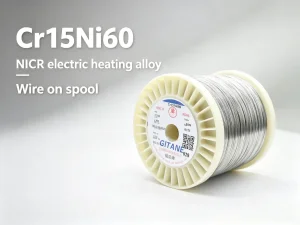
Wholesale High-Quality Cr15Ni60 Heating Wire & Alloy Strip from China Suppliers | Durable Electric Heating Elements Factory Manufacturers, Factories
Request Product Specs