Primary Precision Resistance Alloys & Thermal Equipment
Explore factory-direct wholesale options engineered for optimal heat treatment, industrial kilns, and high-accuracy thermal spectroscopy.




Metallurgical Whitepaper: Passivation Dynamics of Cr20Ni80
An authoritative analysis of high-nickel resistance alloys and the kinetics behind self-healing protective oxide barrier formation.
In thermal system design and high-temperature material engineering, Cr20Ni80 (Nichrome 80/20) represents the global standard for non-magnetic resistance heating alloys. Composed of approximately 80% Nickel and 20% Chromium, this austenitic alloy exhibits a remarkable phenomenon under elevated operating temperatures: it spontaneously forms a dense, adherent layer of Chromia ($\mathrm{Cr_2O_3}$) upon exposure to oxidizing environments at temperatures exceeding 600°C to 1200°C.
This self-passivating capability is the fundamental reason why industrial furnace builders, heating element manufacturers, and aerospace systems specifiers select wholesale Cr20Ni80 wire, strip, and ribbon over alternative materials. The spontaneously formed oxide layer acts as a kinetic barrier against continued chemical degradation, preventing accelerated subsurface oxidation and maintaining structural integrity across thousands of thermal cycles.
Key Metallurgical Advantages of Spontaneous Passivation:
- Kinetic Barrier Protection: The high thermodynamic stability of $\mathrm{Cr_2O_3}$ drastically reduces oxygen ion diffusion rates into the underlying bulk alloy.
- Self-Healing Mechanics: If mechanical stress or thermal expansion causes micro-cracking in the scale, exposure to atmospheric oxygen instantly regenerates the oxide layer.
- Thermal Cycling Endurance: The physical match between the coefficient of thermal expansion (CTE) of Cr20Ni80 and its chromia scale minimizes spallation during rapid heating and cooling cycles.
- Uniform Electrical Resistivity: By preventing internal alloy depletion, the dense scale ensures consistent electrical resistance over an extended operational lifespan.
Thermodynamics and Kinetics of Spontaneous Oxide Growth
Understanding Wagner’s Oxidation Theory, parabolic rate constants, and the impact of trace micro-alloying elements.
According to Wagner's oxidation theory, the rate of oxide growth on high-temperature alloys follows a parabolic rate law ($x^2 = k_p \cdot t$), where $x$ represents scale thickness, $k_p$ is the parabolic rate constant, and $t$ is exposure time. For wholesale Cr20Ni80, the optimization of $k_p$ depends critically on raw material purity and precise thermal processing during manufacturing.
When Cr20Ni80 is heated, chromium ions ($\mathrm{Cr^{3+}}$) rapidly diffuse outward toward the gas-metal interface due to the higher chemical affinity of Chromium for oxygen compared to Nickel. This preferential oxidation results in a continuous, non-porous layer of $\mathrm{Cr_2O_3}$. Beneath this primary oxide, a secondary interface containing trace Nickel Chromite spinel ($\mathrm{NiCr_2O_4}$) frequently develops, further enhancing adhesion to the nickel-rich substrate.
| Property Parameter | Standard Value (Cr20Ni80) | Engineering Significance |
|---|---|---|
| Chemical Composition (%) | Ni: 77.0–79.0%, Cr: 20.0–23.0%, Fe: ≤1.0% | Ensures stable austenitic structure and high hot strength. |
| Max Continuous Operating Temp | 1200 °C (2192 °F) | Optimal for heavy industrial heat treating and furnace coils. |
| Electrical Resistivity at 20°C | 1.09 ± 0.05 μΩ·m | High resistivity allows compact element designs with low weight. |
| Density | 8.40 g/cm³ | Provides high thermal mass and dimensional stability. |
| Melting Point | 1400 °C (2552 °F) | Generous safety margin above standard operating thresholds. |
| Specific Heat Capacity | 0.440 kJ/(kg·K) | Facilitates rapid thermal response in dynamic heating systems. |
To further optimize scale adhesion, leading manufacturers introduce trace quantities of reactive elements (RE) such as Yttrium (Y), Cerium (Ce), and Rare Earth Silicides during induction melting. These additions anchor the oxide scale via "pegging" mechanisms at alloy grain boundaries, virtually eliminating scale spallation even under aggressive thermal shock conditions.
Macro Industry Solutions & Thermal System Engineering
How high-grade Cr20Ni80 solves demanding heating requirements across key industrial sectors worldwide.
Industrial Heat Treatment
Carburizing, annealing, and hardening furnaces operate continuously under harsh chemical atmospheres. Cr20Ni80's dense oxide layer prevents carbon ingress and green rot attack, extending element service life in heavy metallurgy.
Semiconductor & Solar PV
Diffusion furnaces and wafer oxidation chambers require zero particle shedding. The tightly adherent passivated scale on Cr20Ni80 guarantees cleanroom-compatible heating without flake contamination.
Glass & Ceramics Kilns
Firing technical ceramics and glass bending requires rapid thermal cycles. Cr20Ni80 maintains hot strength and ductility, resisting sag and creep deformation across long operating campaigns.
Petrochemical Catalysis
High-temperature fluid heaters and gas cracking units benefit from Cr20Ni80's immunity to sulfur compound degradation when operated in oxygenating environments.
Global Commercial Landscape & Total Cost of Ownership (TCO)
Optimizing procurement economics, managing raw material volatility, and evaluating long-term ROI in factory operations.
From a global commercial perspective, resistance alloys represent a critical operational expense in energy-intensive industries. While FeCrAl (Iron-Chromium-Aluminum) alloys offer higher maximum operating temperatures and lower raw material costs, Cr20Ni80 delivers a significantly lower Total Cost of Ownership (TCO) in cycling applications and mechanical stress environments.
The primary economic advantage stems from Cr20Ni80’s superior hot strength and post-use ductility. Unlike FeCrAl alloys, which become brittle after exposure to elevated temperatures due to grain growth, Cr20Ni80 remains ductile after cooling. This enables maintenance crews to repair, adjust, or re-coil elements without total component destruction, drastically shortening maintenance downtime.
TCO Procurement Evaluation: Cr20Ni80 vs. Alternative Alloys
- Downtime Reduction: Spontaneously formed chromia scale eliminates unexpected element burn-out, reducing un-scheduled furnace shutdowns by up to 40%.
- Energy Efficiency: Constant electrical resistance prevents power input drift, allowing precision SCR controllers to maintain steady temperature profiles with minimal power wastage.
- Recyclability Value: High nickel content (approx. 80%) ensures significant scrap recovery value at the end of element life, offsetting initial capital expenditure.
Localized Application Scenarios & Engineering Integration
Adapting Cr20Ni80 elements to regional power grids, specialized furnace geometry, and custom OEM equipment designs.
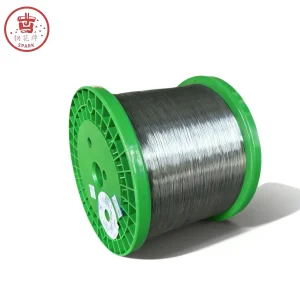
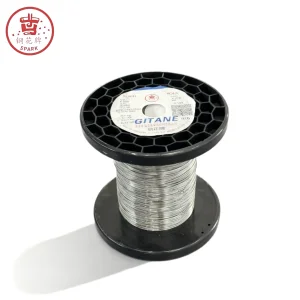
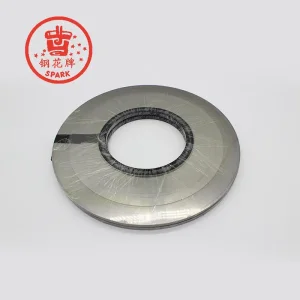
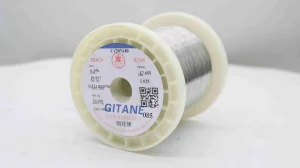
Industrial manufacturing requirements vary considerably by region due to localized electrical standards, fuel availability, and environmental regulations. Wholesale Cr20Ni80 components can be custom-fabricated into round wire (from 0.05mm to 10.0mm), flat strip, ribbon, and pre-formed helical coils to match specific regional machinery designs.
North American Market
Emphasis on 480V 3-phase industrial power systems requiring heavy-gauge wire coils with high surface loading capacity ($W/cm^2$) in compliance with UL and ASTM B344 standards.
European Union Market
Focus on strict energy efficiency, RoHS/REACH compliance, and low carbon footprint manufacturing. Preferred supply form includes precise flat ribbon for compact ceramic heater cartridges.
Asia-Pacific Region
Rapid expansion in semiconductor tooling, photovoltaic ingot pulling, and high-speed rail heat-treatment lines requiring factory-direct wholesale coil bundles with certified mill test reports.
Quality Assurance, International Compliance & Mill Testing
Rigorous quality control protocols ensuring batch-to-batch chemical uniformity and predictable oxidation behavior.
To guarantee that wholesale Cr20Ni80 spontaneously forms a dense, defect-free oxide film in service, strict metallurgical controls are enforced throughout the production sequence: from vacuum induction melting (VIM) and electroslag remelting (ESR) through wire drawing and continuous hydrogen atmosphere annealing.
GB/T 1234-2012
National standard for high-resistance electric heating alloys, specifying precise tolerances for dimensional uniformity, resistivity, and surface finish.
ASTM B344 Compliance
Standard specification for drawn or rolled nickel-chromium alloys for electrical heating elements, guaranteeing chemical purity and elongation metrics.
ISO 9001:2015 Certification
Full traceability from raw nickel/chromium charge to final wire spool, accompanied by 3.1 Mill Test Certificates (MTC) detailing spectroscopic chemistry.
Technology Roadmap & Future Outlook (2025–2035)
Innovations in micro-alloying, powder metallurgy, and AI-optimized furnace thermal modeling.
As industrial thermal processing transitions toward electrification and net-zero carbon emissions, the demand for highly reliable electric heating elements is accelerating. The technological roadmap for Cr20Ni80 alloys centers on three key evolutionary fronts:
- Nano-Scale Oxide Engineering: Tailoring RE (Rare Earth) dopants at the atomic level to reduce the temperature threshold for spontaneous chromia formation from 600°C down to 400°C.
- Powder Metallurgy (PM) Processing: Utilizing dispersion-strengthened powder metallurgy to eliminate grain growth and boost creep resistance at temperatures approaching 1250°C.
- AI-Driven Predictive Life Modeling: Integrating real-time sensor data with digital twin simulation software to forecast oxide scale degradation and optimize proactive maintenance schedules.
Frequently Asked Questions: Technical & Procurement Q&A
Expert answers to common engineering questions regarding Cr20Ni80 oxidation, installation, and performance optimization.
Why does wholesale Cr20Ni80 spontaneously form a dense protective scale?
At elevated temperatures, chromium has a higher thermodynamic driving force for oxidation than nickel. Chromium atoms rapidly diffuse outward to react with atmospheric oxygen, creating a continuous, non-porous layer of Chromia ($\mathrm{Cr_2O_3}$). This scale passivates the alloy surface and halts internal oxidation kinetics.
How does Cr20Ni80 compare to FeCrAl alloys in cyclic heating operations?
While FeCrAl alloys form an alumina scale with higher temperature limits, they become extremely brittle after heating due to rapid grain growth. Cr20Ni80 maintains excellent post-service ductility and superior scale-to-substrate CTE matching, making it vastly superior for frequent turn-off/turn-on cycling without scale spallation.
What atmospheres are compatible with Cr20Ni80 resistance wire?
Cr20Ni80 excels in oxidizing air, nitrogen, argon, and vacuum environments. In reducing or carburizing atmospheres (such as endothermic gas), appropriate pre-oxidation treatments are recommended to establish a robust chromia barrier prior to gas introduction.
What product dimensions are available for factory wholesale ordering?
Wholesale supply includes round wire (0.05mm to 10.0mm diameter), flat ribbon/strip (thickness 0.1mm to 3.0mm, width 1.0mm to 100mm), and fully prefabricated spiral elements customized to specific voltage, wattage, and furnace chamber dimensions.
How does surface loading ($W/cm^2$) affect scale stability and wire life?
Excessive surface loading increases internal wire operating temperatures relative to furnace chamber ambient temperatures. Keeping surface loading within recommended thresholds (typically 1.5 to 4.0 $W/cm^2$ depending on furnace operating range) prevents thermal stress and ensures stable, long-term self-passivation.
Complementary High-Temperature Alloy Series & Furnace Hardware
Discover factory-direct supply lines for FeCrAl, specialized tube materials, and industrial thermal process plants.