Featured Electric Heating & Resistance Alloys
Precision-engineered heating elements, NiCr resistance wires, and FeCrAl alloys supplied directly from accredited manufacturing facilities.



Executive Summary: The Metallurgical Superiority of Cr20Ni80 Alloy
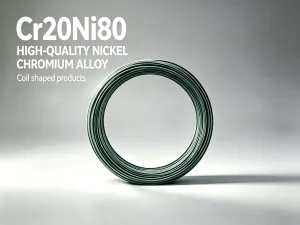
Cr20Ni80 (Nichrome 80/20, UNS N06003, 2.4869) represents the pinnacle of austenitic nickel-chromium electrical resistance alloys. Engineered for demanding industrial high-temperature operations up to 1200°C (2192°F), it combines exceptional hot strength, high electrical resistivity, and remarkable oxidation immunity.
Austenitic Matrix Stability
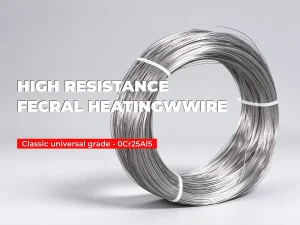
Unlike ferritic FeCrAl alloys which suffer from grain growth and post-heating embrittlement, Cr20Ni80 retains a fully stable face-centered cubic (FCC) austenitic microstructure throughout its entire operating temperature spectrum. This structural phase stability ensures that elements can undergo repeated rapid thermal cycling, cooling, and re-shaping without cracking or mechanical failure.
High Hot Strength & Creep Resistance
The high nickel concentration (~80%) prevents sag, deformation, and hot plastic flow under suspended element setups. In heavy industrial kilns where long unsupported wire coils or strip elements are mounted on ceramic rods, Cr20Ni80 demonstrates superior creep-rupture life compared to iron-base alternatives.
Core Technical Value: Cr20Ni80 wire forms a self-repairing, highly adherent Chromium Oxide (Cr₂O₃) protective layer when heated. This micro-scale oxide scale acts as a barrier against aggressive environmental chemical attack, allowing seamless operation not only in standard atmospheric ambient air but also in demanding inert protective gas and weak reducing process environments.
Multi-Atmosphere Stability Kinetics: Air, Inert & Weak Reducing
Selecting the correct resistance alloy requires understanding thermodynamics at elevated temperatures. Below is an engineering evaluation of Cr20Ni80 performance across the three primary industrial atmosphere categories.
1. Air & Oxidizing Atmospheres
Rating: Optimal (Up to 1200°C)
In oxygen-rich ambient environments, Cr20Ni80 forms an initial chromia oxide film (Cr₂O₃) reinforced by trace NiO at the outer interface. The oxide scale exhibits low lattice defect density and exceptional thermal-expansion coefficient matching with the underlying alloy substrate. This prevents spallation during rapid heater cycling, providing a service life measured in thousands of hours.
2. Inert Shielding Atmospheres (Ar, He, N₂)
Rating: Highly Stable (Up to 1150°C)
In high-purity Argon, Helium, or Nitrogen shielding environments used in semiconductor processing or bright annealing, Cr20Ni80 remains chemically unreactive. Unlike iron-base alloys that can form volatile nitrides under certain pure N₂ flow conditions, NiCr 80/20 maintains electrical resistivity stability without micro-cracking or grain boundary degradation.
3. Weak Reducing Atmospheres (H₂/N₂, Exothermic Gas)
Rating: Stable with Pre-Oxidation
In weak reducing environments such as dissociated ammonia (75% H₂ / 25% N₂) or lean exothermic gas mixtures, Cr20Ni80 outperforms standard iron-chrome alloys. To prevent internal oxidation or "Green Rot" (carburization/oxidation attack around 800–1000°C), pre-oxidizing the wire in air to build a thick Cr₂O₃ shield prior to exposing it to reducing gas is recommended.
Physical, Mechanical & Electrical Parameters of Cr20Ni80
Compliant with GB/T 1234-2012, ASTM B344, and DIN 17471 standards. Below is the comprehensive engineering datasheet for designers and procurement teams.
| Property Parameter | Metric Value | Imperial Value | Engineering Significance |
|---|---|---|---|
| Nominal Chemical Composition | Ni: ~80%, Cr: 19.0 - 21.0% | Ni: ~80%, Cr: 19.0 - 21.0% | Balanced high-nickel matrix ensuring non-magnetic behavior & corrosion resistance |
| Electrical Resistivity at 20°C | 1.09 ± 0.05 μΩ·m | 656 Ω/cmf | High resistance enables compact heating coil designs and precise power density controls |
| Density | 8.40 g/cm³ | 0.303 lbs/in³ | Stable mass density providing structural rigidity under thermal load |
| Tensile Strength (Annealed State) | 650 - 850 MPa | 94,200 - 123,200 psi | Superior ductility and cold-coiling performance during element manufacturing |
| Elongation Rate (%) | ≥ 20% | ≥ 20% | Allows extreme bending radii without micro-fissure formation |
| Thermal Conductivity (100°C) | 14.6 W/(m·K) | 101.3 BTU-in/hr-ft²-°F | Efficient heat transfer from core element to outer furnace cavity |
| Coefficient of Thermal Expansion (20-1000°C) | 17.0 × 10⁻⁶ /K | 9.4 × 10⁻⁶ /°F | Predictable thermal elongation for mounting insulation design |
Temperature Resistance Temperature Factor (Ct)
| Temperature (°C) | 20°C | 200°C | 400°C | 600°C | 800°C | 1000°C | 1200°C |
|---|---|---|---|---|---|---|---|
| Ct Factor (Cr20Ni80) | 1.000 | 1.013 | 1.031 | 1.047 | 1.062 | 1.075 | 1.080 |
Localized Application Scenarios & Engineering Field Use
From precision semiconductor cleanrooms to heavy automotive heat-treatment lines, wholesale Cr20Ni80 wire delivers failure-free operation across diverse industrial landscapes.
Semiconductor Diffusion & LPCVD Furnaces
Precision silicon wafer processing requires thermal uniformity within ±0.5°C inside horizontal and vertical quartz tube furnaces. Cr20Ni80 is chosen because it produces zero flaking scale and maintains highly predictable resistance under ultrapure Nitrogen and Argon purges.
Automotive Gear Carburizing & Tempering
Continuous mesh-belt furnaces used in automotive gear manufacturing expose heating elements to endothermic gas mixtures and carbon-rich atmospheres. Cr20Ni80, when properly pre-oxidized, resists carbon soot penetration and green-rot corrosion, significantly extending element lifecycle.
Aerospace Vacuum Heat Treatment
For high-nickel superalloy thermal processing in vacuum or low-pressure inert gas backfill systems, Cr20Ni80 strip and heavy wire elements provide exceptional low-vapor-pressure stability, preventing element vaporization contamination inside the furnace vacuum chamber.
Technological Innovation Roadmap & Future Metallurgy
As global industrial thermal processes transition toward decarbonization and electrification, resistance alloy research is driving next-generation performance advancements.
1. Micro-Alloying with Rare Earth Elements (RE)
Modern Cr20Ni80 formulations incorporate precise micro-additions of Yttrium (Y), Zirconium (Zr), and Cerium (Ce) at fractional PPM levels. This reactive element effect (REE) locks chromium oxide scales to the alloy grain boundaries, improving cyclic oxidation resistance by up to 40% compared to legacy compositions.
2. Powder Metallurgy (PM) & ODS Processing
By shifting from conventional ingot melting to oxide dispersion strengthened (ODS) powder metallurgy routes, future Cr20Ni80 grades achieve ultrafine grain structures. This eliminates high-temperature grain growth completely, elevating creep strength at 1150°C to levels previously achievable only by refractory metals.
China Factory Manufacturing Capacity & Integrated Supply Chain
Capitalizing on 60+ years of metallurgical expertise under the Shougang Gitane heritage, our manufacturing base offers complete end-to-end production control—from raw nickel ore melting to micro-wire drawing.
Vacuum Induction Melting (VIM) & ESR
We utilize Vacuum Induction Melting paired with Electroslag Remelting (ESR) to eliminate dissolved oxygen, hydrogen, and trace sulfur impurities. This ensures ultra-clean molten metal chemistries that yield crack-free wire drawing down to 0.05mm diameters.
39,268 m² Dedicated Production Workshops
Our Shahe Changping facilities house cold-rolling strip mills, multi-pass continuous wire drawing machines, and hydrogen-bright annealing furnaces operating in a unified quality matrix controlled under ISO 9001 certifications.
100% Traceability & Batch Mill Test Reports (MTR)
Every wholesale coil, spool, or ribbon shipment is issued with detailed chemical analysis reports, resistance measurements (Ω/m), and mechanical elongation verification matching exact GB/T 1234-2012 tolerances.
Global Commercial Landscape & Total Cost of Ownership (TCO)
While initial per-kilogram acquisition costs for nickel-rich Cr20Ni80 are higher than lower-grade iron-chrome alternatives, calculating Total Cost of Ownership reveals substantial long-term savings for industrial operators.
Downtime Reduction Analysis
In high-throughput continuous annealing lines, a single heater element failure can incur thousands of dollars per hour in halted production. Cr20Ni80's mechanical flexibility after thousands of heating cycles prevents premature brittle fracture, ensuring continuous furnace uptime.
Refurbishment & Re-coiling Advantages
When kilns require maintenance, Cr20Ni80 heating elements can be uncoiled, repaired, welded, or re-formed at room temperature because the alloy does not undergo grain-boundary embrittlement upon cooling. Ferritic FeCrAl wires, conversely, turn brittle and shatter if bent post-service.
Localized Technical Support & Global Compliance Standards
Ensuring seamless international distribution with full regulatory compliance and direct engineering consultation for worldwide OEM partners.
RoHS & REACH Compliance
All delivered resistance wire products strictly comply with EU Directive 2011/65/EU (RoHS) and REACH regulations, guaranteeing heavy-metal-free, hazardous-substance-free alloy formulations.
Custom Spooling & Packaging
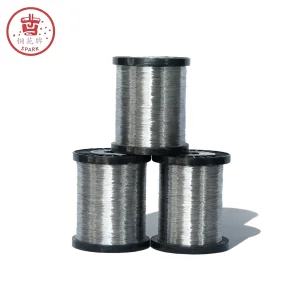
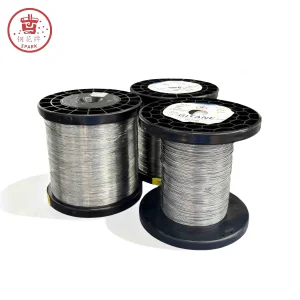
Supplied in DIN100, DIN160, DIN200, DIN250 plastic spools or heavy wooden crate wire coils wrapped in moisture-proof anti-tarnish plastic film for ocean cargo protection.
Custom Element Fabrication
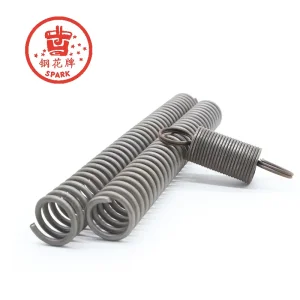
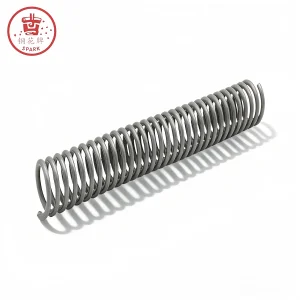
On-demand coiling, wave-shaping, flat ribbon punching, and welded terminal lead rods (Ni, Fe, or special alloy leads) tailored to client furnace assembly drawings.
Frequently Asked Questions (Q&A)
Clear engineering answers regarding thermal behavior, atmosphere compatibility, and product selection.
Explore Additional SPARK Heating & Resistance Alloys
Browse our full range of high-temperature resistance materials, customized elements, and specialized furnace accessories.