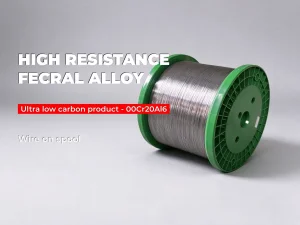

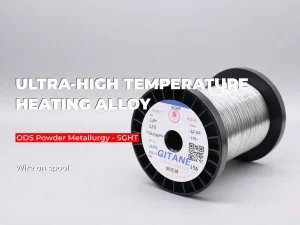
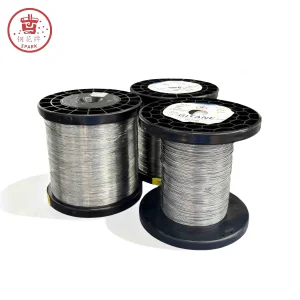

Executive Summary & Metallurgical Foundations of Cr20Ni80 Alloy
In the realm of advanced thermal processing, electrical resistance alloys are the fundamental engine driving industrial decarburization, high-precision thermal metallurgy, and laboratory thermal research. Among the extensive spectrum of Nickel-Chromium (Ni-Cr) resistance alloys, Cr20Ni80 (commonly designated as Nichrome 80/20, Ni80Cr20, or UNS N06003) stands as the gold standard for mid-to-high temperature applications operating continuously up to 1200°C (2192°F).
Engineering box furnaces for heavy-duty industrial heat treatment demands heating elements that exhibit exceptional mechanical integrity at elevated temperatures, resistance to thermal fatigue caused by rapid cycling, and metallurgical immunity to localized oxidation. Cr20Ni80 delivers a harmonious balance of high electrical resistivity (1.09 µΩ·m at 20°C), superior hot strength, non-magnetic properties in fully annealed states, and outstanding structural ductility post-extended thermal exposure.
Unlike Iron-Chromium-Aluminium (FeCrAl) alloys which experience severe grain growth and room-temperature embrittlement post-heating, Cr20Ni80 retains excellent ductility and structural toughness, preventing sagging or structural collapsing during long-term box furnace operation.
Upon initial heating in oxidizing atmospheres, Cr20Ni80 forms a tenacious, self-healing Chromium Oxide ($Cr_2O_3$) protective passivation layer. This dense layer minimizes further oxidation and resists thermal shock scaling during high-frequency pulse-width modulated (PWM) furnace power cycles.
Extremely stable in air, nitrogen, and argon gas environments. Highly resistant to "green rot" oxidation in carburizing atmospheres when modified with trace silicon and rare earth element (REE) additions during vacuum induction melting.
Comprehensive Alloy Comparison Matrix (Industrial Electric Heating Standards)
| Metallurgical Parameter | Cr20Ni80 (Nichrome 80) | Cr15Ni60 (Nichrome 60) | 0Cr25Al5 (FeCrAl Grade) | SGHT / SGHYZ (Ultra-High Temp) |
|---|---|---|---|---|
| Chemical Composition | 80% Ni, 20% Cr (Balance Fe < 1.0%) | 60% Ni, 15% Cr, Bal. Fe (~25%) | 25% Cr, 5% Al, Bal. Fe | Advanced FeCrAl + Rare Earth (REE) |
| Max Continuous Temp | 1200°C (2192°F) | 1150°C (2102°F) | 1250°C (2282°F) | 1400°C - 1425°C |
| Electrical Resistivity (20°C) | 1.09 ± 0.05 µΩ·m | 1.11 ± 0.05 µΩ·m | 1.42 ± 0.07 µΩ·m | 1.45 ± 0.08 µΩ·m |
| Density (g/$cm^3$) | 8.40 | 8.20 | 7.10 | 7.10 |
| Ductility After Long Heating | Excellent (Fully Ductile) | Good | Brittle (Requires Careful Handling) | Moderate (Engineered Grain Structure) |
| Primary Application | Industrial Box Furnaces, Heavy Duty Elements | Appliance Heating, Resistors | Industrial Kilns, High Temp Heaters | Semiconductor, Advanced Ceramics |
Industrial Heat Treatment: Heating Elements for Box Furnaces
Box furnaces (muffle furnaces, chamber kilns, and batch heat-treatment ovens) serve as the backbone of metallurgy shop floors globally, executing stress relieving, annealing, normalizing, hardening, tempering, and carburizing. The heart of these systems lies in the electric heating elements—typically configured as helical coiled wire, corrugated strip (ribbon), or ceramic-embedded modular panels engineered from wholesale Cr20Ni80 wire.
Surface Power Load Density ($W/cm^2$) Optimization
One of the critical failure modes of box furnace heating coils is localized overheating caused by improper surface loading. Cr20Ni80 allows thermal engineers to design element surface loads up to 2.0 to 4.0 $W/cm^2$ in free-radiating environments depending on furnace target operating temperatures. Proper surface load calculation balances heat transfer to the workpiece against internal element core temperatures, preventing premature burnouts.
- Furnace Temp 800°C: Recommended Surface Load 3.5 - 4.2 $W/cm^2$
- Furnace Temp 1000°C: Recommended Surface Load 2.2 - 2.8 $W/cm^2$
- Furnace Temp 1150°C: Recommended Surface Load 1.2 - 1.8 $W/cm^2$
Geometric Coiling & Mechanical Support Rules
When manufacturing helical elements from Cr20Ni80 wire, maintaining precise pitch-to-wire diameter ratios is vital. The outer diameter of the coil ($D$) relative to the wire diameter ($d$) should ideally sit between 5:1 and 8:1. A pitch spacing ($S$) of 2 to 3 times wire diameter ensures optimal thermal radiation into the furnace chamber while eliminating adjacent coil turn shielding and hot spots.
Cr20Ni80 elements are mounted using high-alumina ceramic tubes, ceramic hooks, or embedded within vacuum-formed ceramic fiber modules, providing total electrical isolation and structural stability during multi-axis thermal expansion.
Global Procurement Needs, Quotes & Wholesale Sourcing Strategy
Procurement managers and OEM furnace engineers operating across North America, Europe, Asia-Pacific, and the Middle East face distinct supply chain dynamics when sourcing wholesale Cr20Ni80 heating wire. As industrial manufacturers accelerate their shift toward electrified heating to meet corporate Scope 1 decarbonization goals, securing high-grade, traceable resistance alloy supply lines has become a strategic priority.
Batch-to-Batch Consistency
Variation in electrical resistance across wire spools leads to uneven power dissipation across large box furnace zones. Leading global buyers require mill test certificates (MTC 3.1) confirming resistance tolerances within ±3% to ±5%, ensuring drop-in replacement performance.
Surface Finish Options
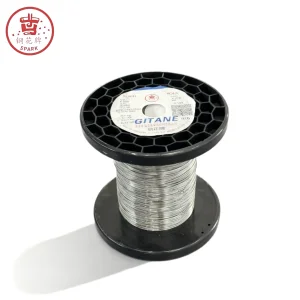
Wholesale Cr20Ni80 wire is supplied in Bright Annealed finish (smooth, metallic shine for clean ambient rewinding) or Oxidized / Pickled finish (pre-passivated for instant thermal operation without initial surface gas outgassing).
Custom Spooling & Packaging
To suit automatic coiling machinery, wire is packaged on standard plastic spools (DIN 160, DIN 200, DIN 250) or heavy metal spools, protected by moisture-vapor barrier vacuum foil packaging for international ocean transit.
Macro-Industrial Solutions Across Mid-to-High End Scenarios
Beyond standard box furnaces, wholesale Cr20Ni80 heating wire powers a sophisticated ecosystem of advanced thermal equipment across strategic global manufacturing sectors.
Aerospace & Automotive Heat Treatment (AMS 2750 Compliant)
In aerospace component manufacturing, box and pit furnaces must strictly adhere to AMS 2750 pyrometry standards for thermal uniformity. Cr20Ni80 heating elements deliver exceptional spatial temperature stability within ±3°C zone limits, crucial for the solution heat treatment of titanium alloys, precipitation-hardening stainless steels, and aluminum automotive structural castings.
Semiconductor & Electronic Components Sintering
Precision electronic resistors, multilayer ceramic capacitors (MLCC), and semiconductor ceramic substrates require clean thermal environments free of metallic flaking. Cr20Ni80's adherent non-dusting oxide layer prevents particulate contamination inside high-purity muffles during high-density firing cycles.
Solar Energy & Photovoltaic Wafer Processing
Used extensively in diffusion furnaces and annealing lines for silicon ingot manufacturing. The non-magnetic property of Cr20Ni80 ensures zero electromagnetic interference with high-precision temperature control sensor arrays and magnetic levitation transport mechanisms inside solar processing chambers.
High-Precision Laboratory & Analytical Kilns
Muffle kilns in research centers rely on Cr20Ni80 elements due to their rapid dynamic thermal response. When combined with modern solid-state relays (SSR) or SCR power controllers, Cr20Ni80 enables precise thermal ramp and soak profiles without thermal overshoot.
Localization Support, Quality Assurance & Compliance Framework
To maintain E-E-A-T (Experience, Expertise, Authoritativeness, and Trustworthiness) compliance in modern industrial procurement, manufacturers must demonstrate verifiable quality control architectures and localized customer engineering support.
Strict Compliance Frameworks
Every heat of Cr20Ni80 resistance wire undergoes rigorous laboratory testing prior to shipment. Production follows global metallurgical benchmarks including GB/T 1234-2012, ASTM B344 (Standard Specification for Drawn or Rolled Nickel-Chromium and Nickel-Chromium-Iron Alloys for Electrical Heating Elements), and DIN 17471.
All delivered products are fully compliant with EU RoHS Directive 2011/65/EU and REACH regulations, ensuring zero hazardous substance contamination during ultra-high temperature thermal operation.
Global Engineering & Technical Support
Transitioning to a new heating alloy supplier involves technical risk management. Leading suppliers provide comprehensive engineering consultation services, including:
- Custom Element Sizing & Ohmic Value Calculation Assistance.
- Atmospheric Compatibility Audits (Carburizing, Nitriding, Vacuum).
- On-site or Remote Failure Analysis & Life Expectancy Modeling.
- Consignment Stock & Local Warehouse Buffer Stock Agreements.
Technological Roadmap & Future Outlook (2025–2035)
As global energy sectors shift toward total thermal electrification, the demands placed on nickel-chromium resistance wire are evolving rapidly. Next-generation industrial heating calls for higher energy efficiency, smart diagnostic capabilities, and enhanced thermodynamic stability.
Nanostructured REE Doping
Innovations in Vacuum Induction Melting (VIM) permit micro-alloying with rare earth elements like Yttrium (Y), Cerium (Ce), and Zirconium (Zr). Doping Cr20Ni80 with nanostructured REE particles drastically improves oxide scale adherence, extending high-temperature element lifespan by up to 40% in aggressive thermal cycling.
Powder Metallurgy (PM) Synthesis
Advancements in Powder Metallurgy processes (akin to modern SGHT grades) allow for ultra-uniform grain size control, eliminating hot-sagging tendencies and allowing box furnace elements to operate close to physical alloy melting points without mechanical deformation.
Digital Twin & Predictive Health
Integrating electrical resistance drift monitoring directly into industrial IoT (IIoT) furnace controllers. Real-time tracking of Cr20Ni80 resistance changes enables predictive maintenance alerts before element failure occurs, completely eradicating unplanned furnace shutdowns.