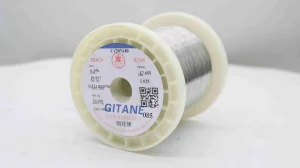
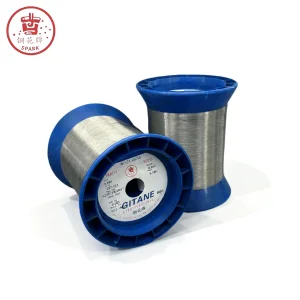
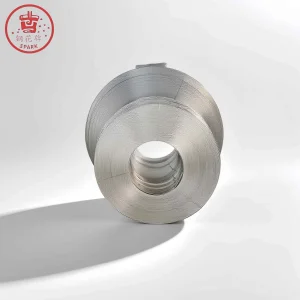
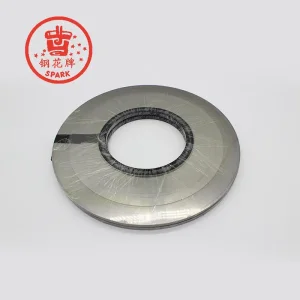
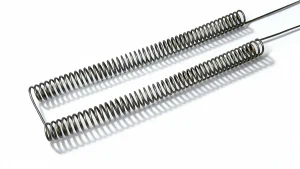
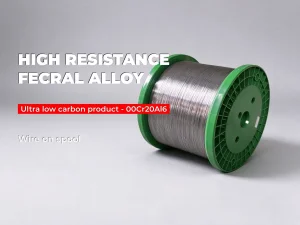
Featured High-Performance Resistance Alloys (Part I)
Explore our foundational range of precision-melted iron-chromium-aluminum and nickel-chromium electric heating wires, ribbons, and custom industrial elements.



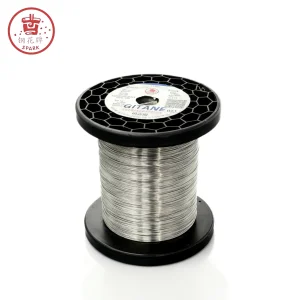
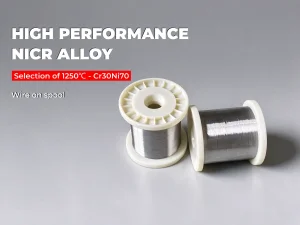


Deciphering Chemical Composition Dynamics in High-Temperature Resistance Alloys
A rigorous examination of how elemental stoichometry, micro-alloying additions (Y, Zr, Hf, Nb), and interstitial controls define operational life, electrical resistivity, and thermal phase stability.
In high-temperature thermal engineering, the selection of resistance heating alloys is driven primarily by the precise control of chemical composition. The elemental synthesis of Iron-Chromium-Aluminum (FeCrAl) and Nickel-Chromium (NiCr) alloys governs their ability to undergo passivating oxidation, retain dimensional integrity under thermal stress, and resist grain growth at elevated temperatures up to 1425°C.
Beijing Shougang Gitane New Materials Co., Ltd. (SPARK) leverages over six decades of metallurgical research and vacuum induction melting (VIM) technology to engineer heating elements with pinpoint elemental tolerances. Understanding the thermodynamic role of each element in the alloy matrix allows furnace design engineers and wholesale procurement specialists to optimize both element longevity and thermal efficiency.
| Alloy Grade | Alloy Family | Cr (%) | Al (%) | Ni (%) | Micro-Alloying Elements | Max Temp (°C) | Resistivity (μΩ·m) |
|---|---|---|---|---|---|---|---|
| SGHT | FeCrAl (PM ODS) | 21.0 - 23.0 | 5.5 - 6.5 | Balance (Fe) | Y, Zr, Hf, Ta additions | 1425°C | 1.45 ± 0.05 |
| SGHYZ | FeCrAl (Ultra High) | 23.0 - 26.0 | 6.0 - 7.0 | Balance (Fe) | Yttrium & Zirconium doped | 1400°C | 1.45 ± 0.05 |
| HRE (1350) | FeCrAl (Powder/VIM) | 22.0 - 25.0 | 5.0 - 6.0 | Balance (Fe) | Rare Earth (RE) optimized | 1350°C | 1.42 ± 0.05 |
| 0Cr25Al5 | FeCrAl Standard | 23.0 - 26.0 | 4.5 - 5.5 | Balance (Fe) | Standard RE additions | 1250°C | 1.42 ± 0.05 |
| 0Cr21Al6Nb | FeCrAl Doped | 20.0 - 23.0 | 5.5 - 6.5 | Balance (Fe) | Nb (Niobium) 0.5 - 1.0% | 1300°C | 1.40 ± 0.05 |
| Cr20Ni80 | NiCr Austenitic | 20.0 - 23.0 | - | 78.0 - 81.0 | Si, Mn controlled | 1200°C | 1.09 ± 0.05 |
| Ni70Cr30 | NiCr Premium | 28.0 - 31.0 | - | Balance (Ni) | Si 1.0 - 1.5% optimized | 1250°C | 1.18 ± 0.05 |
| Cr15Ni60 | NiCr Industrial | 15.0 - 18.0 | - | 55.0 - 61.0 | Fe balance (~24%) | 1150°C | 1.11 ± 0.05 |
Alpha-Alumina Oxide Layer Kinetics
In FeCrAl alloys (such as 0Cr25Al5 and SGHYZ), the inclusion of 4.5% to 7.0% aluminum promotes the selective thermal growth of a continuous, thermodynamically stable alpha-alumina ($\alpha\text{-Al}_2\text{O}_3$) scale. This scale acts as an ionic diffusion barrier, suppressing further oxidation rates by orders of magnitude compared to chromium oxide films.
Reactive Element Effect (REE)
Micro-doping with reactive elements such as Yttrium (Y), Zirconium (Zr), and Hafnium (Hf) modifies scale pegging mechanisms at the oxide-metal interface. REE prevents scale spallation during rapid thermal cycling, locking the protective oxide layer to the alloy substrate and extending hot-life exponentially.
Austenitic Phase Ductility in NiCr
Nickel-Chromium alloys (Cr20Ni80, Ni70Cr30) maintain a face-centered cubic (FCC) austenitic crystal structure throughout their operational spectrum. Unlike ferritic FeCrAl alloys which undergo grain coarsening after high-temperature exposure, NiCr alloys retain superior mechanical ductility when cold.
Next-Generation Alloy Development & Future Horizons
Analyzing the evolution of oxide dispersion strengthened (ODS) powder metallurgy alloys, sub-micron scale integrity, and thermal materials engineering tailored for decarbonized industrial thermal processing.
Powder Metallurgy & ODS Synthesis
Traditional ingot metallurgy suffers from thermal sagging at temperatures exceeding 1300°C due to rapid grain growth. SPARK’s technical roadmap incorporates Oxide Dispersion Strengthened (ODS) Powder Metallurgy, encapsulating nanometer-scale yttria particles ($\text{Y}_2\text{O}_3$) within the metal lattice. This pins grain boundaries, increasing high-temperature creep strength by over 400% in grades like SGHT.
Hydrogen & Clean Fuel Atmosphere Compatibility
As global thermal processes transition from natural gas to pure Hydrogen ($\text{H}_2$) firing and green electrification, electric heating elements must withstand high-moisture and reducing environments. SPARK is engineering modified FeCrAl formulations with elevated Silicon and Tantalum co-doping to prevent scale degradation in dry/wet hydrogen atmospheres.
Smart Sensing & Real-Time Degradation Tracking
Integrating chemical composition diagnostics with predictive AI maintenance algorithms. By tracking slight variations in hot-to-cold resistance ratio ($R_T/R_{20}$), SPARK smart elements allow automated furnace control systems to forecast remaining element life before physical oxide collapse occurs.
Macro-Industrial Solutions Across Key Sectors
From cleanroom semiconductor processing to heavy petrochemical cracking, custom chemical composition matching guarantees optimal thermal performance.
Photovoltaics & Semiconductor Manufacturing
In monocrystalline silicon crystal pulling and diffusion furnace tubes, trace impurities in heating wires can ruin semiconductor yields. SPARK supplies ultra-pure 00Cr20Al6 and SGHT wires with strict limits on iron spallation and heavy metal outgassing, ensuring ultra-clean thermal zones up to 1350°C.
Lithium Battery Cathode Material Sintering
Production of LFP and NCM lithium-ion battery cathode materials requires continuous rotary kilns operating in highly corrosive, alkali-laden exhaust gas environments. SPARK’s 0Cr21Al6Nb alloy elements resist lithium vapor attack and localized carburization, extending campaign life by up to 60%.
Petrochemical & Energy Radiant Tube Systems
High-stress, high-pressure pyrolysis and reforming furnace modules rely on SGHT seamless alloy steel tubes and heavy ribbon spirals. Engineered with exceptional high-temperature tensile strength, these products resist thermal distortion under continuous duty at 1150°C to 1300°C.
China Factory 4.0: Metallurgical Supply Chain Resilience
Combining state-of-the-art melt shop automation with vertical integration—from raw material refining to final spool packaging.
End-to-End Quality Control Architecture
At Beijing Shougang Gitane New Materials Co., Ltd., production spans an 88,000 square meter state-of-the-art facility featuring fully automated Vacuum Induction Melting (VIM), Electro-Slag Remelting (ESR), continuous hot rolling, and diamond-matrix ultra-fine wire drawing mills.
- Automated SPECTRO Analytical Monitoring: Real-time chemical melt verification ensuring zero batch-to-batch chemical composition deviation.
- Hydrogen Bright Annealing Lines: Oxygen-free heat treatment producing oxide-free, bright mirror-finish wire surfaces with consistent grain structure.
- Online Laser Diameter Measurement: Continuous optical micrometer inspection maintaining wire diameter tolerances within ±0.002 mm.
- 100% Eddy-Current Flaw Detection: Non-destructive testing eliminating internal micro-cracks and surface inclusions prior to shipment.
Direct Factory Wholesale Pricelist Dynamics
Our direct-to-enterprise supply chain eliminates intermediary markups. Pricing matrices are indexed directly to London Metal Exchange (LME) raw metal quotes for Nickel and Chromium, combined with volume tier discounts.
Global Buyers' Pricelist & Technical Procurement Guide
A step-by-step framework for procurement engineers to evaluate alloy specifications, verify mill test certificates, and optimize total cost of ownership (TCO).
Define Operating Environment
Specify continuous service temperature, thermal cycle frequency, and atmospheric gases ($\text{O}_2, \text{N}_2, \text{H}_2, \text{CO}/\text{CO}_2$, vacuum). FeCrAl excels in oxidizing atmospheres up to 1425°C, while NiCr is preferred in reducing/nitrogen atmospheres or frequent thermal cycling environments.
Calculate Surface Load ($W/\text{cm}^2$)
Determine element watt density. Overloading element surface watts accelerates aluminum depletion and leads to premature hot spots. SPARK engineers provide full surface load calculations to match target element lifespan goals (e.g. 10,000+ continuous hours).
Verify Mill Test Certificates (MTC)
Ensure every shipment includes EN 10204 3.1 compliant Mill Test Reports specifying exact ladle chemistry analysis, room-temperature electrical resistance ($\Omega/\text{m}$), tensile strength, elongation %, and batch heat numbers.
Global Regulatory Compliance & Regional Support
Meeting international quality benchmarks to guarantee seamless export and integration into European, North American, and Asian industrial supply chains.
Standards Cross-Referencing
SPARK alloys fully conform to international standards including Chinese GB/T 1234-2012, ASTM B603 (FeCrAl), ASTM B344 (NiCr), DIN 17470, and JIS C2520. Cross-spec documentation is provided for easy engineering substitution.
Environmental & Safety Compliance
Fully compliant with EU RoHS Directive 2011/65/EU, REACH (SVHC) candidate list regulations, and ISO 14001 environmental management standards. Free from hazardous heavy metals and toxic surface lubricants.
Export Packaging Engineering
Spools and coils are vacuum-sealed in desiccated vapor-corrosion-inhibitor (VCI) foil wrap, then enclosed in IPPC heat-treated, fumigation-free plywood crates to ensure zero oxidation during long maritime transport.
Frequently Asked Technical & Procurement Questions
Detailed answers from SPARK metallurgical team to assist procurement specialists and heat-process engineers.
How does chemical composition directly impact the maximum operating temperature of FeCrAl wire? +
What is the economic advantage of sourcing wholesale FeCrAl vs NiCr alloys from China manufacturers? +
Why is Nb (Niobium) added to the 0Cr21Al6Nb chemical formulation? +
What delivery forms can SPARK supply for wholesale factory orders? +
How does SPARK guarantee electrical resistance uniformity across large spools? +
What quality management certifications and test reports are provided with wholesale orders? +
Can SPARK produce customized chemical compositions for unique OEM furnace designs? +
Featured High-Performance Resistance Alloys (Part II)
Complete product range featuring special furnace elements, spectrometer accessories, high-temperature ribbons, and specialized alloy formulations.