
Automated Winding-Compatible Heating Alloys (Part 1)
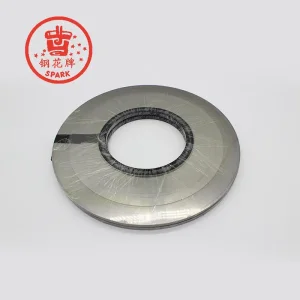
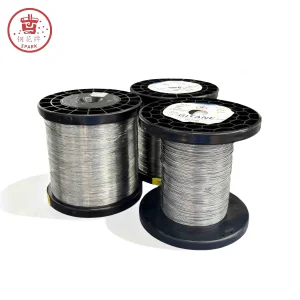
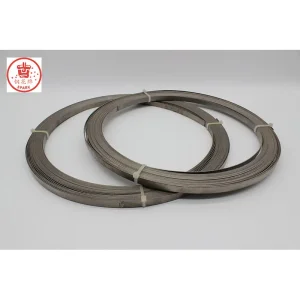
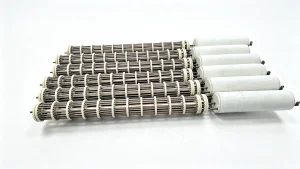
Select from our premium alloy wire spools, precision ribbon strips, and prefabricated heating cores optimized for tension-controlled automated coiling machines.




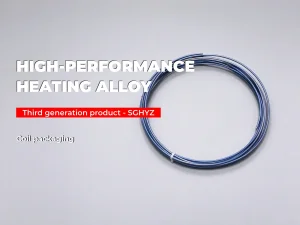
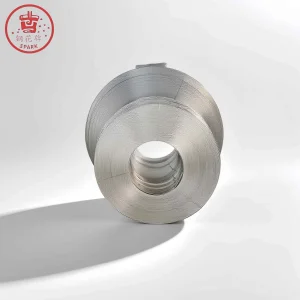

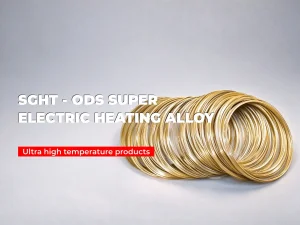
The Automation Paradigm Shift in Industrial Heating Element Winding
In modern thermal manufacturing—spanning semiconductor tube furnaces, EV battery thermal management modules, photovoltaic diffusion chambers, and heavy industrial heat-treatment kilns—the shift from manual element coiling to high-speed CNC automated winding lines is absolute. High-speed automatic winding machines run at linear wire speeds exceeding 150 to 300 meters per minute. At these velocity levels, conventional resistance wire fails due to dimensional variability, inconsistent tensile yield strength, and wide electrical resistance fluctuations.
Crucial Technical Bottlenecks Solved by Custom Resistance Tolerances
When global heating element manufacturers automate their production lines, they encounter three core mechanical and electrical pain points:
1. Spool Resistance Drift
Standard commercial wire permits a resistance tolerance of ±5% to ±7%. Over a continuous 500kg spool, this variation causes localized power spikes, uneven surface load (W/cm²), premature hot-spot burnout, and automated quality reject rates exceeding 8.5%.
2. Dynamic Springback Variation
Automated coiling mandrels rely on a precise elastic modulus and uniform grain boundary structure. Fluctuations in wire hardness or grain size lead to springback inconsistencies, forcing automated lines to pause for manual recalibration.
3. Tensile Breakage at High Speed
Sub-surface micro-inclusions or non-uniform annealing cause immediate wire snapping under continuous high tension, stalling automated robotic winding cells and causing costly downtime.
Information Gain Advantage: SPARK Metallurgical Consistency
By leveraging Beijing Shougang Gitane’s 60+ years of state-owned enterprise metallurgical legacy, SPARK heating alloys undergo Vacuum Induction Melting (VIM), continuous electroslag remelting, dynamic laser-micrometer diameter tracking, and online high-frequency micro-ohmmeter calibration. We deliver spooled wire guaranteed with ultra-tight custom resistance tolerances down to ±1.0%, guaranteeing zero-fault robotic feeding, identical pitch dimensions, and uniform power density across millions of coiled elements.
FeCrAl vs NiCr Alloy Performance Matrices for Automated Winding
Engineering data comparing key physical, electrical, and mechanical properties across standard and specialized SPARK alloy grades manufactured according to GB/T 1234-2012 and international standards.
| Alloy Grade | Alloy Family | Max Temp (°C) | Resistivity (μΩ·m, 20°C) | Tensile Strength (MPa) | Resistance Tolerance Options | Automated Winding Rating |
|---|---|---|---|---|---|---|
| SGHT (Powder Metallurgy) | FeCrAl (PM) | 1425°C | 1.45 ± 0.02 | 750 - 950 | Custom ±1.0%, ±1.5% | ★★★★★ (Ultra-Creep Resistant) |
| SGHYZ Ultra-High Temp | FeCrAl Rare-Earth | 1400°C | 1.42 ± 0.02 | 700 - 900 | Custom ±1.5%, ±2.0% | ★★★★★ (High-Speed CNC Ready) |
| 0Cr25Al5 Workhorse | FeCrAl Alloy | 1250°C | 1.42 ± 0.03 | 650 - 850 | Custom ±2.0%, ±3.0% | ★★★★☆ (Industrial Standard) |
| 0Cr23Al5 High Resistance | FeCrAl Alloy | 1250°C | 1.35 ± 0.03 | 620 - 800 | Custom ±2.0%, ±3.0% | ★★★★☆ (Economical Coiling) |
| Cr20Ni80 Nichrome | Ni-Cr Alloy | 1200°C | 1.09 ± 0.02 | 750 - 980 | Custom ±1.0%, ±1.5% | ★★★★★ (High Ductility & Flexibility) |
| Cr30Ni70 Nichrome | Ni-Cr High-Temp | 1250°C | 1.18 ± 0.02 | 780 - 1000 | Custom ±1.0%, ±2.0% | ★★★★★ (Cyclic Thermal Stability) |
China Factory 4.0: Supply Chain Resilience & Cost-Efficiency Advantage
In an era marked by global supply chain volatility, European and American original equipment manufacturers (OEMs) demand predictable lead times, strict lot-to-lot traceability, and scalable raw material capacity. Shougang Gitane’s 88,000 square meter Beijing manufacturing complex serves as a flagship model of China Industry 4.0 smart manufacturing.
Real-Time Laser Metrology
Continuous dual-axis laser micrometers measure wire outer diameter every 0.01 seconds during continuous drawing, locking dimensional tolerances within ±0.002 mm across thousands of wire meters.
Automated Spool Tension Control
Precision servo-driven winding spools maintain constant back-tension from inner core to outer layer, preventing wire crossover, tangling, or deformation during high-speed dereeling on customer lines.
Fully Vertical Integration
From raw ore refining and master alloy melting down to hot rolling, cold drawing, continuous annealing, and packaging—100% internal control eliminates supplier-induced delays and quality slips.
Custom Spooling Specifications for Automated Lines
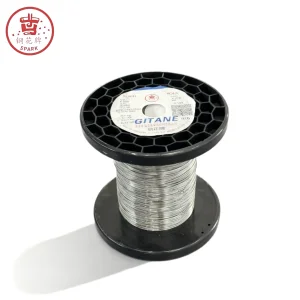
SPARK alloy wires are delivered on heavy-duty plastic or metal spools (DIN 200, DIN 250, DIN 355, K355, and custom weight spools up to 500kg per reel) designed specifically to fit European (e.g., Jouhsen, Wafios) and Asian automated CNC spring and element coiling machines.
Localized Application Scenarios & Global Enterprise Procurement
How global industries leverage custom resistance tolerance wire compatible with automated winding production lines to achieve operational excellence.
Semiconductor Diffusion Furnaces
In vertical wafer diffusion and oxidation chambers running up to 1350°C, temperature uniformity within ±0.5°C across the heating zone is required. Using SPARK SGHYZ or SGHT wire with custom ±1.0% resistance tolerance guarantees matching electrical wattage across multi-zone automated heaters.
Automotive & EV PTC Auxiliary Heaters
High-speed assembly lines producing electric vehicle cabin heaters and battery thermal conditioning elements demand flat wire and tight-diameter round wire that coils smoothly into dense ceramic insulating frames without deformation or short-circuit risk.
Photovoltaic Ingot Sintering Kilns
Solar wafer production relies on ultra-high-power radiant tube heating cores. Large gauge 0Cr25Al5 wire automated winding ensures uniform spiral expansion, preventing inter-turn shorting during 24/7 continuous operation at 1250°C.
Home Appliances & Commercial HVAC
Wholesale manufacturers of air heaters, tumble dryers, and toaster elements use SPARK Cr20Ni80 wire spools on high-speed multi-axis automatic winders, maintaining consistent pitch and total coil resistance for immediate assembly.
Automated Winding-Compatible Heating Alloys (Part 2)
Explore additional high-temperature FeCrAl, NiCr, and specialized radiant elements designed for automated manufacturing and exact resistance specification compliance.

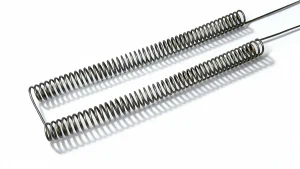
State-of-the-Art Quality Verification & Certified Metallurgical Standards
As an established supplier under Shougang Group, Beijing Shougang Gitane New Materials Co., Ltd. holds ISO 9002 (since 1996) and ISO 9001 (since 2003) system certifications. Every reel of wire produced for wholesale automated winding lines is backed by full Mill Test Certificates (MTC) detailing metallurgical heat chemistry, tensile yield point, elongation percentage, electrical resistance at 20°C, and accelerated thermal oxidation lifespan test results.
In-Line Resistance Testing
100% of wire length passes through high-frequency continuous micro-ohmmeters during final spooling, rejecting out-of-spec sections before shipment.
GB/T 1234-2012 Compliance
Strict adherence to national electrothermal alloy standards, matching or exceeding international specifications such as ASTM B603, ASTM B344, and DIN 17470.
Defect-Free Surface Polish
Bright annealed or uniform oxidized surface finishes free from micro-scratches, burrs, or lubricants, keeping customer winding mandrels clean and free of residue.
Frequently Asked Questions by Global Engineers & Procurement Directors
Answers to key technical inquiries regarding automated coiling compatibility, custom tolerance ordering, and metallurgical selection.
Why is wire compatibility with automated winding production lines critical for wholesale buyers?
Automated CNC winding machines require consistent wire elongation, uniform tensile strength, and exact outer diameter control. If wire hardness varies across a spool, the springback angle changes, causing inconsistent outer coil diameters and pitch errors. SPARK alloy wire undergoes continuous, tension-controlled bright annealing to lock in physical ductility, ensuring uninterrupted high-speed winding without machine jams or manual re-setting.
How does customized resistance tolerance (e.g., ±1.0% to ±2.0%) benefit heating element manufacturing?
Standard commercial wire tolerances (±5% or wider) cause substantial wattage variation between individual heating coils. In automated element production, fixed coil lengths cut from high-variance spools will produce hot spots, uneven thermal zones, and electrical quality rejects. Custom tight resistance tolerances guarantee that every finished element falls within exact power rating requirements without manual trimming or sorting.
What is the difference between standard FeCrAl (e.g., 0Cr25Al5) and ultra-high-temperature SGHT/SGHYZ alloys?
Standard FeCrAl 0Cr25Al5 operates reliably up to 1250°C. SGHYZ utilizes specialized rare-earth element additions to push continuous operation to 1400°C with improved creep resistance. SGHT is manufactured via advanced powder metallurgy, enabling operational temperatures up to 1425°C with superior high-temperature structural rigidity, structural anti-sagging properties, and extended life under thermal cycling.
Which alloy family should be chosen: FeCrAl or NiCr (Nichrome)?
FeCrAl alloys offer higher maximum operating temperatures (up to 1425°C), higher electrical resistivity, and approximately 15% lower density than NiCr—reducing overall raw material weight and cost per element. NiCr alloys (e.g., Cr20Ni80, Cr30Ni70) provide superior hot strength, maintain room-temperature ductility after long-term heating, and perform exceptionally well under rapid thermal cycling and in reducing/reducing-nitrogen furnace atmospheres.
What packaging options are available for global bulk wholesale orders?
We offer custom spooling options tailored to client equipment, including DIN 200, DIN 250, DIN 355 plastic spools, heavy-duty K355 metal reels, and large continuous wire coils (up to 500kg). All spools are vacuum-wrapped with moisture-absorbent desiccant and packed into export-grade reinforced wooden cases for secure global shipping.