Featured Industrial Heating Alloys & Precision Elements
Direct factory supply of ultra-high temperature resistance wires, custom furnace spirals, and micro-heating elements certified to ISO 9001 and GB/T 1234-2012 standards.





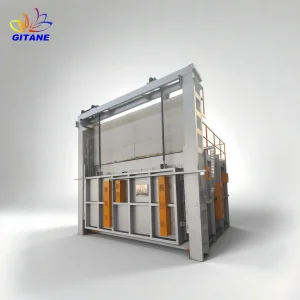
Macro-Industrial Thermal Management: Chemical Infrastructure & Semiconductor Convergence
In modern advanced manufacturing, precise thermal control represents the foundational boundary between operational profitability and catastrophic process failure. Across two vastly different operational scales—heavy chemical processing pipelines stretching kilometers and sub-micron semiconductor packaging die-attach stages—the fundamental physical requirement remains identical: uncompromising thermal stability, precise heat distribution, and ultra-high reliability under harsh environmental conditions.
Global enterprise demand for specialized electric heating alloys, chemical pipe tracing cables, polymer extruder heating bands, and semiconductor packaging heating blocks has experienced exponential growth. Driven by the global expansion of petrochemical refining complexes, polymer recycling extruders, and high-density microelectronics fabrication (advanced 2.5D/3D IC packaging, flip-chip bonding, and wafer-level fan-out packaging), industrial procurement teams face increasing pressure to source thermal components that minimize Total Cost of Ownership (TCO) while guaranteeing flawless operational uptime.
Chemical processing plants operating high-viscosity media require specialized heat tracing systems to maintain process temperatures above crystallization or dew points. A thermal variance of just 5°C along a chemical transport pipe can lead to localized solidification, pipe rupture, or massive throughput degradation. Simultaneously, plastic and polymer extrusion systems demand high-watt-density ceramic band heaters capable of enduring continuous thermal cycling up to 450°C without wire oxidation or die-face deformation. At the ultra-precision end of the spectrum, semiconductor encapsulation and die bonding equipment demand micro-patterned heating elements manufactured from specialized Nickel-Chromium (NiCr) or Iron-Chromium-Aluminum (FeCrAl) alloys capable of delivering instantaneous, localized thermal pulses with sub-degree accuracy.
Electrothermal Alloy Engineering: FeCrAl vs. NiCr Metallurgical Dynamics
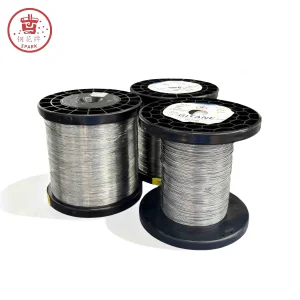
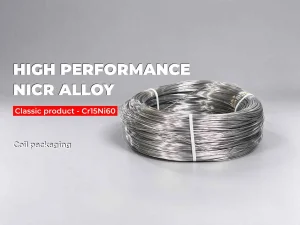
Selecting the optimal heating wire composition is the core engineering decision determining heater life, energy efficiency, and mechanical reliability. Beijing Shougang Gitane New Materials Co., Ltd. (SPARK) produces two premier alloy families engineered for demanding chemical and microelectronic thermal applications: Iron-Chromium-Aluminum (FeCrAl) and Nickel-Chromium (NiCr) alloys.
FeCrAl Alloys (SGHT, SGHYZ, 0Cr25Al5)
Engineered for ultra-high temperatures up to 1425°C. FeCrAl alloys form a tenacious, self-healing Alpha-Aluminium Oxide (Al₂O₃) surface scale upon heating. This oxide layer provides outstanding electrical insulation and superior protection against high-temperature oxidation and sulfur-containing atmospheres typical in chemical processing plants.
NiCr Alloys (Cr20Ni80, Cr30Ni70, Cr15Ni60)
Recognized for extraordinary hot mechanical strength and ductility post-oxidation. NiCr alloys form a dense Chromium Oxide (Cr₂O₃) protective layer. They exhibit minimal elongation over long term service and exceptional fatigue resistance under rapid ON/OFF thermal cycling, making them ideal for semiconductor packaging and plastic extrusion.
Powder Metallurgy (SGHT Grade)
Produced via advanced dispersion-strengthened powder metallurgy. SGHT exhibits zero sag at temperatures up to 1420°C, high creep rupture strength, and uniform electrical resistance—critical for semiconductor wafer diffusion and ceramic packaging sintering.
| Alloy Grade | Composition Family | Max Operating Temp (°C) | Resistivity at 20°C (μΩ·m) | Density (g/cm³) | Primary Industrial Application |
|---|---|---|---|---|---|
| SPARK SGHT | FeCrAl (Powder Met) | 1425°C | 1.45 ± 0.05 | 7.10 | Semiconductor packaging, diffusion kilns, cleanrooms |
| SPARK SGHYZ | FeCrAl (Rare Earth) | 1400°C | 1.42 ± 0.05 | 7.10 | Chemical pipeline trace heating, gas preheaters |
| SPARK 0Cr25Al5 | FeCrAl Alloy | 1250°C | 1.42 ± 0.05 | 7.10 | Extruder ceramic band heaters, industrial furnaces |
| SPARK Cr20Ni80 | NiCr Alloy | 1200°C | 1.09 ± 0.05 | 8.40 | Semiconductor die bonding blocks, micro-heaters |
| SPARK Cr30Ni70 | NiCr Alloy | 1250°C | 1.18 ± 0.05 | 8.10 | High-stress thermal cycling, corrosive chemical trace |
Global Procurement Matrix: Criteria for Chemical & Semiconductor Technical Sourcing
Global enterprise buyers—including Tier-1 chemical EPC contractors, original equipment manufacturers (OEMs) of plastic extruders, and semiconductor assembly & test (OSAT) packaging engineers—face stringent quality criteria when sourcing heating elements. Procuring inferior resistance wire results in early oxide spallation, localized hotspots, wire resistance drift, and premature open-circuit failures that cost thousands of dollars per minute in downtime.
Core Challenge: Long pipe runs exposed to ambient weather and corrosive chemical vapor require consistent linear resistance over hundreds of meters.
Solution: SPARK FeCrAl SGHYZ wire provides tight dimensional tolerances (±0.01mm) ensuring zero voltage drops or localized overheating across tracing circuits.
Core Challenge: Twin-screw polymer extruders operate under high vibration and high watt density up to 450°C die face temperatures.
Solution: SPARK 0Cr25Al5 ribbon and wire offer exceptional yield strength and high resistivity, enabling compact ceramic band construction with superior thermal transfer efficiency.
Core Challenge: Sub-micron flip-chip and thermocompression bonding demand rapid thermal ramp rates (up to 100°C/s) and sub-degree surface flatness.
Solution: SPARK Cr20Ni80 ultra-fine wire and strip maintain structural stability without warping during millisecond thermal cycling under high vacuum or inert gas.
Industrial Thermal Solutions: Engineering Implementation Architectures
Achieving optimum thermal efficiency requires more than raw alloy wire; it requires integrated engineering architecture tailored to specific industry mechanisms. Below are three benchmark application blueprints engineered by Beijing Shougang Gitane New Materials Co., Ltd.:
1. Pipeline Thermal Tracing Architecture
In hazardous chemical transport, trace heating cables utilizing SPARK FeCrAl alloy resistance cores are insulated with high-purity magnesium oxide (MgO) and encapsulated in seamless stainless steel or Incoloy sheaths. The system provides continuous self-regulating or constant-wattage maintenance for viscous crude, sulfur, and caustic soda transfer lines, ensuring zero cold-spots over extended operating spans.
2. Polymer Extruder Barrel Heating
Extrusion machinery processing fluoropolymers (PTFE/PFA) or engineering resins (PEEK) requires multi-zone heating blocks. SPARK 0Cr25Al5 flat ribbon wire is helically wound around mica or ceramic cores, providing maximum surface area contact. This reduces watt density per square centimeter, preventing localized polymer degradation while extending heating element lifespan by over 300%.
3. Semiconductor Packaging Bonding Block
During IC packaging, die-attach adhesives and gold/copper wire bonds require immediate, repeatable micro-heating. SPARK Cr20Ni80 precision resistance wire is embedded directly into polished nitride ceramic heating platens. The ultra-low temperature coefficient of resistance (TCR) ensures accurate closed-loop PID control and prevents thermal overshoot during delicate silicon interposer bonding.
Technical Roadmap & Future Outlook: Thermal Control in Next-Gen Microelectronics
As semiconductor nodes shrink below 2nm and chip architecture transitions to gate-all-around (GAA) nanosheets and advanced 3D stack packaging (CoWoS, EMIB), thermal management during packaging has become the primary yield-limiting factor. Thermal gradients during thermocompression die bonding cause micro-warpage, die cracking, and solder bridge voids.
Ultra-Fast Transient Heating (2025–2028)
Development of ultra-thin, low-mass resistance foils capable of reaching 400°C within 500 milliseconds and cooling back to 50°C instantly. SPARK’s research team is pioneering nano-grained FeCrAl alloy strip with enhanced electrical resistivity for next-generation chiplet packaging stages.
Zero-Carbon Chemical Tracing (2026–2030)
Transitioning fossil-fuel fired chemical pipeline boilers to 100% electrified, smart-grid integrated trace heating systems. High-voltage (up to 1000V) direct electrical tracing using SPARK SGHT alloy wires reduces industrial carbon footprints while providing real-time AI impedance monitoring for predictive maintenance.
3D Printed Ceramic-Embedded Heating (2028–2035)
Integration of additive manufacturing with micro-alloy wire placement. Complex, conformal heating channels printed inside silicon carbide (SiC) semiconductor chucks allow tailored 3D thermal profiles, eliminating edge-effect cooling during wafer encapsulation.
Global Technical Compliance, Testing & Localized Engineering Support
Beijing Shougang Gitane New Materials Co., Ltd. operates under strict state-level metallurgical quality protocols, maintaining full traceability from raw alloy melting in vacuum induction furnaces to final wire drawing, annealing, and spooling. Every batch of wire, strip, and heating element is backed by complete material certification and physical property testing.
ISO 9001 & GB/T 1234 Standard
Fully certified to ISO 9001 quality system management since 2003. All electrothermal alloys comply strictly with GB/T 1234-2012 high-resistance alloys for electric heating, matching international specs ASTM B603, DIN 17470, and JIS C2520.
Comprehensive Quality Testing
Equipped with optical emission spectrometers, high-temperature tensile testers, life-cycle thermal fatigue rigs, and digital resistance measuring bridges. Every coil undergoes 100% continuous resistance checking to guarantee zero resistance fluctuations.
Worldwide Logistics & Technical Support
Exporting to over 50 countries across North America, Europe, Southeast Asia, and the Middle East. Our dedicated engineering office provides local technical support, custom drawing design, sample fabrication, and on-site furnace retrofit consulting.
Frequently Asked Technical & Procurement Questions
Explore Additional Industrial Electric Heating Solutions
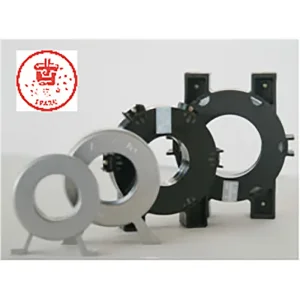
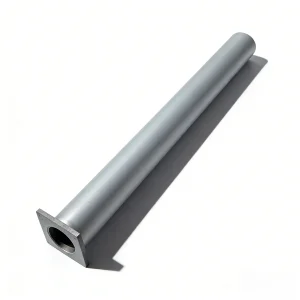
High-performance electrothermal wires, power line inductors, furnace tubes, and custom industrial heating hardware engineered by Shougang Gitane.