
Featured FeCrAl & NiCr High-Temperature Alloy Series
Factory-direct wholesale precision resistance wires, heating coils, and industrial thermal elements certified under ISO9001 quality management systems.


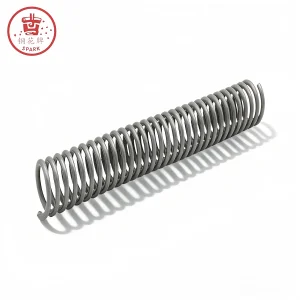

Executive Technical Briefing: High-Temperature FeCrAl Ignition Coils
Engineering parameters, thermodynamic stability, and material physics of Iron-Chromium-Aluminum (FeCrAl) alloys in advanced industrial combustion ignition systems.
The Engineering Challenge in Modern Thermal Ignition
High-temperature ignition coils operate under severe thermodynamic stress. Modern industrial burners, gas turbines, automotive pre-heating systems, and ceramic sintering furnaces demand igniters capable of withstanding rapid thermal shock cycling ($0^\circ\text{C}$ to $>1300^\circ\text{C}$ in seconds), high electrical resistance stability, and intense oxidative degradation.
Traditional Nickel-Chromium ($\text{NiCr}$) alloys, while ductile, suffer from rapid oxidation degradation above $1200^\circ\text{C}$ and elevated mass density. Certified FeCrAl (Iron-Chromium-Aluminum) alloys have emerged as the premier metallurgical solution due to their superior upper-temperature limit ($1425^\circ\text{C}$), high electrical resistivity ($1.45\,\mu\Omega\cdot\text{m}$), and lower mass density, yielding up to 15-20% material weight savings per ignition coil element.
Alpha-Alumina ($\alpha\text{-Al}_2\text{O}_3$) Self-Healing Passivation
The hallmark of FeCrAl high-temperature ignition coils lies in their dynamic surface chemistry. Upon exposure to oxygen at temperatures exceeding $900^\circ\text{C}$, FeCrAl alloys undergo selective oxidation, forming a continuous, thermodynamically stable, and non-conductive layer of alpha-alumina ($\alpha\text{-Al}_2\text{O}_3$).
This ceramic-like passivation layer acts as a impermeable barrier against further internal oxidation, hot corrosion, and carburization. When reactive rare-earth elements (REM) such as Yttrium ($\text{Y}$), Zirconium ($\text{Zr}$), and Hafnium ($\text{Hf}$) are precisely micro-alloyed, scale adhesion is dramatically enhanced, preventing oxide spallation during harsh thermal cycling.
Compositional Architecture & High-Temp Oxidation Kinetics
Understanding chemical stoichometry, grain boundary dynamics, and powder-metallurgy dispersion strengthening (ODS/PM) in high-reliability FeCrAl igniters.
FeCrAl Chemistry Breakdown
FeCrAl alloys typically consist of Chromium (20.0% – 26.0%), Aluminum (4.5% – 6.5%), balance Iron, and micro-additions of rare earth elements (RE). Aluminum content directly governs the lifetime of the $\alpha\text{-Al}_2\text{O}_3$ scale layer, as aluminum depletion ultimately leads to catastrophic iron-oxide formation at high temperatures.
Reactive Element Effect (REE)
By doping FeCrAl heats with controlled concentrations of Yttrium ($\text{Y}$), Cerium ($\text{Ce}$), and Zirconium ($\text{Zr}$), grain boundary diffusion paths of oxygen ions are altered. This eliminates voids at the oxide/metal interface, preventing scale blistering and spallation during rapid ignition power cycles.
Powder Metallurgy (PM / ODS)
Advanced SGHT grades produced via Powder Metallurgy incorporate Oxide Dispersion Strengthening ($\text{Y}_2\text{O}_3$ nanoparticles). PM-FeCrAl igniter coils resist high-temperature creep and grain growth deformation, retaining mechanical geometry under continuous thermal loads above $1350^\circ\text{C}$.
Material Comparison: FeCrAl vs. NiCr vs. Silicon Carbide (SiC)
Objective physical performance comparison of high-temperature ignition alloy materials for engineering design selection.
| Performance Parameter | FeCrAl (SGHT / SGHYZ) | FeCrAl (0Cr25Al5) | NiCr (Cr20Ni80) | Silicon Carbide (SiC) |
|---|---|---|---|---|
| Max Operating Temp (°C) | 1400°C – 1425°C | 1250°C | 1200°C | 1600°C |
| Electrical Resistivity (μΩ·m) | 1.45 – 1.53 | 1.42 | 1.09 | 1000 – 5000 (Non-linear) |
| Density (g/cm³) | 7.10 | 7.10 | 8.40 | 3.10 |
| Thermal Shock Resistance | Excellent | Very Good | Superior | Moderate / Brittle |
| Passivation Scale Type | $\alpha\text{-Al}_2\text{O}_3$ (Alumina) | $\alpha\text{-Al}_2\text{O}_3$ (Alumina) | $\text{Cr}_2\text{O}_3$ (Chromia) | $\text{SiO}_2$ (Silica) |
| Hot Strength & Creep | Ultra-High (PM/ODS) | Moderate | High | Very High |
| Cost Efficiency / kg | High (Economical) | Highest | Moderate (High Ni cost) | Low (Expensive) |
Localized Industrial Application Scenarios
How wholesale certified FeCrAl high-temperature ignition coils power demanding systems across diverse global industries.
1. Automotive OEM & Diesel Cold-Start Systems
FeCrAl ignition wire and glow coils are critical components in modern automotive internal combustion engines, auxiliary heating units, and commercial diesel pre-heating igniters. FeCrAl ignition coils withstand rapid electrical surges to reach $>1000^\circ\text{C}$ in under 2 seconds, guaranteeing rapid cold-start combustion in sub-zero environments while resisting sulfur contamination in exhaust gases.
2. Industrial Gas Burners & Radiant Tubes
In heavy industrial thermal processing—such as steel annealing, heat treatment, and glass manufacturing—direct spark and hot-surface FeCrAl igniters spark flame ignition inside gas combustion tubes. FeCrAl's high oxidation immunity ensures years of maintenance-free ignition without element sagging or electrical short-circuiting.
3. Hydrogen Combustion & Green Energy Igniters
As global energy transitions toward zero-carbon hydrogen combustion, heating elements face extreme water vapor ($H_2O$) concentrations at high temperatures. Certified FeCrAl alloys formed with rare-earth additions maintain ultra-dense $\alpha\text{-Al}_2\text{O}_3$ films that prevent steam corrosion, making FeCrAl the premier material for hydrogen burner ignition coils.
4. High-Precision Ceramic Kilns & Sintering
Advanced technical ceramics (e.g., Zirconia, Alumina, Silicon Nitride) require precise thermal profiling during firing. Heavy-gauge FeCrAl spiral coils provide reliable high-density energy input up to $1400^\circ\text{C}$, maintaining stable electrical resistance across thousands of operational firing cycles.
5. Aerospace & Gas Turbine Auxiliary Thermal Coils
Aerospace igniter assemblies utilize precision-wound ODS-FeCrAl coils within micro-turbines and APU (Auxiliary Power Units). The material's resistance to thermal shock, high vibration, and pressure transients guarantees instant fuel ignition during flight re-start procedures.
6. Commercial Appliances & Catering Equipment
From commercial pizza ovens and electric salamanders to high-efficiency domestic pellet stove igniters, FeCrAl hot-surface ignition coils provide safe, rapid ignition without open gas pilot flames, drastically lowering standby energy consumption.
Technical Roadmap & Future Outlook: 2025 – 2030
Pioneering advancements in microstructural engineering, nano-scale oxide scale control, and additive manufacturing of FeCrAl high-temp elements.
Next-Generation Metallurgical Developments
- Nano-Grain Structure Control: Utilizing ultra-high pressure powder compaction and spark plasma sintering (SPS) to achieve sub-micron grain sizes, multiplying room-temperature ductility and coiling elasticity.
- Dual-Element Rare Earth Doping (Y+Hf / Zr+Ce): Synergistic doping formulations that reduce alumina scale growth rate ($k_p$) by up to 40%, extending continuous ignition life beyond 10,000 operational hours at $1380^\circ\text{C}$.
- Pre-Oxidized Surface Engineering: Factory pre-conditioning processes that form a uniform $2\,\mu\m$ $\alpha\text{-Al}_2\text{O}_3$ layer prior to assembly, eliminating field commissioning burn-in time.
Manufacturing & Digitization Roadmap
- Laser-Assisted 3D Element Coiling: Precision computer-controlled winding machinery with in-line laser measurement, maintaining resistance tolerances within $\pm 1.5\%$ across batch manufacturing.
- Hydrogen Atmosphere Compatibility Testing: Rigorous simulation testing environments validating material stability in $100\%\text{ H}_2$ and pure $\text{O}_2$ combustion atmospheres for green steelmaking and power generation.
- Full Supply Chain Traceability: Integration of unique heat-code laser engraving on master coils, offering end-to-end chemical and mechanical test reporting.
China Factory Supply Chain Resilience & Cost-Efficiency Advantages
How fully integrated metallurgical manufacturing guarantees price stability, rapid OEM custom prototyping, and uncompromised quality.
Vertical Metallurgical Integration
Our state-of-the-art facilities cover the entire manufacturing value chain: vacuum induction melting (VIM), electroslag remelting (ESR), hot rolling, precision cold wire drawing, hydrogen continuous annealing, and automated spiral coiling. Eliminating third-party intermediate processing lowers lead times and guarantees batch-to-batch chemical purity.
Wholesale Economies of Scale
By producing thousands of tons of FeCrAl wire and millions of custom coil assemblies annually, our factory leverages massive raw material purchasing power. OEM clients receive world-class ignition coils at competitive factory-direct wholesale pricing—delivering substantial margin expansion for equipment manufacturers.
Agile OEM Custom Engineering
Whether your engineers require custom wire diameters ($0.10\,\text{mm}$ to $10.0\,\text{mm}$), flat ribbon geometries, specific pitch/diameter coil ratios, or pre-attached terminal leads, our engineering team delivers rapid prototyping samples within 5–7 business days.
Global Commercial Trends & Industrial Demand Dynamics
Navigating energy transition trends, supply chain risk mitigation, and global demand for high-performance electric heating and ignition components.
Electrification of Industrial Process Heat
Global decarbonization initiatives are accelerating the transition from fossil-fuel burners to high-efficiency electric furnace infrastructure. Industrial furnace builders across Europe, North America, and Asia-Pacific are increasingly standardizing on certified FeCrAl alloys due to their high power density and extended service life. The market for wholesale FeCrAl high-temperature coils is expanding at over 6.8% CAGR, driven by industrial electrification projects.
Procurement Risk Mitigation & Buffer Stocking
International OEMs face growing geopolitical and logistics volatility. Partnering with verified Chinese factories that maintain vast inventories of raw ingot and master wire rod ensures operational continuity. Our global service framework offers flexible buffer-stocking programs, localized warehousing options, and transparent CIF/DDP logistics support.
Quality Assurance, Testing & Regulatory Compliance
Every heat of FeCrAl heating alloy and ignition coil is subjected to rigorous mechanical, chemical, and electrical quality audits.
1. Spectrographic Heat Analysis
Optical Emission Spectrometry (OES) verifies exact stoichiometric ratios of Cr, Al, Fe, and trace RE additions prior to ingot casting, preventing elemental segregation.
2. Accelerated Life Testing (GB/T 1234)
Samples undergo continuous rapid burn-in tests at $1350^\circ\text{C}$ to measure oxidation life, resistivity drift, and mechanical sag resistance against standard benchmarks.
3. International Compliance
All products fully comply with EU RoHS 3 and REACH SVHC standards, ISO9001:2015 quality frameworks, and ASTM B603 / DIN 17470 technical specifications.
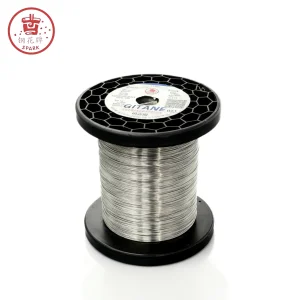
Industrial Resistance Wires & Specialty Alloy Portfolio
Explore our full line of factory-direct FeCrAl and NiCr products engineered for industrial furnaces and high-temperature ignition applications.



Frequently Asked Questions (FAQ) for OEM Buyers & Engineers
In-depth answers regarding FeCrAl high-temperature ignition coil engineering, material selection, custom fabrication, and wholesale procurement.